
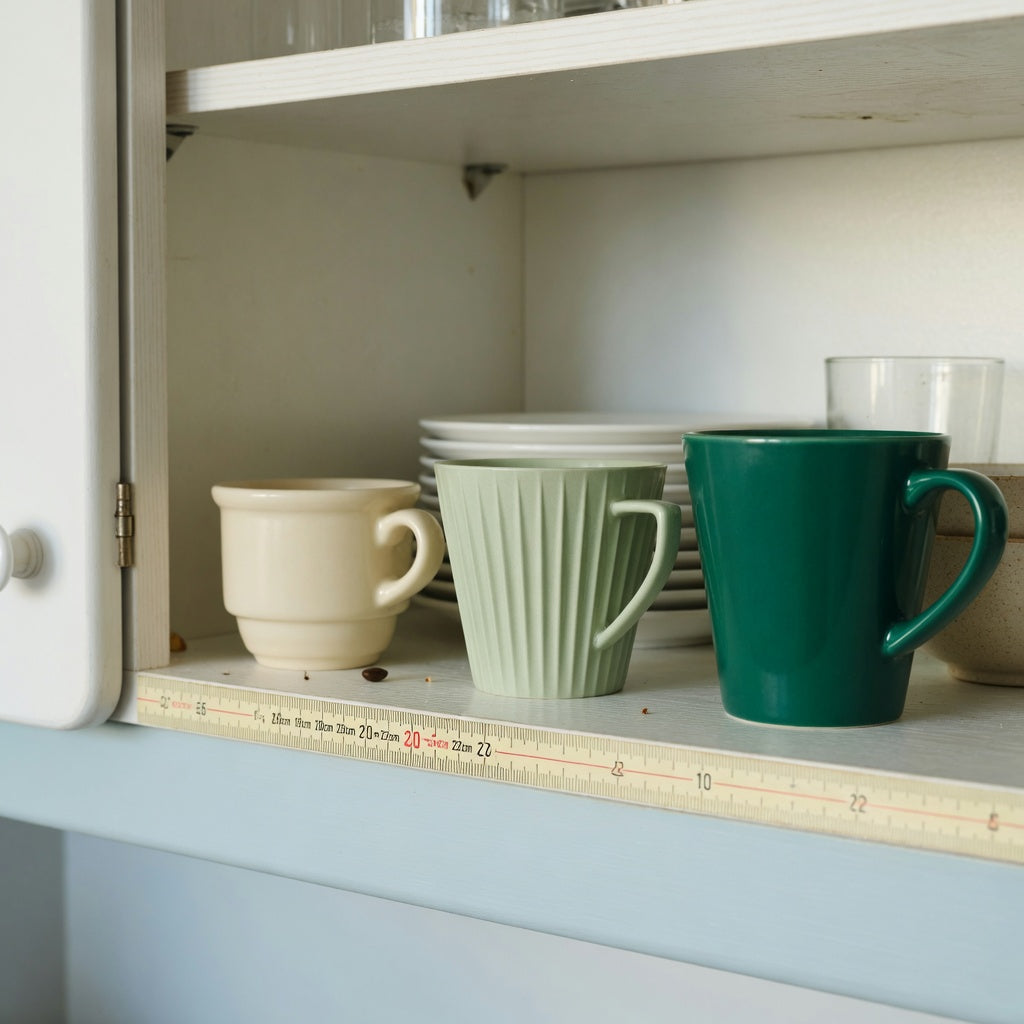
Decaf coffee cup storage fit guide: 3 shapes compared
Reading time: about 9 minutes
A cabinet door can clear the cup body and still catch the handle during the last inch of closing. We see the same problem while arranging display shelves and packing multi-cup orders: listed capacity matters for serving, but the outer shape decides where the cup can live. This decaf coffee cup storage fit guide compares the current Retro, Pleated, and Emerald options around both decisions.
The confirmed catalog facts are straightforward: Retro holds 170 ml, Pleated holds 200 ml, and Emerald holds 270 ml. The supplied facts do not include verified external height, body width, base diameter, or handle projection, so we will not turn product photos into made-up measurements. If a current product page lists those dimensions, use the listing as the final reference before ordering.
What does this decaf coffee cup storage fit guide compare?
Capacity and storage fit are separate variables. Capacity is the internal serving volume. The storage envelope includes the widest part of the body, the outer edge of the handle, the base, and the rim. Handle projection is especially easy to miss because turning a handle forward uses cabinet depth, while turning it sideways uses space in the row.
| Current cup | Listed capacity | Visible form | Buyer situation to test |
|---|---|---|---|
| Retro 170 ml coffee tea cup | 170 ml | Rounded, visually compact cup profile | A shorter serving and a crowded shelf; inspect this shape first, then confirm its external measurements. |
| Pleated 200 ml coffee tea cup | 200 ml | Vertical pleating around the cup wall | A middle serving size with a textured form; check the widest body point and total width across the handle. |
| Emerald 270 ml coffee tea mug | 270 ml | Mug-style silhouette with the highest listed capacity | A larger serving on a roomier shelf or desk; verify both vertical clearance and handle depth. |
The capacity column is confirmed. The fit column is a decision path, not a dimensional guarantee. A lower capacity does not automatically prove that every external measurement is smaller, and visible pleating does not tell us the exact body width. That distinction matters when cabinet space is tight.
If none of these three forms suits your shelf arrangement, compare additional silhouettes in our unique coffee mugs collection rather than forcing the wrong shape into the available space.
Which capacity fits your serving habit and available shelf?
Start with the serving size you actually prefer, then eliminate shapes that your storage cannot support. A cup that fits neatly but feels too small during daily use is not a successful purchase. A larger cup that blocks the cabinet door creates a different kind of frustration.
- Choose Retro for a 170 ml serving and limited storage: Its rounded, compact-looking form makes it the logical first product to inspect for a crowded cabinet. It is not a guaranteed fit until you confirm the current outer dimensions.
- Choose Pleated for a 200 ml middle ground: This option suits a shopper who wants more capacity than Retro and prefers a visibly textured cup wall. Check whether the widest part of the pleating changes how many cups can sit in one row.
- Choose Emerald for a 270 ml serving and more placement room: The larger listed capacity fits buyers who prefer a fuller serving and have an open shelf, roomy cabinet, or office desk available. It is not the practical choice for an unmeasured shallow cabinet.
Handle comfort deserves equal weight. A close-set handle can reduce the outer footprint but may offer less finger room; a more open handle can be easier to pick up while requiring additional clearance. Because verified handle-opening measurements are not available here, compare the product photos with a cup you already find comfortable and note whether you normally use one, two, or three fingers.
How much cabinet room does the handle really use?
The useful measurement is not just the diameter of the cup body. You need the total distance from the far side of the body to the outermost edge of the handle. On a shelf, that total width becomes either depth or side-to-side space depending on how you orient the cup.
- Measure usable depth: Measure from the rear wall to the inside face of the closed door. A face frame, hinge arm, or raised shelf lip can reduce the nominal cabinet depth.
- Measure clear height: Measure from the shelf surface to the underside of the shelf above. Do not rely on the distance between shelf-pin holes.
- Plan the handle direction: Handles facing forward consume depth. Handles turned sideways consume row width and can knock against the next cup.
- Allow lifting space: Leave a no-contact gap so you can remove one cup without dragging its handle or rim across a neighboring piece.
- Compare current product details: Use verified external dimensions from the live product page if they are listed. Ask our store for clarification before ordering several cups if a critical measurement is missing.
In our experience, shoppers often count how many cup bodies fit across a shelf but forget the room needed to grasp and lift each handle. In our store, we orient handles consistently and avoid direct contact between pieces. Repeated handle-to-handle knocks, a cabinet door striking the handle, and rim pressure from unstable stacking are common ways drinkware becomes chipped or marked during storage.
Closed cabinet, open shelf, office desk, or gift?
- For a tight closed cabinet: Start with the linked Retro 170 ml cup because it pairs the lowest listed capacity with a compact-looking rounded form. Choose it only if a 170 ml serving suits you and the confirmed outer measurements clear the door.
- For a cabinet with moderate room: The Pleated 200 ml cup offers a middle capacity and a more textured appearance. It suits buyers who want that balance, but the pleated wall and handle still need to be checked against the usable shelf width.
- For an open shelf or office desk: The Emerald 270 ml mug makes sense when the larger serving is the priority and there is room around the handle. On a desk, include the space occupied by a keyboard, notebook, or monitor stand rather than measuring an empty surface.
- For a gift when storage is unknown: Retro or Pleated may be more capacity-conservative starting points, but neither should be presented as a guaranteed small-space fit. At gift unboxings, the appearance gets attention first; the cabinet question arrives later, so sharing the product page helps the recipient check.
Open shelving removes the cabinet-door problem but introduces dust, cooking residue, and edge risk. Keep frequently used cups far enough from the shelf edge that a sleeve or dish towel cannot catch the handle. A deep open shelf can suit Emerald, while a narrow closed cabinet may make the smaller serving options easier to place.
Can these shapes be stacked, and what changes after washing?
The verified product facts supplied for this guide do not identify Retro, Pleated, or Emerald as stackable or nesting designs. Treat them as single-layer cups unless the current listing explicitly confirms stacking. Handles and rims can create unstable contact points even when one cup appears to balance on another.
- Use a shelf riser if you need a second storage level; it carries the load instead of placing one cup's weight on another cup's rim.
- After hand washing or a dishwasher cycle, dry the base ring and the area around the handle attachment before returning the cup to a wood shelf.
- Check the individual product instructions before using a dishwasher or microwave. This storage guide does not establish appliance compatibility.
- Test dishwasher-rack fit separately from cabinet fit. A projecting handle can catch a rack tine or touch another item even if the cup fits the cabinet.
- Inspect the rim and handle junction after any impact. Set aside a cup with visible cracking or chipping rather than hiding the damage at the back of the shelf.
For open shelves, add regular dusting or a quick rinse before use to the routine. For closed cabinets, make sure cups are fully dry before the door is shut. Care requirements are part of storage planning, especially if the shelf is crowded and individual cups are difficult to remove without contact.
Five-minute shelf test before checkout
Use this decaf coffee cup storage fit guide as a filtering method, then run one practical test in the exact spot where the cup will be stored.
- Choose the actual shelf, desk corner, or hanging area rather than measuring a more convenient empty space.
- Write down usable width, depth, and height after accounting for the door, hinges, shelf lip, and neighboring dishes.
- Place a cup you already own in that space and test both forward-facing and sideways handle positions.
- Select 170 ml, 200 ml, or 270 ml according to your preferred serving rather than shelf size alone.
- Open the relevant product page, compare any current measurements and care details, and avoid assuming that the cups can be stacked.
The best choice is the cup that clears the cabinet, feels comfortable in hand, and holds the serving you actually want. If any one of those checks fails, move to a different shape instead of accepting daily storage friction.
Frequently asked questions
What does the decaf coffee cup storage fit guide confirm?
It confirms the listed capacities: Retro is 170 ml, Pleated is 200 ml, and Emerald is 270 ml. It does not supply unverified external width, height, base diameter, or handle-projection measurements, so those should be checked on the current product pages.
Which current cup should I inspect first for a shallow cabinet?
Start with the Retro 170 ml because it has the lowest listed capacity and a visually compact rounded profile. That is a sensible first comparison, not a fit guarantee; measure usable cabinet depth and check the current external specifications before buying.
Does the Pleated 200 ml cup require more shelf width?
The vertical pleating is visible, but the verified facts do not establish its exact overall width. Measure the shelf, then compare the listing's widest body measurement and total width across the handle if those details are available.
Can the Emerald 270 ml mug fit in an upper cabinet?
Yes, if the cabinet provides enough height, depth, and handle clearance. Its 270 ml capacity alone does not prove that it is too tall or too wide, so use actual external measurements rather than judging from volume.
Where should I compare the cups after measuring my shelf?
Match a 170 ml preference to Retro, a 200 ml preference to Pleated, or a 270 ml preference to Emerald using the product links above. If those shapes do not meet all three checks - serving size, handle comfort, and shelf clearance - take your measurements to the CoffeifyMug unique coffee mugs collection and compare another silhouette.
More from our blog
Read more
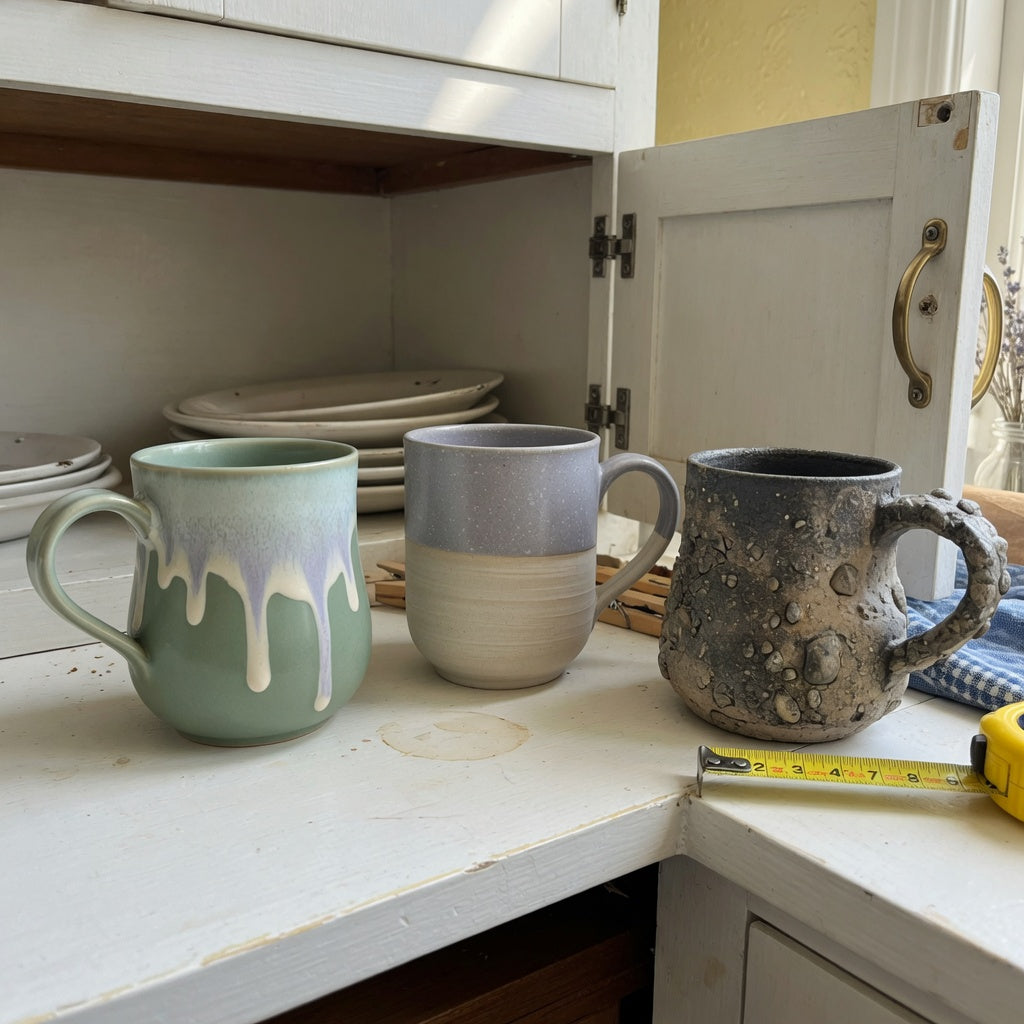
Herbal Tea Mug Storage Fit Guide: 400, 440 and 480 ml
Compare The Flow 400 ml, Morning and Night 440 ml, and The Rock 480 ml by confirmed capacity, then use handle projection, shelf depth, and door-clearance checks to judge real cabinet fit without re...
Read more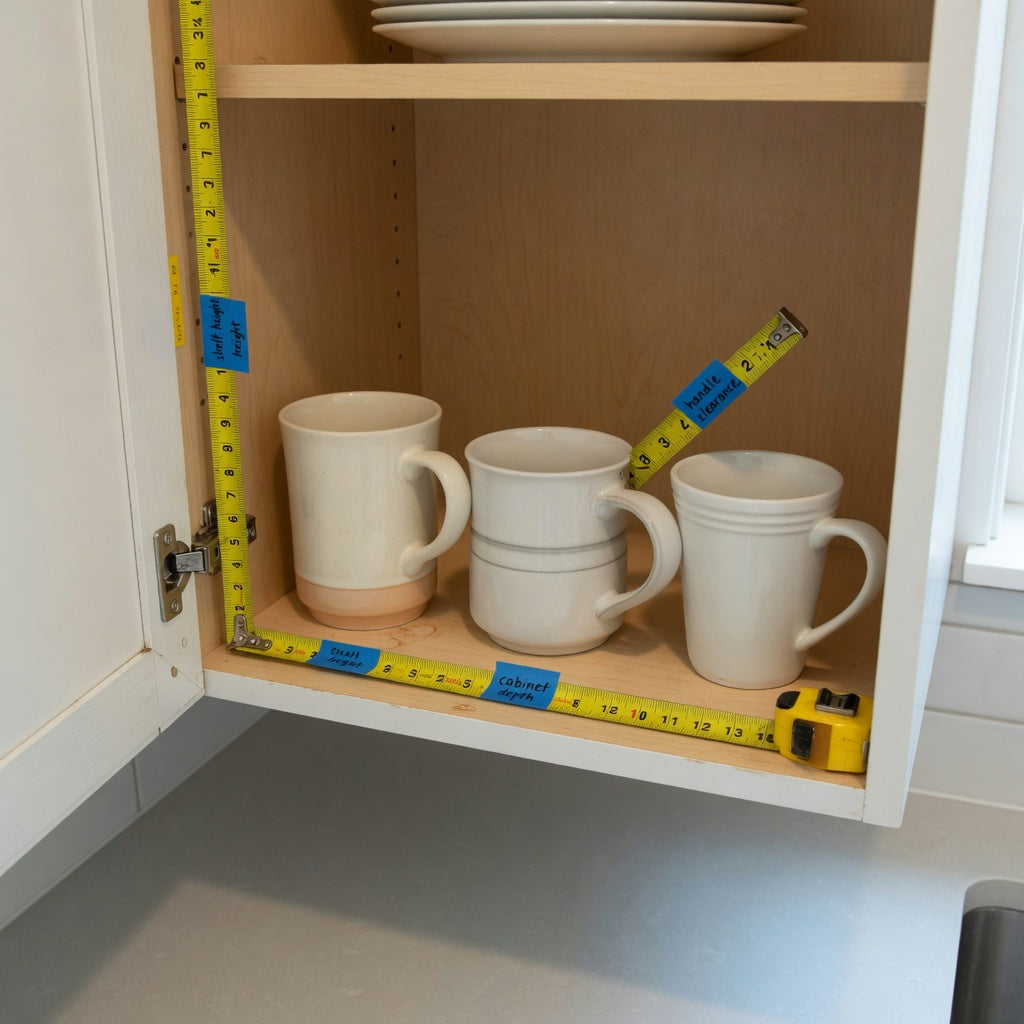
Cafe Au Lait Mug Storage Fit Guide: 3 Current Mugs Compared
Compare verified 400 ml, 440 ml, and 480 ml capacities against shelf height, cabinet depth, handle projection, and removal clearance. See which CoffeifyMug option belongs on your shortlist without ...
Read more
Leave a comment
This site is protected by hCaptcha and the hCaptcha Privacy Policy and Terms of Service apply.