
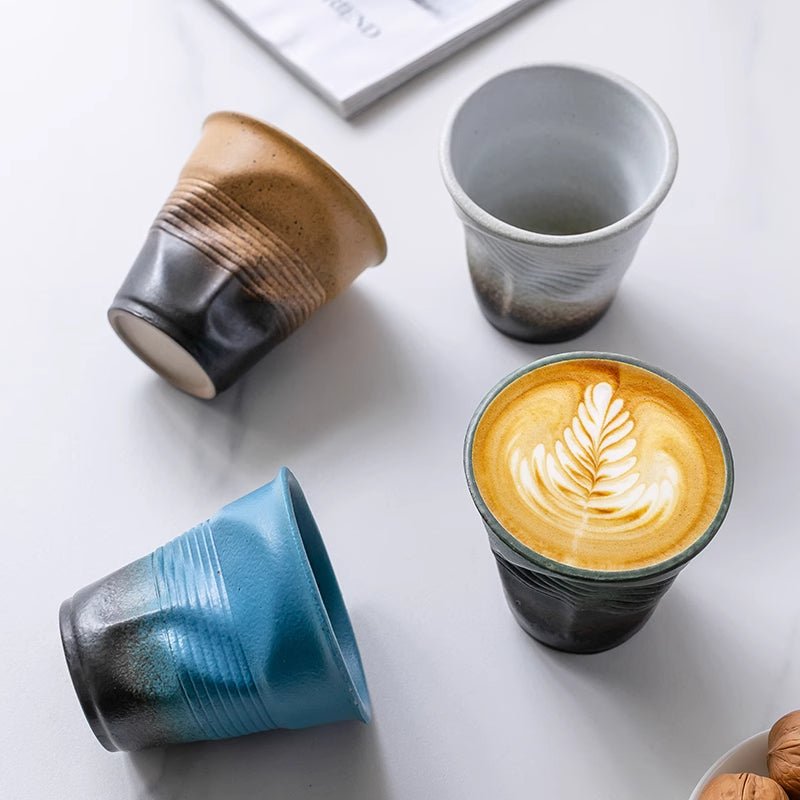
Decaf Coffee Cup Compact Kitchen Product Shortlist Guide: 3 Picks
Reading time: about 11 minutes
The cup beside the kettle can occupy the only clear patch between the sink and the next appliance. Put it away, and the handle may catch the cabinet door or crowd the bowls already on the shelf. This decaf coffee cup compact kitchen product shortlist guide treats that as a practical selection problem: match your actual serving to 170 ml, 200 ml, or 270 ml, then confirm that the handle and storage space work in your kitchen.
In our store, we handle these products and answer the same questions shoppers raise before ordering. Will the usual serving fit without filling the cup to the rim? Can the handle be lifted comfortably from a tight corner? Where will the cup sit while drying? The three confirmed capacities in this shortlist are Retro 170 ml, Pleated 200 ml, and Emerald 270 ml. Capacity does not establish exterior width, height, weight, material, stackability, or appliance compatibility, so we will not use it as a substitute for those details.
What this decaf coffee cup compact kitchen product shortlist guide compares
This is a three-option shortlist, not a ranking. Start with serving capacity, remove any option that cannot hold your normal finished pour with your preferred headroom, and then check the surviving product against your grip and storage setup.
| Option | Listed capacity | Best starting situation | Reason to skip |
|---|---|---|---|
| Retro coffee tea cup | 170 ml | A short serving and a willingness to refill when needed | Your normal serving does not fit comfortably within 170 ml |
| Pleated coffee tea cup | 200 ml | A middle-capacity option between the shorter and fuller choices | You clearly prefer either the 170 ml or 270 ml end of the shortlist |
| Emerald coffee tea mug | 270 ml | A fuller single serving with fewer trips back to the brewing area | You usually serve much less and want the lowest practical capacity |
The table gives you a starting point. It does not promise that the lowest-capacity cup has the smallest outside footprint, or that the highest-capacity mug is automatically too large for a particular cabinet. That judgment requires current exterior measurements or a direct comparison with the space you have.
Which listed capacity matches your usual serving?
Measure the drink you actually serve, not the amount you imagine serving on an unusually relaxed morning. Use a measuring jug once, including any part of the finished serving you normally add before drinking. Then decide how much empty space you prefer below the rim. A cup that technically holds the liquid but must be carried completely full is not a practical match for a busy counter.
- 170 ml: Start here if your measured serving is short and you do not mind preparing another cup when you want more.
- 200 ml: Start here if 170 ml feels restrictive but 270 ml is more capacity than your routine requires.
- 270 ml: Start here if you prefer a fuller serving and want to reduce the chance of needing an immediate refill.
Serving preference is the useful dividing line. A shopper who drinks at the counter for a few minutes may be happy with 170 ml. Someone carrying the cup to a desk or table may value the extra capacity of the 270 ml option. The 200 ml cup is the practical middle choice, but it is not automatically the right one simply because it sits between the other two.
One limitation deserves emphasis: capacity measures internal volume. It does not tell you the total width once the handle is included, how tall the cup stands, or whether its shape works with your shelf. Choose a capacity first, then run the separate fit checks below.
Which cup fits your compact-kitchen routine?
Retro 170 ml: the counter changes jobs throughout the morning
Reader situation: The same clear patch is used for preparing food, making coffee, and setting down washed dishes. You serve a short cup, finish it promptly, and put it away rather than leaving it on the counter.
Why it fits: At 170 ml, the Retro has the lowest listed capacity in this group. It is the most direct match for a measured short serving and for a shopper who does not want unused capacity. Review the Retro 170 ml coffee and tea cup to compare its current shape and handle presentation with the cup you already find comfortable.
Why to skip it: It is not a good fit if your normal serving exceeds 170 ml, you dislike refilling, or you prefer plenty of open space above the drink. Do not select it only because you assume lower capacity guarantees the smallest outside dimensions. Confirm the physical fit separately.
Pleated 200 ml: one cup must cover several serving preferences
Reader situation: You want more room than a short 170 ml cup provides, but a 270 ml serving is not your usual choice. This can also suit a shared kitchen where one cup style needs to cover different, moderately sized servings.
Why it fits: The Pleated is the middle option at 200 ml. That makes it a sensible first comparison for shoppers who have measured their serving and found 170 ml too limiting without needing the full capacity of the Emerald. Open the Pleated 200 ml coffee and tea cup page and check the current product views against your preferred grip and shelf position.
Why to skip it: Skip it if your serving clearly belongs at either end of the shortlist. A 200 ml cup adds little value if you consistently want a short 170 ml serving, and it may create avoidable refills if your routine is closer to 270 ml. The middle option should solve a real serving need, not feel like the safest choice by default.
Emerald 270 ml: a fuller serving moves away from the prep zone
Reader situation: You make one fuller cup and carry it to a table, kitchen island, or office desk. Returning immediately for another pour would interrupt the way you use the space.
Why it fits: At 270 ml, the Emerald has the highest listed capacity in this shortlist. It gives the fullest single-serving option of the three and is the logical place to start when 170 ml and 200 ml do not cover your measured pour. Check the Emerald 270 ml coffee and tea mug for its current handle, profile, and care information before deciding.
Why to skip it: It is not the practical choice if you normally serve much less, prefer the lowest liquid volume to carry, or cannot confirm enough cabinet and handle clearance. A larger listed capacity is useful only when you plan to use it.
If the right capacity comes with the wrong handle shape or storage profile, do not force one of these three into the space. Apply the same checks to other styles in our unique coffee mugs collection. A different cup style is the better purchase when it matches both your serving and the physical kitchen.
How can you test handle comfort beside a sink or appliance?
Handle comfort is personal, but it can be assessed more carefully than simply deciding that a handle looks large enough in a photo. From handling cups in our store, we focus on three separate points: finger clearance inside the handle, knuckle clearance beside the cup body, and the wrist angle needed to lift a filled cup.
- Fill a cup you already own with the same amount of water as your usual serving.
- Lift it from the exact counter position where the new cup will sit, approaching it from the direction you normally use.
- Notice how many fingers you place through the handle and whether your knuckles touch the cup body.
- Check whether the handle points toward a wall, faucet, appliance, or neighboring item when the cup is put down.
- Compare that familiar grip with the current product photos and any measurements stated on the live listing.
A handle that feels comfortable in open space may be awkward in a corner. The total projection of the handle also matters for cabinet doors and neighboring dishes. None of the three capacities identifies a universal handle winner, so shoppers with strict grip or clearance needs should not decide from milliliters alone.
Counter, cabinet, and drying-rack fit are separate checks
A cup can work perfectly on the counter and still be inconvenient to store. Before checkout, check every place it will regularly occupy rather than measuring only the most obvious space.
- Counter: Account for the cup body, the handle, and the hand movement needed to pick it up. Keep enough working room for the tasks that share that section of counter.
- Cabinet or shelf: Measure the usable interior width, depth, and height. Include shelf lips, hinges, and the space needed for the door to close without meeting the handle.
- Stacking: Do not assume a cup is stackable because several would fit side by side. Only rely on stacking if the current product information supports it.
- Drying area: Consider how the cup will rest on your rack or mat and whether its handle will collide with another cup, plate, or rack tine.
- Desk or table: If the cup leaves the kitchen, repeat the clearance check around a keyboard, notebook, coaster, or other object that stays in place.
A useful method is to place your current cup in each location and note what causes trouble. Is the body too tall for the shelf, does the handle extend into the next item, or does the cup leave too little prep room? Those observations give you a more reliable comparison than a general preference for small mugs.
What should you inspect at unboxing and during routine care?
Cup inspection takes only a minute. The areas we pay attention to while handling drinkware are the rim, the base or foot, the surface, and both handle attachment points. General shipment issues to check for include a chipped rim, a hairline crack near a handle join, a rough contact point, or a base that rocks unexpectedly on a flat surface.
- Unpack the cup over a clear surface and inspect it in good light.
- Check the rim and handle joins before washing or filling it.
- Place the empty cup on a flat, dry counter and confirm that it sits as expected.
- Follow the care instructions on the current product page or packaging before first use.
- For a gift, complete these checks before wrapping so the recipient does not discover a shipping issue during the unboxing.
These are sensible checks for any cup shipment, not a claim that the Retro, Pleated, or Emerald is prone to a particular defect. We also do not label these options dishwasher-safe or microwave-safe in this comparison because those care claims were not supplied for the shortlist. Confirm the current material and care guidance on the product listing if either point determines your purchase.
A five-minute shortlist before checkout
- Record your normal finished serving in milliliters.
- Decide how much headroom you prefer and whether an occasional refill is acceptable.
- Use a cup you own to identify your comfortable finger position and lifting angle.
- Check the intended counter, cabinet, and drying locations, including handle clearance.
- Open the matching product page and verify any current exterior measurements, material details, and care instructions that affect your decision.
If the smallest listed capacity matches, start with the Retro 170 ml. If your serving sits in the middle, compare the Pleated 200 ml. If you need the fullest option in this group, review the Emerald 270 ml. A cup stays on the shortlist only when both its capacity and its real storage route make sense.
Frequently asked questions
What does a decaf coffee cup compact kitchen product shortlist guide compare?
It compares the cup's listed capacity with your normal serving, then checks handle comfort, counter clearance, cabinet storage, and drying space. This shortlist uses three confirmed capacities: Retro 170 ml, Pleated 200 ml, and Emerald 270 ml. Exterior fit and care compatibility still need to be verified on the current product page.
Is a 170 ml cup too small for an everyday decaf serving?
It is too small if your normal finished serving does not fit within 170 ml with the headroom you prefer. Measure your usual pour once rather than guessing. If it fits and you like a short serving, the Retro is the most direct capacity match in this group.
Does the 270 ml Emerald automatically require the most cabinet space?
No. Capacity describes internal volume, not total exterior width, height, or handle projection. The Emerald has the highest listed capacity here, but you still need current exterior measurements or a direct space comparison before judging cabinet fit.
Which option is best if handle comfort is my first priority?
There is no responsible universal answer based on capacity alone. Compare the current product views with a cup whose grip you already like, paying attention to finger clearance, knuckle position, and the direction from which you lift it. If exact handle clearance is critical and cannot be confirmed, a different style is the better choice.
Can I assume these cups are dishwasher-safe or microwave-safe?
No blanket care claim should be assumed from a product name or capacity. Check the live listing and packaging for the current material and care instructions. If those details are essential and not confirmed, pause the purchase rather than relying on a general rule for drinkware.
Your next step: write down your usual serving in milliliters, the space needed by your preferred grip, and the cup's route from counter to cabinet to drying area. Choose the Retro, Pleated, or Emerald only if all three checks pass; otherwise, compare another shape in the unique coffee mugs collection using the same notes.
More from our blog
Read more
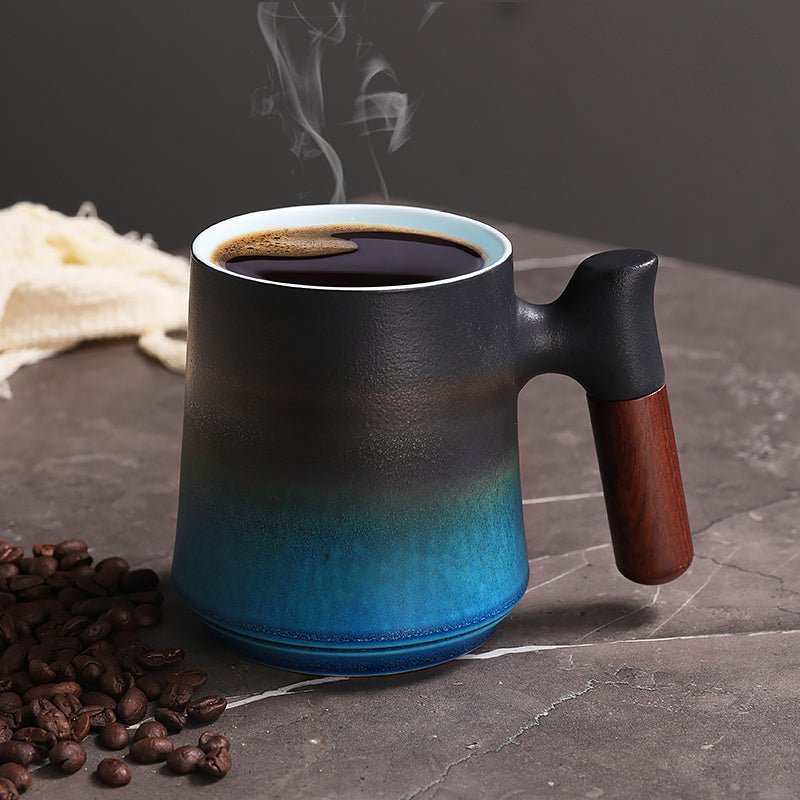
Two Tone Ceramic Coffee Mugs Compact Kitchen Product Shortlist Guide
Measure shelf clearance, closed-door depth, handle span, and drying space, then compare three two-tone ceramic mugs with clear reasons to choose or skip each one.
Read more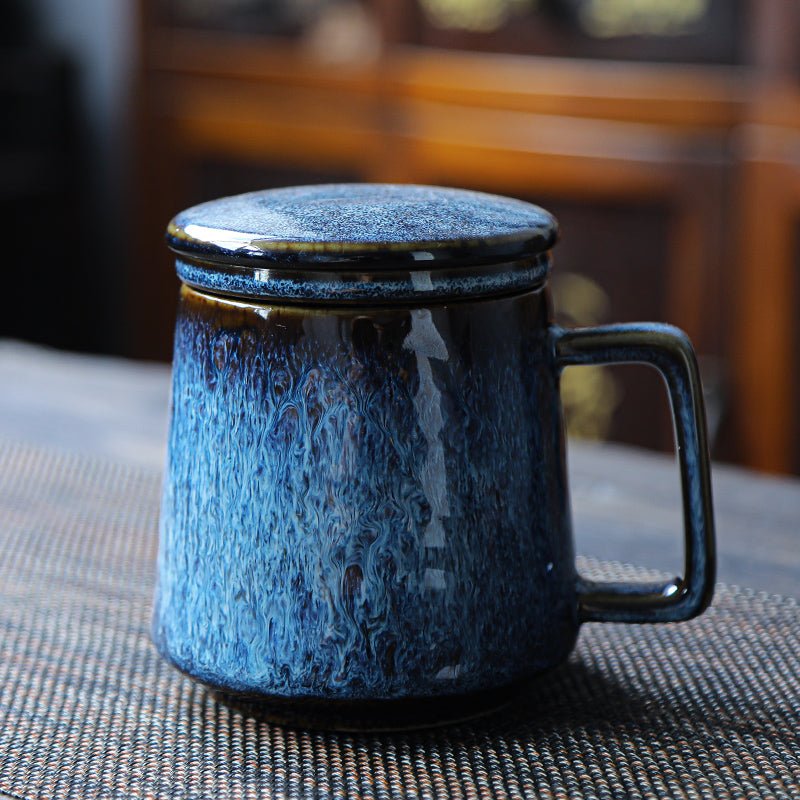
The peppermint tea mug compact kitchen product shortlist guide: 3 picks
Compare The Flow 400 ml, Morning and Night 440 ml, and The Rock 480 ml for a compact kitchen. This shortlist explains which capacity suits each routine, how to assess handle comfort, and when you s...
Read more
Leave a comment
This site is protected by hCaptcha and the hCaptcha Privacy Policy and Terms of Service apply.