
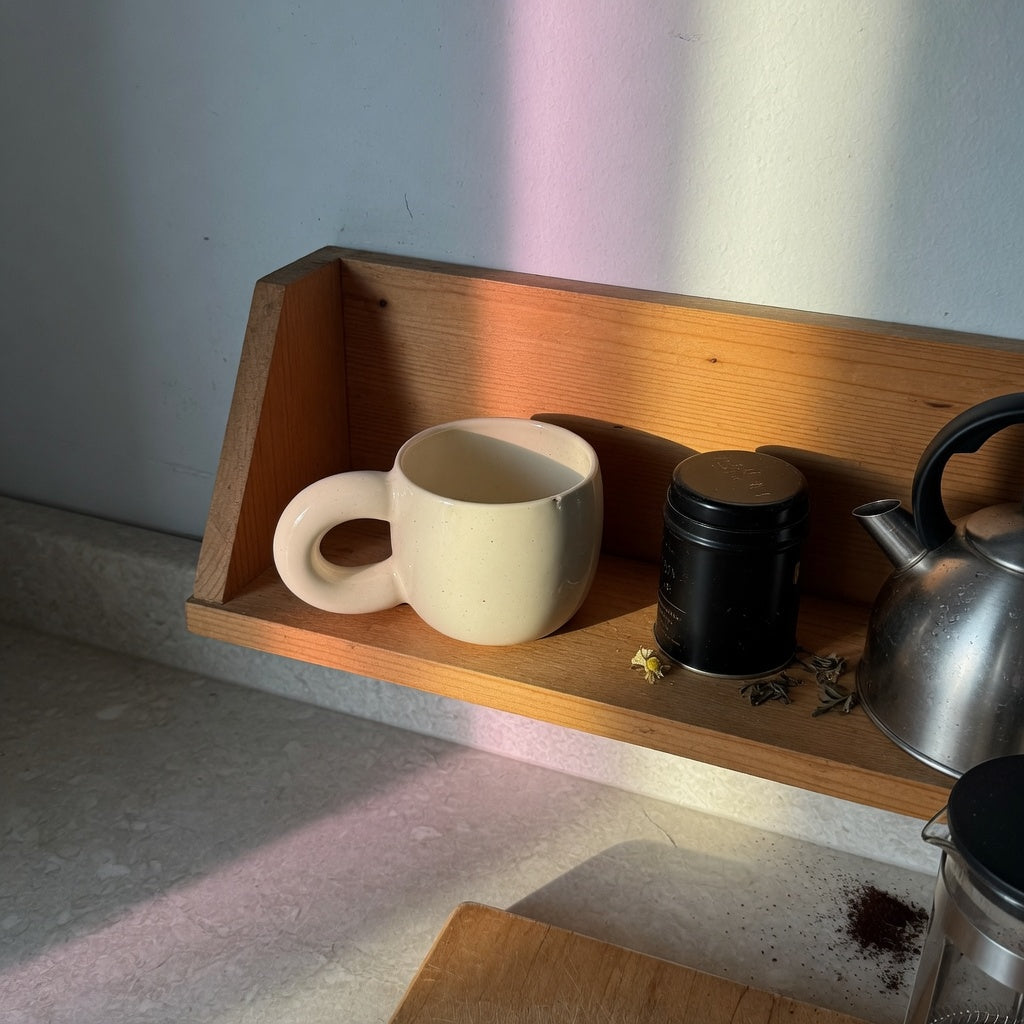
Coffee Tea Mug Gift for Home Decor: What to Compare
Reading time: about 13 minutes
The mug that looks finished on a styled shelf is often the one that prompts a message two weeks later. Someone reheated the last inch of coffee, ran it with the dinner plates, or tried to nest it in a cabinet that only accepts straight-sided cups. In our store, that is the usual miss with a coffee tea mug gift for home decor. The glaze and the handle sell the unboxing. The kitchen then decides whether the piece stays by the kettle or slides behind the mixing bowls.
Who is a coffee tea mug gift for home decor actually for?
We sort these orders into three kitchens before we point anyone at a product page. The same silhouette is not equally useful in all three.
- Daily drinker, mug left in sight. They use one or two cups every morning. The piece has to feel steady once it is full and still look considered beside a kettle or a small tray.
- Collector who displays more than they drink from. A few favorites rotate into use. The rest are visual. Those display pieces should not be treated as everyday drinkware.
- Housewarming buyer. They want one object that finishes an open shelf or a compact coffee and tea station without guessing the exact brew method.
If the recipient notices handle shape, not just color, start with the ball-handled coffee tea mug and read the live listing before you commit. That page is the recommendation when a ball-style handle is the detail you want. The name is not a measurement. It does not establish capacity, clay body, glaze type, handle clearance, weight, or dishwasher and microwave status. Those lines have to be on the current product page. If a line is missing, treat it as unconfirmed. Do not fill it in from a lifestyle photo or from a different mug with a similar outline.
A handle that reads as a focal point is a decor asset when the shelf has room for it. It is a poor fit when every cup must nest, or when the drinker wants a simple loop around a full, hot mug. If clearance and capacity are not published, do not guess. Choose another shape, or ask us before you wrap it.
Shoppers comparing several outlines should open our unique coffee mugs and check care and size on each product page, rather than picking from thumbnails.
Coffee pour, tea steep, or a shelf that only looks thirsty?
Coffee and tea share a cupboard. They do not share a brief, and mixing them up is how a thoughtful gift ends up unused.
For coffee, we look at three practical things. First, capacity against the cup that person actually finishes. FDA describes cups and mugs, for its leach-testing categories, as small ceramic hollowware normally about 240 mL (8 fl oz), usually made with a handle. That is a category description for testing, not a rule that every breakfast drinker wants 8 ounces. Someone who pours a tall mug may find a small cup fussy. A slow sipper may find an oversized bowl goes cold and crowds a narrow shelf. Second, handle comfort with liquid in it, not empty on the counter. Third, a rim they accept against the lip and a base that sits flat on stone or a crowded desk. Rim thickness is rarely obvious in a photo. If the listing is silent, lip feel stays unknown.
Tea often wants different geometry. Room to steep matters when they brew in the cup. A lid or an infuser is a real preference for many tea drinkers, and a plain coffee mug is the wrong gift when that is what they asked for. A wider opening makes it easier to lift a bag without dripping down the outside. None of those parts arrive just because a mug is sold for coffee and tea. On the ball-handled listing, check whether a lid, infuser, or any extra piece is actually included. If the page does not list those parts, it is not an infuser gift. Look through the listings in the unique coffee mugs collection for a page that names the parts you need.
Then there is the person who rarely drinks either. A mug-shaped present for someone who does not use mugs is decor they did not request. If you already know they avoid hot drinks, put the budget on something they will touch. A strong handle will not create the habit.
How do you judge handle comfort before you can hold it?
You cannot feel finger clearance through a screen. What you can do is refuse to invent it. In our experience, gift returns on statement handles come from storage and grip, not from the color.
- Compare any stated capacity with the mug they already finish in the morning. If ounces are not listed, size is unknown.
- Read the handle description on that page. The ball-handled listing is the one to open when you want that named profile, but you still need the page to describe clearance. A distinctive handle can look right on open shelving and still feel tight for a larger hand, or awkward once the cup is full.
- Picture the cabinet. Handles that project from the body snag neighbors on a hook rail and refuse to nest. If the kitchen is stack-only, this style is the wrong gift even when the glaze matches the room.
- Use weight only if the listing prints it. A heavier cup can tire a smaller hand over a long pour. No number means no assumption.
We would not send a handle-forward gift to someone whose current favorite is a thin diner mug unless they have said they want a different grip. This shape is also a weak choice for an office desk where mugs get stacked in a drawer between meetings. If the answers on the page are thin, pick another silhouette and run the same four checks.
What fails first: the wash, the microwave, or the print?
The clay can be tough and the decoration can still quit. When customers write us after a few weeks of normal use, metallic rims, foil accents, and some surface prints are the details that peel, flake, or fade, even when the mug body still looks sturdy. A dishwasher-safe line sometimes describes the ceramic and not the artwork. Read the care sentence for the decoration, not only for the body.
Microwave use is a separate question. Metal trim and a microwave do not belong together; metal can spark. Reheating in a mug marked not microwave safe, or in one that never says, is how a gift becomes a complaint. If the listing is silent, do not run a test as a surprise. Hand-wash-only pieces are honest gifts when the card says so. They are a bad match for someone who loads every cup before work.
Before checkout, confirm these on the current page:
- Whether the mug is listed as dishwasher safe, hand wash only, or not specified.
- Whether it is listed as microwave safe, and whether any metallic detail is called out.
- How the pattern is applied, if the listing says: underglaze, overglaze, decal, or metal. Underglaze sits under the glaze coat. Overglaze and metal sit where brushes and detergent can reach them. Only trust the method that page names.
- What you will do if the glaze chips. We take chipped or crazed food-contact surfaces out of drink rotation. Cracks and crazing hold stains and residue. They are not a surface we would keep using for coffee or tea.
Material words are easy to over-read from a title. Porcelain, stoneware, and earthenware feel different in the hand and do not all like the same hot wash, but you only know which body you are buying when that listing says so. Do not copy a clay type onto the ball-handled mug from another product, a marketplace photo, or a general article.
Lead, cadmium, and the mug that should stay on the shelf
Home-decor ceramic and drinkware can share a shape and still be different objects. FDA has reported that some ceramic foodware has released significant amounts of lead from surfaces that touch food, and that the metal can move into food. With continued use, that exposure can cause adverse health effects, including effects of chronic lead poisoning. Lead compounds have been used in glazes. If pottery is fired at an inadequate or poorly controlled temperature, that lead may not be fully bound into the glaze and can leach into food.
For cups and mugs, FDA's action level is 0.5 micrograms of lead per milliliter of leaching solution, in any one of six units tested, under the pottery guidance known as CPG 545.450. The action level for extractable cadmium in small hollowware pottery is also 0.5 micrograms per milliliter of leaching solution for any one of six units. Pottery with cadmium-based pigments may leach cadmium into food. These figures are enforcement action levels for a leach test. They are not proof that every colorful mug online was tested, and they are not a personal lab result for the cup in your cart.
Label words need the same restraint. FDA has said ceramicware that shows extractable lead under the CPG 545.450 method should not be labeled Lead Free, and that using the phrase on ware that fails the test can be false or misleading. A product page that says lead free or food safe is a claim to read against the rest of that listing. It is not a phrase to invent on a gift tag, and we will not imply it for a mug whose page does not say it.
There is a specific path for pieces that look usable but are not meant for food. If ceramicware appears suitable for food use, FDA treats it as foodware unless it meets 21 CFR 109.16. That rule calls for a conspicuous stick-on warning the buyer can see, plus a permanent statement of the selected warning on the exterior of the base. A decorative cup with no warning, sold in a form people would drink from, is not automatically just a shelf object.
What we tell buyers in plain terms:
- For daily coffee or tea, buy ware presented for food use and read the listing for care and any safety statement.
- If a piece is marked not for food use, keep it on the shelf. Do not pour into it to see what the warning means.
- Stop drink use once the glaze is chipped, cracked, or heavily crazed.
- Unknown decorative pottery with a bright glaze is a risky everyday mug, however well the color matches the room.
We do not treat a lifestyle photo as a food-contact test. If a listing on our site leaves out a safety or care detail you need, ask before you gift it for daily drinks. Silence on the ball-handled page is not a yes.
Open shelves, hooks, and a weekday coffee station
Styling is where decor buyers get specific, and where a lot of gift guides stop at a photograph. A shelf looks deliberate when the cups people actually use are easiest to reach, and the sentimental ones are clearly out of the daily path.
On an open shelf, turn handles one direction and group similar heights so the row does not look accidental. Put the weekday mug at the front. Shift chipped, novelty, or not-for-food pieces higher, or behind the working set, so a guest does not grab the wrong one. One stronger silhouette usually reads better beside quieter companions than a row of competing patterns. Open shelving also collects dust and a light film of kitchen grease. If a mug has been on display, rinse it before the first pour, even if it arrived clean.
Hooks are less forgiving. A light, ordinary loop hangs cleanly. A heavier or projecting handle can stress a small hook, knock the next cup, or annoy anyone walking a narrow galley. If the listing does not give weight or how far the handle stands off the body, do not assume a statement mug belongs on a hook meant for thin cups. A chip from that knock is the moment we would retire it from drinks.
A compact coffee and tea station only works if the mug, kettle, and tins share the same square of counter. Stackable shapes save a cabinet with no extra depth. They also hide the outline that made the mug interesting on display. If space is the real constraint, say so and pick a simpler profile from the collection instead of forcing a projecting handle into a stack. This gift is not the one for a kitchen that measures success by how many cups fit in one column.
Checkout checks that keep the gift next to the kettle
Pretty packaging does not fix a mug the recipient will not use. Before you order, run this list against the live product page.
| Check | What a fit looks like | Walk away if |
|---|---|---|
| Who it is for | They drink coffee or tea, or they asked for a display piece | They dislike mugs and you hope the color converts them |
| Coffee or tea fit | Capacity and opening match how they brew; lid or infuser only if the page lists them | You are guessing a tea set from a coffee-shaped photo |
| Handle | The listed shape and any size notes suit their grip and your shelf | Measurements are missing and nesting storage is non-negotiable |
| Wash and heat | Dishwasher and microwave lines match how that kitchen actually runs | Metal is called out, or microwave status is blank, and they reheat every cup |
| Food contact | Sold as drinkware, no not-for-food warning, glaze intact | Decorative-only labeling, unknown glaze, chips, or heavy crazing |
| Decor role | It can sit forward on a shelf or station without blocking tools they use | It only works in a photo and fails the cupboard they own |
Pairing the mug with coffee, tea, or a simple towel is optional, and it only helps if they will use the cup. The mug still has to stand on its own. We would rather you buy one piece with honest care notes than a set that looks generous and spends its life in a box.
Open the ball-handled listing when you want that handle profile and you will confirm capacity, material, and appliance care on the page in front of you. If those answers are missing, or the handle is wrong for their kitchen, go back through the other mug shapes we carry and apply the same table. That comparison takes a few minutes. It is the difference between a gift that earns the spot by the kettle and one that only matched the wrapping.
Frequently asked questions
Is a coffee tea mug gift for home decor meant to be drunk from or only displayed?
Both jobs are possible, and neither is automatic. If the piece is sold as drinkware and the listing gives care instructions, plan on daily coffee or tea only while the glaze stays intact. If it carries a not-for-food-use warning, or the glaze is chipped or crazed, keep it on the shelf. When a page is silent on food contact and care, ask before you assume either role.
Will a gold rim or printed design survive the dishwasher?
Do not assume it will. Metallic rims, foil, and some surface prints can peel or fade even when the ceramic body is durable. Check whether the listing's dishwasher claim covers the decoration, not only the clay. If the page says hand wash only, put that on the gift note so the first week does not strip the pattern. Do not infer a gold rim, or any metal, just because a mug looks decorative.
What if the recipient drinks tea, not coffee?
Ask whether they steep in the mug and whether they want a lid or infuser. A comfortable coffee mug can still work for tea if the size and rim suit them, but it is the wrong gift when they specifically want an infuser set. Choose a mug with those parts only when the current listing includes them. A ball-handled name does not add a lid or a basket.
How large should the mug be if I cannot see ounces on the page?
Then you do not know the size, and you should not guess from the photo. FDA's test category for cups and mugs is normally about 240 mL, or 8 fl oz, but that is not a recommended gift size. Match any published capacity to the cup they already finish. If the listing prints no volume, pick a page that does, or ask us before you order it as their everyday mug.
Are stackable mugs better for a small kitchen?
They are better when cabinet depth is the limit and the drinker does not care about a distinctive outline. They are worse when the gift is supposed to read as decor on an open shelf, because stacking hides the profile. A projecting or ball-style handle is usually the piece you leave out of a tight stack. Pick the limit that actually matters in that kitchen, then choose the shape that serves it.
More from our blog
Read more
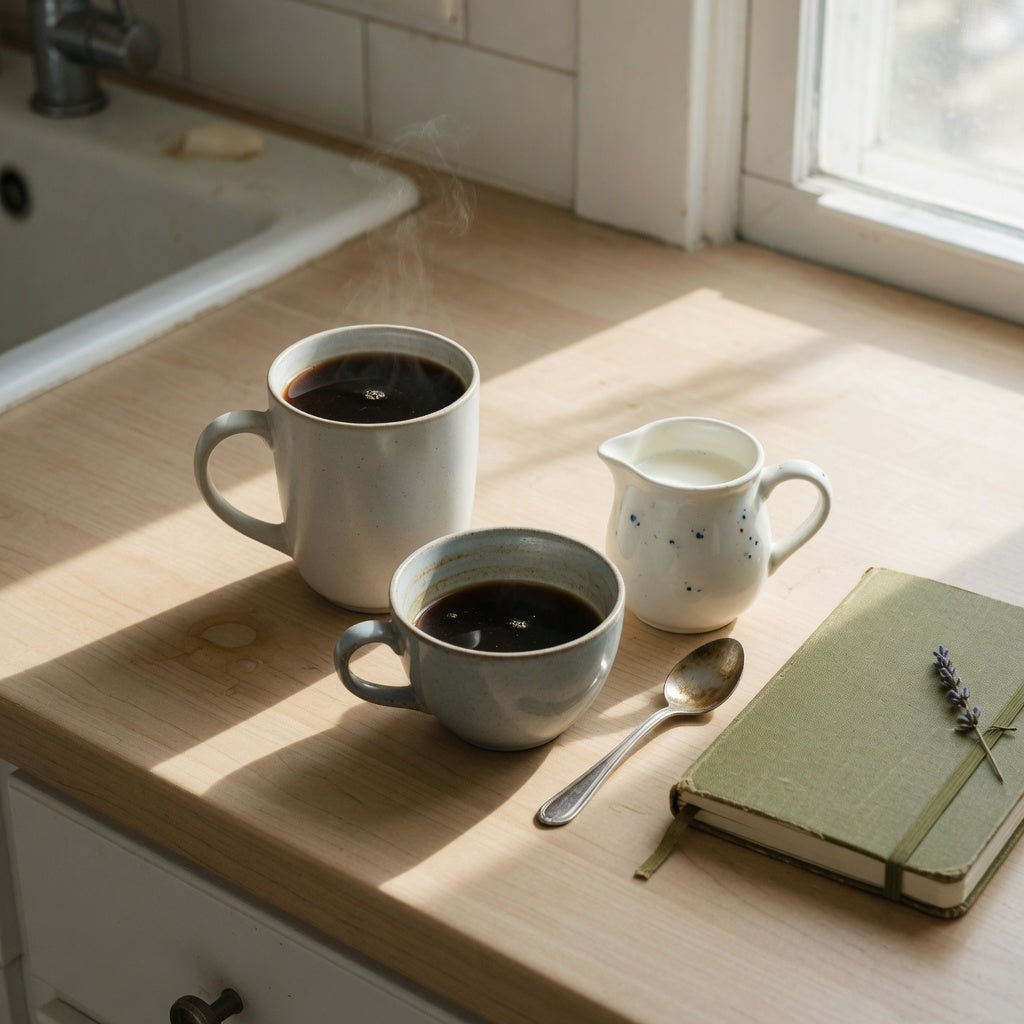
Everyday Ceramic Mug 350 ml: Fill, Handle, and Care
Shoppers comparing an everyday ceramic mug 350 ml usually want a desk coffee or latte near 12 fl oz, not a travel tumbler. We cover usable fill, handle, full weight, warmth, and care so you can che...
Read more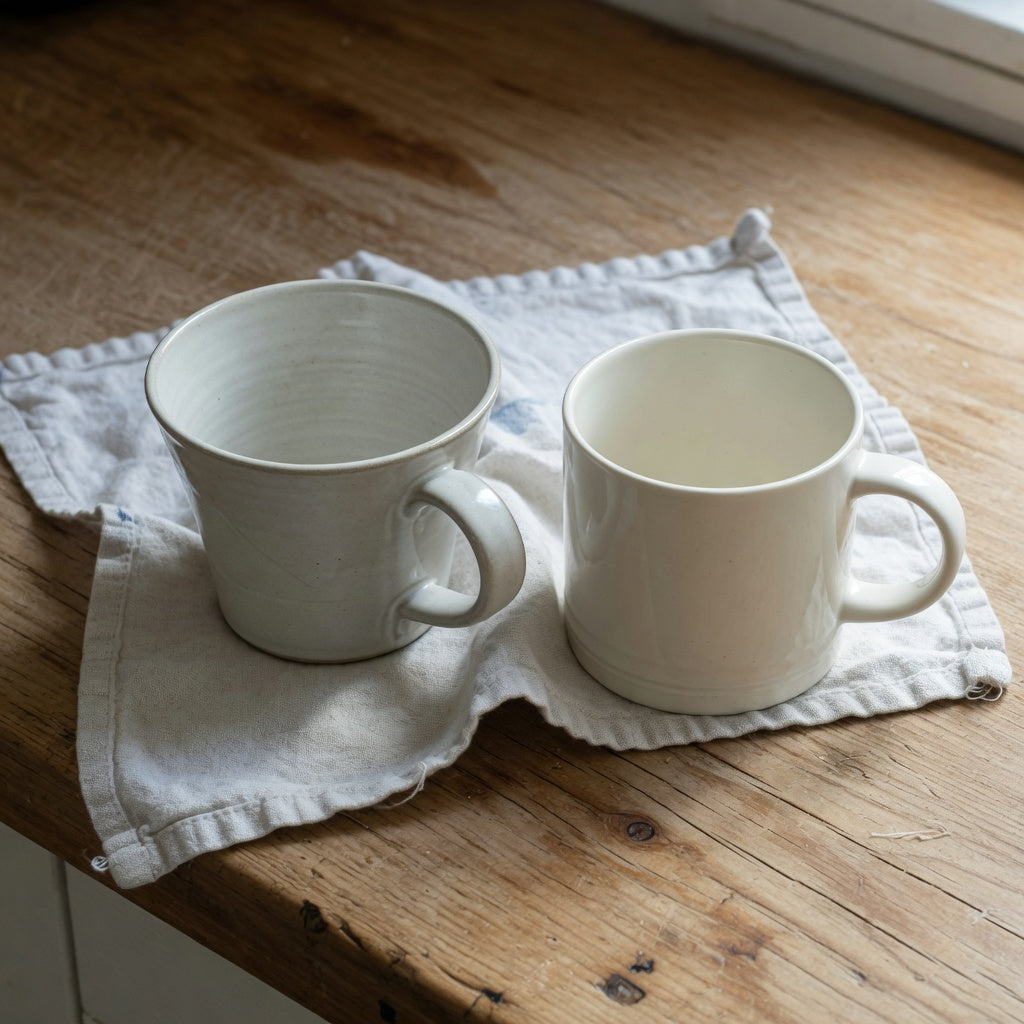
Spittoon mug vs coffee mug: job, rim, and safety
A spittoon mug vs coffee mug search mixes up a drinking mug, a spit cup, and a cupping basin. We split those jobs, then list what to verify on a novelty listing: rim, lid, capacity, and food contact.
Read more
Leave a comment
This site is protected by hCaptcha and the hCaptcha Privacy Policy and Terms of Service apply.