
Coffee Mug Size: How to Choose the Right Fit Before You Buy
Reading time: about 8 minutes
A mug can look right on a product page and still fail at 7 a.m. if it needs a refill before you finish a normal cup. The right coffee mug size is not just about ounces; it changes how the mug pours, how fast coffee cools, and whether it fits your cabinet, dishwasher rack, and hand at the same time.
We see this choice go wrong in the same ways every week. A buyer wants a bigger cup for a milk-heavy drink, then ends up with something too wide for the desk. Another buyer wants a clean, compact shape, then discovers the mug is too small for a standard drip coffee pour. If you want to compare shapes while you read, start with our all mugs collection and work from there.
What coffee mug size works for daily use?
For most shoppers, the best daily mug sits in the middle range. It is large enough for a full cup of coffee, but not so oversized that it hogs shelf space or feels awkward to lift when full. In our store, we usually point first-time buyers toward the size they will use on a weekday morning, not the size they imagine using on a slow Sunday.
| Common capacity | Best use | Main trade-off |
|---|---|---|
| 8 to 10 oz | Short black coffee, espresso-based drinks, smaller servings | Refills come quickly if you drink a full cup |
| 11 to 14 oz | Everyday drip coffee, pour-over, balanced desk use | Can feel small for heavy milk drinks |
| 15 to 18 oz | Latte-style drinks, tea, longer mornings, bigger pours | Heavier in the hand and takes more cabinet space |
| 20 oz and up | Very large coffee servings, cocoa, broth, or all-day sipping | Too bulky for many hands, shelves, and cup holders |
The number on the listing is only part of the story. A thick-walled 12 oz mug can feel more compact than a thin 12 oz mug with a wide mouth. Rim diameter, wall thickness, and base width all change how a mug drinks in real life.
If you want a broader benchmark before narrowing down your choice, our Average Coffee Mug Size: What Buyers Should Expect and Coffee Mug Size Guide: How to Choose the Right Fit Before Buying are good reference points.
Does shape matter as much as ounces?
Yes. Sometimes shape matters more. Two mugs can hold the same amount and still feel completely different at the table. A tall mug uses vertical space and usually has a narrower footprint. A wide mug spreads out on the saucer or counter, but it exposes more surface area, so coffee can cool faster and splash more easily while you walk from the kitchen to your desk.
Handle clearance is one of the details people overlook until the mug arrives. We look for enough space between the handle and the mug wall so two or three fingers fit without rubbing the ceramic. If the opening is too tight, the mug can feel clumsy even if the size on paper looks right.
We usually tell customers to buy for the cup they refill most often, not the oversized mug they only reach for on weekends.
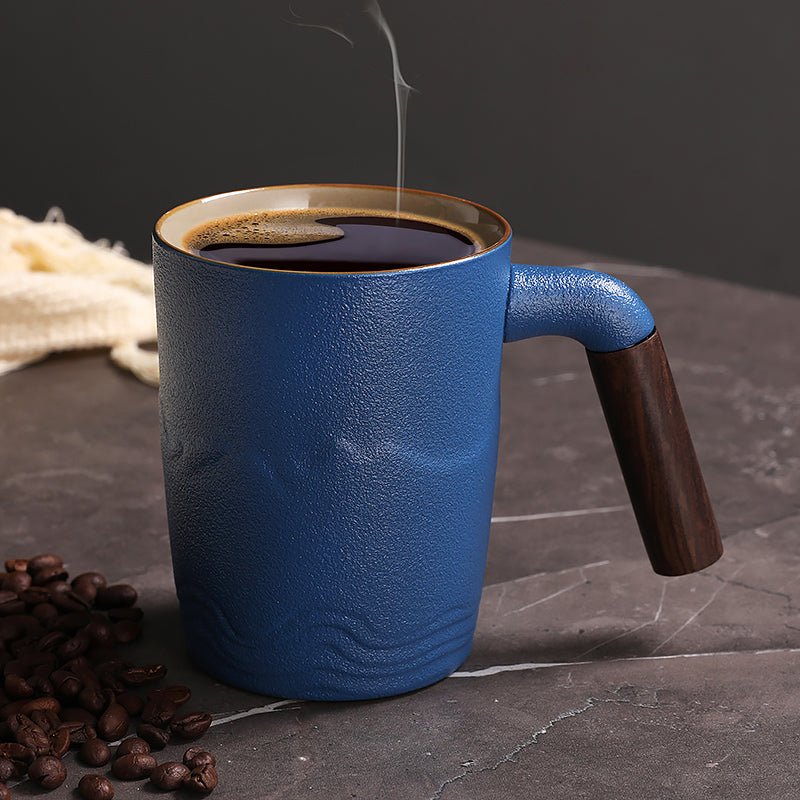
A taller mug can also be a better answer for a crowded shelf or a narrow coffee station. That is why a profile like the Landscape Tall Coffee Tea Mug makes sense if you want more vertical presence without turning the mug into a wide bowl. It is not the best pick for everyone. If your espresso machine sits low, or your cabinet clearance is tight, a tall mug can be the wrong shape even if the capacity is right.
Which size fits home, office, and gifts?
The best coffee mug size changes with the setting. A mug used at home can be a little larger because storage is easier and refills are less annoying. An office mug has to share space with a keyboard, a notebook, and maybe a laptop charger. A gift mug needs to be versatile unless you already know the recipient likes a very specific style.
- Home: A mid-range mug is usually the safest choice for everyday drip coffee, French press pours, or tea. It feels generous without taking over the counter.
- Office: A stable mug with a moderate footprint works best on a crowded desk. It should fit beside a mouse pad without forcing you to move everything else.
- Gift: Choose a shape that looks good unboxed and feels balanced in one hand. Very large mugs are personal; they are not always the best universal gift.
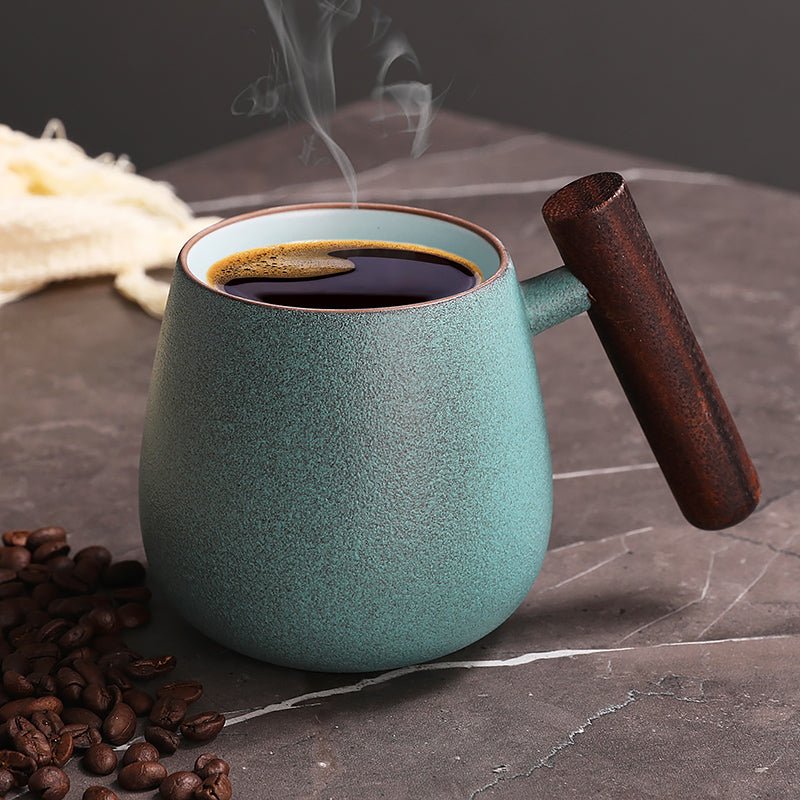
If you are comparing actual products rather than abstract size ranges, start with the Great Mountain Coffee Tea Mug and the Emerald Coffee Tea Mug. For buyers who prefer a taller silhouette, the Landscape Tall Coffee Tea Mug is the kind of shape we would check first when counter space matters.
If your cabinet is shallow, your hand is small, or you drink coffee slowly over an hour, an oversized mug may be a bad fit. If you want a big latte bowl for weekend use, a small 8 oz cup will feel cramped from the first pour. That is the trade-off, and it is worth deciding before checkout.
What details separate a good mug from a frustrating one?
Size is only one part of the buying decision. The small details decide whether the mug feels well made or annoying every morning. We pay attention to the rim, the foot ring, and the handle because those are the parts that get touched every single day.
- Rim shape: A smooth, even rim is more comfortable to sip from than a thick or uneven lip.
- Wall thickness: Thicker walls usually feel sturdier and can help the mug hold heat, but they also make the mug heavier.
- Foot ring: A clean, stable base matters on a desk, tray, or dishwasher rack. A mug that wobbles is annoying immediately.
- Glaze quality: We look for even coverage with no obvious pinholes, rough spots, or dull patches that suggest weak finishing.
- Handle comfort: The inside opening should let fingers slip through without scraping the mug wall.
Common defect modes are easy to miss in product photos: a rough foot ring that scratches surfaces, hairline cracks from thermal shock, glaze pinholes that collect stains over time, and a handle that feels sharp where it meets the body. Those are not cosmetic details only. They affect how long the mug stays pleasant to use.
Care also matters. If the listing says dishwasher-safe, that usually helps with daily use, but we still recommend avoiding sudden temperature changes. Do not move a mug from very cold storage into boiling liquid without a pause. Even sturdy ceramic can be stressed by thermal shock over time. If you hand-wash, use a soft sponge and avoid abrasive scrubbers that can dull the glaze.
If you want a wider market benchmark on common capacities, the articles Average Coffee Mug Size: What Buyers Should Know Before Ordering and Best Ceramic Mug Size for a Small Coffee Corner are useful, especially if you are matching a mug to limited shelf space.
How do you compare mugs before adding one to the cart?
If you want to buy once and use the mug every day, compare the mug against the space it has to live in. That is the part people skip. A mug that is technically the right ounce size can still fail if it does not fit under the cabinet, beside the espresso machine, or in the dishwasher rack you already use.
- Measure the storage height. Check the shelf or cabinet clearance before choosing a tall mug.
- Think about the drink. Black coffee, cappuccino, latte, tea, and cocoa all ask for different headroom.
- Check the grip. Make sure your fingers fit the handle without touching the hot body of the mug.
- Look at the base. A wider base tends to feel more stable on smooth counters and office desks.
- Read the care details. Confirm whether the mug is dishwasher-safe, microwave-safe, or hand-wash only before you buy.
We also think the best purchase is the one that matches how you actually drink coffee, not how you imagine using it. If you finish a mug over fifteen minutes at your desk, a compact mid-size cup is often better than a large statement mug. If you refill twice before lunch, the larger option may be worth the extra cabinet space.
That is the practical approach we use in our store: choose the mug that fits your routine first, then let the design follow. The result is usually a mug you keep reaching for instead of one you only use when everything else is clean.
Frequently asked questions
What coffee mug size is best for everyday drip coffee?
For most people, a mid-range mug is the easiest daily choice. It leaves enough room for a normal drip coffee pour without feeling oversized on a desk or in the hand. If you add milk or creamer, lean toward the upper end of that middle range.
Is a 16 oz coffee mug too big?
Not automatically. A 16 oz mug works well if you drink large pours, latte-style drinks, or tea and cocoa. It is less ideal if you want a compact mug for small hands, tight shelves, or a quick black coffee.
Should I choose a tall mug or a wide mug?
Choose tall if you want a smaller footprint on the counter or shelf. Choose wide if you want a more open drinking feel and do not mind extra surface area. Tall mugs are not always better for low-clearance machines or shallow cabinets.
What should I check before buying a mug online?
Check capacity, overall shape, handle clearance, and the care instructions. If the listing does not mention dishwasher-safe or microwave-safe, do not assume it can handle both. We also look for notes on ceramic finish, because glaze quality and base stability affect long-term use.
What mug size works best if I want one cup for coffee and tea?
A versatile mid-size mug is usually the safest choice. It handles drip coffee well and still has enough room for tea without feeling cramped. If you want one mug for everything, avoid both the smallest espresso-style cups and the largest oversized mugs.
If you are ready to compare by shape instead of guessing by ounces, start with the all mugs collection and compare it against the Great Mountain Coffee Tea Mug, Emerald Coffee Tea Mug, and Landscape Tall Coffee Tea Mug. Use the checklist above, then pick the mug that fits your counter, your cabinet, and the way you actually drink coffee.
Read more
Latte Art Cup Buying Guide: Shape, Size, and Material
A latte art cup changes how the milk lands, how long the foam stays workable, and whether the drink feels balanced in the hand. This guide covers shape, size, material, care, and the trade-offs bet...
Read more
Standard Coffee Mug Dimensions: What Buyers Should Check
A standard coffee mug is more about fit than one fixed size. We break down the measurements that matter in real kitchens, offices, and gift orders so you can choose a mug that feels right, clears y...
Read more
Leave a comment
This site is protected by hCaptcha and the hCaptcha Privacy Policy and Terms of Service apply.