
Coffee Mug Gift Guide for Tea and Coffee Drinkers: What to Compare
Reading time: about 9 minutes
A customer stood at our counter last month with the same mug style in each hand and asked the question that starts half the gift conversations in our store: “He drinks dark roast every morning, she drinks green tea every afternoon — will one mug actually cover both?” It's a fair worry, and the numbers back it up. Coffee and tea together accounted for 20.1% of nonalcoholic beverage consumption by weight among U.S. adults age 20 and older in the CDC's August 2021–August 2023 survey window. A mug that serves both drinks becomes a daily object; one that serves a single drink gets demoted to the back of the cabinet. This coffee mug gift guide for tea and coffee drinkers covers the six comparisons we walk through with gift buyers before they commit — including the trade-offs most product listings leave out.
One mug for two drinks: the coffee-oil problem nobody warns you about
Coffee is oily. That's a virtue in the cup and a nuisance on the glaze. Over weeks of use, coffee oils settle into any texture the interior offers — matte patches, an unglazed rim, hairline crazing — and the next delicate white or green tea poured into that mug can pick up a stale edge. Tea drinkers notice it faster than coffee drinkers do, which is exactly why dual-use mugs get quietly abandoned.
“Can I just use one mug for my morning coffee and my afternoon green tea?” — a question we hear from gift buyers nearly every week.
Honest answer: it depends on the finish and the drink. Run these checks before you gift any dual-use mug:
- Interior finish. A smooth, fully glazed interior rinses clean of coffee oils; anything matte or textured inside holds residue.
- Their tea style. Black tea, chai, and most herbal blends shrug off faint coffee traces. Green and white teas broadcast them.
- The reality check. We know of no independent residue-transfer testing for most mugs on the market, ours included. This one comes down to finish quality and rinsing habits, not lab numbers.
If your giftee is a delicate-tea purist, gift a pair of mugs instead of one compromise and accept up front that the coffee mug and the tea mug will live separate lives. That's not a failure of the gift — it's the right answer.
Coffee mug gift guide for tea and coffee drinkers: capacity decides the gift
Capacity is where gift buyers misjudge most often. A traditional teacup runs small on purpose — 6 to 8 ounces suits repeated short steeps and tea that shouldn't sit cooling. A standard coffee pour and a generous western-style tea both land in the 12 to 16 ounce range, which is what most mixed drinkers ask us for. Buy too big and the tea goes cold halfway down. Buy too small and the coffee drinker feels shortchanged every morning.
| Sipper type | Practical capacity | Why it fits |
|---|---|---|
| Traditional tea drinker | 6–8 oz | Short pours, multiple steeps, nothing left cooling |
| Mixed coffee-and-tea drinker | 12–16 oz | Full coffee pour or a long tea without refilling |
| Large-pour coffee drinker | 16–20 oz | Covers big brews, though tea cools before the last sip |
| Commuter | 12–16 oz, lidded | Check base width against their car's cup holder |
Two details generic guides skip: stated capacity usually means brim-full, so a “16 oz” mug holds a 12 ounce pour with sane headroom; and a wide rounded body holds heat well while full but cools quickly past the halfway mark. One shape keeps showing up in our gift orders — the Round Coffee Tea Mug. Before assuming it covers the 12–16 ounce range, confirm the capacity on its current listing. Variants change, and we'd rather you trust the product page than anyone's memory, ours included.
Porcelain, stoneware, double-wall glass, or insulated: which material fits the sipper?
Material controls two things: how the drink tastes and how long it stays drinkable. A published review of hot-beverage research recommends serving at 130 to 160°F — hot enough to taste right, below scalding territory — and each material holds that window differently. We don't have independent lab data comparing them head to head, but the counter feedback in our store is consistent:
- Porcelain: non-porous and flavor-neutral, the safest pick for delicate teas. Trade-off: thinner walls shed heat faster than thick stoneware.
- Thick ceramic and stoneware: wall mass keeps coffee drinkable through a long morning. Trade-off: heavier in the hand, and glaze quality matters — see the safety note below.
- Double-wall glass: shows off the drink and stays cool outside. Trade-off: fragile, and usually the first casualty of a crowded dish rack.
- Ceramic-lined vacuum travel mugs: the commute answer, holding serving temperature for hours. Trade-off: no microwave, and lidded sipping mutes the aroma tea drinkers care about.
A safety note we give every handmade-pottery shopper: the FDA's action level for lead in ceramicware cups and mugs is 0.5 µg/ml of leaching solution, and lead in improperly manufactured traditional glazes can leach into food and drink. One published pilot study measured lead leaching from certain ceramic mugs at 0.2 to 8.6 µg/L into coffee and up to 1.6 µg/L into tea. That's not an indictment of artisan work — it's a reason to ask the maker whether the glaze is food-safe before gifting anything handmade or vintage for hot drinks. If you'd rather compare ready-made options by shape and glaze first, browse our unique coffee mugs collection and see the differences side by side.
Handles, lids, and infusers: the details that decide week-one usage
Handles are the most under-checked feature in gifting. Poor finger clearance gets a mug abandoned within a month, especially by anyone with larger hands or limited grip strength — a filled 16 ounce stoneware mug carries a pound and a half or more, and what looks charming on a shelf can feel exhausting at a desk. Left-handed sippers deserve a specific warning: plenty of lid designs assume right-handed sipping, so check which side the sip hole favors before buying any lidded mug.
Lids earn their keep at office desks — they keep dust out, double as a coaster, and buy a busy drinker twenty extra warm minutes. They're not universal, though. A loose-leaf tea drinker needs an infuser basket with real expansion room for the leaves to unfurl; a lid alone does nothing for them. And a wide-mouthed, lidless mug is the wrong gift for anyone whose drink shares a desk with a keyboard.
Which finishes survive the dishwasher — and which fade quietly by spring
Care instructions decide whether your gift looks new in June or tired by March. Three rules from years of customer follow-ups:
- Printed decals sit on top of the glaze and fade or crack after repeated dishwasher cycles; decoration fired into the glaze lasts far longer. If a listing doesn't say which method it uses, assume hand wash.
- Metallic accents mean hand washing, full stop. A gold or silver rim dulls in a dishwasher, and there's no undoing it.
- Matte glazes show coffee-oil rings that glossy ones hide. A baking soda paste lifts tea and coffee stains from either finish without scratching.
Glaze color also changes how the drink reads on a desk, which giftees notice more than buyers admit. Dark interiors hide stains; pale interiors show every one — which some tea drinkers actually prefer when judging steep strength.
Who the Round Coffee Tea Mug fits — and who should pick something else
Mapping mugs to real people is most of our job, so here's that exercise for the mug that keeps selling:
- Fits: the desk sipper who alternates between morning coffee and afternoon tea and wants one mug with character. A round interior has no corners where grounds and leaves catch, so rinsing between drinks takes seconds.
- Verify before checkout: exact capacity, body material, and dishwasher and microwave ratings — those details live on the current Round Coffee Tea Mug listing. We don't quote specs we haven't confirmed, and neither should you.
- Skip it if: your giftee steeps loose leaf and needs a built-in infuser, or commutes and needs a secure lid. In that case, use our collection to compare alternatives and confirm infuser or lid features on each listing before you buy — no single all-purpose mug covers every drinker, and pretending otherwise is how gifts get regifted.
The seven checks we run before wrapping any mug gift
Run any candidate through this list before you pay:
- Capacity matches their drinking style — and you know the real fill level, not just the brim number.
- The interior is smooth and fully glazed, especially if delicate teas are in the mix.
- Material suits the priority: porcelain for flavor, stoneware for heat, insulated for the commute.
- The handle clears their fingers, and the filled weight works for their grip.
- Care instructions match how they'll actually wash it — decals, metallics, and matte finishes all change the answer.
- Handmade or vintage? Food-safe glaze confirmed with the maker.
- Add a small loose-leaf sampler or a bag of beans so the gift works on day one.
Gifting a logo-printed or designer mug instead? Our guide to what to check before buying a Kate Spade coffee mug applies the same verification habit to branded ceramics. If a candidate passes all seven checks, it will earn counter space instead of cabinet space — start comparing in our unique coffee mugs collection, or pull one shortlisted mug and verify its listing line by line.
Frequently asked questions
Can you drink tea out of a coffee mug?
Yes — the glaze and material matter more than the label. Choose a smooth, fully glazed interior, rinse well after coffee, and give delicate green or white teas their own mug if the drinker is particular about flavor. Black tea drinkers rarely notice anything.
What size mug suits someone who drinks both coffee and tea?
For most mixed drinkers, 12 to 16 ounces is the practical range: enough for a full coffee pour or a generous western-style tea. Traditional tea drinkers often prefer 6 to 8 ounce cups for repeated steeps, so match the size to how they actually drink rather than to the shelf display.
Are handmade ceramic mugs safe for hot drinks?
Ask the maker directly whether the glaze is food-safe and fired to specification. The FDA's action level for lead in ceramicware cups and mugs is 0.5 µg/ml of leaching solution, and improperly made traditional glazes can leach lead into hot liquids. Vintage pottery without documentation is better displayed than filled.
What does this coffee mug gift guide for tea and coffee drinkers say about personalization?
Treat it like any printed decoration: ask whether the design is fired into the glaze or applied as a surface decal, because decals fade over repeated dishwasher cycles. Fired-in or etched personalization lasts longer, and metallic add-ons should be hand washed no matter how they were applied.
Is a lidded travel mug a good gift for a tea drinker?
For commutes, yes — a ceramic-lined vacuum mug holds serving temperature for hours and protects car interiors. For slow sipping at home, no: lidded sipping mutes the aroma that carries much of tea's flavor, and vacuum mugs can't go in the microwave. Many dedicated tea drinkers end up owning both.
More from our blog
Read more
Best Mugs for Tea Drinkers: 7 Things Worth Comparing
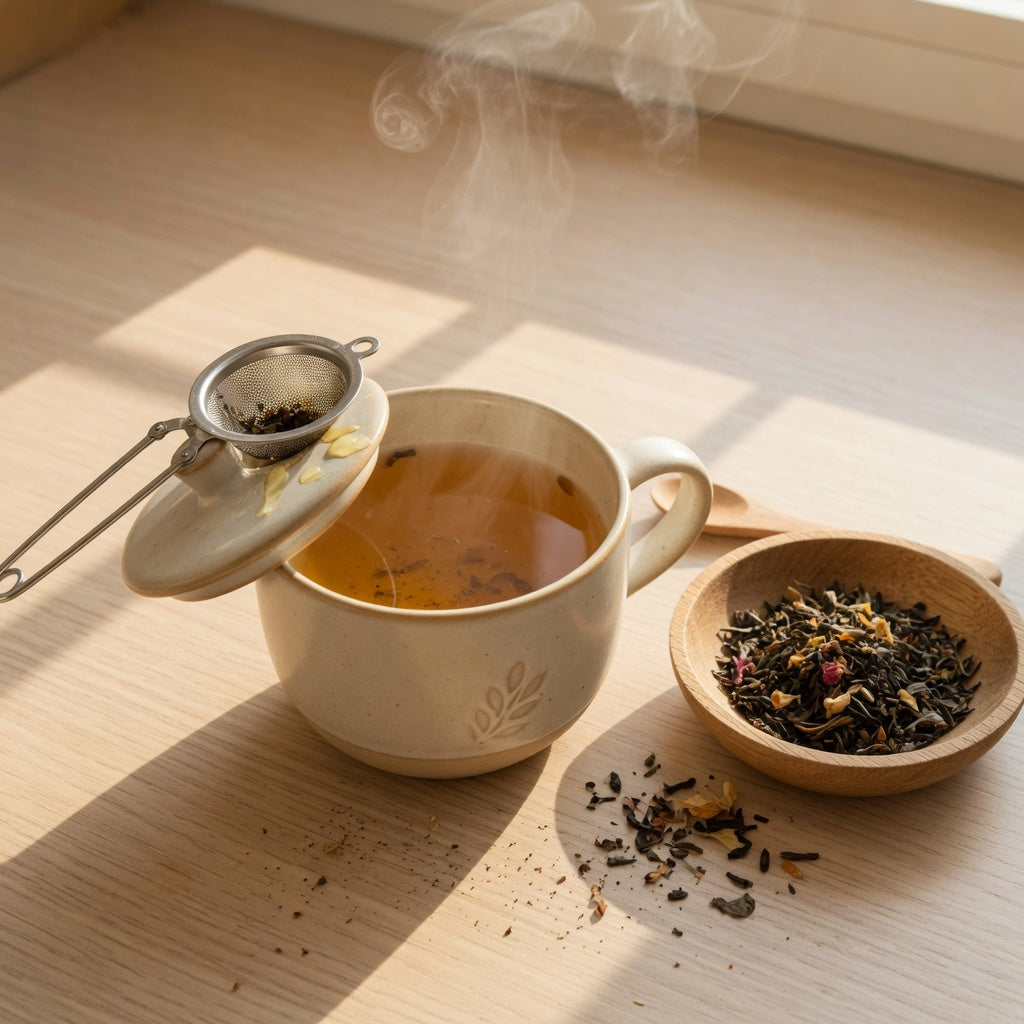
Tea buyers weigh different variables than coffee buyers: heat through a long sitting, a light interior to judge strength, handle fit, and glaze safety. We break down material, capacity, infusers, a...
Read more
Retro Coffee Mugs for Gifts: 6 Things Buyers Should Compare
Retro coffee mugs for gifts come down to six real decisions: vintage versus new, lead safety on older pieces, matching the era to the person, capacity and handle fit, print durability, and how to b...
Read more
Leave a comment
This site is protected by hCaptcha and the hCaptcha Privacy Policy and Terms of Service apply.