
Coffee Mug Comparison: Materials, Insulation, Size and Durability
Reading time: about 7 minutes
How should you compare coffee mug materials?
We handle these products every day at our store, so we see exactly what happens when buyers pick one mug over another based on limited details. A coffee mug comparison starts with the material because it determines how the mug feels in your hand, how it performs with temperature, and how long it lasts before you need a replacement.
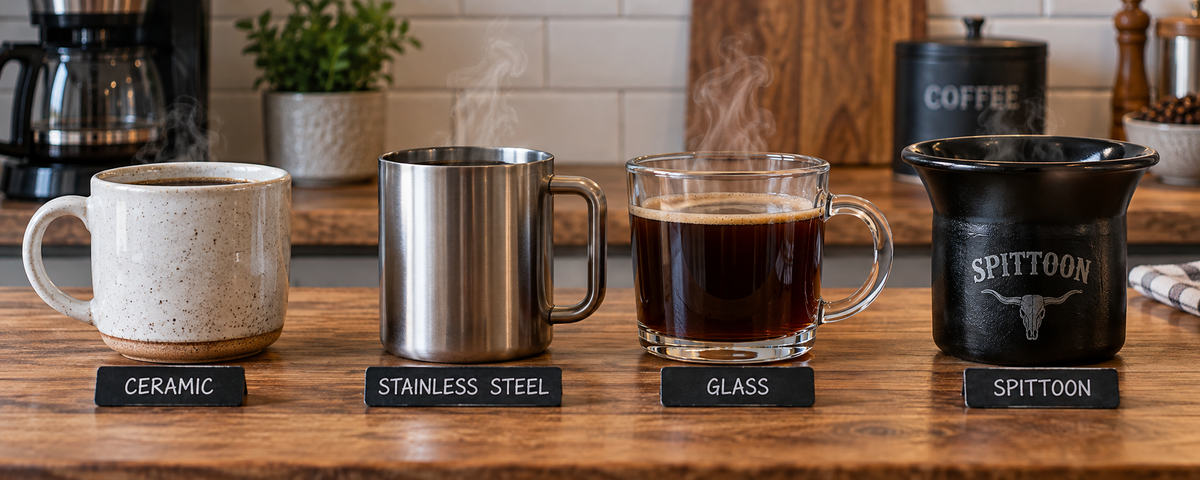
Ceramic mugs give a warm, comfortable feel and look premium on the counter, but they can develop small cracks or absorb smells if not dried properly after use. Porcelain adds extra strength and resists chips better than basic ceramic, making it reliable for daily family use. Stainless steel excels at keeping drinks hot or cold thanks to its insulating properties, though it can feel colder to the touch and sometimes picks up condensation. Glass lets you watch the color of your coffee change, but it is more prone to breakage and not suitable for boiling-hot drinks.
Trade-offs are important to understand. A ceramic mug might feel nicer for casual sipping but risks damage in the sink or dishwasher. Stainless steel lasts longer but adds weight when carrying it across the room. We often recommend testing the handle construction and overall weight in person if possible. For office desks, we lean toward stainless or sturdy ceramic that stays put without sliding. If you need something for gifting, porcelain or unique ceramic styles stand out.
In our experience, buyers who spend time on this material comparison end up happier with their choice and less likely to replace the mug within a year.
What insulation options should you compare for temperature retention?
Insulation separates good mugs from the rest during a coffee mug comparison because it directly affects whether your coffee stays hot through a long morning or gets warm enough for iced tea later. Single-wall designs cool off faster and suit room-temperature drinks, while double-wall construction creates a barrier that slows heat transfer.
Stainless steel double-wall mugs are the most common choice for hot coffee because they maintain temperature longer without burning your fingers. Vacuum insulation adds even better retention but makes the mug heavier and sometimes more expensive. Glass options exist but are rarer and usually not as effective for extreme temperatures. The key variable is seal quality—poor seals lead to condensation or quick cooling no matter the material.
We advise buyers to consider their main drink type first. If you prefer piping-hot coffee all day at your desk, insulation becomes essential. For iced coffee or tea, look for designs that reduce exterior condensation to avoid wet desks. Not every mug claims full insulation; some advertise it while others rely on thick walls alone. Always check care instructions because certain seals can degrade after repeated dishwasher cycles.
Our Spittoon Coffee Tea Mug offers a versatile option for both drinks without claiming advanced insulation, so it suits moderate needs but may require more frequent refills compared to heavily insulated alternatives. View the Spittoon Coffee Tea Mug.
Capacity and size: why this matters in a coffee mug comparison
Capacity and shape play a bigger role than most buyers realize when comparing coffee mugs. A 12 oz mug feels different depending on whether it is tall and narrow for easy one-handed sipping or wider and rounder for more liquid volume. We see this difference affect everything from office desk space to family sharing needs.
In a coffee mug comparison, factor in if you drink one large cup or multiple smaller ones. Extra capacity can mean fewer trips to the kitchen during work hours, but a too-large mug might feel overwhelming on a small counter. Height also affects stability—tall designs can tip easier than shorter ones. We recommend measuring your typical drink volume against your preferred sitting style.
Ball handled designs add ergonomic value for those who want secure grip without bulk. The right size and shape turn a good mug into one you reach for automatically.
Durability and care: common issues buyers encounter in coffee mug comparison
Durability separates mugs that survive months from those that fail after a few drops. Ceramic can crack along the rim from thermal shock or handle stress, while stainless steel handles sometimes loosen over time and glass breaks easily if knocked off the counter.
We test these products ourselves, so we know what happens after repeated use in sinks, dishwashers, and cabinets. Ceramic requires careful drying to prevent mold and prefers hand washing for delicate patterns. Stainless steel often goes in the dishwasher but benefits from occasional vinegar soaks to remove mineral buildup. Glass finishes need special care to avoid scratches that weaken the material.
In our experience, buyers who compare care instructions before buying avoid frustration later. A mug that works well until it develops a hairline crack frustrates more than one that simply looks worn. We always suggest choosing the material that matches your cleaning habits and storage conditions.
- Check for handle strength after washing
- Test for cracks after dishwasher cycles
- Inspect seals on insulated models
Smart coffee mugs with sensors and apps: when they fit in a coffee mug comparison
Smart mugs with temperature sensors and companion apps represent the latest category in coffee mug comparisons. They monitor your drinking temperature or sync with apps to log habits, but they come with added complexity like charging needs and higher costs.
Traditional materials still outperform in reliability for basic use. Smart features might appeal if you track intake or want reminders, yet they do not replace the need for proper insulation or capacity matching. We acknowledge limitations—battery life can fail during travel, and some models require constant connectivity that feels unnecessary for simple coffee breaks.
Environmental factors also enter the conversation. Recycled stainless steel options reduce waste compared to single-use plastics, though we focus on current listings rather than unverified claims. For most shoppers, a well-made ceramic or stainless steel mug from everyday materials meets daily needs without the tech layer.
Buying guide: Top recommendations by category after a coffee mug comparison
After weighing materials, insulation, size, and durability, we guide customers into clear categories. For office use, sturdy stainless steel or large ceramic with solid handles wins because it survives busy desks and keeps coffee hot through meetings.
For home kitchens, porcelain or well-finished ceramic suits casual use and counter display. Gifting favors unique designs with good grip and stable bases. Our unique coffee mugs collection shows styles that stand out for gifting.
Our Spittoon Coffee Tea Mug serves as a versatile recommendation for buyers who want one mug to handle both coffee and tea without extremes in insulation or size. Check the Spittoon Coffee Tea Mug details.
For broader selection and style options, explore our unique coffee mugs collection at https://coffeifymug.com/collections/unique-coffee-mugs. See our Spittoon Coffee Tea Mug.
The following table summarizes key variables buyers compare most often:
| Material | Best For | Key Trade-offs |
|---|---|---|
| Ceramic | Casual daily sipping, aesthetic appeal | Chipping risk, moderate heat retention |
| Stainless Steel | Insulated drinks, long-term durability | Can feel cold, heavier to carry |
| Glass | Visual drink enjoyment, iced options | Fragile, limited for hot beverages |
| Porcelain | Frequent use, chip resistance | Less common insulation options |
Frequently asked questions
How does a coffee mug comparison help when choosing the right mug?
A coffee mug comparison forces buyers to weigh materials, insulation, capacity, and durability against their actual routine. We see customers avoid regret by matching these factors to office desks, kitchen counters, or gifting needs. The process takes minutes but prevents buying the wrong mug months later.
What insulation options really matter in a coffee mug comparison?
Double-wall vacuum insulation keeps drinks hotter or colder longer but adds weight and cost. Single-wall ceramic cools faster but feels lighter and more comfortable for some. We recommend double-wall stainless for all-day hot coffee while noting that iced tea might need different cooling performance. Check seals on each listing to verify retention claims.
Is capacity the most important variable when comparing coffee mugs?
Capacity interacts with shape and handle comfort to determine daily satisfaction. A 12 oz tall mug suits single servings while larger round styles work for sharing. We always ask about your typical drink volume and desk space before recommending options. The right size prevents refills during busy mornings.
How do you compare durability and care between different coffee mugs?
Durability depends on handle construction, thermal shock resistance, and cleaning ease. Ceramic needs careful drying to avoid cracks while stainless steel handles can loosen over time. We advise matching care instructions to your sink and dishwasher habits. A mug that survives dishwasher cycles without staining lasts longer overall.
Should I consider smart coffee mugs with temperature sensors in my coffee mug comparison?
Smart mugs with apps and sensors track habits and maintain temperatures automatically, but they add complexity and cost. Traditional insulated options from our collection often provide better reliability for basic needs. We suggest them only if you specifically want tracking features, otherwise a standard ceramic or stainless mug meets most buyer requirements without extra maintenance.
More from our blog
Read more

Mountain Sea Mug vs Ceramic Mug for Tea: Heat Retention Comparison
See why Mountain Sea mugs outperform ceramic ones in tea heat retention, with real insights on materials, weight, and care from our store experience.
Read more
Ceramic Spittoon Mug for Tea Lovers: What Buyers Should Compare
A ceramic spittoon mug for tea lovers brings practical hygiene to your tea rituals by handling saliva disposal right in the mug. Compare materials, compartment design, and care tips to pick the one...
Read more
Leave a comment
This site is protected by hCaptcha and the hCaptcha Privacy Policy and Terms of Service apply.