
Clay Pottery Coffee Mugs: Everyday Rotation Practical Purchase Checklist
Reading time: about 9 minutes
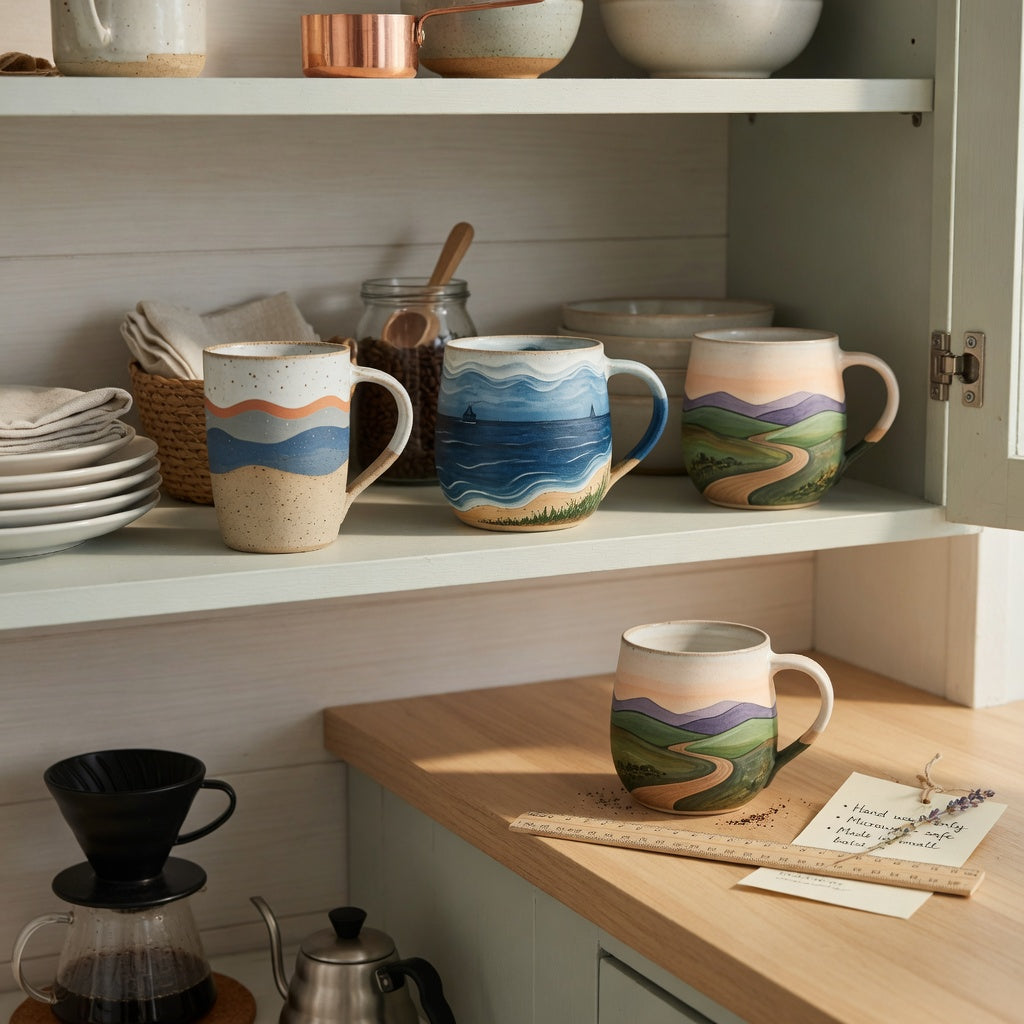
Open the cabinet above the coffee maker at 7 a.m. and the same two mugs are usually within reach. The taller one behind them may be attractive, but it gets ignored because its handle catches the shelf or it feels awkward during the walk to a desk. This clay pottery coffee mugs everyday mug rotation practical purchase checklist starts with that ordinary moment: a daily mug has to work through the full cycle of storage, filling, carrying, sipping, washing, and putting away.
In our store, we separate current product facts from general selection advice. A product page should be the source for its listed material, dimensions, capacity, and care instructions. Our role here is to show you how those details affect real use and how to treat anything not listed as an open question rather than filling the gap with a guess.
How many mugs does your wash schedule actually support?
Start with frequency, not a preset bundle size. Multiply the number of mug drinks your household makes each day by the number of days between washes. That gives you a planning baseline. Add a spare only if one mug regularly stays at an office desk, sits in the sink, or is reserved for guests.
| Daily routine | Planning baseline | Buying implication |
|---|---|---|
| One person, one drink, hand-washing the same day | One mug in use and one clean option | Compare a small rotation before buying a larger set |
| Two people, one mug each, washing every second day | Four mug uses between washes | Check that four mugs fit the accessible shelf space |
| Kitchen and home-office use | Household baseline plus the mug left at the desk | Give the desk mug its own footprint and care check |
This calculation is a starting point, not a rule. Reusing a promptly rinsed mug lowers the number you need. Serving tea to guests raises it. The useful question is how many pieces can stay clean and reachable without creating a crowded second row that no one uses.
Shelf depth, clear height, and handle reach: will the mug fit?
Measure the space before comparing artwork. Record the clear height below the shelf above, the depth from the cabinet back to the inside face of the closed door, and the width available for each mug with its handle included. A product photograph is not a reliable ruler. Use listed measurements where available, and treat an omitted measurement as unknown.
- For closed cabinets: check body diameter, total width including the handle, and clear height.
- For wall hooks: compare the handle opening with the hook thickness and curve.
- For open shelves: leave enough room to grip the handle without nudging the mug beside it.
- For desk storage: compare the base diameter with the coaster and the clear area beside your keyboard.
Do not assume pottery mugs are stackable. Sculpted handles, foot rings, and nonuniform profiles can make stacking unstable even when two pieces appear compatible in a photo. If compact nesting is essential, a thin, uniform ceramic set may serve a small kitchen better than a more individual pottery rotation.
How do handle clearance, rim shape, and base stability feel?
A current favorite mug is your best reference. Measure its height, outside diameter, handle opening, and base. Note whether you hold it with one, two, or three fingers. If a candidate page lists comparable measurements, you can make a more useful online comparison than you can from appearance alone.
After delivery, follow the store's current return instructions before putting the mug into full use. Inspect the rim for chips, look closely at both handle joins for hairline shipping damage, and place the base on a flat counter to check for rocking. Run a fingertip around the foot ring as well. A rough unglazed point can mark a wood desk even if the mug otherwise sits level, so it may require a coaster.
Rim preference is personal but noticeable during repeated use. A thicker rim can feel substantial for slow coffee or tea, while a finer rim may suit someone who takes quick sips or drinks iced beverages. For a mug carried between rooms, grip and balance deserve extra attention. Fill it to your normal level and hold it for 30 seconds; pressure against the knuckles or a forward-pulling balance will not become more convenient with repetition.
Which CoffeifyMug design fits the job you want it to do?
The product names and current listing images can guide the visual side of the decision. They should not be used to assume that different mugs share a capacity, material specification, care method, or storage footprint. Compare each current page on its own terms.
- You want one design that combines mountain and sea imagery: start with the Mountain Sea Coffee Tea Mug. It is the relevant visual match for that combined theme. Next, record whatever material, size, capacity, and care information is currently listed before judging its daily fit.
- You prefer a mountain-led scene: compare the Great Mountain Coffee Tea Mug. Choose it for the subject shown on the page, then check its measurements against the mug and shelf you already use.
- You want broader landscape artwork: inspect the Landscape Coffee Tea Mug. It belongs on the shortlist when a scenic design matters, but the current listing still needs to confirm the practical details your routine requires.
- Shape or storage fit matters more than a particular scene: compare more silhouettes in our unique coffee mugs collection. Shortlist by dimensions and care first, then use the artwork to make the final choice.
This selection order prevents a common buying mistake: choosing three coordinated designs and only later discovering that one unanswered specification affects where or how a mug can be used. If a detail that controls your decision is not shown, ask our store before ordering rather than inferring it from the image.
How should you use the clay pottery coffee mugs everyday mug rotation practical purchase checklist?
Run the clay pottery coffee mugs everyday mug rotation practical purchase checklist in the same order that you use the mug. That keeps visible design from outweighing a storage, grip, or care issue that will affect every cup.
- Count daily use: note the number of drinks and days between washing cycles.
- Read the material wording: do not assume that clay, stoneware, earthenware, porcelain, and general ceramic labels are interchangeable. Use the exact description on the current product page.
- Confirm capacity: compare the listed volume with the mug that already gives you the right coffee or tea pour.
- Measure storage: check mug height, body diameter, handle reach, and the cabinet's usable depth.
- Match your grip: compare the handle opening with your preferred number of fingers and consider the balance of a full cup.
- Review the drinking edge: decide whether the visible rim profile suits hot coffee, tea, or iced drinks.
- Check the base: prioritize a level footprint for counters and desks, and plan on a coaster if the foot is rough.
- Verify care: look for explicit dishwasher and microwave guidance instead of assuming those uses are permitted.
- Plan the arrival check: inspect the rim, handle joins, glaze, and foot promptly, especially when the mug is a gift.
An unknown is not automatically a defect or a reason to reject a mug. It is an unresolved purchase condition. Resolve the conditions that affect your routine before checkout, particularly capacity, dimensions, and care compatibility.
Which care routine will still happen on a rushed weekday?
Care instructions vary by product, finish, and decoration, so follow the current listing for the mug you select. If a page does not explicitly state that a mug is dishwasher-safe or microwave-safe, do not turn that silence into permission. Ask for clarification or choose a product whose care guidance matches your routine.
- Let a very hot mug cool before exposing it to a sudden cold rinse or other abrupt temperature change.
- Use a nonabrasive sponge on decorated or glazed surfaces unless the product instructions say otherwise.
- Dry the foot ring before returning the mug to a shelf, hook, or stack.
- If dishwasher use is expressly allowed, load the mug where it will not knock against heavier dishes during the cycle.
Frequent machine washing is a real purchase variable, not a minor afterthought. If every breakfast mug must enter a heavy dishwasher cycle and the listing does not confirm that use, a uniform commercial ceramic mug with explicit machine-care instructions is the more practical choice.
Who should choose a lighter, more uniform mug instead?
Clay pottery is not the strongest fit for every rotation. Consider another mug style if your cabinet requires tight nesting, you need a standard commuter lid, you carry the mug on public transport, or every piece must have identical dimensions and finish. A lightweight, replaceable set may also make more sense in a high-turnover shared office kitchen.
Pottery is best considered by shoppers who accept a potentially larger storage footprint and are willing to verify care instructions. Its visual character should be the deciding advantage only after the mug passes the practical checks.
Frequently asked questions
How do I use the clay pottery coffee mugs everyday mug rotation practical purchase checklist?
Begin with drinks per day and the time between washes, then measure the shelf and a mug you already enjoy using. Compare each candidate's listed material, capacity, dimensions, and care instructions with those notes. Treat missing decision-critical information as a question for the store, not as permission to assume.
Do the Mountain Sea, Great Mountain, and Landscape mugs have the same size?
Do not assume that from their names, themes, or photographs. Review the current dimensions and capacity shown on each linked product page. If comparable measurements are not listed, ask us before ordering a coordinated rotation.
How many clay pottery mugs should one person keep in rotation?
Multiply your mug drinks per day by the number of days between washes. Someone who washes after each use may need only a small rotation, while a mug left at an office or a two-day dishwasher schedule increases the baseline. Add variety only after confirming the pieces have accessible storage space.
Can I put a clay pottery coffee mug in the dishwasher or microwave?
Only follow the care guidance stated for that specific product. Clay pottery is a broad category, and the body, glaze, decoration, and construction can differ from one mug to another. If dishwasher or microwave compatibility is not stated, confirm it with the store before using that appliance.
Which CoffeifyMug design should I compare first?
Start with the subject you want to see most often: Mountain Sea for combined coastal and mountain imagery, Great Mountain for a mountain-focused design, or Landscape for a wider scenic theme. Then let capacity, measurements, care, and handle fit determine which candidate belongs in daily use.
Measure one mug that already earns a front-row spot, write down your wash interval and cabinet limits, and compare those notes with two or three candidates in the full unique coffee mug collection. Buy only after the practical details are confirmed and the remaining differences are the visual ones you actually want to rotate.
More from our blog
Read more

Cute Ceramic Coffee Mugs: Buying Checklist for Home Coffee Stations
Measure the full mug footprint, brewer clearance, working capacity, handle comfort, and care needs before buying. This checklist maps CoffeifyMug's Handbag, Pleated, and Gradient designs to compact...
Read more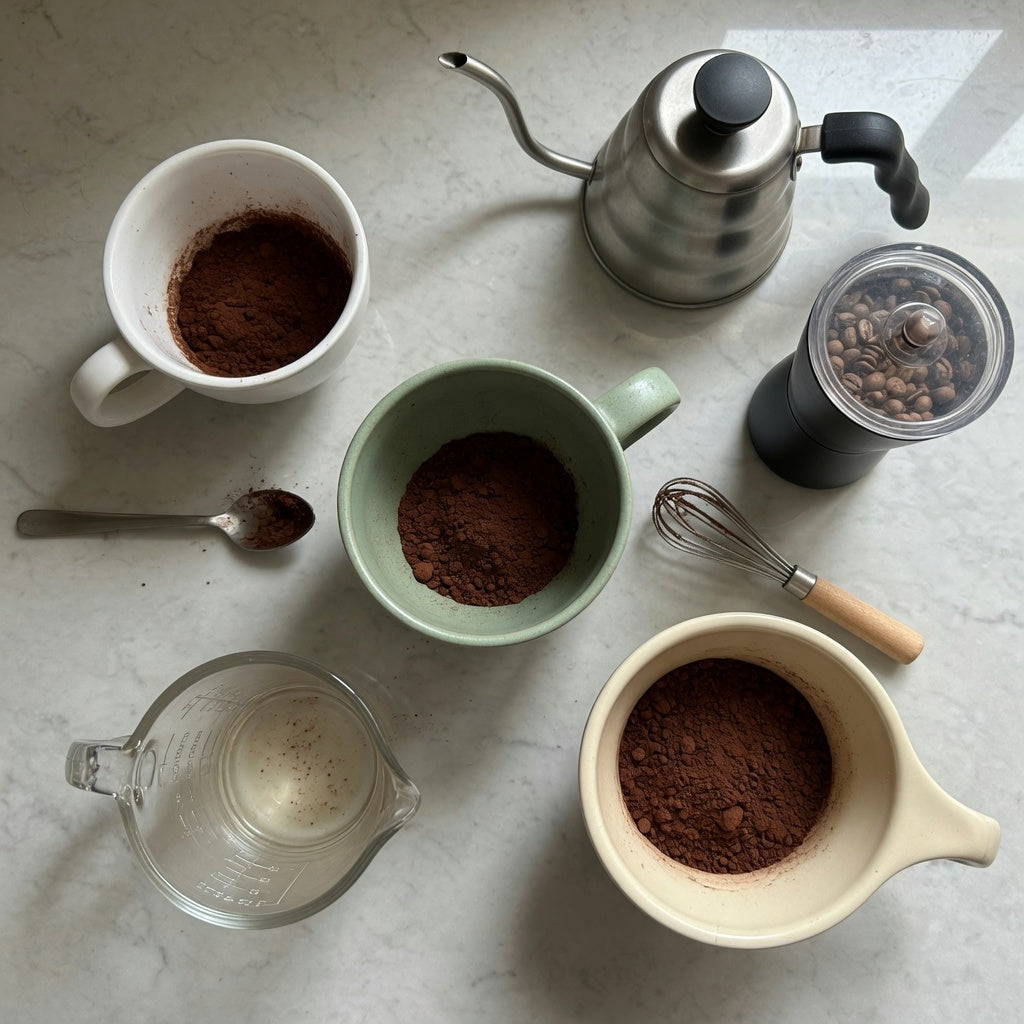
Cacao Cup Home Coffee Station Practical Purchase Checklist
A counter-first comparison of CoffeifyMug's 250 ml Ball Handle, 390 ml Round, and 400 ml Spittoon cups. Measure your recipe, station space, mixing tools, and care requirements before choosing.
Read more
Leave a comment
This site is protected by hCaptcha and the hCaptcha Privacy Policy and Terms of Service apply.