
Ceramic Sculptural Mug Everyday Mug Rotation Product Shortlist Guide
Reading time: about 10 minutes
A sculptural mug can match your usual drink volume and still end up at the back of the cupboard because its outline catches neighboring cups or requires more room than expected. We see the buying decision change once a shopper stops looking only at the front-facing product image and asks how the mug will move from shelf to kettle to desk. This ceramic sculptural mug everyday mug rotation product shortlist guide compares three options using the verified details that matter most for repeated use: ceramic construction, listed capacity, and three-dimensional form.
In our store, we work through a shortlist in a practical order: pour size first, storage route second, and sculptural preference third. That process helps prevent a visually interesting mug from becoming an occasional display piece when the buyer intended to use it every morning. We are focusing on physical form rather than printed surface artwork, and we are not assigning unlisted durability, production, or appliance-safety claims to any mug.
What does this ceramic sculptural mug everyday mug rotation product shortlist guide rule out?
An everyday rotation works best when every mug has a repeatable job. One may hold the first large coffee of the day, another may suit a smaller afternoon tea, and a third may be the piece kept on an office desk. A mug should not make the shortlist solely because its shape looks unusual in a product photo.
- Choose by finished drink volume: Measure the coffee, tea, milk, or ice you normally put in the mug rather than estimating from the brewing method.
- Check the storage route: Consider the shelf opening, cabinet door, neighboring handles, and the room required to lift the mug without striking the shelf above.
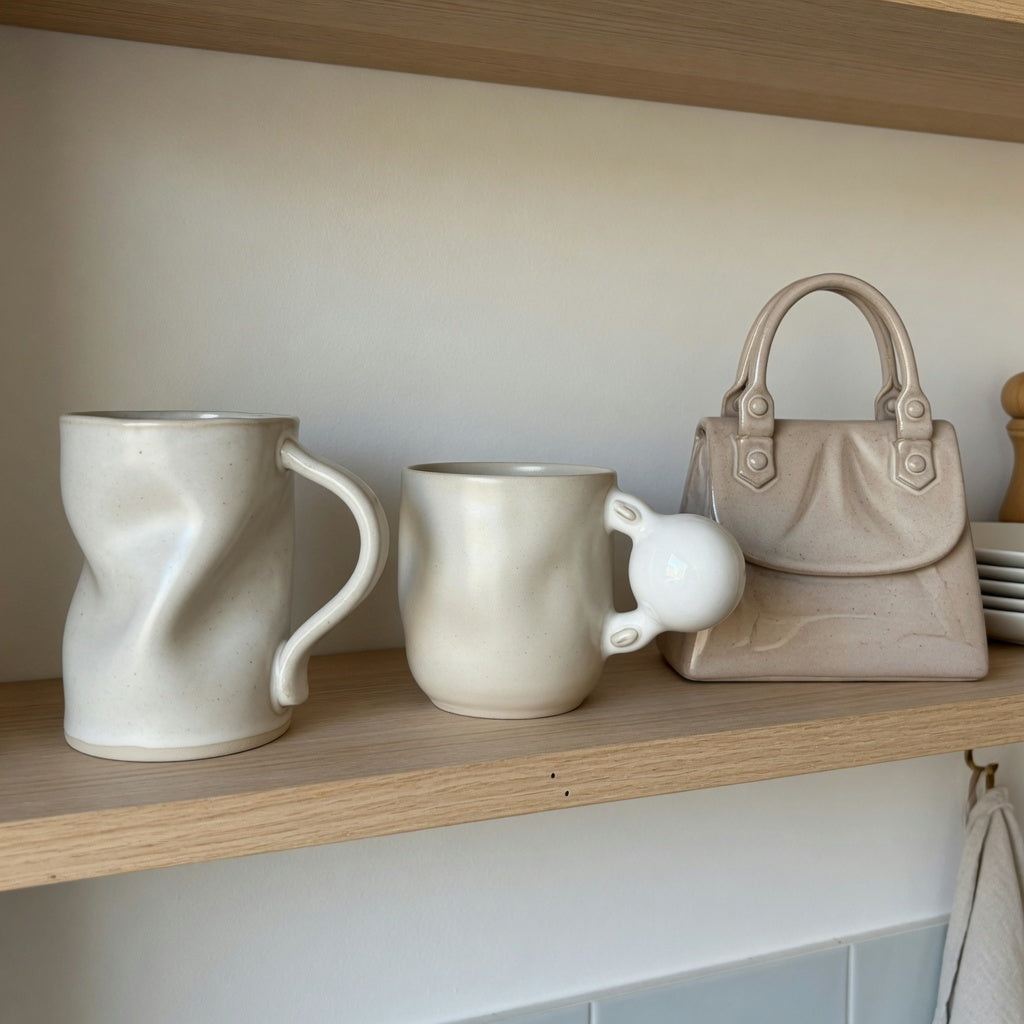
- Decide where the sculpture belongs: The Flow places the visual emphasis on body curves, the Ball Handle concentrates it in a rounded handle, and the Handbag uses a purse-shaped overall silhouette.
- Rule out undocumented requirements: If stacking, microwave use, or dishwasher cleaning is essential, verify that feature on the current product page or care information before ordering.
The verified catalog facts supplied for this comparison do not include exterior dimensions. We therefore will not claim that a mug clears a particular shelf depth or cabinet height. Capacity can narrow the options, but only current product measurements and your own available space can confirm the final fit.
Which capacity matches the drink you actually finish?
The three mugs cover a useful spread from 250 ml to 400 ml. Listed capacity is not the same as a comfortable fill line: most people leave some room below the rim, especially when walking from the kitchen to a desk. To check your requirement, fill your current mug to its normal level with water and transfer that water to a measuring jug. Include milk or the space taken by ice if those are part of your usual drink.
| Mug | Listed capacity | Three-dimensional feature | Best starting scenario | Reason to skip |
|---|---|---|---|---|
| The Flow | 400 ml | Sculptural curves | Your usual drink is the largest in this shortlist | You make short pours or have restricted storage |
| Ball Handle | 250 ml | Rounded sculptural handle | You prefer smaller servings or regular refills | Your finished drink regularly needs more capacity |
| Handbag | 310 ml | Purse-shaped silhouette | You want a middle capacity with a distinct profile | You need a uniform or documented stackable shape |
Use this ceramic sculptural mug everyday mug rotation product shortlist guide as a first-pass filter, not as a substitute for checking the current listing. Your normal fill line and the mug's exterior footprint are more useful than choosing a capacity because it sounds standard.
Is The Flow 400 ml suitable for a larger daily pour?
Reader situation: Your current mug is usually filled toward the larger end of this three-product range, and smaller cups force an extra trip to the kitchen. The The Flow 400 ml sculptural mug is the largest-capacity option here. Its defining feature is a body formed with sculptural curves, so the shape remains visible from several angles rather than depending on surface artwork.
Why it fits: Choose The Flow when a 250 ml or 310 ml mug would not cover your normal finished drink and you want the mug body itself to provide the visual interest. It is the clearest candidate for a longer coffee or tea session among these three listed capacities.
Why to skip it: Do not select it simply because larger sounds more versatile. If your usual serving is modest, extra internal volume may go unused. A 400 ml capacity also does not reveal the exterior width or depth of the curved form, so shoppers with tight shelves should confirm the current product dimensions before treating it as an everyday option.
Does the Ball Handle 250 ml fit smaller pours and frequent refills?
Reader situation: You make a smaller drink, refill by choice, or want the lowest listed capacity in this shortlist. The Ball Handle 250 ml mug places its sculptural feature in the rounded handle rather than relying only on the vessel body. That makes it relevant to shoppers who want the form to be most noticeable at the point where they pick up the mug.
Why it fits: The 250 ml capacity is the practical match when your measured serving remains below the capacity of the two larger options. It can also make sense in a rotation where a smaller afternoon drink has a different role from the main morning mug.
Why to skip it: A rounded handle description does not guarantee a particular finger clearance or grip preference. Compare the product images and any current dimensions with the way you hold a mug. Skip this capacity if coffee, tea, milk, or ice routinely takes your finished drink beyond the available volume; repeated overfilling is a reliable sign that the wrong size entered the rotation.
Who should shortlist the Handbag 310 ml silhouette?
Reader situation: You want a capacity between the other two options and a silhouette that reads as an object even when viewed across an open kitchen shelf. The Handbag 310 ml sculptural mug uses a purse-shaped profile as its defining three-dimensional feature. The 310 ml listing places it between the Ball Handle and The Flow for drink volume.
Why it fits: Choose the Handbag when your measured serving suits a middle capacity and the overall outline matters more to you than a printed motif. It is also a direct gift candidate for someone who has specifically asked for a purse-shaped mug, provided the recipient's drink size and storage setup are known.
Why to skip it: This is not the automatic choice for a cupboard built around uniform cylinders or tightly organized stacks. A distinctive silhouette can demand a different storage position, and stackability is not part of the verified facts used for this article. It is also a poor match for a recipient who prefers understated drinkware or primarily chooses mugs by surface artwork.
Which two-mug rotation avoids duplicate roles?
Buying all three is not necessary. A more practical rotation gives each mug a reason to leave the shelf. We use the following scenario map when helping shoppers reduce a longer list:
- One mug for one consistent serving: Match your measured fill line to the closest suitable capacity, then choose the form you want to handle and see every day.
- Small and large drink rotation: Pair the 250 ml Ball Handle with the 400 ml Flow when you have clearly different short-pour and long-pour routines.
- Moderate drink plus capacity contrast: Start with the 310 ml Handbag, then add either the Ball Handle or The Flow only if a second recurring drink needs a different volume.
- Form-focused open-shelf rotation: Choose two different sculptural features, but confirm that both footprints can sit side by side and that either mug can be removed without moving the other.
- Three-mug rotation: Keep all three only when 250 ml, 310 ml, and 400 ml each correspond to a real use case and the three silhouettes have assigned storage positions.
This approach also exposes when a conventional mug would be the better purchase. If you need identical footprints, proven stackability, or one standard capacity for every household member, a simpler straight-sided set may suit the routine better than a group chosen for sculptural variety.
How should you test shelf clearance, care, and arrival condition?
A few minutes of checking before checkout can prevent most fit mistakes. These steps are especially useful for sculptural forms because capacity alone does not describe their outside geometry.
- Measure the normal drink: Record the finished volume, including milk or ice, and leave the amount of rim clearance you prefer while carrying the mug.
- Measure the assigned storage spot: Note usable width, depth, and height rather than the cabinet's total dimensions. Account for hinges, shelf lips, doors, and neighboring mug handles.
- Trace the retrieval path: Make sure the mug can be lifted and turned without contacting the shelf above or requiring another mug to be removed first. Daily friction is often what pushes an otherwise appealing piece out of rotation.
- Verify the care route: Ceramic material alone does not confirm microwave or dishwasher compatibility. Check the current product page, packaging, or care instructions before the first appliance use. We do not recommend using a dishwasher cycle as an informal compatibility test.
- Inspect before use: At unboxing, check the rim, base, sculptural surfaces, and any handle-to-body junction for visible chips, hairline cracks, or rough damage. Place the empty mug on a flat, dry counter and look for unexpected rocking. Set it aside and contact our store before washing or using it if something appears damaged.
If hand washing is specified, leave enough room in the sink to clean the mug without knocking its projecting form against cookware or the tap. Use the care method stated for the product rather than assuming that every ceramic mug should be treated the same way.
Frequently asked questions
Can a ceramic sculptural mug everyday mug rotation product shortlist guide tell me which mug will fit my shelf?
It can narrow the options by capacity and form, but it cannot replace exterior measurements. Measure the actual shelf opening and retrieval path, then compare those figures with the current product listing. Do not infer the footprint from the 250 ml, 310 ml, or 400 ml capacity alone.
Which capacity is best for an everyday ceramic sculptural mug?
The best capacity is the one that holds your finished drink with comfortable space below the rim. Choose the Ball Handle at 250 ml for smaller servings, the Handbag at 310 ml for a middle option, or The Flow at 400 ml for the largest serving in this shortlist. Measure your current fill line before deciding.
Can I assume these ceramic mugs are dishwasher and microwave safe?
No. Ceramic construction by itself does not verify dishwasher or microwave compatibility, and those care claims are not part of the catalog facts used here. Check each current product page and the instructions supplied with the mug before putting it through a dishwasher cycle or using it in a microwave.
Which sculptural mug makes the most sense for an office desk?
The Ball Handle is the first option to compare if you drink smaller servings, while The Flow suits a larger desk drink and the Handbag provides a middle capacity. Capacity is only part of the decision: check that the silhouette clears your monitor stand, notebook, cables, and the route from the kitchen to the desk.
Do The Flow, Ball Handle, and Handbag mugs stack?
Stackability is not included in the verified product facts for this shortlist, so do not assume that the three sculptural forms will stack together. If vertical stacking is essential, confirm that feature on the current listing or choose a mug style specifically documented for stacking.
Before checkout, write down four answers: your normal fill volume, available shelf space, retrieval clearance, and required care method. Compare those notes with our collection of unique coffee mugs, then keep only the options that pass all four checks. Leave any mug that depends on guessed dimensions or unverified care compatibility off the everyday rotation.
More from our blog
Read more
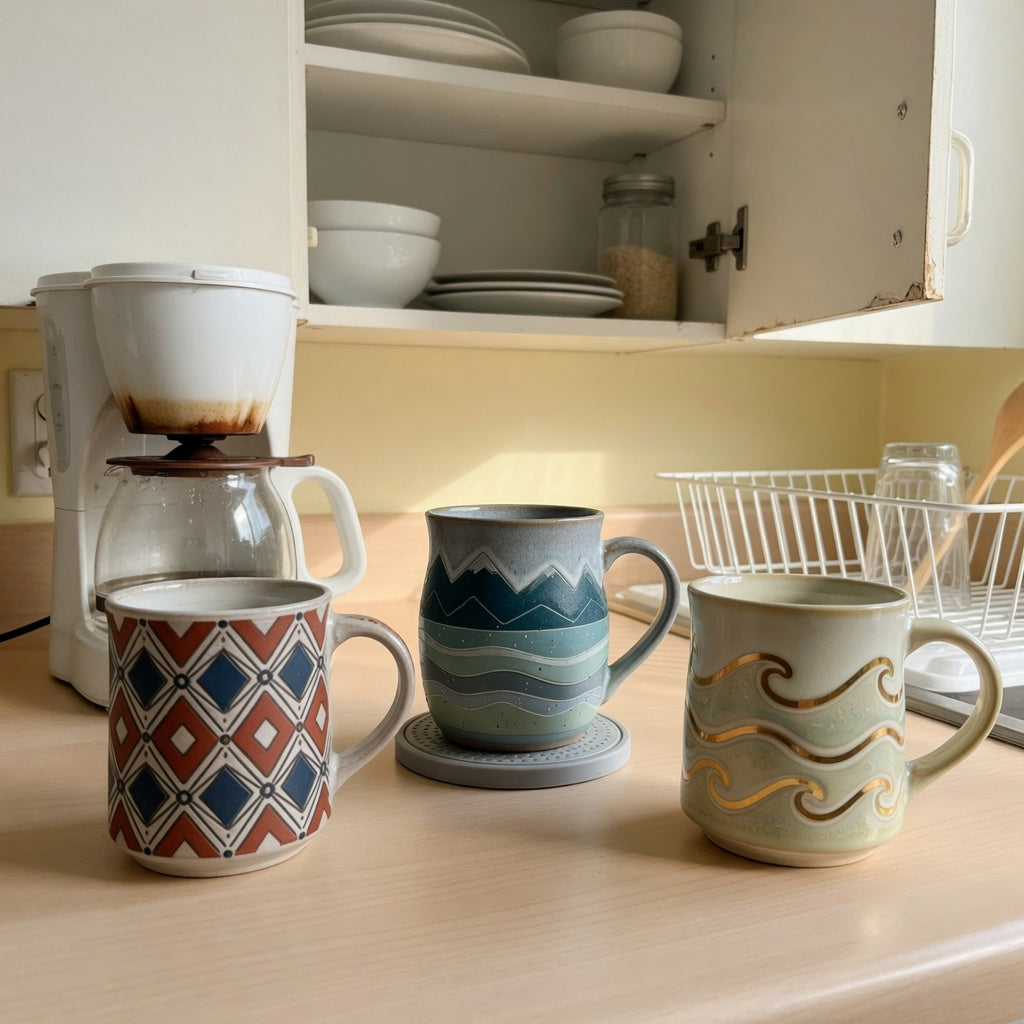
Unique Pottery Coffee Mugs: Everyday Mug Rotation Purchase Checklist
Audit a real week before adding another mug. This checklist compares cabinet fit, handle and rim comfort, care requirements, common ceramic inspection points, and three CoffeifyMug style directions...
Read more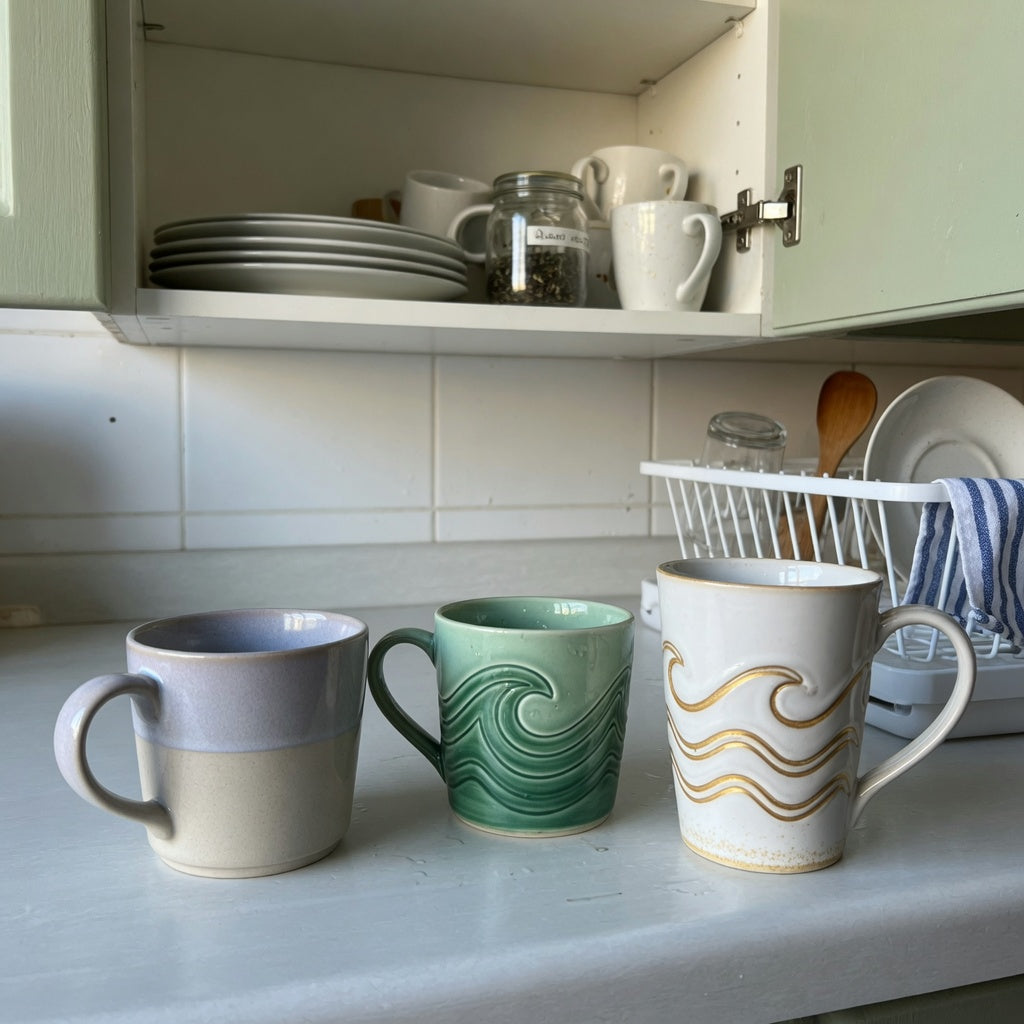
Two Tone Ceramic Coffee Mugs: Everyday Rotation Shortlist Guide
Compare the Gradient, Green Waves, and White Golden Waves Tall ceramic mugs by rotation role, shelf fit, wash routine, and visual impact. Each option includes a clear reason to choose it, a reason ...
Read more
Leave a comment
This site is protected by hCaptcha and the hCaptcha Privacy Policy and Terms of Service apply.