
Ceramic Piccolo Cup: Compare Size, Glaze, and Daily Fit
Reading time: about 9 minutes
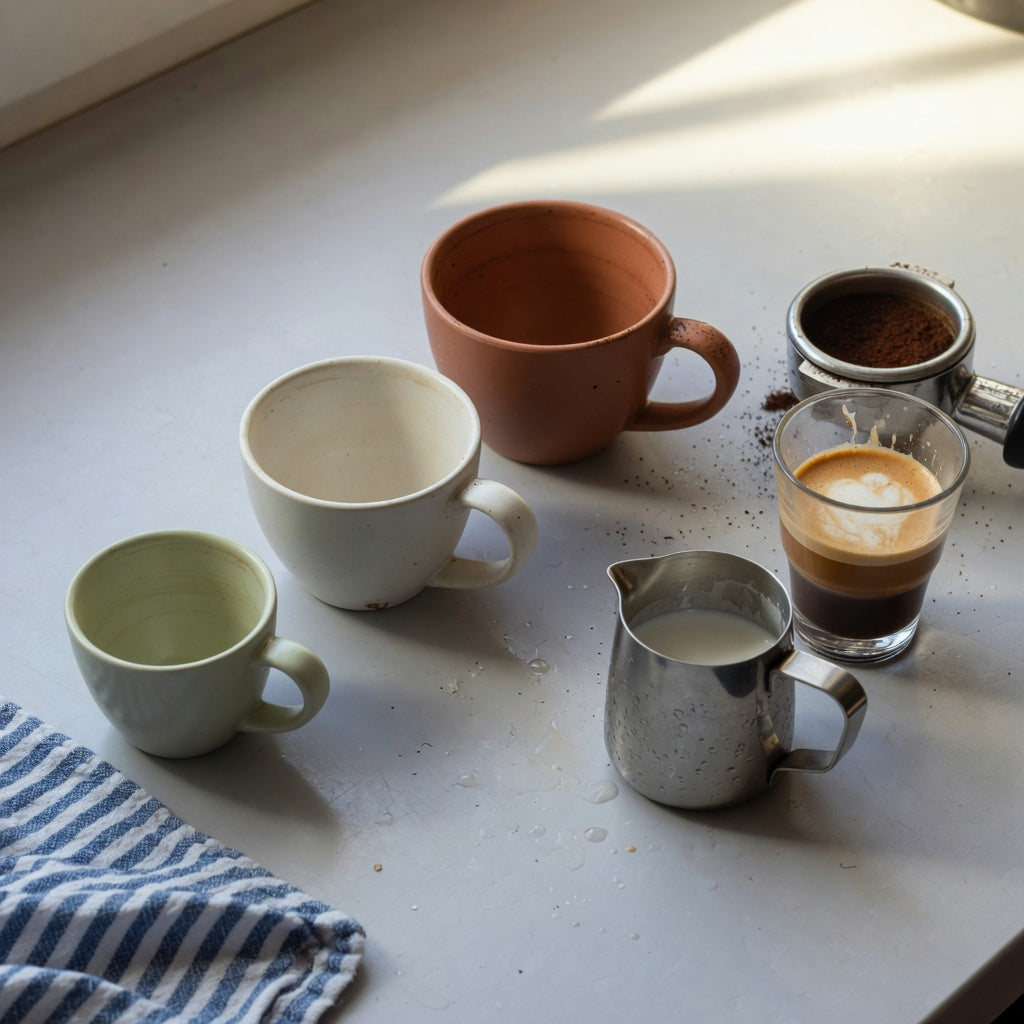
A short milk coffee can look stranded at the bottom of a breakfast mug. Most of the cup stays empty, and the serving no longer feels as compact as the drink that prompted the purchase. That is usually why shoppers start looking for a ceramic piccolo cup.
The name alone does not settle the choice. A cafe piccolo is commonly described as espresso or ristretto with steamed milk served in a compact clear glass, often around 85 to 114 ml. That range is useful context, not a certified standard or a fixed milk-to-coffee formula. Cafes vary, and ceramic cups sold for home use may be considerably larger.
In our store, capacity is the first dependable comparison. The verified catalog facts available for this guide are the Retro at 170 ml, the Ball Handle at 250 ml, and the Emerald at 270 ml. We do not have verified material composition, dimensions, appliance compatibility, lid details, or product-specific food-contact certification in the supplied evidence, so those points remain checks for the current listings.
Ceramic piccolo cup capacity: 170, 250, or 270 ml?
Start with the amount you actually pour. A 170 ml cup is already larger than the commonly referenced 85 to 114 ml cafe glass, while 250 ml and 270 ml move further into small-mug territory. That does not make the larger options wrong. It means they suit a different routine: more milk, more headspace, occasional tea, or a drink that changes from day to day.
| Option | Verified capacity | Capacity-based fit |
|---|---|---|
| Retro coffee and tea cup | 170 ml | The smallest of these three and the closest starting point for a compact home pour |
| Ball Handle coffee and tea mug | 250 ml | A middle option for shoppers who want more room for milk or a small tea |
| Emerald coffee and tea mug | 270 ml | The largest option, suited to a longer drink or deliberately generous headspace |
One detail still needs checking: listings do not always define capacity in the same way. A stated figure may represent a near-brim measurement rather than the amount that is comfortable to carry from an espresso machine to a desk. The evidence supplied for these products does not establish which method was used. Measure your normal finished drink in a kitchen jug, then allow enough empty space for lifting and walking.
A piccolo label describes a style of drink. Milliliters tell you how the cup will fit your own pour.
Which CoffeifyMug capacity matches your routine?
Each recommendation starts with a use case, not an assumption about material, dimensions, or care.
- You want the smallest stated option in this group. Start with the 170 ml Retro coffee and tea cup. It is the closest of the three to a compact cafe-style volume, although it remains larger than the commonly referenced 85 to 114 ml glass. Verify its current material, measurements, finish, and care instructions on the product page.
- Your short coffee sometimes becomes a milkier drink or a small tea. Consider the 250 ml Ball Handle coffee and tea mug. Its verified capacity is 80 ml greater than the Retro, so the practical reason to choose it is flexibility rather than strict piccolo proportions.
- You routinely need the most volume available here. Review the 270 ml Emerald coffee and tea mug. It holds 20 ml more than the Ball Handle option and 100 ml more than the Retro. That makes it the roomiest choice, but not a dramatically different size from the 250 ml option.
If shape and visual style are deciding factors, use the unique coffee mugs collection to compare current options after setting your capacity range. Product names and photographs can narrow the shortlist, but the current listing should confirm material, quantity, dimensions, and care before checkout.
Glass visibility, ceramic feel, and glaze evidence
Clear glass has one advantage that ceramic usually cannot match: you can see the espresso and milk layers as the drink is poured. If visual proportion is part of your ritual, an opaque ceramic body removes that reference. A glass serving vessel may therefore be the better purchase, even if you prefer the appearance of pottery on the shelf.
Ceramic can offer a more substantial rim and a different hand feel, but those qualities depend on wall thickness, body type, shape, and weight. Material names alone do not establish heat retention. A heavy room-temperature cup may initially absorb more heat from the drink, while a thinner vessel may respond differently. Without controlled testing of an exact cup, we would not promise a number of hot-drink minutes.
Material labels need exact-item confirmation
Ceramic listings across the wider market may refer to stoneware, porcelain, earthenware, terracotta, or a ceramic lining inside a stainless travel body. Those are not interchangeable descriptions. Porcelain can be made with a thinner profile, stoneware can be relatively substantial, and ceramic-lined metal is a composite travel product rather than a fully ceramic table cup. Actual construction still depends on the individual item.
- If a listing says handmade, check for disclosed variation in height, rim shape, glaze pattern, and capacity.
- If a finish appears crackled, distinguish an intentional glaze effect from an undisclosed crack through the cup body.
- If metallic decoration is shown, do not infer microwave compatibility from the word ceramic.
Food-contact claims should be product-specific
Color and glaze gloss do not prove food-contact suitability. The FDA action level for leachable lead from ceramic cups and mugs is 0.5 micrograms per milliliter in any one of six units tested. That regulatory figure does not certify an individual product, and this guide does not have independent lead or cadmium leach reports for the three linked CoffeifyMug listings.
Under 21 CFR 109.16, ornamental or decorative ceramicware that appears suitable for food use and contains lead must carry conspicuous warning language and a permanent base statement that it is not for food use. If a piece is marked decorative or not for food use, keep it out of drink service. For any candidate here, verify the current listing's intended-use and food-contact language rather than assigning a certification from its appearance.
Dishwasher labels, thermal shock, and everyday damage
When our team handles a ceramic cup, the first inspection points are practical: the drinking rim for chips, the body for hairline cracks, the foot for rough areas that could mark a table, and any handle joint for movement. These checks matter again after dishwasher cycles, sink knocks, or a drop onto a hard counter.
Care instructions belong to the exact product. Before buying, look for direct answers to these questions:
- Does the current listing explicitly allow dishwasher cleaning?
- Does it explicitly allow microwave use, including for the selected finish?
- Does the maker warn against sudden hot-to-cold or cold-to-hot changes?
- Are abrasive cleaners restricted for the glaze or decoration?
- If an accessory or lid is pictured, is it included and does it have separate care instructions?
A dishwasher-safe statement addresses cleaning compatibility; it does not prevent one cup from striking another in a loosely loaded rack. Sudden temperature changes can also stress some ceramic bodies, so avoid taking a very cold cup directly to a very hot fill unless the maker specifically permits it. Fine glaze crazing is not the same as a crack through the body, but its significance depends on the glaze and construction. A sharp rim chip or structural crack is a reason to stop using the cup for drinks and consult the seller or maker.
Espresso-machine clearance, desk stability, and travel lids
Capacity is only one part of physical fit. The dimensions missing from the supplied product evidence can decide whether a cup works in the place you intend to use it.
- Home espresso machine: Measure from the drip tray or scale to the lowest point of the spout. Check the candidate cup's external height and mouth diameter on its current listing; milliliters cannot establish machine clearance.
- Office desk: Look for base diameter, overall width, handle projection where applicable, and filled weight. A compact capacity does not automatically mean a small footprint or a stable base.
- Gift pair: Confirm whether the listing is for one cup or multiple pieces. If matching matters at unboxing, also check for disclosed glaze or form variation instead of assuming two photographed items will be identical.
- Commute: Require explicit information about the lid, leak resistance, insulation, and car-cup-holder fit. None of those features is established for the Retro, Ball Handle, or Emerald by the evidence used here.
A fully ceramic table cup is not the right tool for carrying loose in a bag. A ceramic-lined stainless travel cup may better suit that job, but it trades the construction and rim feel of a table cup for a lid and travel body. Check the exact travel listing rather than transferring its features to a similarly sized mug.
A 60-second comparison before adding to cart
- Measure the finished drink you normally pour.
- Add the headspace you need for carrying it without spills.
- Compare that total with 170 ml, 250 ml, and 270 ml.
- Decide whether seeing the drink's layers makes clear glass a better fit.
- Verify material, food-contact language, dimensions, dishwasher and microwave instructions, quantity, and included accessories on the exact listing.
- Check espresso-machine, shelf, desk, or cup-holder dimensions for the place where the cup will actually be used.
This order keeps a pleasing photograph from overruling the practical details. Once capacity and fit are settled, compare finish and shape in our current unique coffee mug selection.
Frequently asked questions
What size ceramic piccolo cup should I buy?
Measure your finished drink first. A traditional cafe reference is often around 85 to 114 ml, while the CoffeifyMug options compared here are 170 ml, 250 ml, and 270 ml. Choose 170 ml for the smallest stated option, or move up when extra milk, tea, or headspace is part of your routine.
Is 170 ml too large for a traditional piccolo?
It is larger than the commonly referenced 85 to 114 ml cafe glass. It can still hold a short piccolo-style drink with visible headspace, but it will not reproduce that glass by volume. There is no fixed cafe ratio that turns every 170 ml cup into a standard piccolo vessel.
Can a ceramic piccolo cup go in the dishwasher and microwave?
Only if the exact product's care instructions say so. Ceramic is a broad material category, and glaze, decoration, and construction can change appliance compatibility. Treat dishwasher and microwave use as unconfirmed when the listing is silent.
How do I check whether a ceramic glaze is suitable for coffee?
Look for explicit food-use or food-contact language on the exact listing and check the base for any decorative-use warning. A glossy surface, handmade description, or natural-looking glaze is not evidence of testing. Ask the seller for product-specific documentation if the listing does not answer the question.
Should I buy a ceramic table cup or a ceramic-lined travel cup?
Choose a table cup for drinking at the kitchen counter, dining table, or desk. Choose a travel design when you need a verified lid, insulation, leak resistance, or cup-holder fit. Those travel features must be confirmed on the exact item and should not be assumed from compact capacity alone.
For the next step, measure one normal serving and decide how much empty space you prefer above it. Then compare that number with the verified 170 ml Retro, 250 ml Ball Handle, and 270 ml Emerald capacities, opening each current product page to confirm every material, care, and fit detail that capacity cannot answer.
More from our blog
Read more

Ceramic Tea Mug Buying Guide: Compare 3 Everyday Options
Compare three current coffee-and-tea mug listings using the details that matter for ordinary serving: material wording, listed capacity, visible form, and handle shape. Includes practical checks fo...
Read more
Big Coffee Mug The Rock 480: Ceramic vs Travel Options
Big Coffee Mug The Rock 480 can mean a 480 ml ceramic mug, a steel travel tumbler, or novelty merch. We separate those use cases and show which listing details to verify for desk, kitchen, gifting,...
Read more
Leave a comment
This site is protected by hCaptcha and the hCaptcha Privacy Policy and Terms of Service apply.