

Ceramic Mug With Wooden Handle Weekend Coffee Product Shortlist Guide
Reading time: about 10 minutes
The second Saturday pour is where a poor mug match becomes obvious. The cup may be larger than the serving you brewed, the handle may crowd your fingers, or the vessel may take up more breakfast-tray space than expected. Our ceramic mug with wooden handle weekend coffee product shortlist guide compares two CoffeifyMug options using three details that can support a sensible purchase: listed capacity, visible ceramic vessel form, and wooden handle shape.
We sell and handle this category, and in our experience the useful comparison happens before coffee goes into the mug. We look at the side profile, finger clearance, and the relationship between the listed capacity and the shopper's normal serving. We do not fill specification gaps with assumptions about wood species, coatings, detachability, water resistance, dishwasher compatibility, heat performance, or production methods. If one of those details affects your decision, confirm it from the current product information before ordering.
Which weekend coffee routine is sitting on your counter?
Start with the actual scene rather than the decoration. A mug used for one measured pour beside a book has a different job from one that moves between a breakfast table, kitchen counter, and home-office desk. Naming that job makes the shortlist shorter.
- Solo reading: Match the listed capacity to the amount you normally pour, then study whether the handle shape suits the one-, two-, or three-finger grip you use during a longer sitting.
- Breakfast at the table: Compare an upright ceramic body with a rounder, more open form. The preferred silhouette is partly visual, but it also determines how the mug fits among plates, a coffee press, and serving dishes.
- Coffee followed by tea: Both featured products are presented as coffee and tea mugs. Capacity remains the deciding specification because the product title alone does not tell you whether either mug matches your usual serving.
- Daily commuting or utility use: A different mug style may suit you better if a sealed lid, cup-holder fit, compact stacking, or explicitly stated dishwasher care is essential.
This is also the point to separate a weekend ritual purchase from an everyday equipment purchase. A distinctive wooden handle can be a reason to choose the mug for a quiet table setting. It is not a substitute for travel features, verified care instructions, or measured handle clearance.
How does a ceramic mug with wooden handle weekend coffee product shortlist guide narrow the choice?
Use three gates. An option stays on the shortlist only if it clears all three; attractive surface design should not rescue a capacity or grip mismatch.
- Check the listed capacity against a real serving. Measure the coffee you normally pour in milliliters or fluid ounces, including the milk or other additions you regularly use. Allow for the headroom you prefer rather than assuming you will fill a mug to its maximum stated capacity.
- Read the vessel form from more than one image. Look for the base, wall, shoulder, and rim in a side view. Mountain Sea II presents as the more upright option, while The Cloud reads as rounder and more open at the top. Product photography can show the general form, but it should not be treated as a substitute for unlisted dimensions.
- Study the wooden handle profile. Note the opening, angle, and distance between the grip and ceramic wall. If handle-opening measurements are not stated and finger clearance is critical, ask for the relevant measurement instead of estimating from a close crop.
These gates keep the comparison within facts we can support. A wooden handle changes the visible grip arrangement, but its appearance does not establish the wood species, finish, wash method, temperature behavior, or comfort for every hand.
Mountain Sea II: a fit for an upright, graphic table setting?
The Mountain Sea II Coffee Tea Mug with Wooden Handle combines a ceramic vessel with a distinct wooden side handle. In the listing imagery, its body reads as upright, while the Mountain Sea design gives it a more graphic, landscape-led presence on the table.
Choose it for:
- A Saturday breakfast setting where the mug's surface design is intended to be visible rather than blend into a plain set.
- A preference for a more vertical ceramic silhouette beside a French press, plate, or laptop.
- A coffee or tea serving that matches the capacity currently listed on the product page, with the headroom you normally leave.
Skip it for:
- A kitchen built around plain, minimal drinkware with no scenic or graphic treatment.
- A preference for a visibly rounder body and broader-looking rim opening.
- A grip requirement that depends on exact handle-opening dimensions that you have not yet confirmed.
- A serving size that falls well above or below the listed capacity.
The practical next step is to open the product page, record its current capacity, and compare that number with your measured Saturday serving. Then inspect the side-view images for the handle angle and likely knuckle clearance. Do not choose it because the design appears to imply any unlisted finish or manufacturing technique.
The Cloud: a fit for a softer, rounder vessel profile?
The The Cloud Coffee Tea Mug Wooden Handle is also presented as a ceramic coffee and tea mug with a wooden handle. Its visible vessel form reads as softer and rounder than Mountain Sea II, with a more open-looking top profile.
Choose it for:
- A reading chair, quiet breakfast, or tea service where you prefer a softer visual profile over a more upright, graphic form.
- A preference for seeing a broader-looking opening at the top of the vessel.
- A usual serving that aligns with the capacity currently stated on the listing.
Skip it for:
- A preference for the more structured, vertical silhouette shown by Mountain Sea II.
- A table setting that needs stronger graphic contrast rather than a cloud-inspired visual treatment.
- A small work surface where exact outer dimensions are critical but have not been confirmed.
- A hand-fit requirement that cannot be judged confidently from the available handle views.
Use the same next step here: compare the live capacity with your normal pour, then judge the body and handle from the clearest side image. The rounder appearance is a style and form observation, not evidence of different heat performance, weight, balance, or durability.
Mountain Sea II or The Cloud: what decides the final two?
| Buyer variable | Mountain Sea II | The Cloud | Decision check |
|---|---|---|---|
| Visible ceramic form | More upright and vertical | Softer, rounder, and more open-looking | Choose the silhouette that fits your table and visual preference |
| Surface direction | Landscape-led, more graphic | Cloud-inspired, visually softer | Decide whether you want contrast or a quieter look |
| Handle | Distinct wooden side-handle profile | Distinct wooden side-handle profile | Compare opening, angle, and finger space in current images |
| Capacity | Use the current listed value | Use the current listed value | Compare each value with a measured serving and preferred headroom |
| Reason to remove | Wrong capacity, grip, or visual form | Wrong capacity, grip, or visual form | Do not keep an option merely because the surface design is appealing |
The point of this ceramic mug with wooden handle weekend coffee product shortlist guide is not to declare a universal winner. Mountain Sea II is the more direct choice for a shopper drawn to an upright, graphic vessel. The Cloud is the more direct choice for someone who prefers a softer, rounder profile. Either should be removed if its live capacity or handle shape fails your practical check.
Which shoppers should skip both wooden-handle mugs?
A wooden-handle ceramic mug is not automatically the right answer for every slow coffee routine. We would remove both products from the shortlist in several common situations:
- You need a sealed travel lid, leak resistance, or verified cup-holder compatibility. These products are presented as coffee and tea mugs, not as travel vessels.
- You need identical mugs that stack compactly in a crowded cupboard. Choose a product explicitly designed or described for stacking.
- Your household depends on a daily dishwasher cycle and the current care instructions do not explicitly confirm that routine.
- You need measured handle clearance because of hand size, reduced grip strength, or a preferred adaptive hold. Request dimensions or choose a mug with those measurements clearly stated.
- You want a plain full-ceramic profile with no separate wooden element.
If those requirements remove both options, browse the current unique coffee mugs collection and apply the same capacity, vessel-form, and handle checks. Treat the collection as a comparison surface, not a promise that every item will meet a travel, stacking, care, or accessibility requirement.
What should you inspect at unboxing and before the first wash?
A careful unboxing catches shipping damage and fit problems before the mug enters your weekend routine. These are category inspection steps, not claims that either featured product normally arrives with a defect.
- Confirm the model and specification. Match the mug to the order and compare any capacity information on the packaging or current listing.
- Set the empty mug on a flat, dry counter. Check that the base sits level rather than rocking noticeably.
- Inspect the ceramic under side light. Look around the rim, body, and base for shipping chips or hairline cracks. Pause use and contact our store if the mug appears damaged.
- Support the ceramic body while checking the handle. Gently assess whether the wooden handle has unexpected movement. Do not twist or use the handle as a lever during inspection.
- Read the current care directions. Appearance alone cannot confirm dishwasher suitability, soaking tolerance, coating, water resistance, or whether a handle is detachable. Follow the instructions supplied with the product rather than borrowing a routine from another wooden-handle mug.
This short check is especially useful for gifts. Inspecting the rim, base, and handle before wrapping avoids giving someone a mug that was damaged in transit or does not match the ordered option.
Your five-minute weekend shortlist
- Measure the coffee or tea you actually serve on a slow morning.
- Open Mountain Sea II and The Cloud in adjacent tabs.
- Remove any option whose listed capacity does not fit your serving plus normal headroom.
- Choose between the more upright Mountain Sea II form and the rounder, more open-looking Cloud form.
- Inspect the wooden handle images. If exact clearance or care information is essential and unstated, pause the purchase and confirm it.
A practical shortlist can contain two options, one option, or none. The goal is not to force a winner. It is to prevent an attractive mug from reaching your counter with the wrong capacity, vessel form, or handle profile for the routine you had in mind.
Frequently asked questions
How should I use the ceramic mug with wooden handle weekend coffee product shortlist guide?
Measure your usual serving first, then compare the listed capacity, visible vessel form, and wooden handle shape of each mug. Remove an option as soon as one of those three details does not fit. This leaves a defensible shortlist instead of a long set of visually similar choices.
What is the practical difference between Mountain Sea II and The Cloud?
Mountain Sea II appears more upright and has a more graphic, landscape-led presentation. The Cloud reads as softer, rounder, and more open at the top. Those are visible form and design differences; they do not establish differences in heat performance, durability, weight, or care.
Can I assume a ceramic mug with a wooden handle is dishwasher-safe?
No. Ceramic and wood describe the visible materials, not the approved wash method. Check the current product listing and supplied care directions before using a dishwasher, soaking the mug, or treating the handle as detachable.
What mug capacity is best for a slow weekend coffee?
The best capacity is the one that fits your actual serving with the headroom you prefer. Measure your normal coffee, milk, or tea volume and compare it with the value listed on each product page. Do not choose from appearance alone.
Are these wooden-handle ceramic mugs suitable for commuting?
They are presented as coffee and tea mugs, not as sealed travel mugs. If you need a lid, leak resistance, impact protection, or cup-holder fit, choose a product that explicitly states those features rather than assuming them from the vessel shape.
Measure your usual Saturday pour, then reopen Mountain Sea II and The Cloud side by side. Keep the option that clears all three checks: current listed capacity, preferred visible vessel form, and workable handle shape. If neither clears them, continue through the unique coffee mugs collection with the same checklist.
More from our blog
Read more
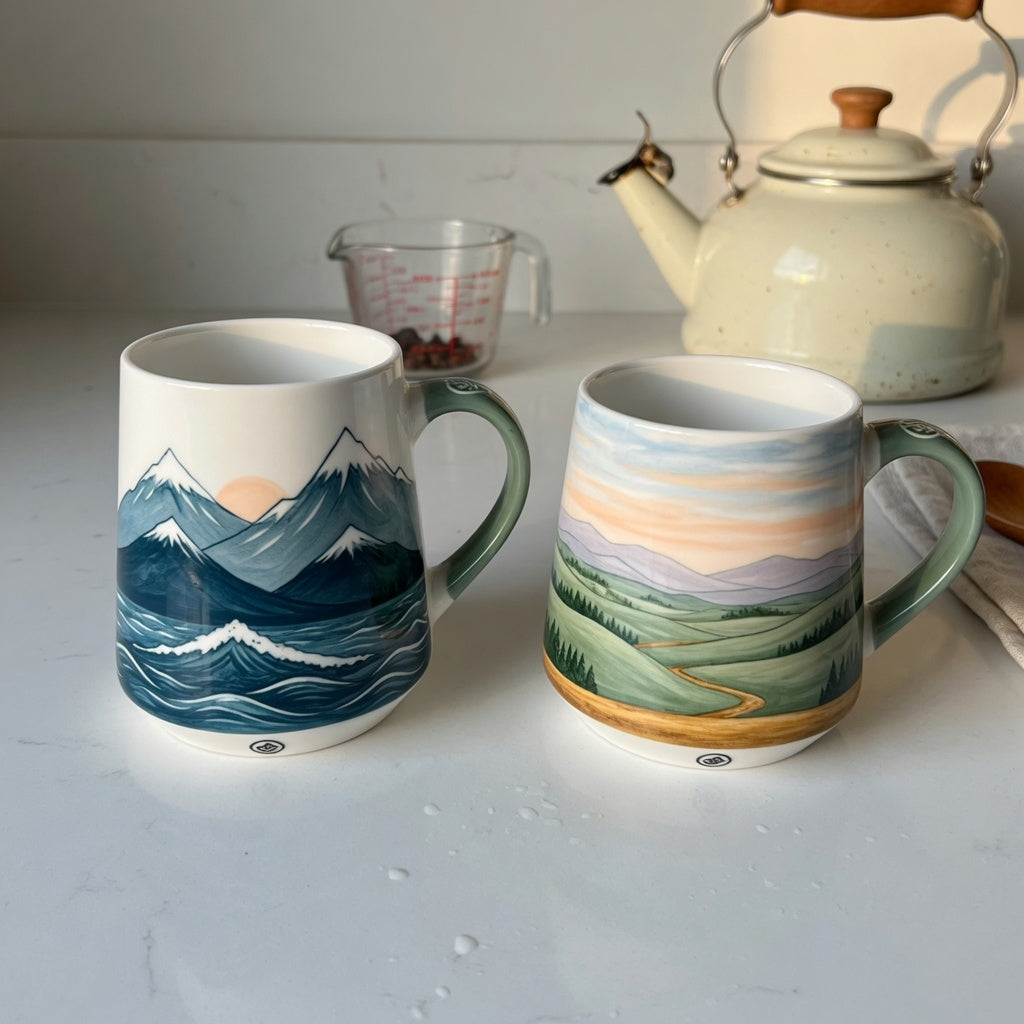
Ocean Coffee Mug First Time Buyer Product Shortlist Guide: 2 Picks
Compare two current nature-inspired ceramic mug listings using the details a first purchase depends on: visible imagery, form, listed capacity, cabinet fit, and care unknowns. Each option includes ...
Read more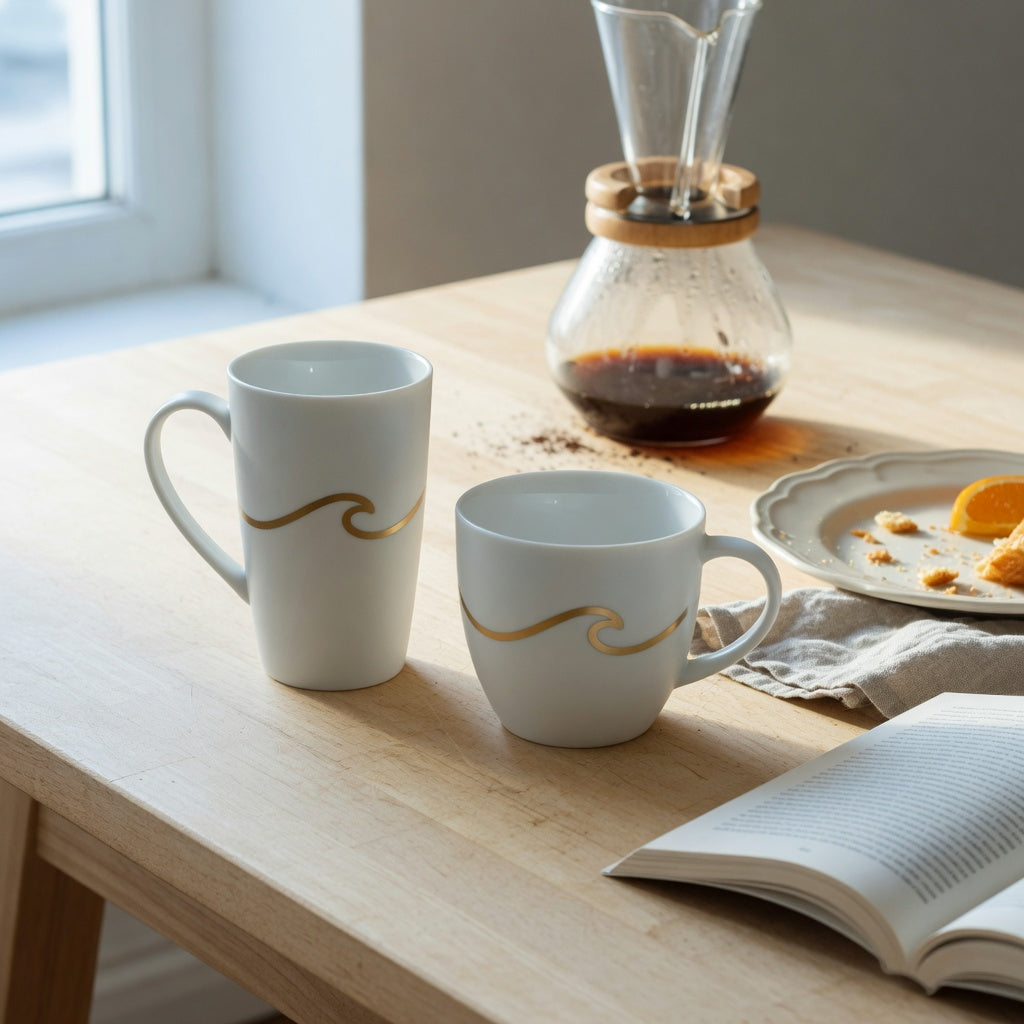
White and Gold Coffee Mug Weekend Coffee Product Shortlist Guide
Compare two white-and-gold wave mugs by listed capacity and visible form. This scenario-based shortlist explains which option fits a solo pour or brunch tray, when to skip both, and what to verify ...
Read more
Leave a comment
This site is protected by hCaptcha and the hCaptcha Privacy Policy and Terms of Service apply.