

Ceramic Mug Pair for Coffee Station: What to Compare
Reading time: about 12 minutes
The second mug is the one that causes the argument. One person slides a full cup under a low cabinet and the rim taps the door. The other grabs an identical white cup in dim light and drinks from the chipped edge. In our store, that is the usual request for a ceramic mug pair for coffee station use: two cups that match in a photo and then fight on the counter. A shared morning needs mugs you can tell apart, fill below a slosh line, and wash the same way. Gift styling is a different decision from everyday durability.
Who a ceramic mug pair for coffee station mornings is really for
A pair earns the counter when two people brew in the same few minutes and stop digging through a mixed cabinet. Couples, roommates, and a small home bar are the cases we hear. The pair is not a commute cup, and it will not replace a lidded mug in a bag or a car holder. One person at a desk and one person beside the kettle is often a reason to buy two shapes, not twins that only match in a gift box.
We split the decision into daily use and presentation. Daily use is a pour you can drink, a handle that clears adult fingers on a full hot mug, and a footprint that fits the tray you already own. Presentation is a coordinated glaze, a box, or his-and-hers styling. Pretty sets often leave out the lines that say whether both mugs can take the dishwasher and the microwave.
Before sunrise, tell-apart beats matching. Identical cups get swapped, and the chipped one always finds a new owner. Two-tone glaze, a light mug beside a dark one, or two silhouettes solve it without labels. Compare the Landscape Tall coffee and tea mug with the Round coffee and tea mug if you want two named profiles on one station. On each current listing, confirm height, diameter, capacity, body material, and any microwave or dishwasher wording before you call them a pair. The names suggest shape. They do not prove ounces, wall thickness, or appliance safety.
If you need color more than a particular outline, browse unique coffee mugs, choose two you can tell apart, and apply the same checks to both pages. A housewarming set that cannot be washed the way you actually wash dishes is a display piece, not a station pair.
Listed ounces versus the pour that stays in the cup
Shoppers sort listings into bands they already know: about 11-12 oz, 14-16 oz, or a larger cup near 20 oz. That is retail language. It is not how the mug drinks. Many pages print a brim-full number. A comfortable pour stops lower, so coffee stays in the cup on the walk to the table and milk still fits.
FDA guidance describes cups and mugs as small ceramic hollowware used for drinks such as coffee or tea above room temperature. They normally, though not exclusively, hold about 8 fl oz (240 mL) and have a handle. In that wording a cup usually has a base and curved sides, while a mug has cylindrical sides. Retail coffee mugs are often sold well above that size. Bigger is not automatically better on a short counter. A very large cup crowds the kettle and turns heavy, which is when a tight handle hurts.
Match the band, then read the live page:
- Shorter pour, around 11-12 oz: drip coffee with room for milk, or tea you finish before it cools. Kinder to a narrow shelf. A weak choice if you refuse a refill.
- Mid pour, around 14-16 oz: the band shoppers ask us about most for a shared station. Confirm whether the number is brim-full.
- Large pour, near 20 oz: fewer refills for one heavy drinker. A poor fit under a low cabinet, or when the second person wants a lighter cup.
Pour your usual amount into a measuring cup at home and compare. If the listing never says whether ounces are brimful, keep the number as an open question. For a closer look at volume, see how many ounces a typical coffee mug holds and ounces in a mug of coffee. Do not borrow capacity from a similarly named mug. It does not carry over.
Cabinet gap, tray space, and a handle for a full hand
Fit fails under the cabinet or brewer head, across the tray, and in the hand. Measure from the counter to the lowest shelf or spout. A shape that looks elegant in a photo can be the one that will not slide under a pod machine. A wider foot can feel steady and still crowd the grinder.
Cropped photos hide the handle. When we compare mugs in this category, we fill them with water first, because an empty handle lies. Two or three fingers should pass without a knuckle on hot ceramic, and your thumb should not have to rest on the body. Thin walls can heat the hand fast. A thick wall can stay hot outside longer, which helps the drink and punishes a loose grab. Double-wall ceramic is often sold as more comfortable to hold. The outer wall can feel that way. It often stacks badly, and the inner cup can be smaller than the outside implies. There is no single warmth time worth quoting. Thickness, fill, and an open top all change it. An open pair with no lid is the wrong tool for a car cup holder.
Stack only if the foot sits in the rim without rocking and you can unstack with one free hand. Cabinet clearance is the stacked height, not the height of one mug. A stand helps only if the listed foot or handle actually fits it. No height, foot diameter, or handle opening on the page means you are guessing.
| What the photo suggests | What to read on the current listing |
|---|---|
| A coordinated glaze | Dishwasher and microwave wording for that exact mug |
| A taller or rounder outline | Height versus your cabinet or brewer gap, and foot size versus the tray |
| A printed ounce claim | Whether the number is brim-full or a drinkable line |
| A gold-looking rim or pattern | Whether any part is metal, which does not belong in a microwave |
A laptop lid changes the math again. Coaster space beside a keyboard is smaller than a kitchen tray, and a wide handle gets knocked. That is a reason to pick two different outlines, not a reason to force a twin set onto both spots.
Stoneware weight, porcelain rims, and matte versus gloss
Body and glaze change weight, how a rim chips, and how the lip feels. This is what we notice across the category, not a hidden spec for every mug we sell. Stoneware tends to be heavier and more forgiving when it is set down. Porcelain often has a thinner rim that chips against a steel sink. Matte glaze shows spoon marks. Gloss shows drips and usually wipes faster. None of those traits equals dishwasher-safe. The listing has to say so.
- Thick stoneware: steady on a tray, warmer in the hand, heavy when full. Skip it for a weak grip or a tiny tray.
- Thinner porcelain: lighter, often a finer lip for tea. Not what we would hand someone who sets cups down hard.
- Double-wall ceramic: the outer wall can feel kinder, the body is bulkier, nesting is awkward, and an open top still lets the drink cool. Skip it if the pair must stack in a low cabinet.
- Matte versus gloss: matte looks quiet and shows water spots. Gloss makes stains obvious, which helps you retire a cup that is no longer clean.
Do not paste that list onto the Landscape Tall or Round listings. Read those pages. A heavy mug is a poor match for a weak grip. A double-wall mug is a poor match when you need a low stack. Any open ceramic cup is the wrong tool for the oven, a broiler, or as a stand-in for a saucepan.
Lead, cadmium, and metallic coats in the microwave
Glaze is a safety check, not a finish choice. Lead in the glaze or decoration of some traditional pottery can leach into food and drink if the piece was not manufactured properly. For ceramic cups and mugs, the FDA action level is 0.5 micrograms of lead per milliliter of leaching solution. If any one of six tested units exceeds that level, the article may be considered for enforcement. Referenced test methods include ASTM C738.
Cadmium is a separate limit. FDA reports that some imported and domestic ceramic ware has been found with significant quantities of extractable cadmium. Acid foods can extract it, and continued food use could cause chronic cadmium poisoning. The action level for small hollowware is 0.5 micrograms of cadmium per milliliter of leaching solution. Ceramicware that shows extractable lead under the FDA method should not be labeled lead free, and that label may be treated as misleading. If the Landscape Tall or Round listing shows no test detail, we cannot confirm a lead-free or cadmium-free claim. Not stated is not the same as safe, and it is not the same as unsafe.
Microwaves pass through ceramic and glass and reflect off metal. The wall can still heat up from the coffee inside. Use cookware made for microwave use, and only when that mug's listing says so. Metal trim is a sharper risk. In March 2024, the CPSC announced a recall of about 440,500 ceramic mugs with a metallic coating sold in Starbucks-branded gift sets, including an 11 oz two-mug holiday set and 16 oz mug sets. Microwaved, or filled with extremely hot liquid, those mugs could overheat or break. The agency reported 12 incidents and 10 injuries, with burn and laceration hazards. We keep gold rims, metallic patterns, and lustre out of microwave advice even when nearby copy says microwave-safe. If you cannot separate metal from glaze, leave the pair out of the microwave.
Water heated alone in a very clean cup can superheat and erupt when the cup is picked up or instant coffee is added. FDA has reports of serious burns from that. Putting coffee, tea, or sugar in before heating greatly reduces the risk. Stay inside a heating time you already trust for that volume.
Cracks on arrival, crazing, and a handle that is done
Pairs fail in the box and in the sink more often than the photo suggests. On delivery, run a finger around both rims and hold each wall up to a lamp. Hairlines hide in dark glaze. We would rather replace a cracked mug than put it through a hot wash, where the line can open. A chipped lip on day one ends that mug as a drinking cup. Sanding the rim is not a repair.
Crazing is a fine crackle in the glaze after heat cycles. It can look dirty, and the lines can hold moisture. Retire a crazed food surface instead of scrubbing harder. Light gloss shows it early. Dark matte hides it until the cracks stain.
A handle that wobbles, clicks, or shows a crack at the join is finished. Lifting a full mug by a tiny loop is how weak joins let go. Do not glue a drinking mug back together. A chipped foot rocks on a tray next to a kettle, which is its own spill.
Use a dishwasher only when that exact listing says the mug can go in. Heat and alkaline detergent can dull matte glaze and lift a weak decal over repeated cycles. If the page is silent, wash by hand. Skip scouring pads on gold or colored decoration.
Eight checks before two mugs share the tray
Run this list on the live product pages, not from memory of a similar cup:
- Comfortable pour, not only the printed ounces. Leave room under the rim.
- A way to tell the mugs apart: color, glaze, or silhouette.
- Height against the cabinet or brewer gap, and foot size against the tray.
- Handle opening with a full, hot cup in mind.
- Microwave and dishwasher statements on that listing. No metal decoration in the microwave.
- Any lead or cadmium wording, and whether a test reference sits behind it.
- A gift box only if this is a present. A stand only if the foot is listed and actually fits.
- Rims, handle joins, and bases checked before the first wash.
For two profiles on one station, open the Landscape Tall mug listing and the Round mug listing, read every size and care line, and only then decide they belong together. If you need more color so each person keeps a cup, start in the unique coffee mug collection and use the same eight checks on both picks.
Frequently asked questions
Is a ceramic mug pair for coffee station use microwave-safe and dishwasher-safe?
Only when each mug's current listing says so. Microwaves can pass through ceramic, but the cup still heats from the drink, and a metallic coating can overheat or break. The March 2024 CPSC recall of metallic mugs in gift sets is the concrete example: those cups could overheat or break if microwaved or filled with extremely hot liquid. If the page is silent, wash by hand and keep metal decoration out of the microwave.
Why does the listed ounce size feel smaller once coffee is poured?
Many listings quote a fill to the brim. A drinkable line sits lower so the coffee does not spill on the walk to the table and milk still fits. Two mugs with the same ounce claim can also have different interior shapes. Compare the number with the amount you already pour at home, and do not copy capacity from a similarly named mug.
How should a lead-free or cadmium-free badge on a mug pair be read?
Look for a test reference, not only the words on the badge. The FDA action level for lead in ceramic cups and mugs is 0.5 micrograms per milliliter of leaching solution, and the cadmium action level for small hollowware uses that same figure. Ware that leaches lead under the FDA method should not be called lead free. If a listing shows no test detail, the claim is unverified.
Can two ceramic mugs stack under a cabinet without rocking?
Only if one foot nests in the other rim and the stacked height still clears the cabinet or brewer. A single-mug height is the wrong measurement. If the listing skips base diameter, measure before you add a rack. A rocking stack is a bad neighbor for a hot kettle.
Do matching his-and-hers mugs work on a shared coffee bar?
They work as a gift when the box and the story matter. They work poorly in dim light if nobody can see whose cup is whose. Different tones, or two different silhouettes, stop the morning swap. Confirm both listings so one mug is not everyday ware while the other is decorative only.
More from our blog
Read more

Morning Coffee Mug for the Counter: Fit, Pour, Care
A morning coffee mug for the counter has to clear the cabinet and the brewer, match the pour you actually finish, and show real care and food-contact wording. We walk through the checks before that...
Read more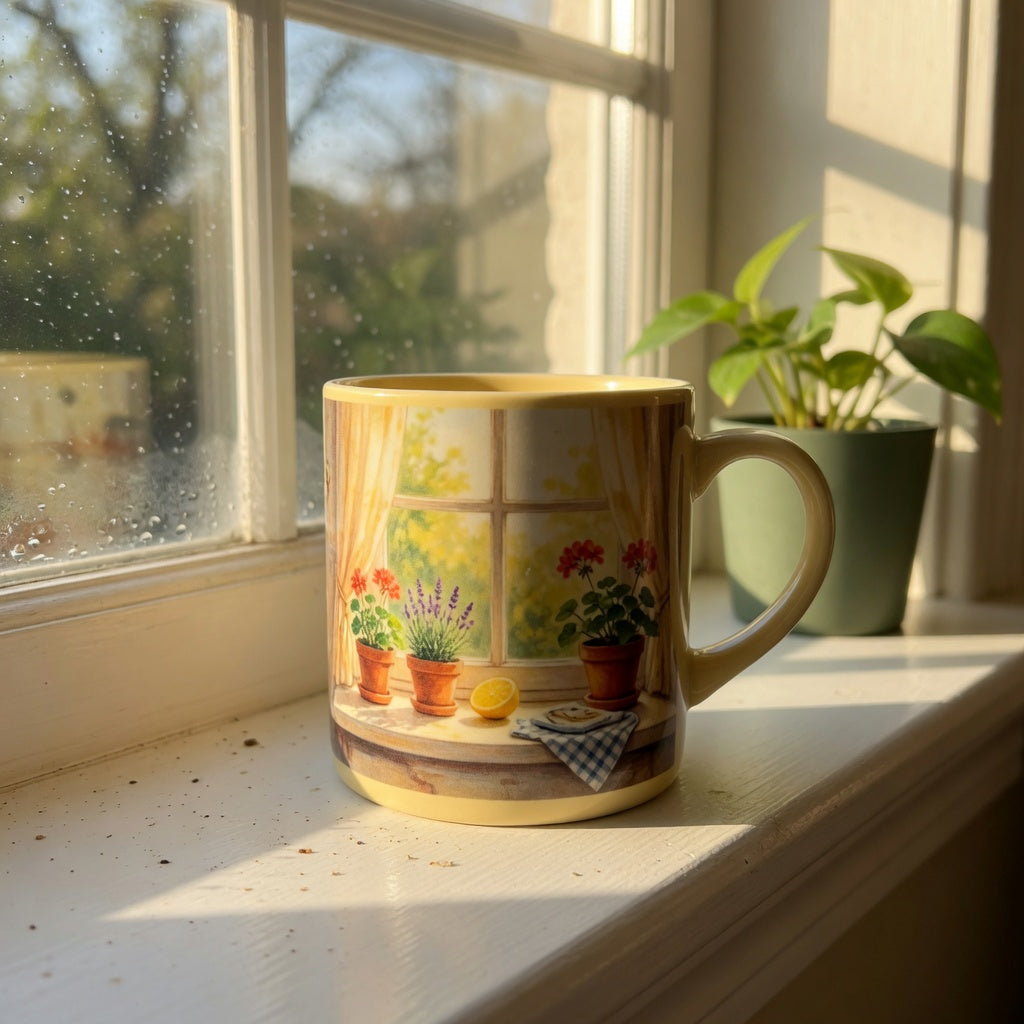
Sunny Window Coffee Mug: What Buyers Should Compare
Shoppers like the windowsill photo, then need capacity, print durability, and food-contact facts. We compare what matters before a sunny window coffee mug becomes a daily cup or a gift.
Read more
Leave a comment
This site is protected by hCaptcha and the hCaptcha Privacy Policy and Terms of Service apply.