



Ceramic Mug Gift Tray: Capacity, Care, and Safety
Reading time: about 12 minutes
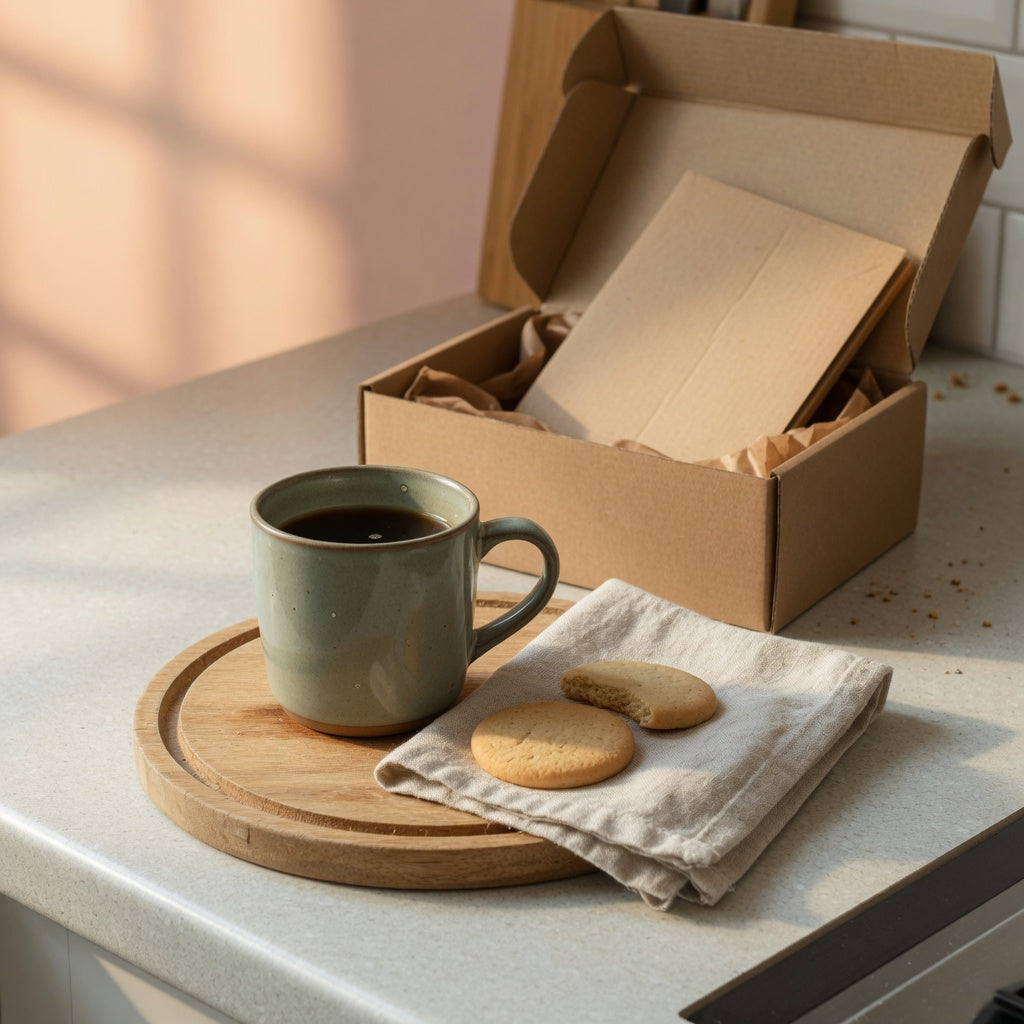
A customer note we see more than once asks us to include the tray with a mug. The saved photo shows a cup on a wooden board with two cookies. The title on that page is ceramic mug gift tray. What often ships is a kraft sleeve around a single mug. No board. No cookies. That gap is what this search keeps producing.
We sell ceramic drinkware, and the same miss shows up after the box is opened. The mug is small for a morning pour. The handle pinches a larger hand. The wood cannot follow the mug into the dishwasher. Or the glaze line never says the piece is meant to hold a hot drink. A thumbnail can look finished while the kitchen counter tells a different story.
What does a ceramic mug gift tray listing actually include?
Shoppers type one phrase and land on three different products.
- A ceramic mug, sometimes a pair, sold with a ceramic, wood, bamboo, or melamine serving tray.
- A kraft or cardboard gift box that holds one or two mugs and no tray at all.
- A paperboard gift tray packed with a mug plus snacks, tea bags, or drink packets.
These are not substitutes. A breakfast board has to carry weight and stop a cup from sliding on the walk from the counter to the sofa. A kraft box only has to survive the carrier and look decent when the tissue comes off. A snack tray is often a single-use carrier, not a dish you keep beside the kettle.
If the mug is the part someone will actually drink from, start with our coffee mugs for gifts and decide second whether a tray belongs in the box. We send people to the round coffee tea mug when a round cup is the shape they asked for, and to the pleated coffee tea cup when that pleated listing is the look they want. Do not treat either page as a tray set unless it says a tray is included. Capacity, clay body, glaze notes, and care have to be read on that page the day you order. A similar name on another site does not establish those facts for our mugs.
Which capacity, handle opening, and tray lip fit coffee or tea?
There is no ounce standard for this category. Espresso cups and full-size coffee mugs are both sold under gift-tray titles. Read the stated capacity. The photo will not give it to you.
FDA guidance on lead in ceramic cups and mugs is a size reference, not a promise for any set. It describes cups and mugs as small hollowware commonly used for coffee or tea served above room temperature. Those pieces normally, though not always, hold about 8 fluid ounces (240 mL) and are made with a handle. A mini espresso gift can sit well under that. A wide latte mug can sit over it. The present fails when the recipient's real drink does not match the cup.
On the packing bench we check three things a lifestyle photo hides.
- Handle opening. A thick ceramic handle can look generous and still pinch, especially with a napkin or a cardboard sleeve in the grip.
- Tray footprint and lip. A flat platter lets a mug creep while it is carried. A raised rim or a recessed cup spot is what keeps a biscuit and a spent tea bag from sliding with it.
- Base stability. A foot that rocks on ribbed wood clicks every time the mug is set down. On a desk that is annoying. With a full cup it is a spill.
If the tray is only a coaster with a rim, say so in the gift note. It will not carry toast. Readers who mainly need the right cup, not a board, can compare ceramic mugs for coffee and tea drinkers. Ceramic suits someone who wants glaze and weight at the table. It is not a lidded commute cup that lives in a car holder.
Do the mug and a wood, bamboo, or melamine tray share one care rule?
Often they do not. The listing still prints one care line for the bundle. In our experience, that single line is where gifts go wrong. Ask before you pay, not after the third wash warps the board.
Confirm each material on its own.
| Part | What to verify | What goes wrong |
|---|---|---|
| Ceramic mug | Dishwasher, microwave, and any metal decoration | Crazed glaze, a faded print, or a metallic rim in the microwave |
| Wood or bamboo tray | Hand-wash only, oiling, or a soak limit | Warp, coffee stains, or a finish that lifts |
| Melamine tray | Dishwasher yes or no, and any heat ceiling | Warp, or a smell that stays after high heat |
| Paperboard or kraft | Packaging, or an actual server | Collapse once it meets a wet cup or a spill |
Gold, silver, and other luster prints change the microwave question. Hunt for them in the description. If the page is silent, silence is not permission. A clay body that would be fine alone can still be a poor microwave candidate once metal sits on the rim.
A wooden or bamboo board does not inherit the mug's dishwasher mark. Melamine has its own heat ceiling. It does not belong in an oven just because the mug is ceramic. Paperboard and kraft are packaging unless the seller shows they are meant to meet wet food.
Skip the mixed set if the recipient only needs a weekday mug. Buy a ceramic piece whose own care line you can live with. One honest cup beats a tray they have to baby. A mixed set is also a poor fit for a desk with no sink, a commute, or anyone who wants a bottle that stays hot for hours. It is a counter and couch gift.
What should lead, cadmium, and food-contact wording cover?
A badge that says lead free, food safe, or FDA compliant is not a test you can read. We slow this check down when a drinking cup is sold with a tray that might also touch food.
For lead leached from ceramic cups and mugs, the FDA action level is 0.5 micrograms per milliliter of leaching solution, applied to any one of six units. Cadmium is separate. Acidic food can pull cadmium from some ceramicware, and continued food use of that extractable cadmium is tied to the risk of chronic cadmium poisoning. Small hollowware under 1.1 liters has a cadmium action level of 0.5 micrograms per milliliter for any one of six units. Large hollowware of 1.1 liters or more is 0.25 micrograms per milliliter. Most gift mugs fall under 1.1 liters. A large serving bowl may not.
The FDA points testers to the current edition of ASTM C738, among other methods. That method extracts lead and cadmium from glazed ceramic surfaces with acetic acid, and the extraction is described as a severe test that normal eating and drinking are unlikely to match. A seller who says FDA compliant without naming a method has not told you what was tested, or whether the tray was in the sample. A ceramic tray might be a food-contact surface or only a carrier. The listing has to say which. An undefined badge on a product photo is not that answer.
Ware that looks suitable for food is treated as food ware unless it is marked as ornamental in the required way: both a visible stick-on warning and a permanent statement on the base, or a hole bored through the surface that could hold food. A handsome tray with neither mark is not automatically a display piece.
No amount of washing, boiling, or other home processing removes lead from pottery. If the piece says it is not for food use, including a warning that it may poison food, do not cook, serve, or store drinks in it. The FDA has reported traditional pottery labeled lead free that still released lead, in some cases at levels comparable to lead-glazed pottery and in some cases above the action levels. Ceramicware with extractable lead under the compliance-policy method should not be labeled lead free. That wording can be false or misleading.
There is no known safe level of exposure to lead. The FDA has calculated interim reference levels of 2.2 micrograms of lead per day for children and 8.8 micrograms per day for females of childbearing age, using the CDC blood lead reference value of 3.5 micrograms per deciliter and a tenfold safety factor. A blank glaze note on a handmade cup deserves a question. It is not a reason to assume everyday factory mugs have the same problem. The agency says commercial factory pottery made for daily use is much less likely to have lead problems than pieces that are handmade and crude or irregular, antique, damaged or heavily worn, bought from flea markets, street vendors, or an unknown maker, or brightly decorated in orange, red, or yellow.
California uses two labels shoppers mix up. Lead-free tableware contains no lead. Lead-safe tableware may contain some lead, but not above Proposition 65 limits for what can get into food. Tableware above those limits may be sold only with a written warning. The state also lists cadmium as known to cause cancer and developmental and reproductive harm, and notes it may be present in decorative paints on pottery and similar crafts. Shipping into California is a reason to look for that warning on the page or the carton.
We do not leach-test in our store, and a home swab is not a substitute for the maker's food-contact statement. If a consumer test does find leachable lead, the FDA strongly advises against using that piece to cook, serve, or store food or drinks. If the listing never says the glaze is meant for food contact, do not buy it as a drinking gift. For a cup that will mostly sit on a shelf, start with the checks in our ceramic tea mug home decor guide instead of assuming a pretty glaze is a food surface.
Will the pieces match, survive shipping, and work as a named gift?
Handmade mugs and trays often vary in color and outline. That variation can be the point, or it can look like a mistake when one piece in a pair does not match its mate. If a matched set is the promise, choose factory ware described as a set and read any variation note before you pay. We would rather set that expectation before the ribbon goes on.
Gift boxed and drop ship describe how a carton leaves a warehouse. They do not describe an insert, a tray that locks the mug, or what you receive if one piece breaks. Ask whether the box is meant to be handed to someone as-is. A scuffed mailer with a loose mug is a shipping carton, not a present.
Personalization splits the same way. A name on a tea-bag rest is a home gift. A logo on a run of mugs is a corporate order, with an imprint area, color limits, and a lead time. Do not assume a retail ceramic set can take a company mark. Do not assume a promo kit will feel like a housewarming gift. When the person mainly drinks coffee at the kitchen table, our comparison of ceramic mug gifts for coffee lovers stays on the cup.
Match the set to the morning, not to the title.
- Tea at a desk. A modest cup plus a small rest for a used bag. A wide breakfast board is extra bulk.
- Breakfast on the couch. The tray needs a lip, enough footprint for a biscuit, and a mug that does not rock.
- Housewarming. A cup they will use daily beats a snack tray they throw out.
- Named or employee gifts. Confirm imprint limits. A retail set with no print area will not become a logo gift at checkout.
A tray set is the wrong object for the car, the oven, or a shelf they will never drink from. Confirm food-contact use before anyone puts coffee in a piece that was sold as decor.
What should the listing show before checkout?
Before we would treat a mixed bundle as gift-ready, the page would need to answer the list below. Use the same list on any ceramic mug gift tray you are comparing.
- Stated capacity, and whether that number is espresso, tea, or a full coffee.
- Handle clearance, not just a flattering side photo.
- Tray material, footprint, and a lip or recess that stops the cup sliding.
- Separate care lines for the mug and for wood, bamboo, melamine, or paperboard.
- Microwave guidance wherever there is gold, silver, or luster.
- Food-contact status for the tray, not only the mug.
- Glaze wording that names a test, or at least does not lean on an undefined lead-free badge.
- What gift box means: an insert, drop-ship readiness, and what happens if one piece breaks.
- Personalization limits, if a name or logo is part of the order.
- Handmade variation, if the set is not factory-matched.
Then open the current round coffee tea mug listing or the pleated coffee tea cup page if the mug is the part you trust, and add a tray only when those checks survive the description. If you are still choosing the cup, browse gift-ready coffee mugs and compare from the live pages, not from a thumbnail.
Frequently asked questions
Is a ceramic mug gift tray dishwasher safe?
Only when every piece is. Confirm the mug and the tray on their own. A ceramic cup can be labeled for the dishwasher while wood, bamboo, or paperboard is not. One care sentence for the whole bundle is a reason to ask the seller before you pay.
Can I microwave a gold-rim mug that comes on a tray?
Do not assume yes. Metallic decoration can make microwaving a bad idea even when the clay would otherwise be fine. If the listing never mentions the gold, silver, or luster, treat silence as unanswered, not as permission. Leave the tray out unless that material is stated as microwave safe.
How do I tell a serving tray from a mug gift box?
A serving tray is supposed to carry the mug after the wrapping is gone, sometimes with a biscuit or a used tea bag. A kraft or cardboard gift box is packaging. A paperboard snack tray is usually a one-time carrier sold with extras. Read the materials so you do not expect a wooden board inside a printed mailer.
Does lead free on the box mean the glaze was leach-tested?
Not by itself. FDA action levels for lead and cadmium are tied to leach testing, including ASTM C738, an acetic-acid extraction that is harsher than normal drinking. A lead-free label can be misleading when extractable lead is actually present. Choose a maker who states food-contact use in plain language, and do not drink from pieces marked not for food use.
What capacity fits a tea-bag tray versus a morning coffee gift?
Use the ounces printed on the listing, not the category name. A mini cup disappoints someone who pours a full breakfast mug. Regulatory language around cups and mugs often pictures about 8 fl oz, but sellers still mix espresso and larger cups under the same gift-tray titles. Check the number, then check that the handle opening fits the hand that will hold it.
Ready to pick your mug? Two ways to save on today's order:
Ordering 1–3 mugs? Get an extra 10% off your 1st order with code 10_OFF Apply 10% Off & Shop Wooden-Handle Mugs →
Gifting 4+ mugs? Buy 3, Get the 4th Free applies automatically at checkout (no code needed; offers do not stack) · Free standard shipping (Nov pre-Christmas delivery: 15–20 calendar days US) · Free replacement if chipped in transit.
Popular mug buying guides: Wooden-Handle Tea Infuser Mugs Compared · Christmas & Secret Santa Mugs 2026 · Espresso & Cortado Cups Guide · Cup & Saucer Gift Sets · All 25 Mugs Spec Table · Mug Size Guide · Shipping & Promo FAQ
FIRST ORDER 10% OFF (CODE: 10_OFF) · OR BUY 3, GET THE 4TH FREE


Read more
Tidy Home Office Coffee Mug Shelf: What to Compare
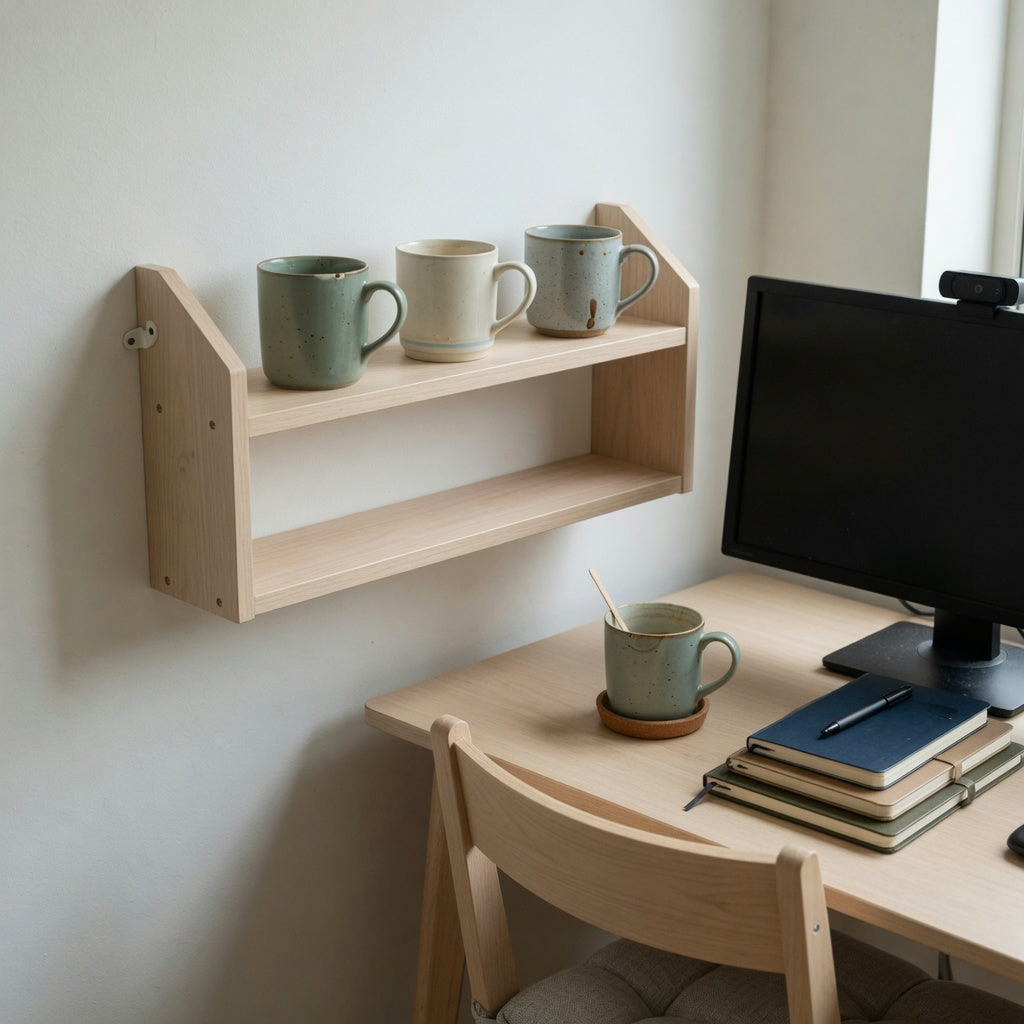
A tidy home office coffee mug shelf works only when format, handles, and daily cup count match the desk you actually use. We compare cubbies, hooks, stackers, and risers, then cover mounts, materia...
Read more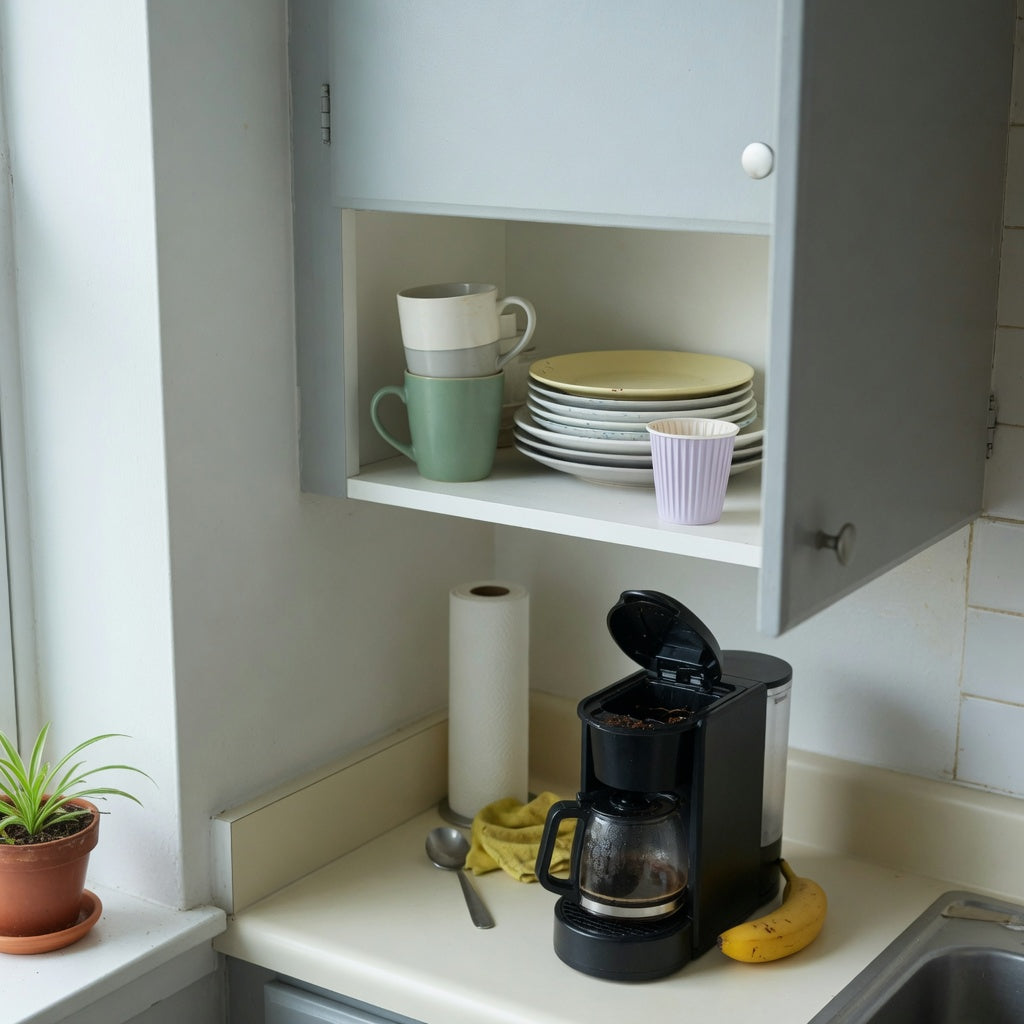
Best Everyday Mug for Apartment Kitchen: What to Compare
A small apartment kitchen runs out of shelf before it runs out of pretty mugs. Compare footprint, usable capacity, microwave labels, and hot-drink safety before you choose a daily cup.
Read more
Leave a comment
This site is protected by hCaptcha and the hCaptcha Privacy Policy and Terms of Service apply.