
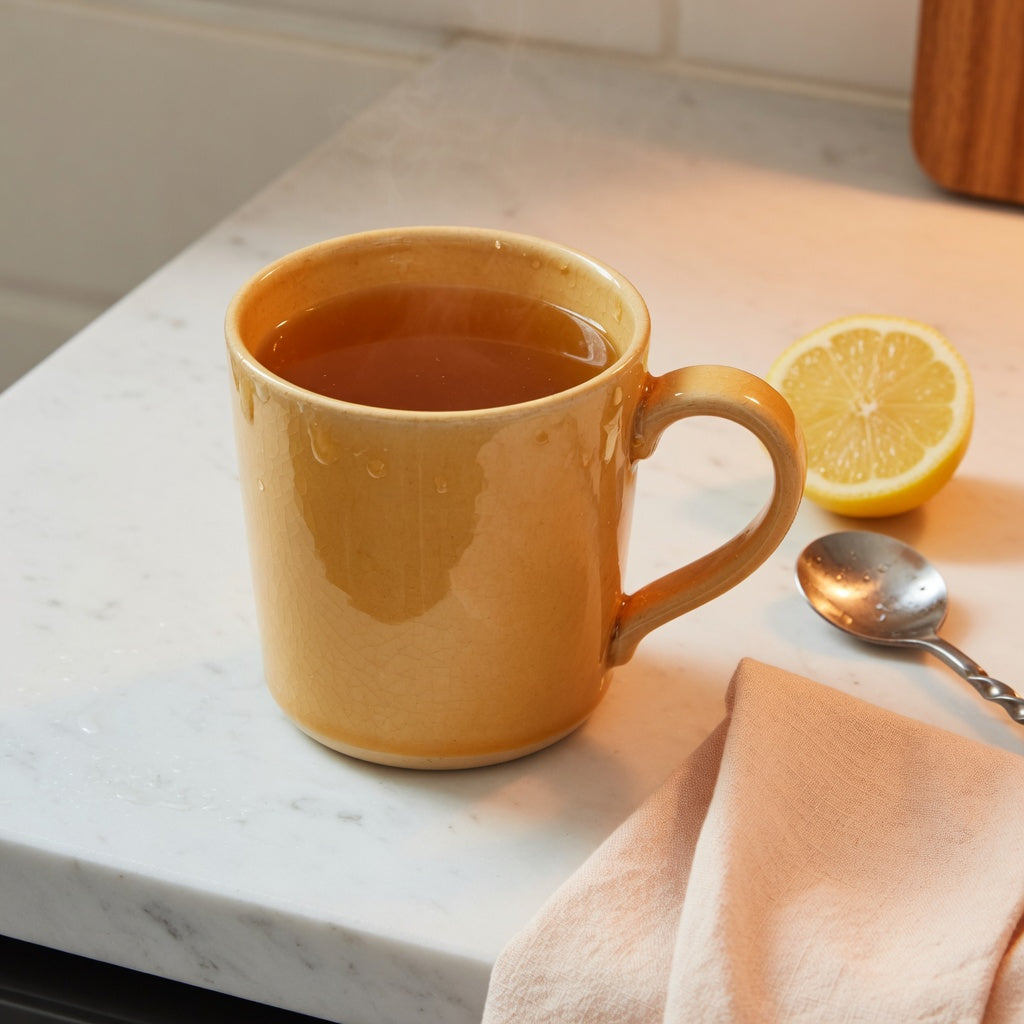
Ceramic Hot Toddy Mug: Compare Size, Handle, and Care
Reading time: about 9 minutes
A small hot toddy can look lost at the bottom of an oversized coffee cup. Move it into a tiny decorative mug, though, and there may be no room to stir or add a lemon slice without reaching the rim. A useful ceramic hot toddy mug has to split the difference: enough space for the finished drink and garnish, but not so much volume that every serving looks undersized.
We handle and sell everyday ceramic drinkware, and the practical questions are consistent at the packing table: How much does the mug hold? Can the handle be gripped without pressing knuckles against the hot wall? Will the same mug work for coffee or tea tomorrow? For the current CoffeifyMug options discussed here, the verified specifications are straightforward: The Gradient and The Flow are 400 ml, while The Rock is 480 ml. We do not claim timed heat retention, laboratory testing, or special temperature performance for these mugs.
Which ceramic hot toddy mug capacity fits your usual pour?
Measure your own finished drink once before comparing mugs. Build it as you normally would, pour it into a measuring jug, and include the hot water or tea you actually use. That number is more useful than a generic serving-size rule because home recipes vary.
A 400 ml mug holds approximately 13.5 US fluid ounces, while 480 ml is approximately 16.2 US fluid ounces. Those are listed capacities, not recommended fill lines. A mug carried to the rim is difficult to stir and easy to spill, so usable volume will be lower.
| Your usual routine | Capacity to compare first | Main trade-off |
|---|---|---|
| Finished drink is around 6-8 oz | 400 ml | Leaves visible headspace, but stays more proportional than a very large coffee mug |
| You add more hot water or tea | 400 ml or 480 ml | The larger mug gives more stirring room but makes a smaller serving sit lower |
| The mug must also hold a taller morning coffee | 480 ml | Better second-use capacity, with more empty space around a small evening drink |
| You want a cocktail-sized vessel that looks nearly full | Smaller footed glass | Better presentation, but less useful as everyday coffee drinkware |
Headspace has a job. It gives you room to dissolve honey, place your own garnish, and carry the mug from the kitchen counter without liquid touching the rim. Prewarming the mug with hot water can also keep cold ceramic from cooling the first pour, but it does not turn ordinary drinkware into an insulated vessel.
Will the handle clear your fingers while you stir and carry?
Capacity gets attention online, but handle geometry decides whether a mug stays in daily rotation. A decorative loop may photograph well and still feel cramped once the mug contains a hot drink. Product photos should show the space between the handle and the body clearly enough to judge your preferred grip.
We use three practical checks when assessing handle usability:
- Finger clearance: Decide whether you normally use one, two, or three fingers. Your knuckles should not be forced against the ceramic wall.
- Attachment points: Inspect the upper and lower handle joins. These areas collect sticky residue and should arrive without gaps or hairline cracks.
- Partly filled balance: A hot toddy may occupy only half the mug. The handle should still feel controlled when the liquid weight sits low in the body.
Hand size matters, especially for a gift. A compact handle can suit a small grip while feeling awkward to someone with broad fingers. If a listing does not provide handle dimensions, study the scale photos and choose a seller with a clear return policy rather than assuming all 400 ml mugs feel alike.
Ceramic or footed glass: which suits the way you serve it?
Ceramic and footed glass solve different buying problems. Glass displays the color of the drink and creates a more traditional bar presentation. Ceramic hides the liquid, feels familiar in the hand, and is usually easier to justify as everyday coffee or tea drinkware.
| Buyer priority | Ceramic mug | Footed glass |
|---|---|---|
| Drink presentation | Opaque surface puts attention on the mug and garnish | Clear wall displays the drink |
| Everyday reuse | Natural fit for coffee, tea, and hot water | More likely to remain with barware |
| Holding method | Handled like familiar kitchen drinkware | Held by a handle, stem, or foot depending on the design |
| Typical visual proportion | Often larger than the finished toddy | Available in smaller cocktail-oriented sizes |
| Travel use | Not designed for a commute unless specifically sold with a suitable lid | Not a travel vessel |
Thicker ceramic can retain heat through its greater mass, and a handle keeps fingers away from the hot drink wall. Wall thickness varies, however, and we have not run timed side-by-side tests on the current products. Choose a footed glass if appearance is the main goal. Choose ceramic if the same vessel needs to work at breakfast, beside a laptop, and after dinner.
Which current 400 ml or 480 ml mug earns cupboard space?
Our current options are everyday coffee and tea mugs rather than dedicated cocktail glasses. The right recommendation depends on the second use you expect from the mug.
- A smaller evening drink plus a moderate coffee: Start with The Gradient 400 ml mug or The Flow 400 ml mug. Their verified capacities are the same, so compare the current listing photos, handle profile, exterior shape, and care information rather than expecting a capacity difference.
- A taller morning coffee or tea: Consider The Rock 480 ml mug. The additional 80 ml is useful for the larger everyday pour, although a small toddy will sit lower inside it.
- A gift where style matters more than a particular capacity: Browse the unique coffee mug collection, then narrow the choices by listed volume and handle clearance. A visually interesting mug still needs to fit the recipient's normal drink.
- A bar-first purchase: Skip these ceramic options if you want a compact, transparent vessel that makes a small serving look full. A footed toddy or Irish coffee glass is a more direct fit.
None of these ceramic mugs is the right tool for a backpack, car cup holder, campsite, or shatter-resistant setup. They also lack cocktail measurement lines. Buyers who need a travel lid, marked portions, or a stemmed serving style should choose a different drinkware category.
What should the glaze and care labels actually confirm?
A hot toddy may contain acidic lemon and is served above room temperature, so the interior food-contact surface deserves more attention than the exterior pattern. Do not infer food safety from the word ceramic alone. Look for an explicit statement that the mug is intended for beverages, along with any food-contact or glaze information supplied by the seller.
FDA ceramicware guidance sets an action level for extractable lead in cups and mugs at 0.5 micrograms per milliliter of leaching solution. The guidance applies the limit to any one of six tested units. That regulatory action level is not the same as a broad promise that every ceramic item described as lead-free has undergone independent testing.
We are a drinkware seller, not a materials laboratory, and we do not claim independent leach results for a mug unless a current listing explicitly supplies them. For a daily ceramic hot toddy mug, use this screening list:
- Confirm that the interior is intended for food or beverage contact.
- Read lead-free or food-safe wording as a specific listing claim, not as something guaranteed by appearance.
- Check dishwasher-safe and microwave-safe statements separately. One does not automatically establish the other.
- Avoid placing metallic rims, metallic decals, or unknown decorative finishes in a microwave.
- If a decorative or handmade mug has no clear food-use statement, keep it for display or ask the seller before serving a hot acidic drink.
Care labels should match your real habits. A hand-wash-only mug can be reasonable for occasional holiday serving. It is a poor purchase for someone who puts every cup through the dishwasher after a late drink.
What should you inspect at unboxing and after washing?
Before using or gifting a ceramic mug, place it on a level counter and inspect the rim, handle joins, interior glaze, and base. Small variations in a handmade-looking finish can be cosmetic. A sharp rim chip, structural crack, unstable base, or damaged interior surface is different and should be raised with the seller before use.
Sticky residue often remains around the lower handle attachment and the foot ring after a quick rinse. Wash those areas deliberately, especially after drinks containing honey or citrus. If the mug is labeled dishwasher safe, the label covers the approved care method; it does not eliminate the value of rinsing residue before it dries.
Avoid sudden temperature changes, such as taking a very cold mug and immediately filling it with boiling liquid. If the interior glaze develops visible cracks, chips, or rough areas over time, stop using it for drinks until the seller or manufacturer can address the condition. We cannot promise long-term glaze performance without repeated-cycle testing, so regular inspection is the honest approach.
Frequently asked questions
What size ceramic hot toddy mug should I buy?
Measure your finished drink, then leave room for stirring and carrying. A listed 400 ml mug is the more proportional starting point for a drink around 6-8 oz, while 480 ml makes more sense if the same mug must also hold a taller coffee or tea. Choose a smaller footed glass if you want the toddy to fill most of the vessel.
Is ceramic or footed glass better for a hot toddy?
Ceramic is the practical choice when you want one mug for toddies, coffee, and tea. Footed glass is better when seeing the drink and creating a traditional cocktail presentation matter most. Neither style is automatically better at every job.
Can I use these ceramic mugs for coffee or tea?
Yes. The Gradient, Flow, and Rock are sold as coffee and tea mugs, which is why they can earn more cupboard space than a dedicated toddy glass. Their 400 ml and 480 ml capacities also suit larger everyday drinks, although you should always follow the care information on the current product listing.
Can I assume a ceramic hot toddy mug is dishwasher safe?
No. Dishwasher safety must be stated for the specific mug, and microwave safety is a separate claim. Decorative finishes and metallic details may require different care, so read the listing before washing or reheating.
Will a ceramic mug keep my hot toddy warm?
Wall thickness and ceramic mass can affect heat retention, but there is no honest universal time claim. We have not professionally tested these models for timed temperature performance. Prewarm the mug, choose a capacity close to your actual serving, and avoid expecting ordinary ceramic to perform like insulated travel drinkware.
Six checks before adding the mug to your cart
- Measure the volume of the drink you normally make.
- Leave headspace for stirring, garnish, and carrying.
- Compare 400 ml for proportion with 480 ml for larger second-use drinks.
- Check the handle opening and attachment points in the listing photos.
- Verify food-use, dishwasher, and microwave statements individually.
- Choose footed glass instead if cocktail presentation matters more than daily reuse.
If those checks point to everyday ceramic, compare the two 400 ml models against the 480 ml option, then use the CoffeifyMug drinkware collection to find the capacity and handle shape that fit both the evening pour and the next morning's coffee.
More from our blog
Read more
Ceramic Affogato Cup: Compare Capacity, Shape, and Care
A one-scoop affogato can look lost in a breakfast mug or crowded in a tiny cup. We compare CoffeifyMug's 170 ml Retro, 200 ml Pleated, and 270 ml Emerald options by capacity, visible shape, food-us...
Read more
Unique Art Coffee Mugs: Compare Fit, Safety, and Care
A practical comparison of motif placement, handle comfort, listed capacity, material wording, food-use details, care, and shipping. It also shows when a standard mug or travel tumbler is the better...
Read more
Leave a comment
This site is protected by hCaptcha and the hCaptcha Privacy Policy and Terms of Service apply.