
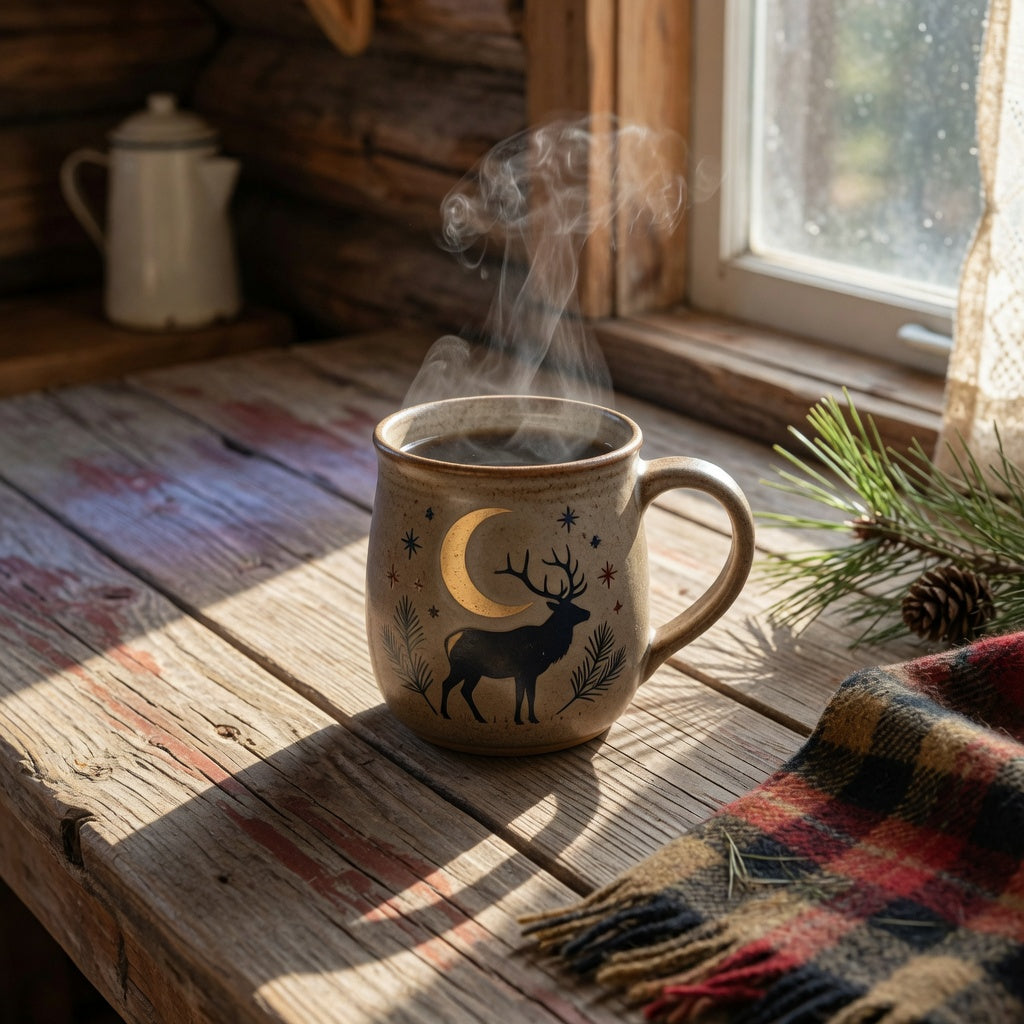
Ceramic Elk Coffee Cup: What to Compare Before You Buy
Reading time: about 10 minutes
Every November, two questions take over our inbox at the same time. Gift shoppers want to know whether the mug holds a full pour. Cabin owners want to know whether the animal on the front is actually an elk or a moose with better marketing. Both are fair. Most wildlife mug listings lead with a hero photo and stay quiet on exactly the details that decide whether the mug becomes someone's daily cup or gets parked behind the good plates.
We sell and pack ceramic drinkware for a living, and the ceramic elk coffee cup is one of those pieces people buy for someone specific — a hunter, a new cabin owner, a dad who already owns too many plain mugs. That specificity raises the stakes, so below is the same comparison list we walk through when a customer asks for help choosing: species ID, clay bodies, capacity and handle fit, glaze care, handmade variation, and gift logistics.
Elk, moose, or deer? Antler cues to check before you buy
Sellers mix these species up constantly, and shoppers pay for it. Search results for elk, moose, and deer designs bleed into each other, and a single front-facing photo can hide the one feature that settles the question. Learn the antler shapes once and you will spot a mislabeled listing in seconds:
- Elk: antlers that branch and sweep up and back in long tines; a leaner body line; often paired with mountains, forests, or moon scenes.
- Moose: broad, palmate antlers — flat paddles, not branches — plus a long snout and heavy shoulders.
- Whitetail deer: slimmer antlers with cleaner individual points and a more delicate face and neck than an elk.
If the title says elk and the photos show paddles, ask the seller before buying. Recipients who hunt or spend time in elk country notice the difference immediately, and no gift message covers for the wrong species. For wider browsing across shapes and motifs, our unique coffee mugs collection is the fastest way to compare wildlife and novelty styles side by side.
What a ceramic elk coffee cup is actually made of
Ceramic is a family name, not a material spec. The clay subtype under the glaze changes heat retention, chip resistance, weight, and how the mug feels on a cold porch morning. Competing listings almost never name it, which is exactly why you should ask:
- Stoneware: dense clay with usually thicker walls and a strong heat hold for slow coffee drinkers. The default for rustic lodge pieces — and heavier to ship.
- Earthenware: more porous unless well glazed and often lighter in the hand; thin glaze over earthenware tends to chip at the rim first.
- Porcelain: finer and frequently thinner; elegant, but it gives up the lodge heft many elk-mug buyers want and can be more fragile in transit.
Glaze quality tells you nearly as much. The food-contact surface inside the cup and over the rim should be smooth and fully covered, and the foot ring should feel clean. Patchy interior glaze, a gritty texture, or open pores in the body are reasons to pass — no matter how good the antlers look in the hero shot.
Food-contact safety is the worry buyers raise most with decorative wildlife glazes, and we will not paper over it. Check the live listing for explicit lead-free or food-safe glaze language and any regional compliance notes the seller provides. If the page is silent, message the store before the mug becomes an everyday cup. A seller who cannot answer that question in writing is telling you something.
Rule of thumb from our side of the counter: if a listing will not name the clay body, the capacity, and the care limits in writing, treat every other claim on the page as decoration.
Capacity and handle fit: the specs listings hide
Wildlife mugs sell on looks first and capacity second, or not at all. That is a problem when the recipient expects a full travel-mug pour and unwraps a 10 oz novelty piece instead. Confirm the numbers before you click buy:
- Capacity in both ounces and milliliters — a 12 oz mug and a 16 oz mug behave very differently at the counter
- Height and rim diameter, which decide whether it fits the cabinet shelf and clears the coffee maker
- Empty weight; heavy stoneware feels substantial, but it frustrates smaller hands and weaker grips
- Handle opening size and how the handle meets the body
Handle construction is where sculpted elk designs trade looks for practicality. An antler-shaped or three-dimensional handle can photograph beautifully and still bruise knuckles, snag dishwasher racks, or crack at the join if the clay runs thin there. Zoom into the photos and ask two questions: is there a thick, gradual join where handle meets body, and is the opening large enough for the actual hand that will use it?
If the elk-and-moon nature motif is the look you want, our Elk and Moon nature coffee mug is the listing to review — and we ask you to verify capacity, dimensions, and care notes on that live page, because we treat the current listing as the source of truth rather than our memory of the catalog. For a deeper look at how mug size changes grip and glaze performance, our 480 ml ceramic mug breakdown covers the same checks in plain kitchen terms.
Washing and daily care for painted and sculpted elk mugs
Hand-painted antlers, embossed relief, and sculpted heads need different treatment than a plain diner mug. In our experience, most disappointment in this category traces back to care surprises, not to the design itself. Five habits prevent nearly all of them:
- Respect thermal shock. Do not fill a mug that just came in from a cold truck or an unheated cabin with boiling water. Let the ceramic move toward room temperature first; sudden swings crack glaze and eventually the body underneath.
- Read the dishwasher answer literally. Some glazed stoneware tolerates the top rack. Hand-painted detail and metallic accents often do not. If the listing does not clearly state dishwasher safe, plan on hand washing with a soft sponge.
- Treat microwave claims the same way. Plain glazes are frequently microwave compatible; metallic overglazes are not. Verify on the listing rather than guessing from photos.
- Watch for glaze crazing. Fine hairline crackle can develop in the glaze after many heat cycles. Light crazing on the outside is cosmetic; heavy crazing on the food-contact surface is a reason to retire the mug to display duty.
- Clean relief with a soft brush. Embossed elk scenes trap coffee oils in the valleys, and abrasive pads scrub paint off the high points. A soft brush and warm soapy water do the job without the damage.
Be honest about where this mug will live. A sculpted elk piece is a poor fit as a stackable cup in a busy shared kitchen — it will not nest, and constant clattering is how sculpted handles die. Statement mug, gift mug, cabin-shelf mug: yes. Sole workhorse in a high-traffic break room: buy something simpler.
Handmade variation or factory-identical: which do you actually want?
Artisan and small-batch wildlife mugs vary piece to piece. Brush density shifts on the antlers, glaze pools differently in the relief valleys, and rim thickness can move a millimeter between two mugs from the same kiln run. Factory-identical novelty mugs look the same in every box, but they tend to feel lighter and less substantial.
Neither path wins automatically. Variation is the feature when you want a one-of-a-kind gift or a mug with visible hand in it; it is the bug when you are outfitting a rental cabin and expect every cup to match the listing photo. Read the listing for variation language, and ask for extra angles if the store shows only one hero shot. Multi-angle photos prevent more mismatched-expectation returns than any product description ever will.
Shipping is the last stress test. Sculpted handles and thin rims need more than a thin mailer: look for double boxing or molded protection and a stated breakage-replacement process, especially when the mug is a holiday gift with a hard deadline. If packing details are missing and the date matters, ask before you order, not after.
Matching the mug to the recipient: hunters, cabins, collectors
Most elk-mug purchases fall into one of four jobs. Match the mug to the job instead of buying the prettiest antler photo on page one.
- Hunter or outdoors gift: prioritize a correct elk silhouette, a handle built for real hands, and a stated capacity. Tuck a one-line care note into the card so the mug gets used instead of shelved.
- Cabin or lodge statement piece: look for stoneware heft, an embossed or painted woodland scene, and enough volume for a full morning pour.
- Wildlife collector: favor handmade or limited runs, accept color variation, and ask about studio details if provenance matters to the recipient.
- Personalized gift: confirm engraving or name options on the exact listing — never assume every elk mug can be monogrammed.
| Buyer situation | Prioritize | Common trade-off |
|---|---|---|
| Hunter gift | Correct species ID, sturdy handle join, listed capacity | 3D antler handles look great but catch racks and need gentle care |
| Cabin everyday mug | Stoneware heft, easy-clean glaze, verified oz and ml | Deep relief traps residue and slows cleanup |
| Collector or display | Handmade character, multi-angle photos, variation disclosure | One-of-a-kind means it will not match a set |
| Personalized present | Custom options confirmed in writing on the live listing | Rush deadlines plus fragile ceramic is a risky pairing |
If the purchase is mostly a present, run the same checks we recommend in our ceramic mug gifting guide: packaging presentation, a breakage plan, and whether the style matches how the recipient actually handles dishes. A mug that cannot go near the dishwasher is a bad match for someone who has never hand-washed a dish in their life.
Frequently asked questions
Is a ceramic elk coffee cup dishwasher safe?
Only if the specific listing says so in writing. Hand-painted wildlife detail and sculpted handles generally last longer with hand washing on a soft sponge. If dishwasher use is allowed, keep the mug on the top rack and skip high-heat dry cycles that stress the glaze.
How do I tell an elk mug apart from a moose or deer design?
Study the antlers across several photos. Elk antlers branch and sweep back in long tines, moose antlers are broad flat paddles, and deer antlers are slimmer with cleaner points. When the title and the photo disagree, ask the seller before buying.
Are decorative glazed elk mugs safe to drink from every day?
Safety depends on the glaze system the maker used, so look for explicit lead-free or food-safe language on the product page. If the listing is silent on food-contact safety, request written confirmation before the mug becomes a daily driver. Pieces sold as decorative-only should stay decorative.
Will a handmade elk mug match the product photo exactly?
Not brushstroke for brushstroke. Expect small shifts in glaze pooling, paint density, and sometimes rim feel — that variation is normal for artisan ceramics. Factory-identical novelty mugs vary less, but they usually feel lighter and less substantial in the hand.
What should packing for a fragile sculpted mug include?
Double boxing or molded protection around the handle and rim, plus a clear breakage-replacement process. Sculpted antler handles and thin rims are the two most exposed points in transit. If packing details are missing and the mug is a timed gift, ask before you order.
Before you checkout: the six-point elk mug check
Run this list against any wildlife mug listing — ours included — before money changes hands:
- Antlers read as elk, not moose or deer
- Clay body named: stoneware, earthenware, or porcelain
- Capacity listed in both ounces and milliliters
- Handle join looks thick and the opening fits a real hand
- Dishwasher, microwave, and hand-wash guidance stated clearly
- Food-contact glaze language plus packing and breakage policy disclosed
If those boxes check and the elk-and-moon style is the one, open the Elk and Moon nature coffee mug listing and confirm the current specs there. Still comparing? Keep browsing the unique coffee mugs collection until the handle, capacity, and care notes match how the mug will actually be used — that fit matters more than any single design.
More from our blog
Read more

Large Unique Coffee Mugs for Gifts: What to Compare Before You Buy
How many ounces make a mug 'large' enough to gift, and which material survives a real kitchen? We compare capacity, heat retention, glaze safety, and practical fit — then match three wave designs t...
Read more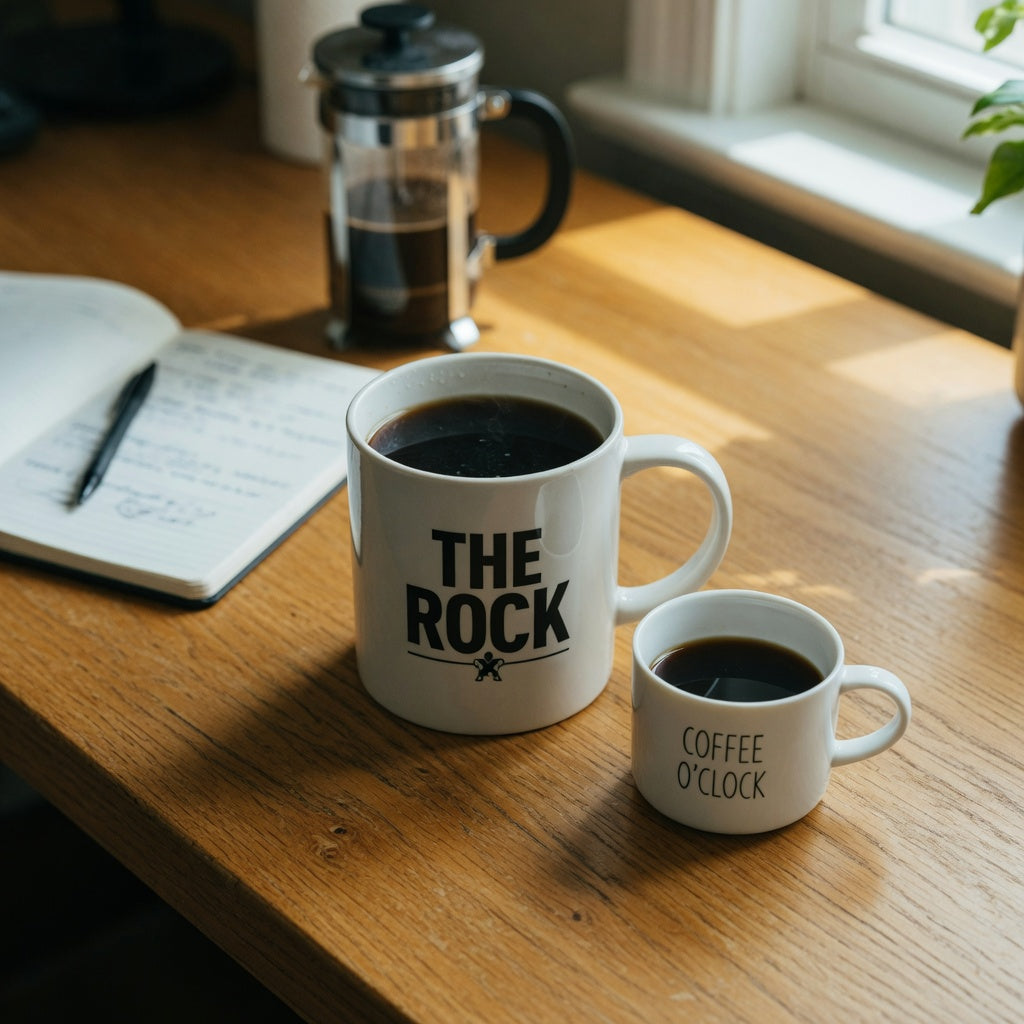
Is 480 ml Mug Big? Size in Oz, Cups, and Who It Fits
Yes — 480 ml is roughly 16 US fl oz, just over a pint, and exactly two 240 ml cups. We compare it with the mugs you already own, run the caffeine math, list the jumbo-mug trade-offs, and show who T...
Read more
Leave a comment
This site is protected by hCaptcha and the hCaptcha Privacy Policy and Terms of Service apply.