



Ceramic Art Mug Gift: Compare Fit, Glaze, Care
Reading time: about 13 minutes
A weekday mug that never leaves the drying rack is the one that won. We watch shoppers choose a ceramic art mug gift for the scene, then hear later that the recipient still pours into the plain cup that fits two fingers and survives the night cycle. The picture can be why they smile at the unboxing. The lip, the handle opening, and the care line decide whether it stays next to the kettle.
In our store, that gap shows up more often than any argument about style. Artwork is the easy comparison. The harder one is how the piece will live on a kitchen counter, a desk, or a shared sink. If you want a wider set of pictured mugs before you narrow by motif, start with our unique coffee mugs and read each listing for stated capacity, material, and care. Photos from the same shop are not a promise that every mug shares one clay body or one washing rule.
Who keeps a pictured mug in the weekday rotation?
The person who actually switches cups already likes drinking from ceramic. They change favorites only when the new piece feels right at the lip and in the hand. A daily coffee drinker will forgive a busy scene. They will not forgive a sharp rim, a handle that pinches, or a hand-wash rule they learn after the first dishwasher cycle.
Pass on this style of gift in a few concrete cases:
- A shared office where mugs are stacked, borrowed, and sent through a harsh machine.
- Someone who reheats every drink in the microwave and will not look for metal in the art.
- A recipient who asked for matching plain cups, not one pictured mug that stands apart.
- A purchase meant only to sit on a bookcase. Mug-shaped is not the same as intended for food.
Drink-first and display-first can both be good gifts. They are different buys. If the talk at home is about shelves and color, say that before you chase a bigger pour. A piece someone is afraid to chip will not replace the cup already by the kettle. A housewarming guest who sips from a smaller cup is a different fit from a partner who fills a tall mug before work. Neither preference shows up in a cropped product photo.
When is a ceramic art mug gift still safe to fill?
Functional art and decorative ceramicware get confused because both can look like a cup. U.S. rules treat an ornamental piece that appears suitable for food as foodware unless it is clearly taken out of that category. The usual exits are a conspicuous warning plus a permanent base statement that it is not for food use and may poison food, or a hole through the surface that would have held the drink. A pretty exterior is not that warning.
For a gift you expect someone to fill, the surfaces that matter are the inside and the rim. Lips and hot liquid meet those on every sip. Exterior artwork can be bold, metallic, or heavily textured and still leave the drinking surface plain. The same glaze can also cover both. A lifestyle photo shot from the side will not tell you which.
Before checkout, look for an explicit food-use statement on the current listing. If you only see decorative language, or you cannot find any use note, ask. In our experience, guessing that a piece looks glazed enough is how ornamental ware ends up in a gift bag.
What do lead and cadmium limits mean at the lip?
Some ceramic foodware can release meaningful amounts of lead from surfaces that touch food. With ongoing use, that exposure is tied to real harm, including chronic lead poisoning. Cadmium is separate. Extractable cadmium from ceramicware can also contribute to chronic poisoning if use continues. Those are reasons to read the glaze notes, not reasons to panic at every painted cup.
For cups and mugs, the FDA action level for lead is 0.5 micrograms per milliliter of leaching solution, applied to any one of six units tested. The agency describes this category as small ceramic hollowware used for drinks such as coffee or tea at or above room temperature. Pieces in that group usually, though not always, hold about 240 milliliters (8 fluid ounces) and are made with a handle. That 8-ounce figure describes a typical cup in the rule. It is not the right fill for every coffee lover, and it is not a spec for any mug in our store unless that listing prints a capacity.
Cadmium has its own action level. For small hollowware, defined as hollowware with a capacity under 1.1 liters, the FDA level is also 0.5 micrograms per milliliter on any one of six units. These checks use lab methods that include ASTM C738, which extracts lead and cadmium from a glazed ceramic surface with acetic acid. A home vinegar soak is not that test. Neither is a shiny photo.
Lead free is narrower than a badge implies. Lead compounds such as lead oxide have a long history in glaze recipes. If firing does not fully lock the lead into the glaze, it can move into food. Ceramicware that still releases lead under the compliance method should not be labeled lead free, and that kind of label can be treated as false and misleading.
California Proposition 65 warnings are a different system. A warning label, an FDA action level, and a seller line that says lead free do not answer the same question. If a listing mixes those phrases, ask which standard they mean and whether any result covers the lip as well as the interior. Gift pages rarely separate lip contact from the inside wall. The lip is where a drinker meets the mug.
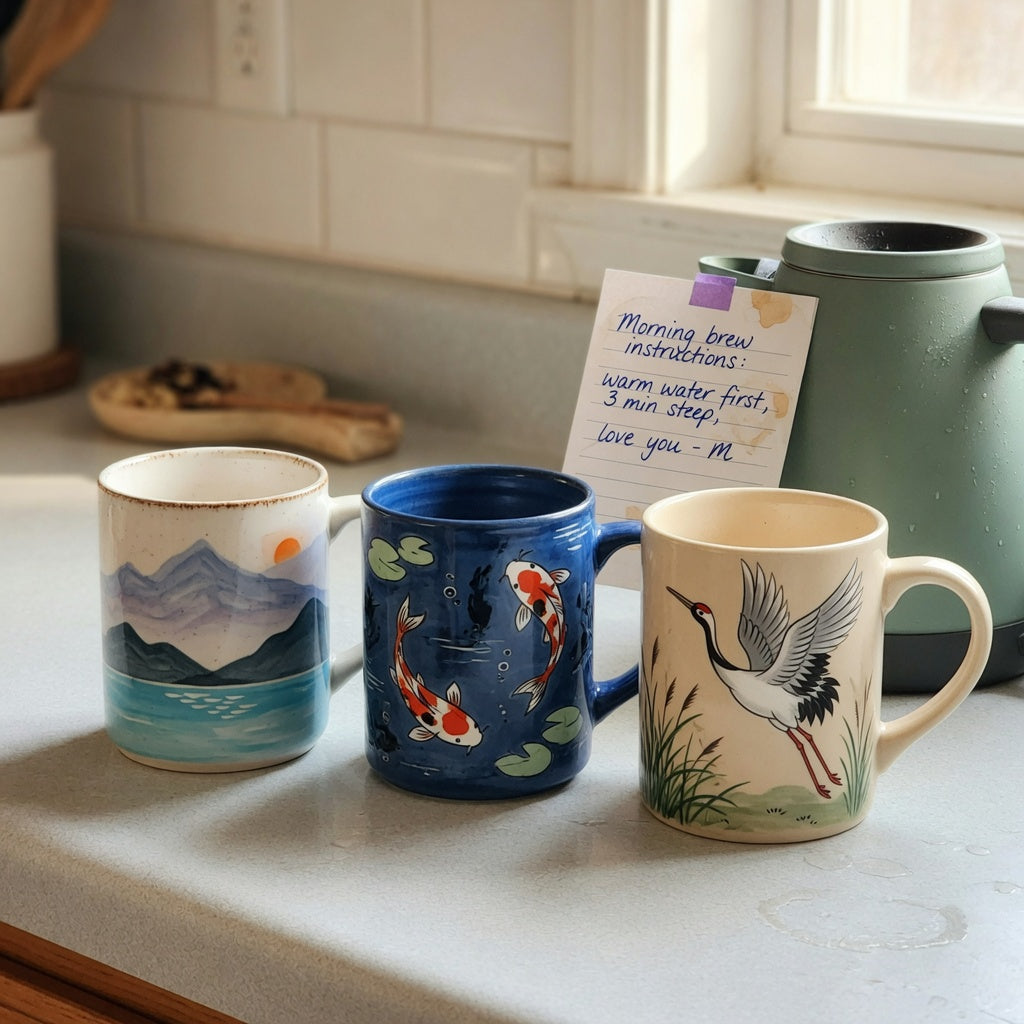
None of those figures is a test report for the mountain, koi, or crane pages. We will not guess food-contact status from imagery. Confirm what the current description says about glaze and food use, then decide.
Microwave, dishwasher, and metal lines do not travel together
Shoppers often collapse care into one question: is it safe? It is three questions. A yes on one does not answer the others.
- Microwave. Does the listing say the piece can be microwaved? If the artwork includes gold, silver, luster, or any metallic line, treat microwave use as off until that page says otherwise. The word ceramic does not cancel metal.
- Dishwasher. Kiln-fired clay can still be a hand-wash piece. Detergent, heat, and knocking against other dishes are harder on some decoration than a quick rinse. Surface prints and photo wraps are a weaker bet against that abuse than color described as underglaze or fired into the glaze. If the listing does not name the method, ask. Do not assume the picture sits under the glaze because it looks crisp.
- Heat shock. A mug that holds hot coffee is not an oven piece, and it is not a from-the-fridge-to-boiling-water piece. If the page is silent, do not bake in it or move it straight from a cold car into boiling water.
Hand-wash-only can still be the right gift. It fits someone who already babies one favorite cup and will read a note in the box. It is a poor fit for a household that runs every cup through the dishwasher at night and will feel guilty, then stop using the mug. That guilt is how art mugs become pencil cups.
Condition is part of the same decision. A crack through the body, a chip on the rim, or crazing (a web of fine lines in the glaze) is a question for the seller, not a charm detail. We would not hand a cracked piece to someone as an everyday hot-drink mug. A speck in a glaze pool is not the same thing as a fissure that can hold liquid against the clay. If you cannot inspect in person, open the listing photos at full size and ask what counts as a defect versus expected variation.
Add-on materials change the answer again. Polymer clay, glued charms, or a non-ceramic handle are not the same object as a fully fired ceramic mug. Do not borrow care rules from a mixed-material cup unless this listing describes that construction.
Mountain, koi, or crane: match the visible motif, then read the page
Treat the art as a style lens, not as a biography. We are not assigning an artist, a movement, an edition, or a studio history from a product name. Compare the motif the current photos actually show, plus whatever shape, material, and capacity that exact listing states today. A title is a pointer. It is not a measurement.
| Name you are comparing | Listing to open | What to settle in the photos | What you still have to read |
|---|---|---|---|
| Mountain and sea | Mountain Sea coffee and tea mug | Does the visible scene match someone who likes landscape imagery, or is it different from what the name suggests? | Listed capacity, clay or glaze notes, microwave and dishwasher lines |
| Koi | Koi fish coffee and tea mug | Is the fish motif one they would notice, and does any line look metallic? | Care wording on this page only |
| Crane | Crane coffee and tea mug | Is the bird the focus, or part of a busier picture than the name implies? | Material, handle, and food-use wording for this piece |
Open the Mountain Sea page when the person responds to landscape imagery. Open the koi page when their taste runs to fish. Open the crane page when a bird is the detail they would notice. On each page, confirm where the picture sits and do not read ounce size off the motif.
None of the three is a matched drinking set unless the pages show matching capacity, handle, and care. Buying them for three different people can work. Buying them as one identical service can fail if the forms differ. If none of those scenes is quite right, go back through the unique coffee mugs and use the same checks.
Capacity, handle clearance, rim, and foot the thumbnail hides
Artwork hides the geometry. On a screen, a tall mug and a short wide mug can look like the same object. Gift buyers then guess the fill. Do not.
Read the listed capacity on the page you are buying. If it is missing, ask for fluid ounces or milliliters before you promise a generous coffee mug. A person who pours a full home cup often wants more than a small tea vessel. A tea drinker who sips slowly may prefer a lower fill that stays comfortable without sloshing. The regulatory note of about 8 ounces is only a description of a typical cup category. It is not a target you should force onto a listing that states something else, and it is not a substitute when the listing states nothing.
- Handle opening. Two fingers should pass without scraping. A thick handle can still be tight if it sits close to the wall. Ask about clearance if the photos never show a hand on it.
- Which hand. A right-handed drinker holds the handle on their right, so a one-sided picture may face other people at the table. A left-handed drinker flips that. If the art does not wrap, look at which side the listing treats as the front.
- Rim and pour. Grit, a flat spot, or a sharp edge is what the mouth feels. A thick rim can feel sturdy and still drip if it does not cut the pour. A thin rim feels finer and chips sooner when it knocks a faucet.
- Foot. A foot ring should sit flat and keep the hot base slightly off the table. Wobble on a desk is a return waiting to happen, especially beside a laptop.
- Balance when full. Top-heavy shapes tip. If you cannot fill the mug yourself, ask whether it stays steady when filled to the listed line.
Stoneware versus porcelain, if the listing names either, changes weight and how the rim feels more than it changes the motif. If the page does not name the clay, leave it as an open question. Do not assign a body from the color of the picture.
What should make you walk away before checkout?
Switch pieces, or skip the gift, if any of these are true and the recipient will not work around them:
- The page never says the mug is for food, or it reads as decorative only.
- You need a microwave cup and the art shows metal, or the microwave line is missing.
- The household runs every cup through the dishwasher and the page says hand wash, or it says nothing.
- Capacity is unlisted and you are shopping specifically for a large morning pour.
- The rim, foot, or handle is hard to see and the seller will not answer.
- You wanted three matching drinkers and the listings do not share form or care.
Variation the seller tells you to expect is not automatically a defect. A crack is not character. Ask which is which before you pay.
When we pack a gift from our store, the useful extra is a short card in the box, not a vague enjoy note. Recipients do not hunt through an email at 7 a.m. Write the specifics from that listing: inside and rim for drinking, hand wash if that is what the page requires, no microwave if metal is present, and the listed capacity so they know what a full pour means.
Frequently asked questions
Is a ceramic art mug gift a good match for someone who drinks coffee every morning?
Yes, if they will actually switch cups and the listing supports daily use. Check stated capacity, handle clearance, rim, and whether the page says dishwasher or hand wash. Skip it for a shared office machine or for someone who will only love it on a shelf. A picture they admire does not replace the plain cup that already fits the routine.
How can I tell whether the glaze is meant for hot drinks?
Read the current listing for a food-use statement, and ask if you only see decorative language. FDA action levels for lead on cups and mugs, and for cadmium on small hollowware under 1.1 liters, are lab limits of 0.5 micrograms per milliliter under the agency tests, not something you can see in a photo. Lead free, a Proposition 65 warning, and an FDA action level are three different claims. If the base says not for food use, do not gift it as a drinking mug.
Should I skip the microwave when the artwork shows gold or silver?
Treat microwave use as off unless that exact listing says it is acceptable with the metal still on the piece. Gold, silver, and luster are a separate limit from the word ceramic. Dishwasher safety is another line entirely. A mug can be fine for hot coffee poured from a kettle and still be a bad idea in the microwave.
What should I verify about capacity before I call a mug a large coffee cup?
Verify the number printed on the page you are buying, in ounces or milliliters. Do not guess from height in a photo, and do not copy capacity from a similar mountain, koi, or crane image. The FDA note that cups and mugs often hold about 8 fluid ounces is a category description, not a product spec. If the listing omits capacity, ask before you promise a generous pour.
Will the picture fade if they run the mug through the dishwasher?
It depends on how the color was applied, which the listing should say. Surface prints and photo wraps are a weaker bet against detergent and heat than color described as underglaze or fired into the glaze. If the page says hand wash only, believe it. If it names neither the decoration method nor a washing rule, ask before you gift it to a dishwasher household.
Before you wrap anything, open the listing you chose and tick five lines: food-use wording, capacity, handle and rim photos, microwave rule, dishwasher rule. Then match the motif to the person. Landscape points you to the Mountain Sea mug, fish to the koi mug, and the bird to the crane mug. If none of those scenes fits, browse other pictured mugs and run the same five lines. A clear no is more useful than a beautiful guess.
More from our blog
Ready to pick your mug? Two ways to save on today's order:
Ordering 1–3 mugs? Get an extra 10% off your 1st order with code 10_OFF Apply 10% Off & Shop Wooden-Handle Mugs →
Gifting 4+ mugs? Buy 3, Get the 4th Free applies automatically at checkout (no code needed; offers do not stack) · Free standard shipping (Nov pre-Christmas delivery: 15–20 calendar days US) · Free replacement if chipped in transit.
Popular mug buying guides: Ceramic Tea Cups & Infuser Mugs · Ceramic Mugs with Lids Compared · Wooden-Handle Tea Infuser Mugs Compared · Christmas & Secret Santa Mugs 2026 · Espresso & Cortado Cups Guide · Cup & Saucer Gift Sets · All 25 Mugs Spec Table · Mug Size Guide · Shipping & Promo FAQ
FIRST ORDER 10% OFF (CODE: 10_OFF) · OR BUY 3, GET THE 4TH FREE


Read more

12 oz ceramic mugs for office: pour, safety, desk fit
Shoppers comparing 12 oz ceramic mugs for office should separate a brim label from a drinkable pour with cream, then check glaze safety, microwave and dishwasher limits, handle comfort, and whether...
Read more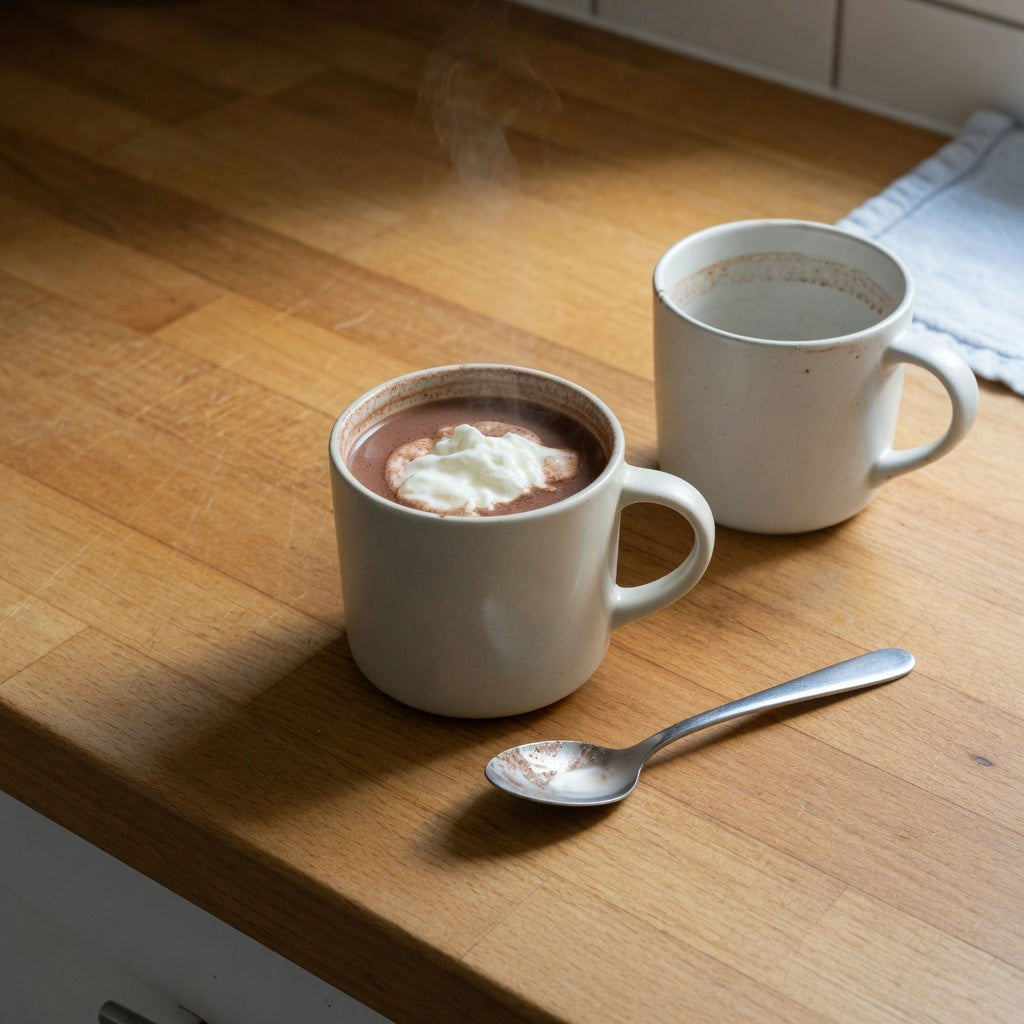
Ceramic Hot Cocoa Mug: What to Compare Before You Buy
A useful ceramic hot cocoa mug leaves room for toppings, stays comfortable to hold, and matches the microwave and glaze wording on that exact piece. We put our 400 ml and 480 ml mugs against those ...
Read more
Leave a comment
This site is protected by hCaptcha and the hCaptcha Privacy Policy and Terms of Service apply.