

Cafe Au Lait Mug Shared Household Practical Purchase Checklist
Reading time: about 9 minutes
At 7:15 a.m., one person pours coffee and milk close to the rim while another leaves part of a large drink untouched. That mismatch is the reason for this cafe au lait mug shared household practical purchase checklist: a shared kitchen needs mug choices based on actual serving habits, not one household average.
We handle larger coffee mugs in our store and pay attention to the details that become noticeable after the first few uses: listed capacity, loaded balance, finger clearance, cabinet fit, and the condition of the rim, base, and handle junction at unboxing. For the three options compared here, the verified product facts are their listed capacities. Material, exact outer dimensions, care requirements, microwave suitability, and dishwasher suitability should be confirmed on the current product listing rather than inferred from appearance.
These are individual product choices, not a promised matching set. The practical goal is to identify which mug fits each person and where a different mug style would be the better purchase.
Which serving fits 400 ml, 440 ml, or 480 ml?
Measure the complete drink, including both coffee and milk. A person who brews 250 ml of coffee and then adds milk is not choosing for a 250 ml serving. They need room for the combined pour, stirring, and any preferred space below the rim.
| Mug | Listed capacity | Reader situation | Trade-off to confirm |
|---|---|---|---|
| The Flow | 400 ml | The usual combined serving leaves comfortable room within 400 ml, and the drinker does not need the largest volume in this comparison. | A larger milk pour may leave too little stirring room. Capacity alone does not establish the mug's handle size or outer dimensions. |
| Morning and Night | 440 ml | The drinker needs more room than the 400 ml choice provides but does not routinely use the largest listed capacity. | As the middle option, it can be a sensible shared choice, but it may still be a compromise if two serving habits differ sharply. |
| The Rock | 480 ml | The drinker makes the largest milk-coffee serving in the household or regularly refills a smaller mug. | It offers 80 ml more listed capacity than The Flow, which also means more liquid to lift when filled. Confirm grip and storage fit. |
The options move in 40 ml steps: 400 ml, 440 ml, and 480 ml. That difference can provide useful headroom, but there is no universal best size. If you want to compare additional silhouettes before deciding, browse our unique coffee mugs collection and check each listing for current specifications.
How much headroom does each person actually use?
Guessing from a current mug is unreliable because few people know its capacity. We recommend a simple cold-water check before buying:
- Ask each person to recreate their normal fill level in the mug they use most, using cold water instead of a hot drink.
- Transfer that water to a marked measuring jug and record the volume.
- Note any extra room normally needed for milk, stirring, foam, or other additions.
- Repeat the check on two ordinary mornings and one slower day if serving size changes with the routine.
- Record whether the person usually finishes the drink, leaves some behind, or returns for a refill.
Do not select a capacity that merely equals the measured liquid volume. A mug filled to its limit leaves no practical stirring or carrying room. The preferred amount of headroom is personal, so compare the measurement with how confidently each person carries a full mug from the brewer to the table or desk.
Should a shared kitchen use one capacity or different individual mugs?
One capacity works when both people make similar drinks and are comfortable with the same loaded weight. It is less successful when one person wants a compact morning serving and the other builds a larger milk-forward drink.
- Similar measured pours: The 440 ml Morning and Night is the midpoint of these three listed capacities and is the clearest product page to review first.
- Clearly different pours: Assign The Flow 400 ml to the person whose serving fits it with headroom, and review The Rock 480 ml for the larger drink.
- Different locations: A kitchen-table drink and an office-desk drink may need different capacities or shapes even if the liquid volume is similar.
- Uncertain habits: Measure before ordering. Buying the midpoint without checking can leave one person overfilling and the other carrying more mug than needed.
We would not force a single-size solution just to make the cabinet look uniform. These products are considered separately, and each household member can follow the product link that matches their measured serving.
How can two people evaluate handle comfort online?
Handle comfort cannot be proven by capacity. The relevant variables are the handle's inner opening, finger clearance, projection from the mug body, section thickness, and balance once the mug contains a normal serving. Product photos can help with shape, but they are not reliable measuring tools unless a scale or dimensions are provided.
- Measure the inside height and width of a handle that already feels comfortable to each person.
- Note how many fingers enter the opening and whether any knuckle presses against the mug body.
- Fill the current mug with cold water to the intended volume and hold it at counter height for 30 seconds.
- Record whether the grip stays relaxed or changes to a pinch grip, base-supporting hold, or two-handed hold.
- Compare those observations with the current listing details and photos for the mug under consideration.
The Flow being 400 ml does not prove that it has the smallest handle. The Rock being 480 ml does not prove that it has the largest opening. Morning and Night is the middle option only by listed capacity. A shopper who needs a specific empty weight, adaptive handle, or published grip dimensions should choose a product that explicitly provides those details, even if that means selecting a different style.
Will the mug fit the brewer, cabinet, desk, and cleaning routine?
A mug can match the serving volume and still be inconvenient in a crowded household. Before ordering, measure the spaces the mug must move through rather than checking the cabinet alone.
- Brewing area: Record the vertical clearance beneath the coffee outlet and the width available beside the kettle or milk container.
- Cabinet: Measure shelf height, depth, and the space around neighboring handles. Do not assume that mugs will stack or nest.
- Desk: Check the clear area away from a keyboard, notebook, charging cable, or edge of the work surface.
- Sink and drying rack: Confirm that the mug can stand securely without the handle pressing against another item.
- Dishwasher: Only assess rack and spray-arm clearance if the current listing explicitly permits dishwasher cleaning. Appearance does not establish dishwasher safety.
Shape affects all five locations. Height, base width, wall profile, and handle projection determine practical fit, but capacity does not reveal those measurements. If exact dimensions are absent from a listing and the space is tight, confirm them before buying. This is especially relevant for the 480 ml choice: it provides the largest listed volume here, but its precise counter footprint should not be guessed from that number.
What should you inspect during the first unboxing?
At our packing table, the inspection points that matter are simple and visible. Check them before a new mug enters the household rotation, and before wrapping it if the mug is a gift.
- Run a careful visual check around the rim for chips, rough areas, or an uneven edge.
- Place the empty mug on a flat, dry counter and check whether the base sits steadily without rocking.
- Inspect both handle junctions for visible cracks, gaps, or surface damage.
- Look over the exterior and interior finish under direct light for damage from transit.
- Confirm that the received product and listed capacity match the item ordered.
Next, read the current care directions on the listing or packaging. Do not use microwave heating or repeated dishwasher cycles as an experiment when suitability is unstated. For the first grip check, room-temperature water lets each household member assess balance and finger clearance without handling a hot drink.
How to use the cafe au lait mug shared household practical purchase checklist
Run this checklist with every regular coffee drinker present. The cafe au lait mug shared household practical purchase checklist works best when each answer reflects an existing routine rather than the drink someone expects to make occasionally.
- Measure each person's full coffee-and-milk serving with cold water and a marked jug.
- Add the headroom that person needs for stirring and comfortable carrying.
- Review The Flow 400 ml when the measured serving fits comfortably within the smallest listed option.
- Review Morning and Night 440 ml when 400 ml is restrictive but the largest capacity is unnecessary.
- Review The Rock 480 ml for the household's largest measured serving.
- Compare handle opening, finger position, loaded balance, and shape against a mug each person already finds comfortable.
- Measure brewer clearance, cabinet space, drying area, and the usual desk or table location.
- Verify material, dimensions, care directions, and any microwave or dishwasher statements on the current listing.
- Inspect the rim, base, handle junctions, and surface finish when the mug arrives.
This comparison is not designed to select an espresso-size cup, insulated travel tumbler, spill-resistant lid, vehicle cup-holder mug, or an especially lightweight adaptive mug. It also makes no claim about traditional form, drink authenticity, special heat retention, or origin. A product explicitly designed and documented for one of those priorities would be a better fit.
Frequently asked questions
Which capacity is best if two people use different amounts of milk?
Measure the complete serving for each person first. The Flow is listed at 400 ml, Morning and Night at 440 ml, and The Rock at 480 ml, so the right match is the option that holds the measured drink with the person's preferred headroom.
Does the cafe au lait mug shared household practical purchase checklist assume the mugs are sold as a set?
No. The three mugs are compared as individual product options, and this article does not claim that they are packaged or sold together. A household can review one size or choose different individual mugs based on separate serving habits.
Are these cafe au lait mug options microwave and dishwasher safe?
Do not assume either feature from the mug's appearance or capacity. Check the current product listing and supplied care directions for an explicit statement before using a microwave or dishwasher.
Can listed capacity tell me which mug has the most comfortable handle?
No. Capacity describes volume, not inner handle clearance, handle thickness, projection, empty weight, or loaded balance. Compare the listing details with measurements from a mug that already feels comfortable, and seek confirmation if a grip dimension is essential.
Is the 480 ml option automatically better for a milk-heavy coffee?
Only if the person's measured serving needs the additional room and the filled mug remains comfortable to carry. The Rock has the largest verified capacity in this comparison, but exact footprint, material, weight, and care details still need to be checked on its listing.
Start with the cold-water measurement, assign each drinker a capacity, and then open the relevant product page to verify current shape, handle, material, dimensions, and care details. If none is an obvious match, compare the broader unique coffee mug range using the same checklist.
More from our blog
Read more
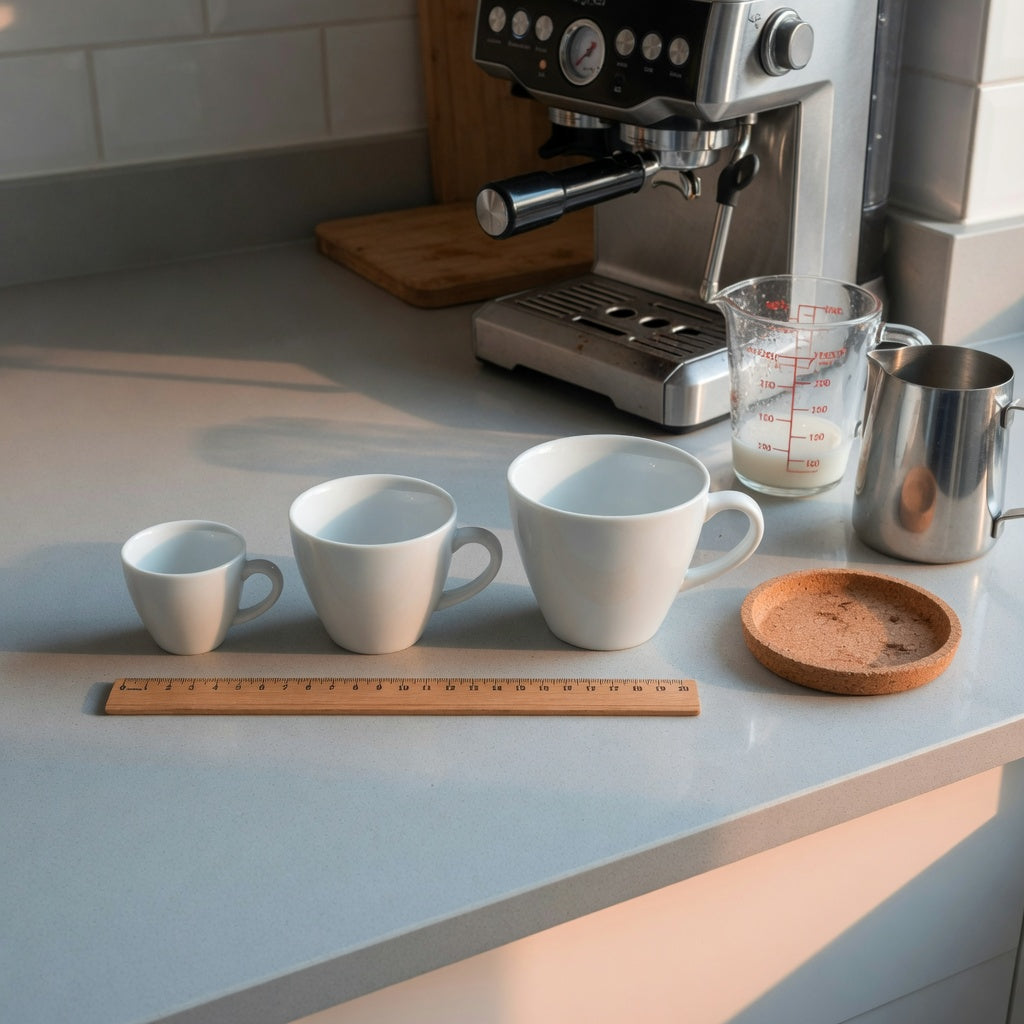
Cappuccino Coffee Mug First Time Buyer Practical Purchase Checklist
Compare the verified 170 ml Retro, 200 ml Pleated and 270 ml Emerald capacities, then check material wording, dimensions, care notes and delivery condition. This checklist separates confirmed facts...
Read more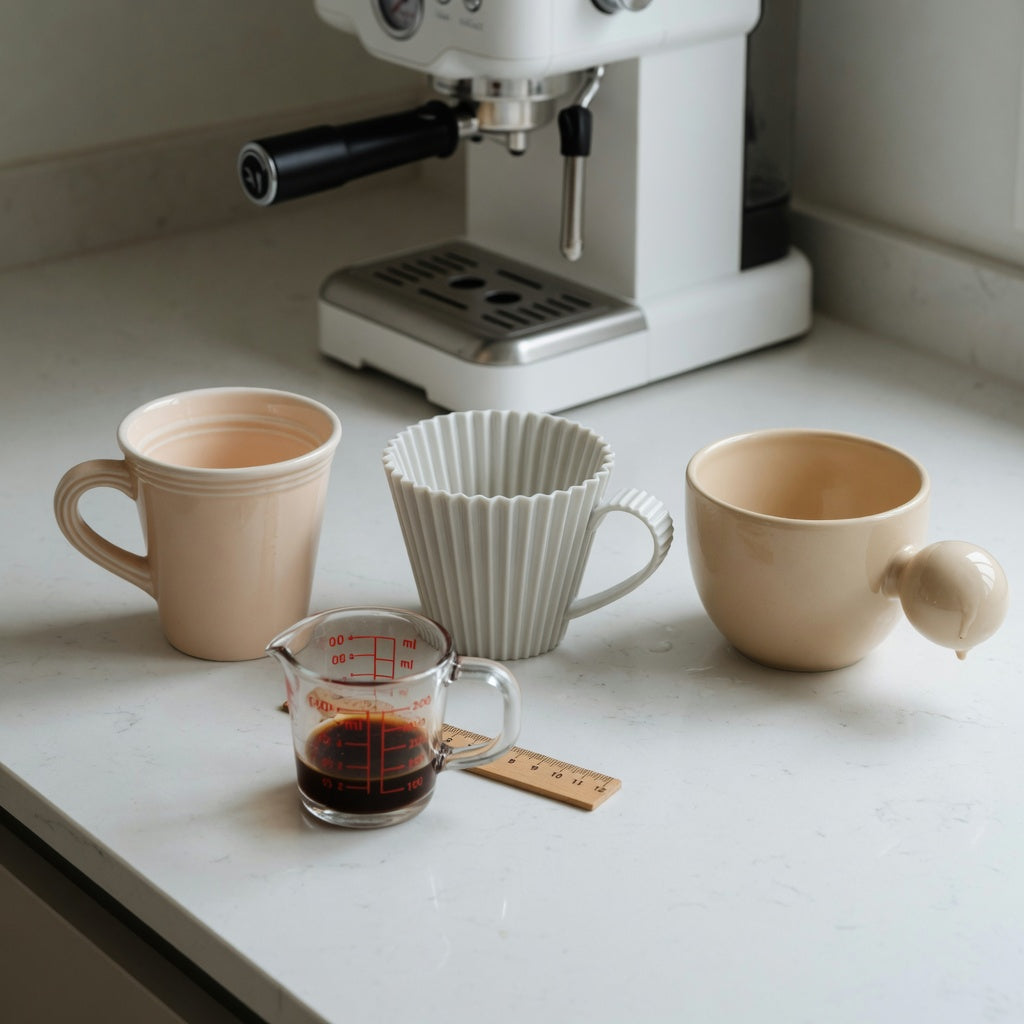
Ceramic Espresso Cup First Time Buyer Product Shortlist Guide: 3 Picks
Compare the verified facts for CoffeifyMug's Retro 170 ml, Pleated 200 ml, and Ball Handle 250 ml ceramic cups. This shortlist explains who each option fits, why to skip it, and which dimensions, c...
Read more
Leave a comment
This site is protected by hCaptcha and the hCaptcha Privacy Policy and Terms of Service apply.