
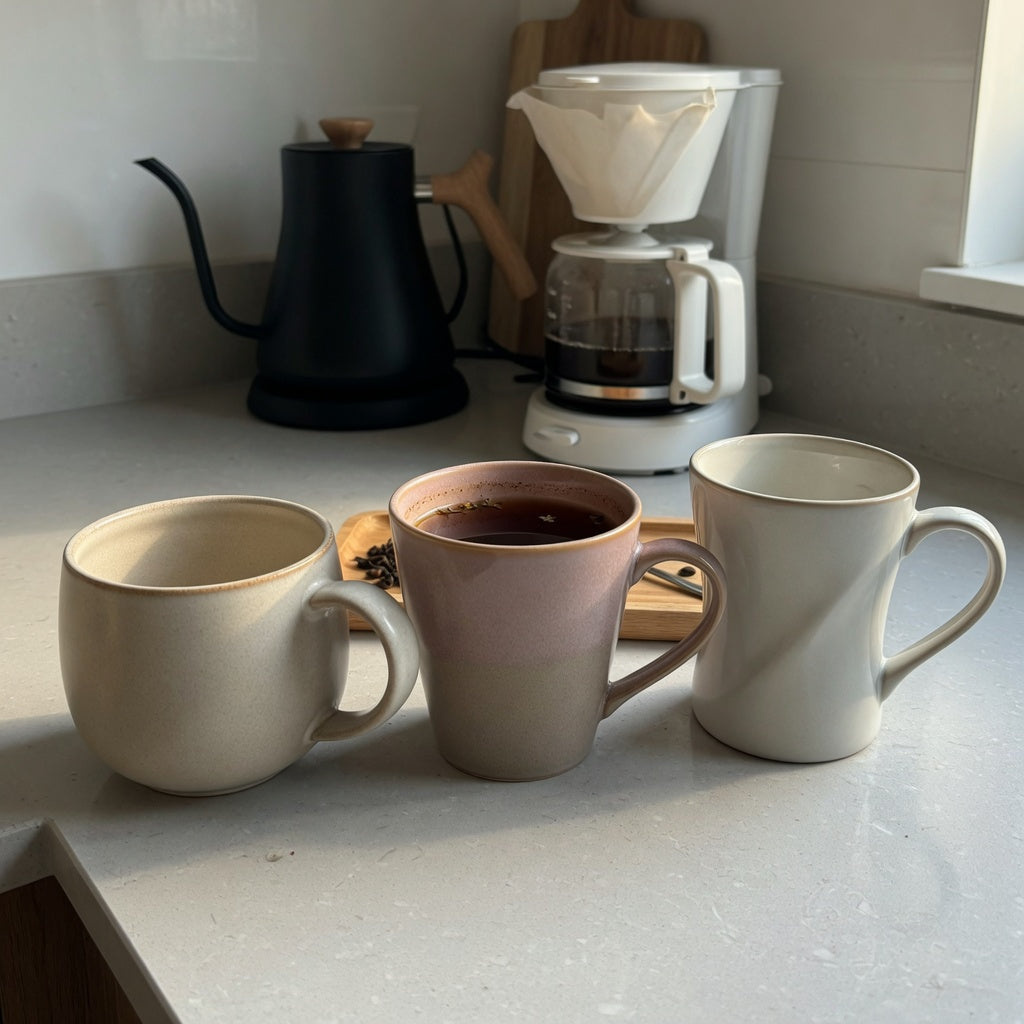
Black Tea Mug Home Coffee Station Product Shortlist Guide
Reading time: about 9 minutes
On a compact kitchen counter, a mug can be wrong before the tea is poured. Its handle occupies the space needed to reach the coffee gear, or the mug must be moved every time someone lifts the kettle. This black tea mug home coffee station product shortlist guide starts with that daily friction rather than assuming every tea mug works in every setup.
In our store, the useful comparison begins with facts we can support: the Round is listed at 390 ml, while The Gradient and The Flow are each listed at 400 ml. Their catalog descriptions support tea use. From there, we ask shoppers to compare the visible handle shape and measure the space where the mug will actually live. We do not assign special steeping, temperature, material, or appliance-compatibility claims to these options.
How much counter space can the mug claim?
A mug has more than a base footprint. It also has a handle envelope: the total side-to-side space occupied by the body and handle. That distinction matters beside a grinder, coffee maker, kettle, storage jar, or wall. A capacity figure describes volume; it does not confirm external width, height, base diameter, or handle projection.
Before comparing product photos, place your current mug in its usual parking position and check four details:
- Measure the maximum width from the far side of the mug to the outside edge of its handle.
- Mark the available front-to-back depth with removable tape.
- Turn the handle left and right to find the orientation that leaves the clearest working space.
- Lift the kettle and access the coffee equipment as usual without moving the mug.
This quick counter test is more dependable than assuming the 390 ml option must have a smaller exterior than either 400 ml option. The 10 ml capacity difference alone does not prove that.
Black tea mug home coffee station product shortlist guide: three scenarios
Each option below has a specific starting scenario, a reason to choose it, and a reason to keep looking.
| Product | Listed capacity | Best starting scenario | Reason to skip |
|---|---|---|---|
| Round Coffee Tea Mug | 390 ml | Your measured serving fits within 390 ml and you prefer the visible Round design. | You want a listed 400 ml capacity or need verified external dimensions before ordering. |
| The Gradient Coffee Tea Mug | 400 ml | You want 400 ml and a visually distinct mug for a shared station. | You prefer a quieter visual style or its displayed handle shape does not suit your grip. |
| The Flow Coffee Tea Mug | 400 ml | You want 400 ml and prefer The Flow's displayed outline and handle. | Capacity is your only deciding factor, since The Gradient is also listed at 400 ml. |
Tight mug zone and a measured 390 ml serving: Round
Choose the 390 ml Round mug for tea if your normal pour fits that listed capacity and its handle appears compatible with the counter space you marked. It is the lowest-capacity option in this three-product set. Skip it if you regularly want the full listed 400 ml or if you need exact exterior measurements that are not confirmed by the capacity figure.
Shared coffee station with a designated tea mug: The Gradient
Choose the 400 ml Gradient coffee and tea mug if you want a tea mug that is visually easy to distinguish from plain coffee cups. That can be useful in a household where several people use the same station. Skip it if the gradient presentation conflicts with the rest of your setup or the handle shown in the listing does not resemble a handle you already find comfortable.
Station-to-desk use with a 400 ml preference: The Flow
Choose the 400 ml Flow coffee and tea mug if your mug often moves from the kitchen counter to an office desk and you prefer its visible form and handle. We would not call it easier to carry without verified dimensions or a direct grip comparison; the product name is not a performance claim. Skip it if capacity is your only concern, because The Gradient has the same listed volume.
If none of these displayed handle shapes suits your measured space, browse our unique coffee mugs for tea and coffee stations. A different shape is a better purchase than forcing one of these three into a counter layout it does not suit.
Does the 10 ml capacity difference matter at home?
The verified capacity gap in this shortlist is 10 ml: Round is 390 ml, while The Gradient and The Flow are 400 ml. That number is too limited to settle the choice without checking how much tea you actually pour.
- Fill your current mug with cool water to your normal drinking level, leaving the same room you usually reserve for milk or other additions.
- Pour that water into a marked measuring jug.
- Compare the result with the listed 390 ml and 400 ml capacities.
- Repeat once if your weekday and weekend servings are noticeably different.
If your comfortable serving falls below 390 ml, all three listed capacities remain candidates and handle shape becomes the stronger filter. If your measured serving is close to 400 ml, start with The Gradient or The Flow. Do not treat the catalog capacity as an instruction to fill hot tea to the rim; the headroom you prefer is part of everyday fit.
How should handle shape be checked without inventing appliance fit?
Handle comfort depends on the opening, the distance it projects from the body, and where it joins the mug. Product photography can show the general form, but perspective does not establish exact dimensions. A mug that looks compact in one image may still occupy more lateral space than your station allows.
- Compare the visible handle opening with a mug you already use comfortably.
- Notice whether you normally lift with one finger, several fingers, or support the body with your other hand.
- Check the handle on both sides of your station; facing it toward open counter space often improves access.
- Do not infer fit beneath a coffee maker, kettle spout, mug warmer, or cabinet from capacity alone.
Our team also asks where the mug goes after brewing. A handle that works on an open kitchen counter may feel awkward between a keyboard and notebook. If the mug travels to a desk, test that route with your current mug and include the landing space in your decision.
Which shoppers should skip this three-mug shortlist?
These mugs are not the right starting point for every setup. Choose a different product style if any of the following is essential:
- You need a lid, spill resistance, insulation, or a travel-cup format.
- You need an integrated infuser or another special steeping feature.
- You require confirmed height, base diameter, or handle width before purchase and cannot verify those details on the live listing.
- Your routine depends on confirmed dishwasher or microwave suitability that is not stated in the current care information.
- You need a serving vessel for several people rather than one personal mug.
The three linked products are shortlisted for listed capacity, visible handle shape, and everyday placement. They are not presented as temperature-control tools, professional brewing equipment, or guaranteed matches for a particular appliance.
What should you inspect at unboxing and before routine washing?
Gift unboxings and first washes are where small condition issues are easiest to catch. In our experience handling mugs, it is worth completing a basic inspection before the mug enters regular kitchen or office use.
- Run a finger carefully around the rim and inspect it under side lighting for a chip or hairline crack.
- Look at both handle attachment points before lifting a full mug.
- Set the empty mug on a dry, level counter and confirm that it sits steadily.
- Check the underside for a rough point before placing it on a wood shelf or finished tray.
- Read the current product care directions before the first microwave use or repeated dishwasher cycles.
These are routine checks for a handled mug, not a claim that these products commonly arrive with defects. For a gift, inspect the mug before wrapping it so the recipient is not the first person to discover shipping damage or a care limitation.
A two-minute checkout decision for your coffee station
This black tea mug home coffee station product shortlist guide can be reduced to five checkout checks:
- Choose Round: your measured serving fits 390 ml and its visible handle works for your marked space.
- Choose The Gradient: you want 400 ml and a distinct visual cue for the tea mug.
- Choose The Flow: you want 400 ml and prefer its displayed form for counter-to-desk use.
- Pause: you need external dimensions, appliance fit, or care claims that are not currently confirmed.
- Keep browsing: none of the three handle shapes or styles works with the station you already own.
Frequently asked questions
What does a black tea mug home coffee station product shortlist guide compare?
It should compare the details that affect daily placement and use: listed capacity, visible handle shape, and the space available beside existing coffee gear. In this shortlist, Round is 390 ml, while The Gradient and The Flow are each 400 ml. The guide does not infer special steeping, temperature, or appliance performance.
Is a 390 ml mug too small for black tea?
That depends on your measured serving rather than a universal cup size. Fill your current mug to its normal level with cool water, measure that amount, and leave room for any milk or additions you use. If the result is below 390 ml, the Round remains a practical candidate by listed capacity.
How do I choose between The Gradient and The Flow if both are 400 ml?
Use the displayed handle shape and overall presentation as the tiebreakers. The Gradient suits a shopper who wants a visually distinct tea mug, while The Flow suits someone who prefers its shown outline for a mug that may move between the station and a desk. Neither should be assigned a grip or performance advantage without a direct comparison.
Will these mugs fit under my coffee maker or kettle spout?
Capacity does not confirm external height or appliance clearance, so this guide cannot promise that fit. Measure the available space and check any dimensions currently provided on the live product page. If exact clearance is critical, do not order from a lifestyle image alone.
Can these tea mugs go in the dishwasher or microwave?
Follow the current care instructions on the individual product page. This shortlist does not assign dishwasher or microwave suitability because those claims are not part of the verified facts used for this comparison.
Measure your usual pour and the maximum mug width your counter can accept, then open the three product pages side by side. Start with Round for a listed 390 ml capacity, compare The Gradient and The Flow for 400 ml, and move to the broader unique mug collection if none of their visible handle shapes fits your station.
More from our blog
Read more
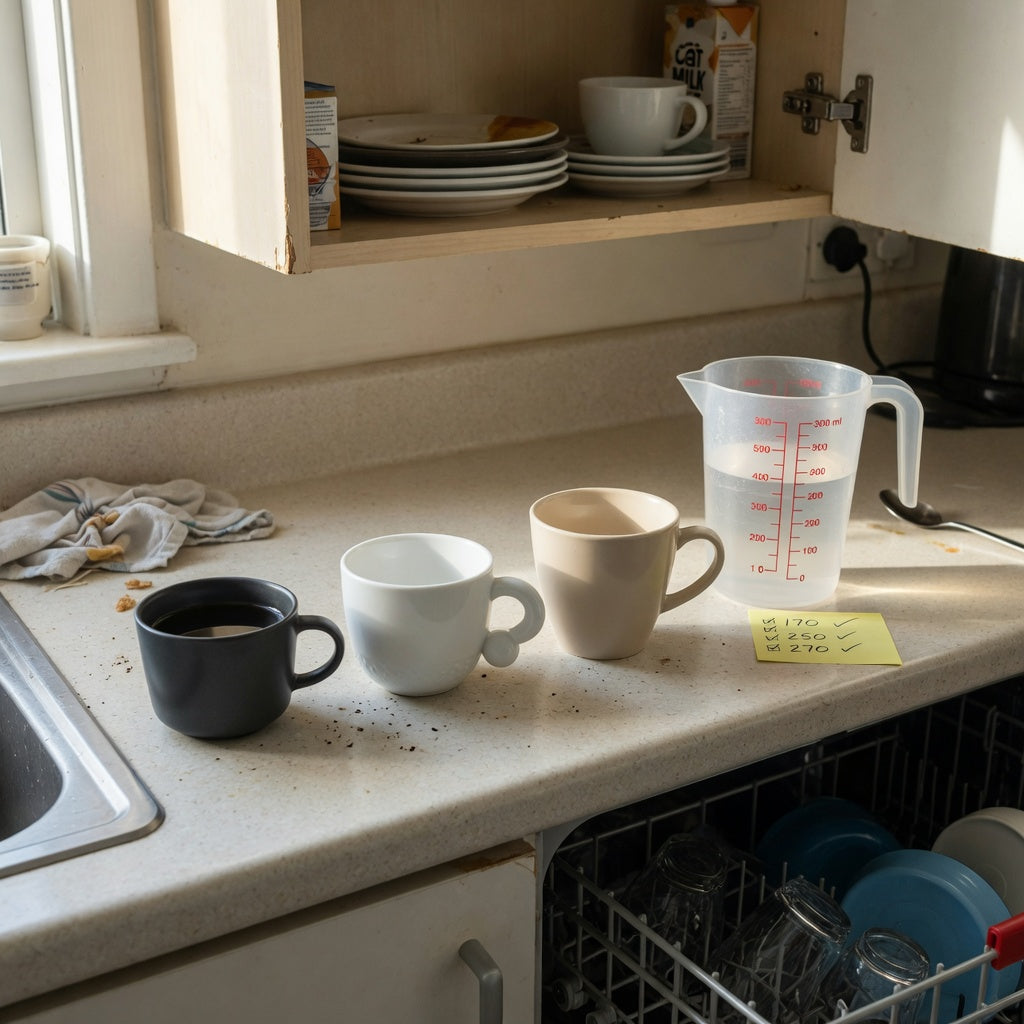
Piccolo Cup Everyday Mug Rotation Practical Purchase Checklist
Compare CoffeifyMug's verified 170 ml Retro, 250 ml Ball Handled, and 270 ml Emerald capacities against your real pour, cabinet space, handle clearance, and care routine. The checklist also flags u...
Read more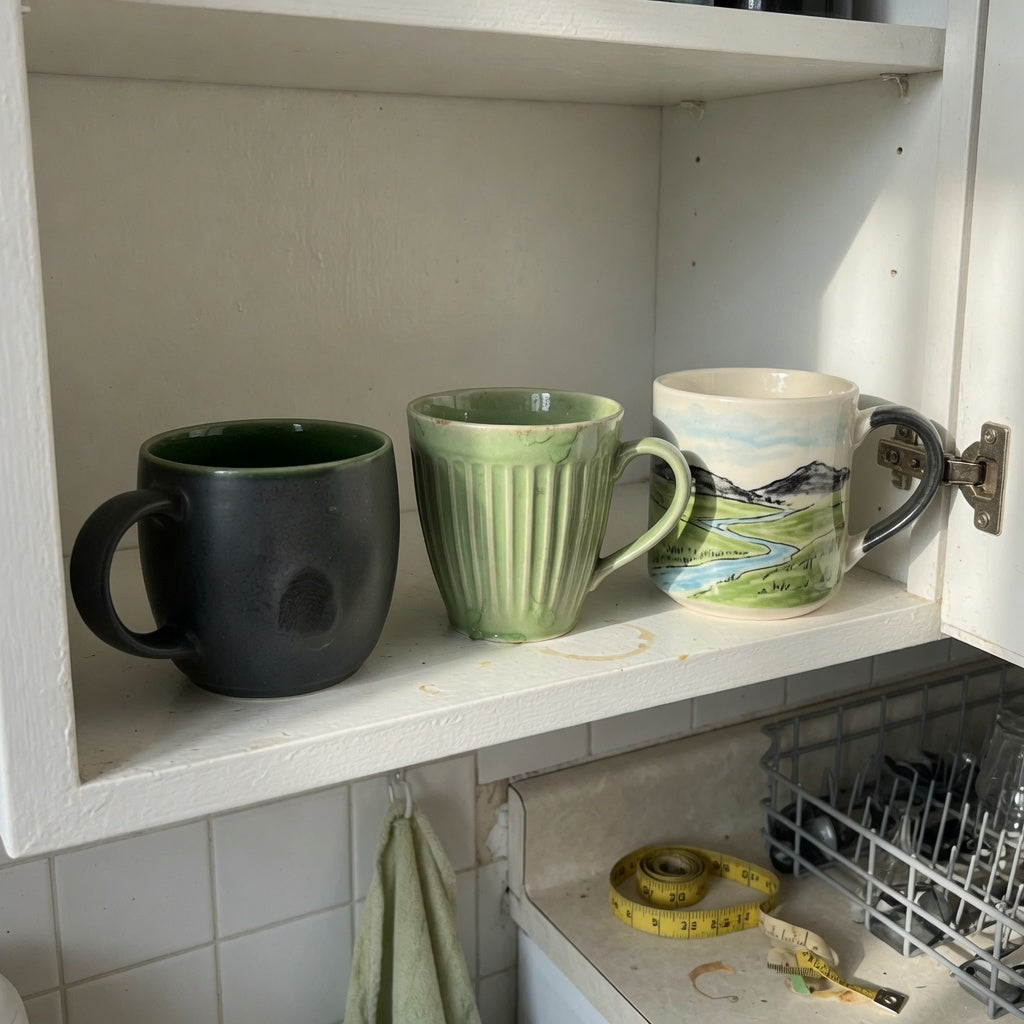
Ceramic vs Porcelain Coffee Mugs: Everyday Rotation Shortlist Guide
Build a two- or three-mug rotation by comparing material labels, cabinet fit, care instructions, and actual wash frequency. We match three CoffeifyMug designs to clear choose-or-skip scenarios.
Read more
Leave a comment
This site is protected by hCaptcha and the hCaptcha Privacy Policy and Terms of Service apply.