




Best small emerald ceramic coffee mug for beginners: buying checks
Reading time: about 11 minutes
The first sign that a beginner chose the wrong mug is often an unfinished drink beside the kettle. A large vessel can look appealing on a product page, yet the serving may be more than the drinker wants, the mug may crowd a small desk, and the handle may feel awkward once it is full. For shoppers comparing the best small emerald ceramic coffee mug for beginners, the useful decision is not simply “Which one looks nicest?” It is “Which size, shape, finish, and care routine will be easy to live with every morning?”
We handle this category with that practical question in mind. The catalog identifies the linked item as the Emerald Small Ceramic Coffee Mug, but the product name alone does not establish a capacity, weight, handle clearance, dishwasher rating, or microwave rating. Those are the details to confirm on the current listing before ordering.
What should a beginner measure before choosing a small mug?
“Small” is a useful description, not a universal measurement. One seller may use it for an espresso-sized cup, while another may use it for a compact everyday coffee mug. Start with the amount you normally drink, then compare the listing’s usable capacity rather than relying on the shape in a photograph.
As a practical comparison range, many shoppers begin by looking at mugs around 6 to 10 fluid ounces. Treat that as a shopping shortcut, not an industry standard. A person drinking a short black coffee may prefer the lower end; someone making a modest filter coffee with a splash of milk may need more room.
- Usable capacity: Check how much liquid the mug is intended to hold without filling to the rim. Leave room for movement, milk, foam, or a spoon.
- Overall height: Measure this against a low coffee-machine outlet, cupboard shelf, or office kitchenette cabinet.
- Rim diameter: A narrow opening can feel more focused for black coffee, while a wider opening may be easier for milk drinks and spooning.
- Base diameter: This affects stability on a desk, fit on a coaster, and how much room the mug takes in a drying rack.
- Handle opening: Look for enough clearance for your fingers without forcing your knuckles against the hot body.
These measurements are especially useful for first-time buyers because photographs rarely show scale accurately. A mug beside a large kettle can look smaller than it is, and a handle can look generous until a full cup is lifted one-handed.
How do you compare the best small emerald ceramic coffee mug for beginners?
Compare the mug in the order you will use it: fill it, lift it, drink from it, wash it, and store it. That sequence reveals more than a color swatch or a staged kitchen photograph.
| Buyer variable | Why it matters in daily use | What to verify on the listing |
|---|---|---|
| Capacity | Prevents a small serving from looking lost or a large serving from being left unfinished | Stated capacity and, if provided, recommended fill level |
| Rim profile | Changes drinking feel, aroma exposure, splash risk, and cooling behavior | Rim diameter, side profile, and clear product photos |
| Handle shape | Determines finger clearance and control while carrying a hot drink | Handle opening, attachment points, and side-on images |
| Foot or base | Affects rocking, coaster fit, and storage footprint | Base diameter and a flat-surface view |
| Finish | Influences appearance, visible variation, and the cleaning routine you are willing to follow | Glaze or decoration description and care instructions |
Our team pays particular attention to the relationship between capacity and opening width. Two mugs can hold a similar amount but behave differently: a broad, shallow form exposes more drink surface to room air, while a taller, narrower form may feel more concentrated. That does not make one shape universally better. It means a beginner should match the profile to the drink rather than buying by ounce count alone.
Does a small mug suit your coffee, tea, and office routine?
A compact mug makes sense for a person who prepares one modest drink at a time, works at a crowded desk, or wants a manageable cup for a kitchen with limited shelf space. It can also suit someone learning a pour-over routine who would rather brew a smaller serving than repeatedly reheat a half-finished drink.
Use these situations to test the fit:
- For a short morning coffee: Prioritize usable capacity, a comfortable handle, and a rim that does not feel too wide for the serving.
- For tea: Check the capacity and opening carefully. Tea leaves, a tea bag, or a small infuser need room without pushing liquid too close to the rim.
- For an office desk: Compare base diameter and stability. A mug that rocks on a slightly uneven desk is more troublesome than one that is a little heavier.
- For gifting: Check the current listing for dimensions and care details before presenting it. A recipient may have a particular coffee machine, shelf, or dishwasher routine.
- For iced coffee: Confirm that the capacity leaves room for ice and any milk or syrup. A mug sized for a hot serving may feel cramped once ice is added.
The Emerald Small Ceramic Coffee Mug is worth evaluating first if your priority is a compact emerald-colored ceramic option for a single everyday serving. Follow the product page’s current measurements and care information rather than assuming the word “small” means the same thing as it does on another mug.
What does an emerald finish change for the buyer?
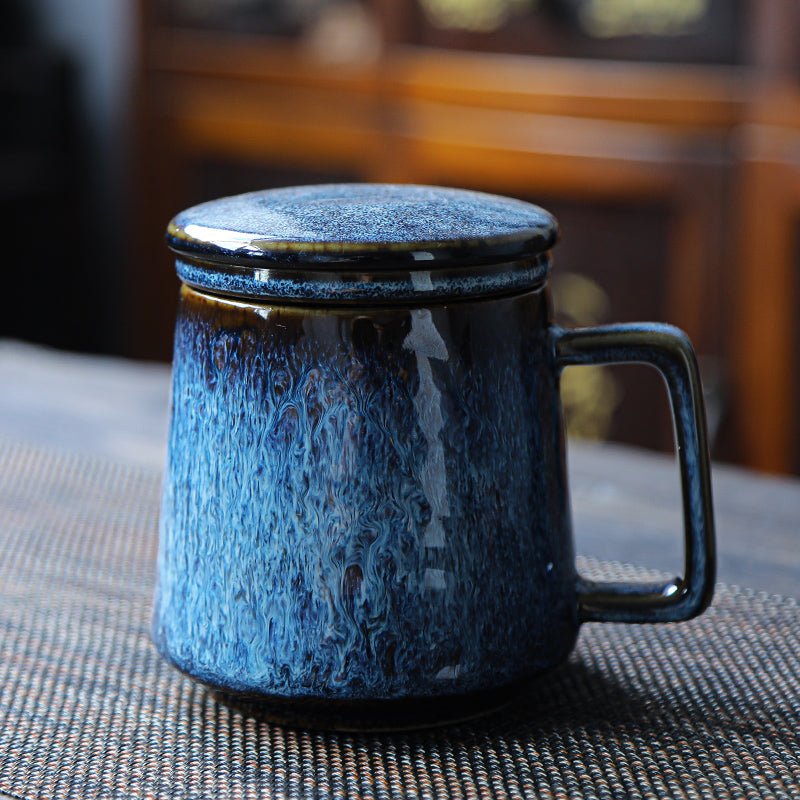
Emerald is a visual choice, but it also changes how closely you should inspect finish information. Green shades can range from deep blue-green to brighter jewel tones, and the result may look different under a kitchen’s warm bulbs than it does in daylight. If you are buying a pair or a set over time, ask whether variation between pieces is expected.
Also establish how the color is produced. A listing may describe a glaze, underglaze, painted decoration, or another surface treatment. Those terms are not interchangeable, and the care instructions should take priority over assumptions based on appearance.
There is a practical trade-off here. A deep color can make coffee or tea residue less visually obvious between washes, but that does not mean the interior is clean. Check the inside surface after each use, especially around the bottom where residue can collect. An emerald mug also has more visual presence than a plain white one, so it suits an open shelf or styled desk better than a buyer seeking a nearly invisible neutral piece.
If you want to compare emerald shapes, handles, and finishes instead of committing to one silhouette, browse the unique coffee mugs collection. Use it to compare the design language first, then return to the individual listing for exact specifications.
Which ceramic defects should you check at unboxing?
Ceramic mugs are formed, dried, fired, and finished, so small visual variation can be part of the manufacturing process. That is different from damage or a defect that affects safe everyday handling. We recommend inspecting a new mug before its first hot drink, not after it has already gone through a dishwasher cycle.
- Run a fingertip around the rim. Look for a sharp rough patch, chip, or nick. The rim is exposed during stacking and is one of the first places damage becomes noticeable.
- Inspect the handle joints. Check both points where the handle meets the body for a visible crack, loose-looking join, or sharp edge.
- Perform a rock test. Set the empty mug on a flat counter and press lightly on opposite sides. Excessive rocking can indicate an uneven foot or base.
- Check the inside bottom. Look for pinholes, bare patches, crawling, or a rough area that could make cleaning difficult.
- Examine the color in daylight. Compare the rim, body, handle, and interior. Variation may be intentional, but unexpected damage or an unlisted finish issue should be documented.
Terms such as crazing and crackle deserve careful attention. Crazing usually describes fine lines in a glaze surface, while crackle may be an intentionally designed effect. Do not assume that a web of lines is decorative or harmless; ask the seller how the finish is intended to look and how it should be cared for.
What care details must you verify before ordering?
Do not infer dishwasher, microwave, oven, or temperature-shock suitability from the word “ceramic.” The current product listing should provide the relevant care guidance. If it does not, ask before placing the order, particularly if the mug has metallic trim, applied decoration, a special finish, or a thick body.
For a general ceramic-mug routine, these habits reduce avoidable damage:
- Let a very cold mug warm gradually before adding a freshly boiled drink.
- Allow a hot mug to cool before placing it into cold water or on a very cold stone surface.
- Use a soft sponge rather than an abrasive pad on decorated or glossy surfaces.
- Dry the foot and handle joint fully before storing, especially in a tightly packed cupboard.
- Place a thin liner between stacked mugs if the rims touch and the storage space is tight.
These steps are category-level precautions, not confirmation of the care rating for the Emerald Small Ceramic Coffee Mug. For the product-specific answer, use the instructions on the linked listing. A different style may be better if you need a sealed lid, a travel handle, a car cup-holder fit, or a stated temperature rating.
Who should choose another mug style instead?
A small emerald ceramic mug is not the right answer for every coffee routine. Being clear about that is part of making a good recommendation.
- Choose a larger mug if you regularly drink a large serving or prepare a foamy milk drink that needs extra headroom.
- Choose a travel mug if you carry coffee in a bag or car. A ceramic mug should not be treated as leakproof unless the listing specifically provides a compatible lid and seal system.
- Choose a lighter, simpler shape if you have limited grip strength or dislike a substantial base. Confirm the empty weight rather than guessing from photographs.
- Choose a neutral finish if you want the mug to blend into a minimalist kitchen or coordinate with many different table settings.
- Choose a more decorative piece if color consistency is less important than a visibly glazed or varied appearance.
If you are unsure which direction suits your routine, start with the CoffeifyMug unique mug collection to compare shapes and visual styles. Then use the individual Emerald Small Ceramic Coffee Mug product page to verify its current dimensions, capacity, finish description, and care instructions.
What should be on your five-line buying checklist?
- Capacity: It matches the amount you drink, with enough room for milk, foam, tea accessories, or ice when needed.
- Fit: Height, rim diameter, base diameter, and handle opening suit your machine, hand, coaster, desk, and storage shelf.
- Finish: The listing explains the emerald surface and sets a reasonable expectation for color variation.
- Condition: You know how to inspect the rim, handle joints, foot, and interior when the mug arrives.
- Care: Dishwasher, microwave, decoration, and thermal-shock guidance is confirmed rather than assumed.
If those checks match your routine, the linked Emerald Small Ceramic Coffee Mug is the logical product page to review next. If one variable does not fit, do not force the purchase because the color is appealing; compare other silhouettes in the collection and choose the shape you will use comfortably every day.
Frequently asked questions
How do I choose the best small emerald ceramic coffee mug for beginners?
Start with the amount you drink, then compare the listing’s capacity, height, rim diameter, base diameter, and handle opening. Confirm the current care instructions as well, because the product title does not establish dishwasher or microwave suitability. The best choice is the one that fits your routine rather than simply the smallest option available.
What capacity should a beginner look for in a small coffee mug?
A practical starting range is roughly 6 to 10 fluid ounces, but it is not an industry standard. Choose the lower end for shorter servings and the higher end if you add milk or make a modest filter coffee. Always leave room below the rim to reduce spills.
Is an emerald ceramic mug suitable for tea and iced coffee?
It can be, provided the current listing’s capacity and dimensions suit the drink. Tea may need room for a bag or infuser, while iced coffee needs space for ice and additions. Check the usable capacity rather than judging from the exterior size.
How can I tell if a ceramic mug has a finish problem?
Inspect the rim, handle joints, foot, and interior before use. Rough chips, sharp edges, visible cracks, excessive rocking, or a rough unglazed patch are reasons to contact the seller. Fine decorative crackle should not be confused with an unexplained crack or damage.
Can I put the Emerald Small Ceramic Coffee Mug in the dishwasher or microwave?
Verify both points on the current product listing or ask before ordering; the product title does not answer them. Decoration, metallic details, and particular finishes can change the care requirements. If the listing is not clear, hand washing and avoiding appliance use until confirmed is the safer decision.
Ready to pick your mug? Two ways to save on today's order:
Ordering 1–3 mugs? Get an extra 10% off your 1st order with code 10_OFF Apply 10% Off & Shop Wooden-Handle Mugs →
Gifting 4+ mugs? Buy 3, Get the 4th Free applies automatically at checkout (no code needed; offers do not stack) · Free standard shipping (Nov pre-Christmas delivery: 15–20 calendar days US) · Free replacement if chipped in transit.
Popular mug buying guides: Ceramic Tea Cups & Infuser Mugs · Ceramic Mugs with Lids Compared · Wooden-Handle Tea Infuser Mugs Compared · Christmas & Secret Santa Mugs 2026 · Espresso & Cortado Cups Guide · Cup & Saucer Gift Sets · All 25 Mugs Spec Table · Mug Size Guide · Shipping & Promo FAQ
FIRST ORDER 10% OFF (CODE: 10_OFF) · OR BUY 3, GET THE 4TH FREE


Read more
The Flow Large Ceramic Coffee Mug Gift: What Buyers Compare
Compare the details that matter before gifting The Flow Large Ceramic Coffee Mug: capacity, dimensions, handle comfort, care questions, and gift presentation.
Read more
How to Size Ball Handled Mug for Daily Use: Ounces, Grip, Weight
A practical sizing walkthrough for ball handled mugs: measure your real pour, match the ball's clearance to your own hand, and weigh the mug full before you buy. Includes a capacity table, where-th...
Read more
Leave a comment
This site is protected by hCaptcha and the hCaptcha Privacy Policy and Terms of Service apply.