
Best Flat White Cups for Home: What Buyers Should Compare
Reading time: about 9 minutes
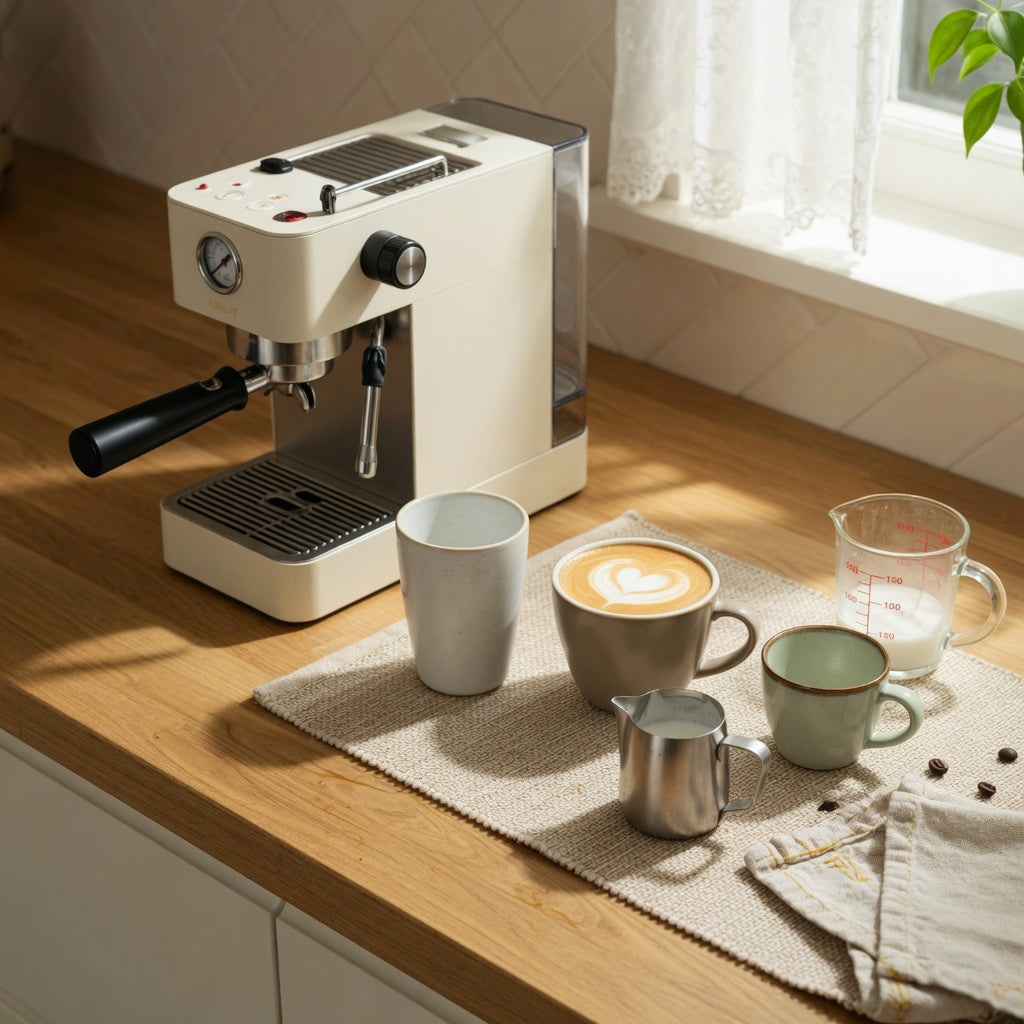
The scene shows up in customer photos every week: a compact espresso machine on the counter, a pitcher of stretched milk, and a 350 ml kitchen mug swallowing the entire drink. A flat white poured into a mug that size tastes like warm milk with a coffee undertone, because a double shot simply disappears. It is the first thing we ask about when someone emails us wondering why their home flat whites never taste like the cafe version.
Choosing the best flat white cups for home is less about decoration and more about four comparisons we run through with customers before they order: how many milliliters the cup holds, whether it physically fits under your machine's group head, how it holds heat, and whether the glaze is safe for daily hot, acidic coffee. We sell and pack these cups ourselves, so this guide covers the same questions we hear across the counter and in our inbox — including the trade-offs our own catalog does not solve.
What Should the Best Flat White Cups for Home Actually Hold?
A flat white is a small drink by design: espresso under a thin layer of textured milk, no tall foam cap. Most home baristas we talk to pour somewhere between 150 and 180 ml, and the endless forum debates about 150 ml versus 200 ml cups exist for exactly this reason — those extra 50 ml genuinely change how the drink tastes. Pour the same double shot into a 350 ml mug and the coffee gets lost; pour it into something tiny and there is nowhere for the milk to go.
Here is how common home pours compare, so you can match a cup to the drink you actually make:
| Drink | Common home pour | Approx. in ounces | What it means for your cup |
|---|---|---|---|
| Double espresso | 45–60 ml | 1.5–2 oz | A demitasse; no room needed for milk |
| Flat white | 150–180 ml | 5–6 oz | Small-to-medium cup with a little headroom above the milk line |
| Cappuccino | 150–200 ml | 5–7 oz | Similar volume to a flat white, with a thicker foam layer sitting on top |
| Latte | 240–350 ml | 8–12 oz | Mug territory; a flat white cup will look undersized |
These are commonly poured home ranges, not enforced standards — cafes differ, and so will your taste. The point of the table is narrower: if your favorite mug holds 350 ml, you are not making a flat white in it, and no amount of latte art will fix that.
Our own catalog sits toward the roomier end of the spectrum. The Pleated Coffee & Tea Cup, for example, is listed at 200 ml — enough for a double shot plus roughly 140–150 ml of milk, which lands on the espresso-forward side of a home flat white. If you want to compare shapes and sizes side by side, our full range of unique coffee mugs is the fastest place to do it.
Will the Cup Fit Under Your Espresso Machine's Group Head?
After capacity, this is the question we field most often, and it is the one most product pages skip. If you pull shots directly into the cup, the cup has to slide under the portafilter, and compact home machines do not leave much vertical space between the drip tray grate and the spouts. Add a shot scale underneath, as many home baristas do, and you lose roughly another centimeter or two of working room.
Before ordering, measure three things:
- Grate-to-spout clearance: the vertical distance from your drip tray grate to the underside of the portafilter spouts.
- Cup height: this should be listed on the product page. If it is not published, ask the seller before buying rather than guessing from photos.
- Scale height: if you weigh your shots, subtract the scale from your available clearance, or plan to pull the shot into a smaller vessel and transfer.
A roomier 270 ml mug can still be part of a flat white routine — you may just brew into a smaller cup first, or steam and pour on the counter instead of under the machine. That is a workflow trade-off, not a dealbreaker, but it is far better to know before the box arrives than after.
How Do Material and Preheating Change Heat Retention?
Thick single-wall cups in stoneware or porcelain carry real thermal mass, and that cuts both ways. Preheated, they hold drinking temperature through a slow morning. Cold, they act like a heat sink — espresso poured into a cold cup drops in temperature quickly, and the microfoam thins sooner. Our habit in the store and at home: fill the cup with hot water while the machine warms up, then dump it right before pulling the shot. Fifteen seconds of effort buys a noticeably longer-lasting drink.
Double-walled borosilicate glass takes a different approach: a sealed air gap between two glass layers slows heat transfer, so the outer wall stays comfortable to hold and the drink stays hot longer. That is the design intent manufacturers describe — we have not lab-tested it, and real-world results vary by brand. The trade-offs are concrete, though: double-walled glass is thinner and more fragile than a glazed cup, it usually wants hand washing, and it is a poor match for households that dishwash everything or for people who drop things.
Plainly: none of the three cups we match below are double-walled designs — they are conventional cups you preheat and serve in. If insulated glassware is what you are after, a glassware specialist will serve you better than this page. For a closer look at how clay body and glaze affect everyday drinking temperature, we have a separate guide to choosing ceramic flat white cups.
Which Glaze Safety Questions Should You Ask Before Buying?
Hot coffee is acidic, and acid plus heat is exactly the combination that pulls heavy metals out of poorly formulated glazes. The FDA's guidance on lead-glazed pottery warns against using decorative or informally glazed ceramics for food and drink unless the maker confirms they are food-safe — and imported pieces, market finds, and handmade gifts are where this risk concentrates.
If a piece was sold as decorative, treat it as decorative.
Our practical advice after years of sourcing cups: buy from sellers who state their tableware is intended for food contact, and treat anything display-first with suspicion until confirmed. Daily espresso belongs in cups the seller stands behind for food use.
Pleated 200 ml, Ball Handle 250 ml, or Emerald 270 ml: Which Fits Your Morning?
All three of these come from our wider range of unique coffee mugs, and the honest way to choose between them is capacity first, looks second. The stated volumes from our catalog are 200 ml (Pleated), 250 ml (Ball Handled), and 270 ml (Emerald). For everything else — exact height, material, care instructions — check the current listing, because those details vary and we would rather you confirm than take a blog post's word for it.
- You drink espresso-forward flat whites: the Pleated Coffee & Tea Cup at 200 ml is the tightest ratio of the three and the closest to the commonly poured 150–180 ml range. It is the pick for a double shot with controlled milk — and it is not the cup for a big latte-style pour. We see it bought as a gift often enough that we wrote a separate guide to pleated tea cups as gifts.
- You go slightly milkier, or share the mug with tea: the Ball Handled Coffee & Tea Mug at 250 ml leaves roughly 190–200 ml of headroom above a double shot — edging toward small-latte territory while staying a compact mug. The trade-off: the larger the cup, the less likely it slips under a tight group head, so verify the listed height against your machine.
- You want one mug for the whole day: the Emerald Coffee Tea Mug at 270 ml is the roomiest — a milder, milkier morning coffee, then an afternoon tea without swapping vessels. If your flat white habit drifts toward cafe au lait, our cafe au lait mug guide covers that lane.
Headroom figures below assume a 45–60 ml double shot:
| Cup | Stated capacity | Milk headroom after a double shot | Suits this routine | Confirm on the listing |
|---|---|---|---|---|
| Pleated | 200 ml | Roughly 140–150 ml | Espresso-forward flat whites; gifting | Height, material, care |
| Ball Handled | 250 ml | Roughly 190–200 ml | Milkier small drinks; coffee-and-tea households | Height, material, care |
| Emerald | 270 ml | Roughly 210–225 ml | Roomy morning coffees plus afternoon tea | Height, material, care |
One limitation worth repeating: none of these three hits the classic 150–180 ml flat white size. If that strict proportion is what you want, measure first and shop deliberately — our collection is where new sizes land when we find pieces we can stand behind.
A Five-Point Fit Check Before You Order
Choosing the best flat white cups for home comes down to five quick checks — two minutes with a tape measure beats a return shipment every time:
- Match capacity to your habit: double shot volume, plus the milk you actually pour, plus a small buffer.
- Measure machine clearance: grate to spout, minus scale height if you weigh shots.
- Check listed dimensions: cup height should be on the product page — message us with your machine model if it is missing and we will confirm what the listing states.
- Read the care instructions: dishwasher and microwave notes vary by glaze and decoration, so verify them per listing rather than assuming.
- Confirm food-safe glaze: daily hot drinks belong in tableware made and sold for food contact.
Run the five checks, shortlist by capacity, then pick the look you will enjoy every morning. Start with the three cups above, browse the full unique coffee mugs collection, or tell us your machine model and how you take your flat white — we will point you to the size that fits.
Frequently asked questions
What size cup is best for a flat white at home?
Most home pours land between 150 and 180 ml, with 200 ml giving a slightly milkier but still espresso-forward drink. When shoppers ask us about the best flat white cups for home, we tell them to work backwards from their double shot: espresso volume, plus the milk they actually pour, plus a small buffer. If the answer keeps landing near 300 ml, they are making lattes, not flat whites.
Will a 250 ml or 270 ml mug ruin a flat white?
Ruin is too strong — the same double shot simply spreads through more milk, so the drink tastes milder and gentler. If you like a milkier cup, that is a feature; if you want the espresso to lead, stay at 200 ml or below. Neither choice is wrong; they are different drinks from the same shot.
Do I really need to preheat the cup?
With thick single-wall cups, yes — a cold cup pulls heat out of a small drink quickly and the microfoam thins faster as a result. Fill the cup with hot water while the machine heats and dump it just before the shot. Double-walled glass needs far less of this, which is a big part of its appeal.
Are the Pleated, Ball Handled, and Emerald cups dishwasher and microwave safe?
Care instructions depend on the glaze and decoration of each specific cup, so we do not give a blanket yes or no — check the care details on each product page, or contact us with the model name and we will confirm exactly what the current listing states before you order.
Is it safe to drink hot coffee from handmade or imported glazed cups?
Only if the seller confirms the glaze is food-safe. The FDA warns that lead can leach from decorative or informally glazed pottery, and hot, acidic drinks like coffee accelerate that transfer. Daily espresso belongs in tableware made and sold for food contact.
Read more
Ball Handled Ceramic Tea Mug: What Buyers Should Compare
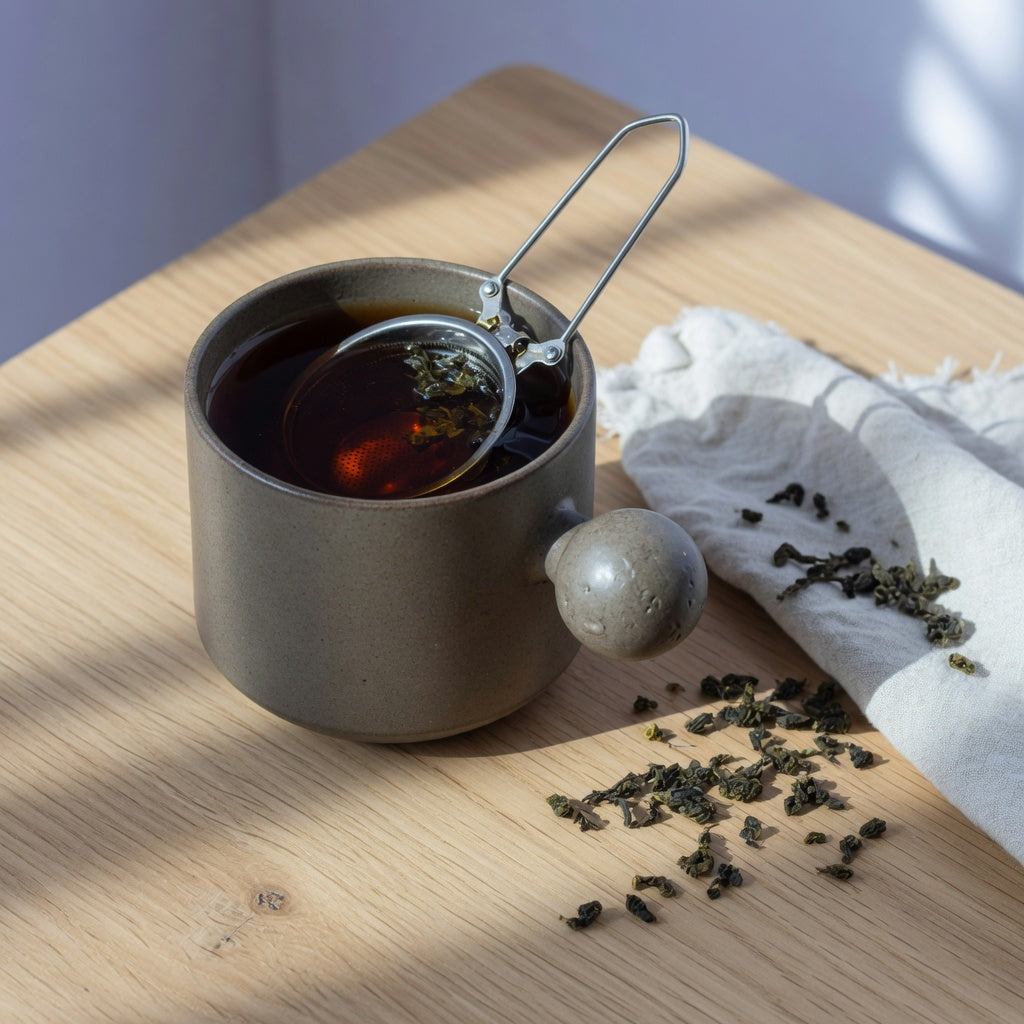
A ball handled ceramic tea mug swaps the loop handle for a rounded knob grip. We break down how that changes comfort and heat at the handle, plus clay and glaze choices, infuser fit, capacity, care...
Read more
Cacao Cup vs Mug: A Practical Comparison Before You Buy
A cacao cup and a mug differ in capacity, mouth width, handle, and care — not in magic. We compare both using the real sizes we pack every day (250, 390, and 400 ml) so you can match a vessel to yo...
Read more
Leave a comment
This site is protected by hCaptcha and the hCaptcha Privacy Policy and Terms of Service apply.