
Best Everyday Mug for Home Decor: What Buyers Compare
Reading time: about 11 minutes
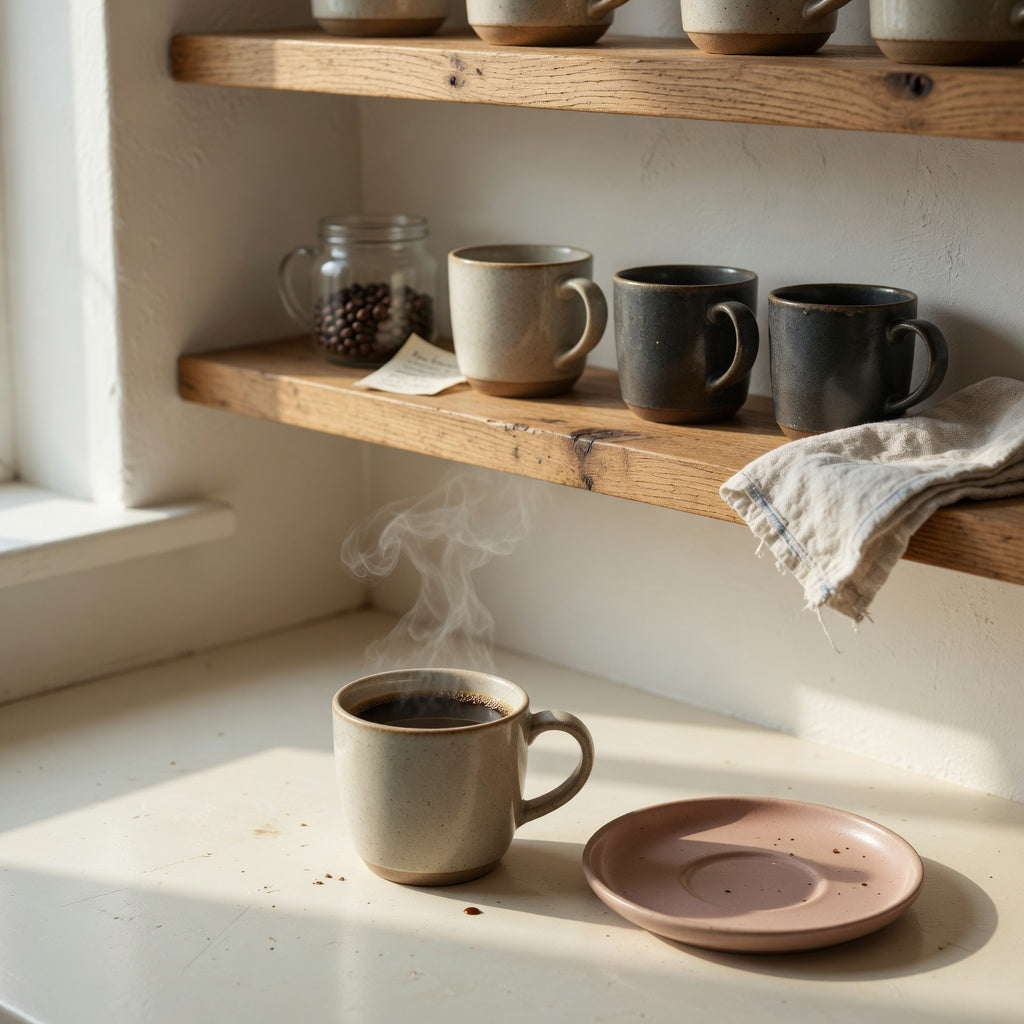
In our store we keep two mugs on the counter for exactly this reason. One is a sculptural piece with a coarse matte glaze that photographs beautifully and has never once held a full cup of coffee. The other is the mug we hand people who want to feel what a well-set handle does for a tired wrist, and it carries a faint mark near the rim from two years of dishwasher cycles. Closing the gap between those two objects is what shopping for the best everyday mug for home decor really involves: a vessel that survives a Tuesday morning and still looks deliberate when the cabinet door is standing open.
Published roundups tend to pick a lane. They line up a dozen sculptural silhouettes and leave out that half are hand-wash only, or they rank workhorses by capacity and never mention that the glaze reads flat under warm kitchen light. What follows is the comparison we walk customers through in person, roughly in the order the questions arrive.
What separates the best everyday mug for home decor from a shelf-only piece?
Three tests, and a mug has to pass all three. Fail one and the piece migrates to the shelf permanently, where it collects dust and occupies space you could have given to something you actually drink from.
- Hand fit before aesthetics. If the handle pinches your knuckles or the balance point sits forward of your wrist, you will reach for a different mug every morning no matter how good it looks.
- Fill level versus stated capacity. A mug sold as 14 ounces rarely accepts 14 ounces of coffee without you wiping the outside. Assume you will use about 80 percent of the stated volume and check the interior height against how you actually pour.
- Care-label honesty. A hand-wash mug becomes a hand-wash mug on the morning you are already late. If the label states dishwasher safe, that is a real feature; if it says nothing, assume it is not.
There is a second distinction decor coverage blurs: a vessel made for food use and a vessel made for display are not the same product even when they sit on the same shelf. We come back to that further down, because it matters more than handle shape.
8 oz, 12 oz, or 16 oz — which capacity survives a real morning?
The FDA describes a ceramic cup or mug as small hollowware normally around 240 mL, about 8 fluid ounces, with a handle. That is a regulatory reference point rather than a shopping rule, but it explains why an 8-ounce vessel reads as a cup and a 14-ounce vessel reads as a mug. Let the drink decide, not the label.
| Capacity | Drink it suits | Trade-off to accept |
|---|---|---|
| 8–10 oz | Black coffee, cortado, strong steeped tea | More refill trips; shallow bowls lose heat quickly |
| 11–13 oz | The genuine all-rounder for drip coffee and tea | Feels cramped if you drink lattes or add a lot of milk |
| 14–16 oz | Lattes, iced coffee, long herbal steeps, desk marathons | Heavy when full; may not clear a low upper cabinet or a small drip tray |
Shape matters as much as volume. Wide, shallow bowls shed heat fast because of exposed surface area — ideal for a cappuccino you finish in five minutes, wrong for a tea you nurse for an hour. Tall narrow mugs hold heat but turn top-heavy once filled, which is why a wide base and a foot ring narrower than the body make such a difference to how stable a mug feels on a nightstand or a stacked shelf. If capacity is the only variable still nagging at you, our notes on what buyers should compare in a morning coffee mug go deeper on matching the drink to the size.
Handle clearance, rim shape, and how heavy a full mug actually feels
These are the details you register within ten seconds of picking a mug up, and the ones product photos hide best.
- Handle clearance. You want two fingers plus a comfortable knuckle gap between hand and mug wall. If your knuckles touch hot stoneware, the handle is too shallow or set too close to the body.
- Rim thickness. A thin, slightly tapered rim sips cleanly and lets liquid flow without dribbling down the outside. Thick rolled rims are durable and feel generous, but they are the usual culprit behind a drip trail on the counter.
- Dry weight versus full weight. A 400 g stoneware mug holding 12 ounces of coffee is over 750 g in hand. Fine at a desk; noticeable when you carry it upstairs or open a door one-handed.
- Foot ring. A defined foot ring lifts the glaze off the counter, reduces wobble, and gives you something to grip while the body is still warm from the rack.
We tell customers to bring their own hand to the decision. A mug that suits a large palm can feel like carrying a vase if your grip is small, and no amount of shelf styling fixes that.
Stoneware, porcelain, or glass on an open shelf?
Material drives almost everything else — weight, chip behaviour, heat retention, and how the piece photographs against a painted wall.
- Stoneware is denser and heavier, holds heat noticeably longer, and usually carries a chunkier handle. Chips tend to be larger and more visible when they happen. Its matte, opaque body is the easiest thing to build a muted shelf palette around.
- Porcelain is thinner-walled and lighter, sips cleanly from a fine rim, and stacks far tighter in a small cabinet. The trade-off is rim chipping — porcelain is the material most likely to lose a small crescent of glaze against a tap or a sink edge.
- Glass never hides staining or scale, and it passes heat straight to the handle. What it gives you is visibility: you see the crema, the steep strength, the fill level, which is why glass tends to live near the coffee maker rather than on the display shelf.
None of these is the correct answer on its own. If your kitchen is small and your cabinets are shallow, porcelain earns its place; if the mug lives on an open shelf and you drink slowly, stoneware looks and behaves better. Our own breakdown of what coffee mugs are made of covers the material trade-offs in more detail than a quick shelf comparison allows.
Where The Rock Coffee & Tea Mug fits — and where it does not
The Rock Coffee & Tea Mug is the piece in our catalogue that draws the most questions from shoppers who want one mug doing both jobs. Because listings change and we will not describe a specification that may have moved, treat the current product page as the source of truth for four things before you buy: the stated capacity in ounces or millilitres, the body material, whether the interior glaze is described as food-safe, and whether dishwasher and microwave use are explicitly listed.
It suits the shopper who wants a single handled mug that reads as intentional decor when it is not in use, and who is comfortable confirming care details on the listing rather than assuming them. It is not the right pick if you need six matched pieces for a dinner table, if you drink 16-ounce lattes and need verified large capacity, or if you want slim porcelain that nests four deep in a tight cabinet. For shoppers browsing silhouettes first and specs second, the unique coffee mugs collection is the better starting point — compare shapes side by side, then check each listing for capacity and care.
What the care label changes: matte glaze, metallic trim, and reactive finishes
Finish is where decor mugs run into real-world limits, and where general advice has to give way to the specific label on the specific piece.
- Metallic rims and gold or platinum detailing. Assume microwave use is off the table unless the listing states otherwise. Thin metallic films arc.
- Matte glazes. These are the finishes most likely to show gradual dulling or a cloudy film after years of detergent and rinse aid. Many makers still rate them dishwasher safe; the appearance change is slow and cumulative rather than a defect.
- Reactive and speckled glazes. Colour varies piece to piece. That is a feature when you are styling an open shelf and a frustration when you wanted six identical mugs.
- Crazing. Fine crackle lines in the glaze are common on handmade ware and largely cosmetic — until the piece stains through the crackle or the body itself is cracked, at which point it should stop holding your coffee.
- Thermal shock. Pouring boiling water into a cold stoneware mug straight off a chilly shelf is a genuine risk. A quick warm-water rinse first costs two seconds.
Is that handmade, vintage, or brightly painted mug safe to drink from?
This is the part decor coverage skips, and it matters more than handle shape. The FDA sets an action level of 0.5 micrograms per millilitre for lead leaching from ceramicware cups and mugs, applied to any one of six units tested. Cadmium action levels sit at 0.5 micrograms per millilitre for small hollowware, again on any one of six units, and 0.25 for large hollowware. Those numbers exist because glaze chemistry is not automatically benign.
The FDA advises extra caution with ceramicware that is handmade with a crude or irregular appearance, antique, damaged or heavily worn, bought from flea markets, street vendors, or an unknown maker, or brightly decorated in orange, red, or yellow. It also notes that factory-made everyday pottery is far less likely to present lead problems, and that washing or boiling a piece cannot remove lead. If a mug carries a permanent warning such as "Not for Food Use—May Poison Food," believe it and keep the piece decorative. A "lead free" claim on traditional pottery is not a guarantee either — the FDA has documented pieces bearing that label with extractable lead at or above its action levels. The CDC has likewise flagged imported and vintage dishware as potential lead sources.
Practical translation for a decor shopper: a bright, handmade, imported piece with an uneven glaze is exactly the mug to buy as a shelf object and not as your daily coffee vessel, unless the maker provides food-contact documentation you trust.
How do you make a mismatched shelf look intentional?
Decor mugs work best in small, deliberate groups rather than as a full cabinet of singles. Three to five pieces in a tonal range — oatmeal, charcoal, one warm accent — reads calmer than a rainbow, and varying height stops the shelf from looking like a row of cylinders. Keep the mug you actually drink from at the front where you can reach it, and place the display pieces behind and above. Stacking two shallow mugs with a saucer between them buys vertical space in a narrow kitchen. If you are shopping for a coffee bar rather than a shelf, put the tallest mug at the back corner and let the smaller ones step down toward the front edge.
Five checks before you add to cart
- Match stated capacity to the drink you make most, then subtract roughly 20 percent for headroom.
- Confirm dishwasher and microwave statements on the actual listing, not on a similar-looking product.
- Read the handle and rim in the product photos — look for a knuckle gap and a tapered lip.
- Verify the piece is sold for food use, especially if it is handmade, imported, vintage, or heavily decorated.
- Decide whether you are buying one mug or building a shelf, because six reactive-glaze mugs will not look identical.
Frequently asked questions
Is the best everyday mug for home decor usually stoneware or porcelain?
Stoneware wins on heat retention and visual weight on an open shelf; porcelain wins on lightness, rim comfort, and tight stacking. Neither is universally better. Choose porcelain for small kitchens and thin-rim drinkers, stoneware for slow drinkers and shelves where you want a matte, opaque look.
Can a mug with a gold or metallic rim go in the microwave?
Not unless the listing explicitly says it can. Metallic films and decals on rims and handles are the most common microwave hazard in this category, and the risk is arcing rather than simple heat damage. Treat metallic trim as hand-wash and reheat-by-kettle only.
Is crazing on a new mug something to worry about?
Fine crackle lines in the glaze are common on handmade and reactive-glaze ware and are usually cosmetic. Watch for staining working into the crackle or an actual crack in the clay body — at that point the mug should be retired from hot drinks and moved to a shelf or the bin.
How do I know a decorative mug is actually safe for coffee?
Look for an explicit food-use statement from the maker plus a care label covering dishwasher and microwave use. Avoid drinking from anything marked for decorative use only, and be cautious with antique, unknown-maker, or brightly decorated orange, red, and yellow pieces — washing or boiling will not remove lead from a glaze.
Does a matte glaze hold up in the dishwasher?
Often yes, but the appearance can shift over years as detergent and rinse aid leave a film or slowly dull the surface. Check the individual product's care statement first, and if the finish matters to you as decor, hand washing is the safer habit.
More from our blog
Read more
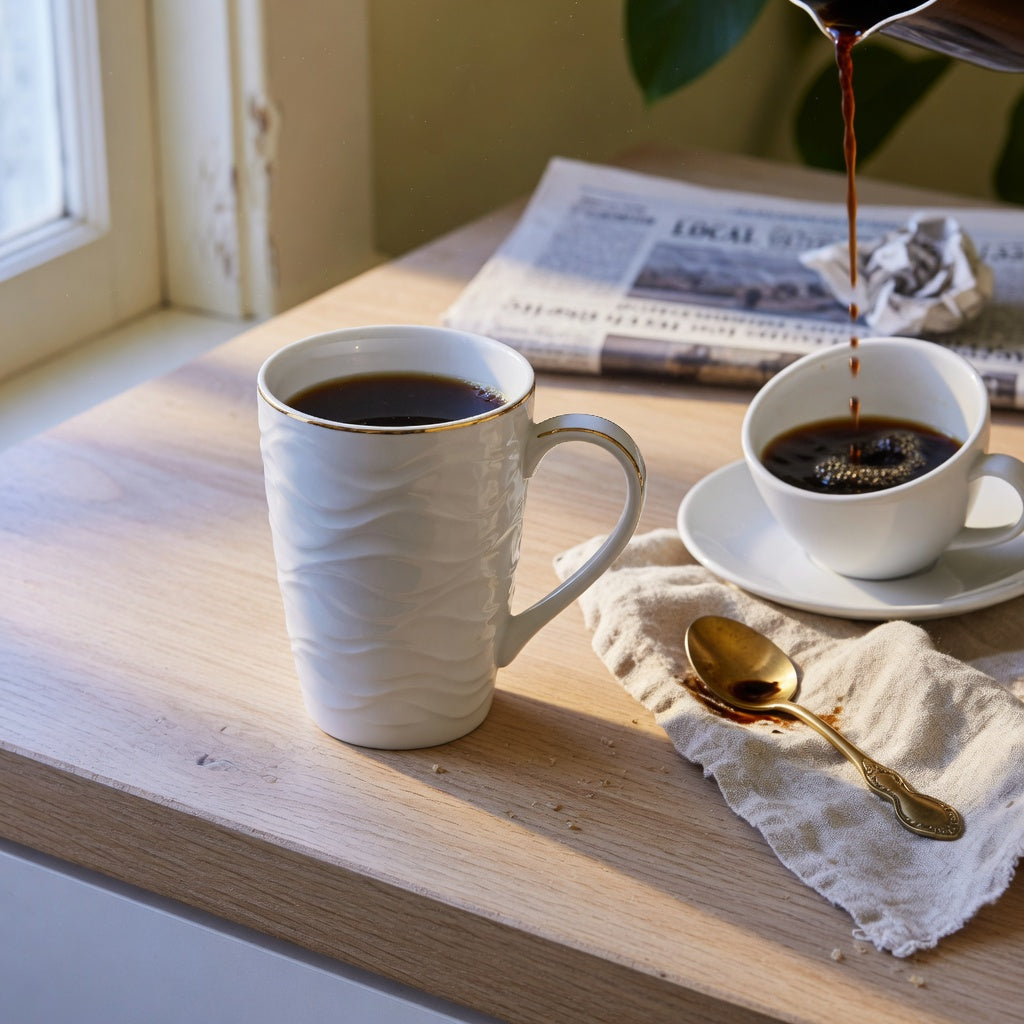
White Golden Waves Tall Coffee Tea Mug for Coffee Lovers Home Decor
A tall white mug with a gold wave line is easy to love in a photo and harder to live with if the trim is metallic. Here is what to verify on capacity, microwave use, rim decoration, and gifting bef...
Read more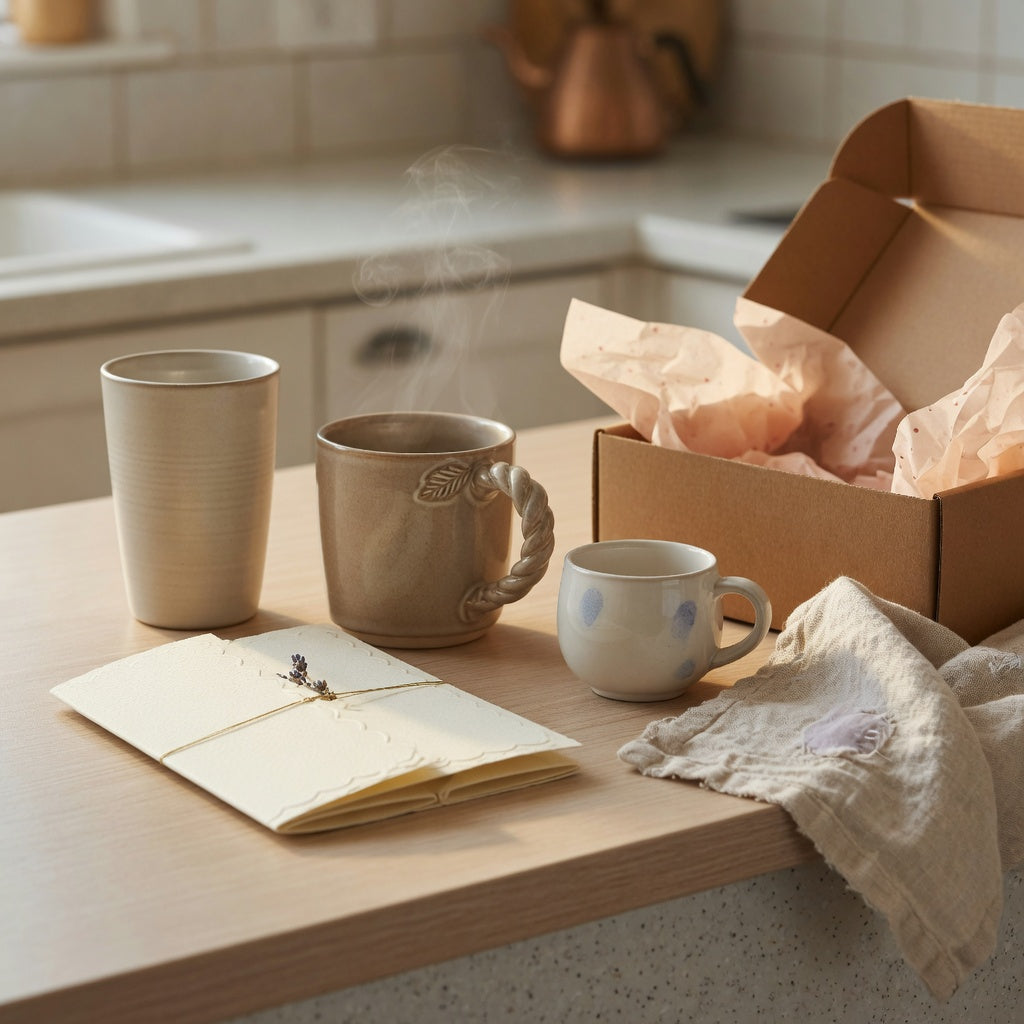
What Size Mug Is Best for a Wedding Gift? 11, 12, 15 or 16 oz
There is no official wedding-gift mug size, but the decision gets simple once you know what the couple drinks and what machine they brew in. Here is how 11, 12, 15 and 16 oz mugs behave in real kit...
Read more
Leave a comment
This site is protected by hCaptcha and the hCaptcha Privacy Policy and Terms of Service apply.