

Ball Handle Mug Gift: Grip, Capacity, and Care Compared
Reading time: about 10 minutes
Every sample mug that crosses our packing bench gets the same unofficial test: whoever walks past picks it up, runs a thumb over the sphere, and only then asks what it costs. Grip first, questions later. That reflex is a big part of why the ball handle mug gift keeps landing on wish lists — and why our inbox fills with the same follow-up questions once the wrapping paper comes off. Which hand does the handle favor? How much does it actually hold? Will the glaze survive a microwave? Did it survive the courier?
Those four questions are basically the whole purchase. The details that decide whether this shape becomes a morning regular or shelf decor almost never appear in a product headline — they live in the finger clearance around the ball, the stated ounce capacity, the glaze label, and the box it ships in. Below is the comparison checklist our team runs before we recommend one, built from the mugs we pack, ship, and hear about afterward.
How does a ball handle feel different from a classic D-handle?
A D-handle works like a hook: you thread fingers through and let the mug hang. A ball handle works like a knob — thumb on one side of the sphere, two or three fingers braced on the other, with the full weight hanging off that pinch. The grip is more deliberate, which is part of the charm and part of the trade-off. You get less leverage than a hooked handle provides, so a large piece can feel heavier than its ounce rating suggests once it's full.
Four things to check — the same four we look at when a customer asks whether a piece will suit their partner's hands:
- Clearance around the sphere. There should be a visible gap between the ball and the mug wall. Tight clearance turns a pinch grip into a knuckle scrape, and rings make it worse.
- Ball size against hand size. A small ball cramps a large hand. Oversized isn't automatically better either — a big, glossy sphere can slip. The middle ground is where most hands end up happy.
- Handle placement. A knob set on the vessel's centerline works for either hand; an offset one quietly favors the right. Left-handed recipients deserve a close look at the photos or a quick question to the seller.
- Weight when full. A stoneware mug filled with hot coffee is a different object than the empty piece in the product photos. If the recipient prefers featherlight mugs, weigh that honestly.
One observation we pass along carefully: several customers with arthritis or reduced grip strength have told us the solid ball is easier to manage than a thin hooked handle, because there's nothing to thread fingers through. We share that as buyer feedback, not a medical claim. If dexterity is the deciding factor, ask the seller for the ball's diameter and wall clearance before ordering. The current measurements and care details for ours live on the Ball Handle Ceramic Coffee Mug listing, and that page is the source of truth — not this article. If the knob turns out to be wrong for the hand you're buying for, the same grip logic applies across our unique coffee mugs collection, where other handle shapes get the same scrutiny.
We go deeper on the fit question, including how handle shape changes the care routine, in our guide to ball handle mug grip, care, and fit.
What capacity should a ball handle mug gift hold?
Capacity is the spec listings get sloppiest, and it decides whether the mug becomes a daily driver or a desk ornament. Match the ounce rating to what the recipient actually drinks:
| Recipient's drink | Typical capacity | Why it matters for this shape |
|---|---|---|
| Espresso | 3–4 oz (90–120 ml) | There's barely room for a ball handle at this scale — finger clearance gets cramped fast |
| Cortado or flat white | 5–8 oz (150–240 ml) | A sweet spot: the knob earns its keep without excess weight |
| Drip coffee or latte | 10–12 oz (300–355 ml) | The most common daily range; labeled sizes vary widely between sellers |
| Tea with milk or cocoa | 12–16 oz+ (355–475 ml) | Room for extras, but a full oversized mug asks for a confident pinch grip |
Two habits worth stealing: convert the listing's ounces to milliliters yourself if the recipient thinks in metric, and be suspicious of any listing that gives capacity as a vague range without naming which variant holds what. Where the number is missing, ask before checkout — a good seller answers with a figure, not a vibe. Whatever capacity and variant detail currently appears on the product page for the Ball Handle Ceramic Coffee Mug is the one that counts at checkout, so treat the listing as the final word rather than this article or your memory of it.
Which glaze details decide microwave and dishwasher safety?
This is the section most listings skip and most gift disappointments come from. Three labels do the heavy lifting, and they don't automatically appear together:
- Food safe. The glaze is formulated for contact with food and drink. US regulators, including the FDA, have warned for decades about lead and cadmium in some decorative ceramic glazes — which is why “decorative only” on a vintage piece means exactly that.
- Microwave safe. Metallic luster glazes and gold or platinum rims can arc and pit in a microwave. A mid-century-style mug with a gold rim is beautiful on a shelf and a poor candidate for reheating.
- Dishwasher safe. On handmade pieces this often carries conditions: top rack only, gentle cycle, or hand wash recommended to protect the finish over repeated cycles.
Thermal shock is the quiet one. Ceramic dislikes sudden temperature swings: don't pour boiling water into a mug that rode home in a cold car, and never take one straight from the freezer to hot liquid. Let the piece drift toward room temperature first. Every point here is a listing-level fact rather than a category-wide one — glaze formulas change between production runs and between sellers — so confirm food-contact, microwave, and dishwasher status on the specific product page before you buy.
Handmade or molded: which version suits your recipient?
The shape exists in two very different markets, and the gift changes character depending on which lane you choose:
- Handmade pottery. Slight variation in weight, glaze pooling, even the ball's diameter — that's the appeal for anyone who loves artisan work and the frustration for anyone expecting an exact match to the listing photo. Expect to pay more and get a story worth telling at the table.
- Molded production mugs. Consistent sizing and glaze, a friendlier price, easier to replace if the worst happens. Less one-of-a-kind, but far more predictable as a gift.
Collectors chase a third lane: vintage Japanese and mid-century ball handle mugs, where the maker's mark on the base separates a shelf piece from a genuine find. If your recipient is that kind of collector, condition and provenance matter more than capacity ever will. And if you're comparing handle materials rather than handle shapes, our checks for a ceramic mug with a wooden handle cover the care differences a second material introduces.
How should a ceramic mug gift ship — and what if it arrives broken?
We pack ceramics every week, and the difference between a mug that arrives whole and one that arrives in fragments is almost never luck. A properly packed ceramic gift is double-boxed, with the mug suspended in void fill so the inner box doesn't rattle when you shake it. The shake test is real; we run it before every label gets printed. A fragile mug loose in a padded envelope is a useful data point about the seller.
If breakage happens anyway: photograph the outer box, the packing material, and the mug together before discarding anything, then contact the seller the same day. Shops that pack fragile ceramics properly will almost always replace or refund when the evidence shows a shipping failure — that's the implicit deal behind what handmade pieces cost.
Presentation is the easy upgrade. A ball handle mug paired with a small bag of the recipient's usual roast, a tin of loose-leaf tea, or a drinking-chocolate kit turns a single object into a ritual, and the wrap does half the gifting for you. We've collected more pairing and comparison ideas in our roundup of ball handled coffee tea mug gift ideas.
Ball handle, D-handle, or handleless bowl: which shape should you gift?
Sometimes the honest answer is that this shape is wrong for the person. Here's roughly how we talk customers through it:
| Factor | Ball handle | Classic D-handle | Handleless bowl |
|---|---|---|---|
| Grip style | Pinch grip on a knob; deliberate and secure | Fingers hook through; casual, low effort | Cradled in both palms |
| Hung on a mug hook | Often won't seat — a solid knob can't slide through | Slides on easily | Not applicable |
| Stacks in a cupboard | Usually no | Sometimes | Yes, typically |
| Fits a travel lid | Almost never | Sometimes | No |
| Unwrapping reaction | Highest — the shape reads as special | Familiar | Cozy but common |
Translated: skip the ball handle if the recipient hangs mugs on hooks, stacks them in a crowded cupboard, or commutes with a lidded travel mug. Choose it when the mug will live on a desk or in a hook-free cupboard and the recipient enjoys objects with a point of view. A gift that fights the recipient's kitchen habits gets re-gifted; one that fits them gets used until the glaze goes soft with wear.
The five-point check we run before every ball handle mug gift ships
Everything above condenses into the list we actually work through before a piece goes in a gift box:
- Stated capacity matches the recipient's usual drink, in ounces and milliliters.
- Photos show clear finger space between the ball and the mug wall.
- Food-safe, microwave, and dishwasher status appears on the listing itself — not only in a chat reply.
- Shipping includes double-boxing or equivalent protection.
- Handle placement works for the recipient's dominant hand.
Those five cover nearly every post-purchase complaint we've ever fielded.
Frequently asked questions
Is a ball handle mug gift practical or just decorative?
Practical, as long as three specifics line up: enough finger clearance around the ball, a capacity matched to the recipient's usual drink, and care labels that fit their kitchen habits. When any of those is missing from the listing, ask the seller before checkout. Get them right and the mug earns daily use; get them wrong and it becomes shelf decor.
Can a left-handed person use a ball handle mug?
Usually, yes — a ball knob set on the vessel's centerline works from either side, unlike some offset loop handles. Placement varies by design, though, so check the listing photos or ask the seller how the handle sits before ordering for a left-handed recipient.
Are ball handle mugs microwave and dishwasher safe?
It depends entirely on the glaze, piece by piece. Metallic lusters and gold or platinum rims generally shouldn't go in a microwave, and handmade glazes often carry hand-wash or top-rack-only conditions. Treat safety labels as per-listing facts and confirm them on the specific product page rather than assuming the whole category behaves the same.
What size ball handle mug works for a tea drinker?
Tea drinkers usually do best in the 12–16 oz range, which leaves room for milk and a longer steep without constant refills. Confirm the exact ounce figure on the listing, since capacity labeling for this style is inconsistent — and remember that a full large mug carries real weight in a pinch grip.
What should I do if a ceramic mug gift arrives broken?
Photograph the outer box, the inner packing, and the broken mug together before throwing anything away, then message the seller the same day. That documentation is what lets a shop replace or refund quickly, and sellers who pack fragile ceramics properly will almost always make it right.
Run the checklist, trust the listing over the lifestyle photos, and you'll land on the right side of the used-daily-versus-shelf-decor line. Start with the current Ball Handle Ceramic Coffee Mug listing for exact measurements and care details, or browse the wider unique coffee mugs range if the knob isn't the right fit for the hand you're buying for.
Read more

Elk Mug Gift for Coffee Lovers: 7 Things to Compare Before You Buy
Our store checklist for buying an elk mug as a gift: confirm the artwork is an elk and not a moose, match mug size to the recipient's coffee habit, check print durability and care, then map product...
Read more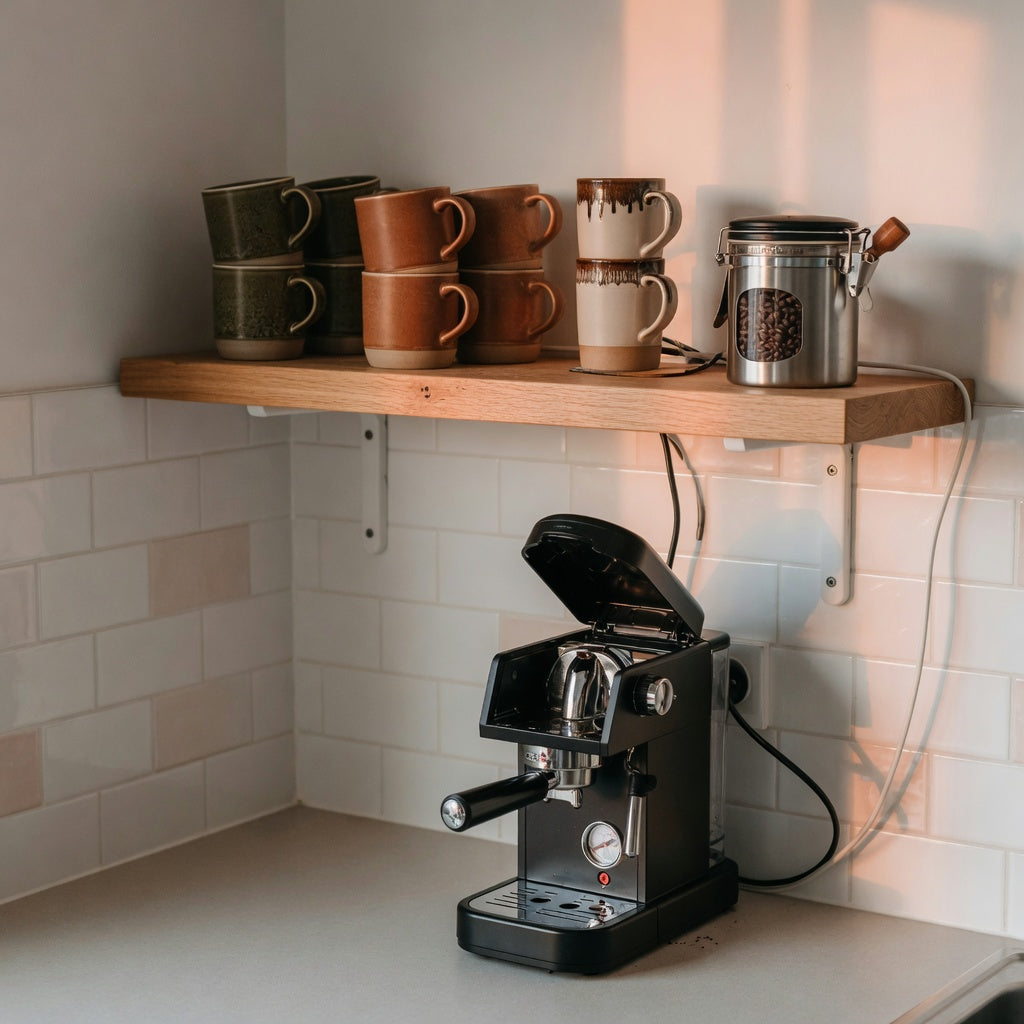
Open Shelf Coffee Corner Ideas With Mugs: What Buyers Should Compare
Shelf load math, mug clearance, display capacity, outlet placement, and rental-safe mounting — compared from real customer photos and daily packing-bench experience, plus which mugs actually earn d...
Read more
Leave a comment
This site is protected by hCaptcha and the hCaptcha Privacy Policy and Terms of Service apply.