
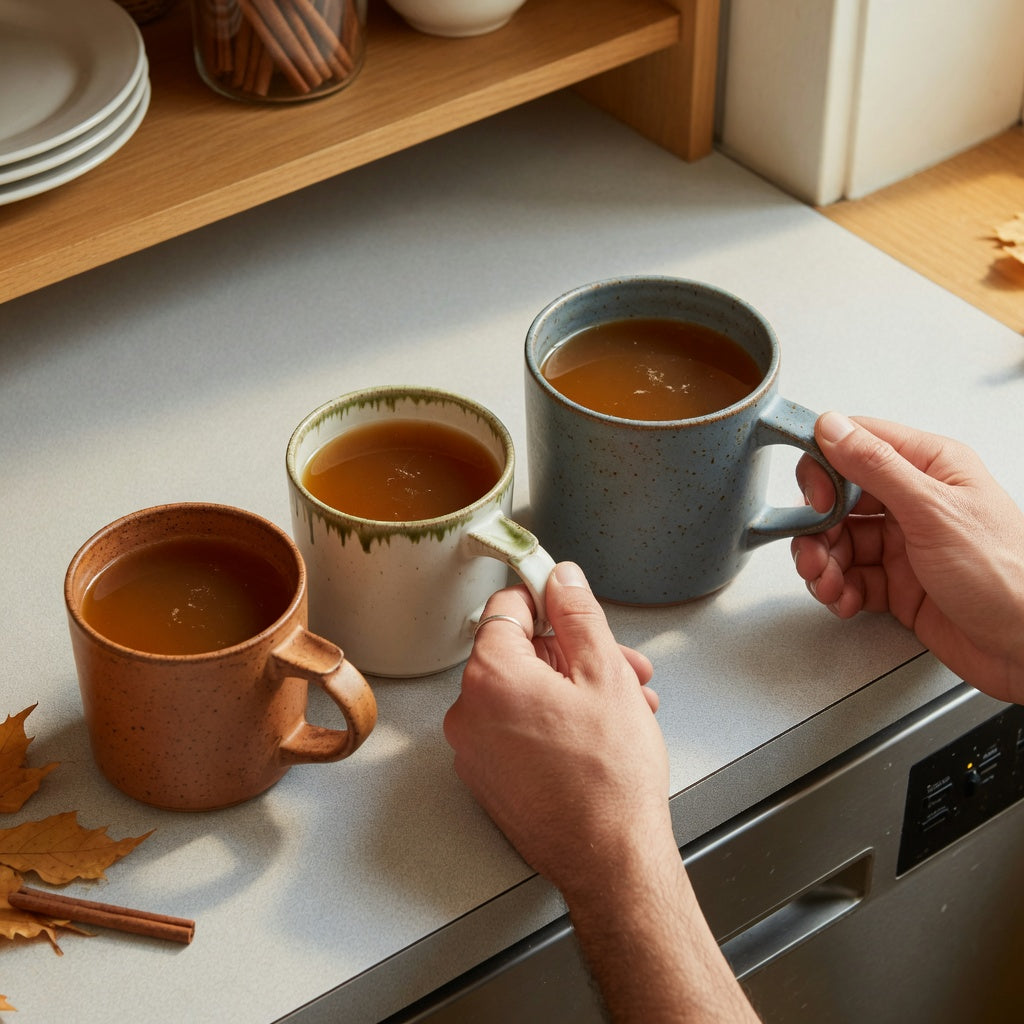
Apple Cider Mug Shared Household Practical Purchase Checklist
Reading time: about 9 minutes
After dinner, one person pours a short serving of cider they plan to finish quickly. Another wants enough to last through a movie. If both keep reaching for the same mug, the mismatch shows up as repeated refills, unfinished cider, or a cup filled so close to the rim that carrying it from the counter becomes awkward. We built this apple cider mug shared household practical purchase checklist around the decisions that matter in our store: verified capacity, handle shape, and the fit of everyday ceramic in a busy kitchen. This is a comparison of individual mugs, not a bundled set, and it does not imply that cider or other ingredients are included.
Which capacity matches each person's usual cider pour?
Start with the amount each person actually drinks, not the mug size that looks best in a photo. CoffeifyMug has two verified capacity points in this group: 400 ml and 480 ml. That 80 ml difference equals about 2.7 US fluid ounces, which is enough to affect refill frequency, carrying weight, and the amount of headspace left below the rim.
- 400 ml, about 13.5 US fluid ounces: This capacity suits someone who prefers a moderate pour, expects to refill, or often leaves part of a larger drink unfinished. Both The Gradient 400 ml mug and The Flow 400 ml mug meet this capacity preference.
- 480 ml, about 16.2 US fluid ounces: This option fits the household member who consistently wants a larger serving and would rather make fewer trips back to the kitchen. The Rock 480 ml mug is the verified larger-capacity choice in this comparison.
Listed capacity should not be treated as the ideal fill line. A mug filled to its maximum leaves little room for carrying, stirring, or setting it down without a spill. Ask each person how much headspace they normally leave. The 400 ml option is not automatically lighter in the hand because the empty weights of these mugs are not part of the verified facts provided here; only the liquid-volume difference is known.
How should several users evaluate the same handle?
A handle that works for one person can be uncomfortable for another. Product photos help, but the useful details are the opening height and width, the clearance between the handle and mug body, the thickness of the ceramic cross-section, and where the upper attachment lets the thumb rest. These variables affect knuckle clearance and control once the mug contains cider.
Our practical approach is to match the handle to the person who will use that mug most often. Review product images and any current dimensions on the listing while considering these points:
- Finger clearance: Decide whether the user normally holds a mug with one, two, or more fingers through the loop. A visually large handle can still place the knuckles close to the mug body.
- Grip strength: A thicker ceramic handle may provide more surface to hold, but it can also feel bulky. Someone with reduced grip strength should not rely on appearance alone; empty product weight and a comfortable filled weight are relevant details to confirm.
- Hand-offs: In shared kitchens, mugs are often passed across a table or moved around a crowded sink. The primary user should be able to control the mug without twisting the wrist or pinching the handle.
- Storage width: The handle contributes to the mug's total width. A comfortable loop may occupy more shelf and dishwasher space than expected.
The Gradient and The Flow share a verified 400 ml capacity, so capacity cannot decide between them. Compare their current product photos, handle profiles, and listed measurements. For the person who needs 480 ml, inspect The Rock with the same care. We do not claim that any of these handles has specialized ergonomic performance.
Will everyday ceramic fit the household care routine?
Ceramic works well for an indoor kitchen mug, but it is hard rather than impact-proof. From handling ceramic pieces during product checks and packing, we pay particular attention to the rim, the two handle attachment points, the glazed body, and the foot ring underneath. Those are the areas where a knock, rough contact, or manufacturing irregularity is easiest to notice.
- Inspect after unboxing: Check the rim and handle joints for chips or hairline cracks. Look across the glaze under direct light for unexpected rough spots or fine crack-like lines, sometimes called crazing.
- Rinse dried residue: If cider dries inside the mug, rinse or soak it before scrubbing. Spices used in a household recipe can collect around the inner base or in textured glaze areas.
- Avoid sudden temperature changes: Do not move an ordinary ceramic mug directly from a very cold environment to very hot liquid. Rapid temperature change can stress ceramic, and no specialized thermal-shock performance is claimed for these products.
- Prevent dishwasher contact: If the current product instructions permit dishwasher use, position the mug so its rim and handle cannot knock against plates, utensils, or another mug during the cycle.
- Check the care listing: Dishwasher and microwave compatibility should be confirmed on the current product page or with our store before ordering. Capacity alone does not establish either feature.
Standard ceramic is also a trade-off for anyone who needs an exceptionally lightweight cup. The liquid in a 480 ml mug adds more weight than the liquid in a 400 ml mug before the mug's own weight is considered. If mobility, grip strength, or fatigue is a major concern, a lighter material may be a better choice.
Do the mugs fit the shelf, dishwasher, and shared counter?
A mug can have the right serving volume and still become the piece nobody uses because its handle catches on a cabinet divider or it occupies too much drying-rack space. Before ordering, measure the maximum shelf height, available depth, and the width of the space once neighboring mugs are in place. Include the handle in that width measurement.
| Product | Verified capacity | Household situation | Details still worth confirming |
|---|---|---|---|
| The Gradient | 400 ml | Moderate or repeat servings | Overall dimensions, handle opening, empty weight, and care instructions |
| The Flow | 400 ml | Same serving volume with another design choice | Overall dimensions, handle opening, empty weight, and care instructions |
| The Rock | 480 ml | Larger serving with fewer expected refills | Overall dimensions, handle opening, empty weight, and care instructions |
Do not assume the 480 ml mug is taller, wider, or heavier than both 400 ml options without checking the listing; capacity describes internal volume, not every exterior measurement. If none of these profiles works with your shelf or grip requirements, compare other unique ceramic mug options in our collection instead of forcing a poor fit.
When is a different mug style the better purchase?
These ceramic mugs are intended for ordinary indoor drink service. They are not presented as insulated drinkware, leakproof travel cups, outdoor camp mugs, or commercial food-service equipment. A different construction is more appropriate in several situations:
- Choose insulated drinkware if the priority is extended temperature retention rather than ceramic feel and household serving capacity.
- Choose a sealed travel mug if the drink will regularly be carried in a car, backpack, or between rooms where spills are a serious concern.
- Choose a lighter material if a user struggles with the combined weight of ceramic and a full serving.
- Choose a purpose-rated commercial mug if the item must tolerate intensive restaurant washing cycles.
- Choose one uniform model if identical shelf alignment matters more than accommodating different serving habits.
A mixed-capacity household can select different mugs independently, but shoppers should check each listing for its current purchase configuration. This guide does not treat The Gradient, The Flow, and The Rock as a set or assume that accessories accompany them.
Apple cider mug shared household practical purchase checklist
Use this apple cider mug shared household practical purchase checklist with the people who will actually drink from the mugs. Ten minutes at the kitchen counter can prevent a capacity, grip, or storage mismatch.
- Write down each person's typical serving rather than estimating from the mug they currently use.
- Choose 400 ml for a moderate or repeat-pour preference and consider 480 ml for the person who regularly wants more volume.
- Allow for headspace. Do not assume the full listed capacity will be the comfortable everyday fill.
- Compare handle opening, ceramic thickness, knuckle clearance, and thumb position in current product photos.
- Confirm the mug's empty weight if grip fatigue or mobility is a concern. The verified capacities do not provide this answer.
- Measure shelf height, shelf depth, and total available width, including room for the handle.
- Check dishwasher and microwave instructions on the current listing instead of assuming standard ceramic care applies.
- Inspect the rim, handle joints, glaze, and foot ring promptly after delivery and before regular use.
- Assign different designs or capacities to different users if that prevents mix-ups, but purchase according to each product page rather than assuming a bundle.
- Treat only the mug and items explicitly stated on the current listing as included. Cider ingredients, utensils, and additional mugs should not be assumed.
Frequently asked questions
What is the first step in an apple cider mug shared household practical purchase checklist?
Record how much cider each person normally pours and how often they refill. That separates the household member who is likely to prefer 400 ml from the person who may benefit from 480 ml. Capacity should be decided before color or decorative style.
Is 400 ml or 480 ml better for apple cider?
Neither size is universally better. A 400 ml mug suits moderate servings or planned refills, while 480 ml gives a larger-volume drinker 80 ml more capacity. Leave enough room below the rim for comfortable carrying rather than filling either size to its maximum.
Can The Gradient and The Flow feel different even though both hold 400 ml?
Yes. Equal capacity does not guarantee equal exterior dimensions, empty weight, balance, or handle clearance. Compare the current product photos and specifications for both mugs, then choose based on the primary user's grip and available storage space.
Are these ceramic mugs dishwasher and microwave safe?
That information is not established by the verified capacity facts used in this guide. Check the current care instructions on the relevant product page or contact our store before using a dishwasher or microwave. Do not infer care compatibility from ceramic material alone.
Should everyone in a shared household use the same mug size?
No. Uniform sizing makes shelves look orderly, but it can force light and generous drinkers into the same serving pattern. Choosing individual 400 ml and 480 ml options according to actual habits is more practical, provided the household is comfortable with different capacities.
Take the next step at the kitchen counter: note each person's usual pour, measure the storage space, compare the three product pages, and confirm current care details. If the capacity or handle profiles do not meet those requirements, return to the CoffeifyMug unique coffee mug collection and keep the same checklist in hand.
More from our blog
Read more
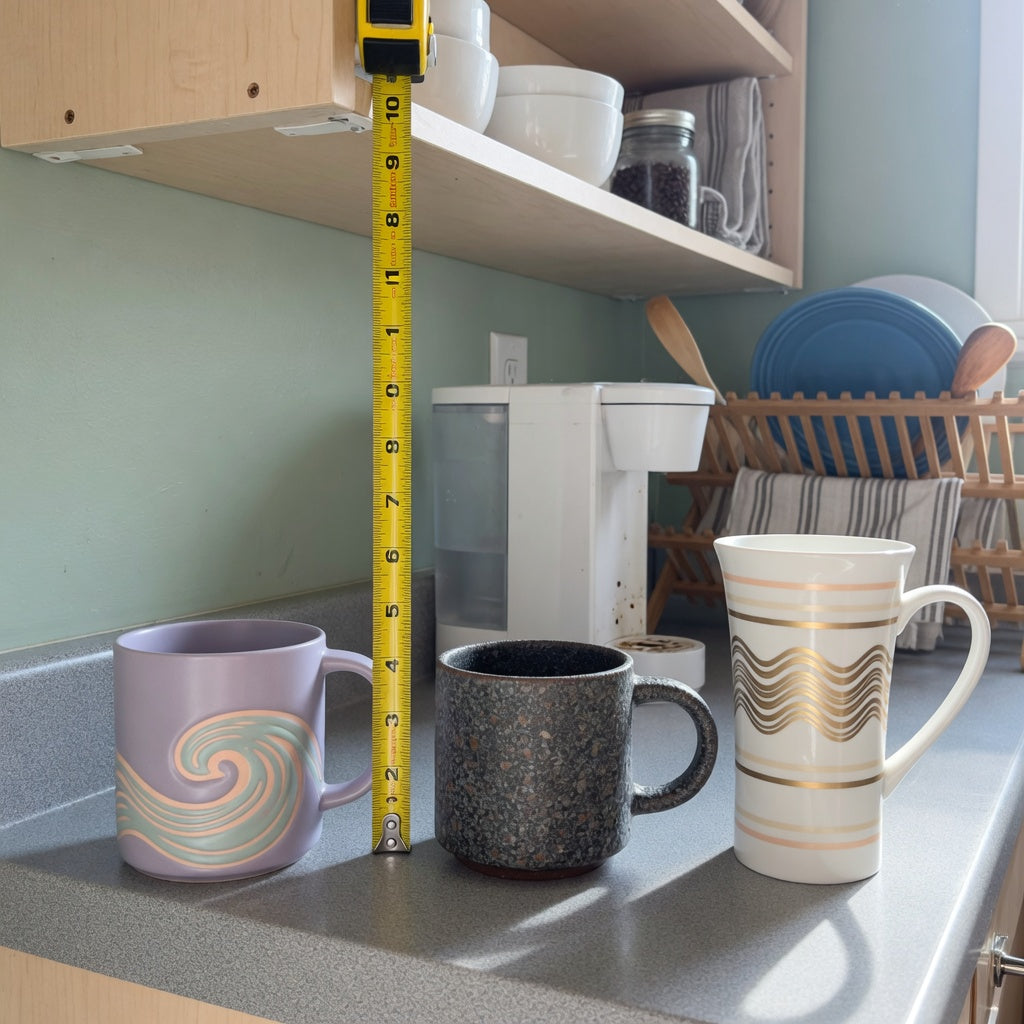
Large Unique Coffee Mugs Compact Kitchen Product Shortlist Guide
Measure shelf clearance, handle-inclusive width, counter depth, and drying space before choosing. We map three CoffeifyMug styles to compact-kitchen scenarios and explain why each belongs on, or of...
Read more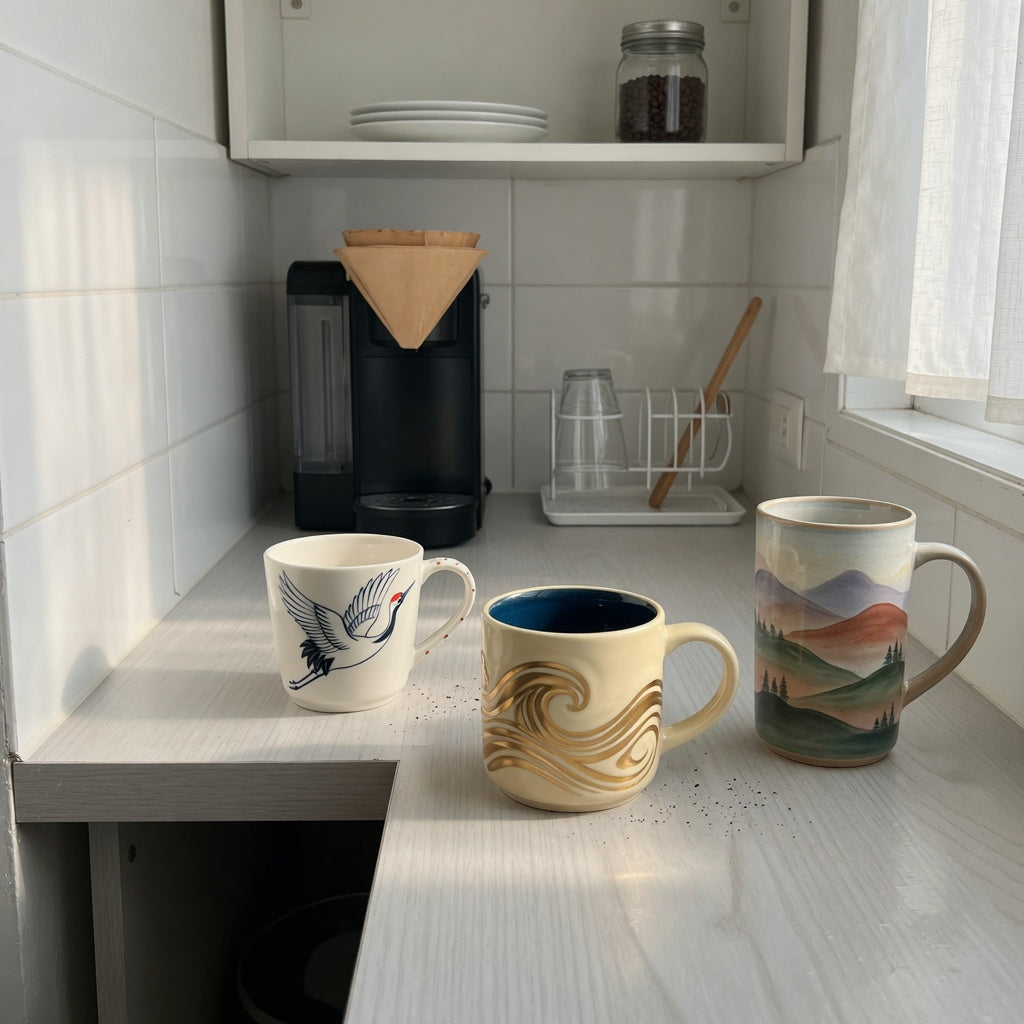
High Quality Ceramic Coffee Mugs Compact Kitchen Product Shortlist Guide
A practical comparison of three ceramic coffee and tea mugs for tight counters, low shelves, and one-mug routines, with clear reasons to choose or skip each design.
Read more
Leave a comment
This site is protected by hCaptcha and the hCaptcha Privacy Policy and Terms of Service apply.