
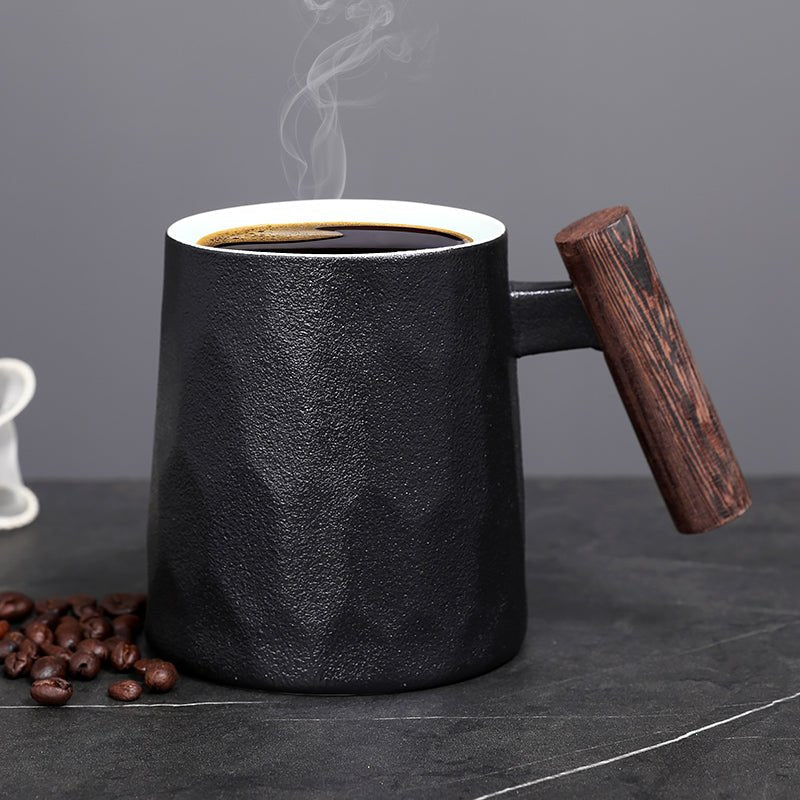
Apple Cider Mug Compact Kitchen Practical Purchase Checklist: Fit First
Reading time: about 9 minutes
A cabinet door that stops against a mug handle turns a pleasant cider break into daily clutter. The same mismatch appears beside a kettle: the mug fits somewhere on the shelf, but there is no safe landing spot for filling it. This apple cider mug compact kitchen practical purchase checklist starts with those real friction points, then weighs capacity, handle clearance, washing, and everyday ceramic care.
At CoffeifyMug, our team handles this category during catalog checks, shelving, and order packing. That work reinforces a practical rule: capacity is useful, but it does not reveal the outer footprint. The confirmed facts for this comparison are The Gradient at 400 ml, The Flow at 400 ml, and The Rock at 480 ml. Height, width, base diameter, handle projection, mug weight, and dishwasher or microwave compatibility are not included in the verified source facts for this article. We treat them as details to confirm, not promises, and we make no specialized temperature-performance or bundled-item claim.
Measure the cabinet door, shelf, and counter route first
An empty shelf can be misleading. The mug also has to clear the cabinet hinge, pass any shelf lip, sit beside neighboring cups, and reach the filling area without forcing you to move the kettle or drying rack every time. Measure the exact place where the mug will live, not the roomiest part of the cabinet.
- Clear shelf height: Measure from the shelf surface to the lowest obstruction above it.
- Door-closed depth: Check usable depth after accounting for the door, hinge, and any front lip.
- Side allowance: Include the mug body, the outer edge of the handle, and space for your fingers.
- Counter route: Confirm that the mug has a stable landing spot near the filling area and a clear path to the table or desk.
- Washing and drying space: Test the rack, draining mat, or towel area where the mug will sit before returning to the cabinet.
Use a mug you already own as a physical proxy. Place it in the intended spot with the handle facing forward, sideways, and toward the back, then close the door gently. Repeat the exercise beside the kettle and on the drying rack. Your kitchen's measurements and usable orientations are the hard filters; a generic compact label is not.
Is 400 ml or 480 ml the better everyday cider capacity?
The capacity comparison is straightforward: The Gradient and The Flow are listed at 400 ml, while The Rock is listed at 480 ml. Treat those figures as comparison points rather than a promise that a brim-full mug will be comfortable to carry. Most people need some open space at the top when moving a drink past appliances, cabinet corners, or an office keyboard.
- Choose 400 ml if your normal serving fits below that listed capacity and you prefer one moderate drink at a time. The Gradient and The Flow are the two confirmed options in this tier.
- Choose 480 ml if a larger serving or fewer top-ups matters more. The Rock offers the higher listed capacity, although more liquid also means more beverage weight when filled.
- Choose another format if 400 ml is already more than you normally use, or if you need a sealed lid, insulation, or spill resistance. A smaller mug or purpose-built travel cup would suit those situations better.
Do not assume that a 400 ml mug has smaller exterior dimensions than a 480 ml mug. Wall thickness, body taper, base shape, and handle projection all affect the footprint. Capacity narrows the shortlist; confirmed exterior measurements complete the fit decision.
How much handle clearance does your hand and cabinet need?
Handle fit has three separate variables: the opening where your fingers sit, the outward projection that consumes shelf width, and the attachment points where the handle joins the mug body. A handle can look compact from the front while projecting farther than expected from the side.
- Measure the total body-to-handle width of a mug that already fits your cabinet. Use that as your home baseline.
- Grip the proxy mug as you normally would. A tighter opening may save space but can pinch larger fingers; a wider opening can be comfortable while using more shelf room.
- Rotate the mug through every practical storage position and recreate the cabinet-door swing.
- Fill the proxy with cool water to your usual level and carry it from the filling point to your seat. This tests grip and route without introducing heat.
Product photography can help you compare handle shapes, but camera angle and perspective are unreliable measurement tools. Exact handle measurements are not among the confirmed facts for these three mugs. If a small clearance decides the purchase, check the current product listing or ask our store for the missing detail before ordering.
Where will an everyday ceramic mug dry, stack, and take daily knocks?
Ceramic is rigid and breakable, so compact-kitchen care is largely about collision control. During handling, we check the drinking rim, handle attachments, and base because those are the places where a chip, hairline crack, or wobble becomes obvious. Cosmetic glaze variation is different from a crack that runs through the ceramic body or handle joint.
- Unbox the mug in good light and inspect the rim, interior, body, and both handle attachment points before use.
- Set the empty mug on a flat counter and check whether the base sits securely without unexpected rocking.
- Verify the current care instructions before using a dishwasher or microwave. Those compatibility details are not confirmed in the source facts used here.
- If dishwasher use is explicitly permitted, position the mug so its rim and handle cannot knock against heavy cookware or be forced between rack tines.
- Use a conservative ceramic-care routine: avoid abrupt temperature changes, wash with a nonabrasive sponge when hand washing, and dry the base before cabinet storage.
These mugs are not our recommendation for a sealed commute, rough outdoor use, or a shared sink where nonbreakable drinkware is required. A stainless or other nonbreakable vessel is a better match for those jobs. For gift unboxings, check the current listing for packaging and contents; no cider mix, lid, spoon, coaster, gift box, or other bundled item is confirmed here.
Which CoffeifyMug option fits each small-kitchen routine?
A responsible recommendation starts with the verified capacity, then leaves exterior dimensions and care details as checks. The table maps each shopper situation to the most relevant product page.
| Option | Confirmed fact | Reader situation | Verify before buying |
|---|---|---|---|
| The Gradient coffee and tea mug | 400 ml capacity | Your normal cider serving fits within 400 ml and you prefer The Gradient's current pictured design. | Exterior dimensions, handle opening and projection, weight, and current care directions. |
| The Flow coffee and tea mug | 400 ml capacity | You want the same confirmed capacity tier but prefer The Flow's pictured design or handle appearance. | Exterior dimensions, handle clearance, base fit, weight, and current care directions. |
| The Rock coffee and tea mug | 480 ml capacity | You want the highest confirmed capacity in this comparison and fewer trips for a top-up. | Cabinet and drying-rack fit, handle projection, filled carrying comfort, and current care directions. |
On verified capacity alone, The Gradient and The Flow are tied; we will not invent a functional difference between them. The Rock is the clear next step only for a shopper who values 480 ml and can confirm the physical fit. For a tight cabinet, none of the three wins until its exterior dimensions pass your measurements. If you want to compare more pictured shapes before deciding, browse our unique coffee mugs collection and apply the same capacity, handle, and storage tests.
Use the apple cider mug compact kitchen practical purchase checklist
Run these checks in order before adding a mug to your cart. Skipping the physical-fit steps is how an attractive mug becomes permanent counter clutter.
- Record your kitchen limits: shelf height, door-closed depth, side allowance, counter landing space, and drying location.
- Choose the capacity tier: select 400 ml or 480 ml according to your actual cider routine, while allowing space below the rim for carrying.
- Confirm exterior dimensions: do not infer them from capacity. Ask for missing measurements if your cabinet has little spare room.
- Check handle geometry: review the opening, outward projection, attachment points, and likely finger clearance.
- Verify care: confirm dishwasher and microwave guidance on the current product page before using either appliance.
- Check listed contents: assume no ingredients, lid, spoon, gift packaging, or accessories unless the product page explicitly names them.
- Dry-fit on arrival: inspect the ceramic, place the empty mug in the cabinet and drying area, and test the door before the first drink.
If every line passes, select The Gradient or The Flow for the confirmed 400 ml tier, or The Rock for 480 ml. If a line fails, a smaller, narrower, lidded, or nonbreakable style may serve your kitchen better.
Frequently asked questions
How do I use the apple cider mug compact kitchen practical purchase checklist before ordering?
Record your cabinet, counter, handle, and drying-space limits first. Choose between the verified 400 ml and 480 ml capacities, then confirm exterior dimensions and care directions on the current product page. Capacity alone is not enough to prove compact-kitchen fit.
Is a 400 ml mug always more compact than a 480 ml mug?
No. Capacity describes how much the mug holds, not its height, width, base diameter, or handle projection. A 400 ml mug can still have a broad body or projecting handle, so compare confirmed exterior measurements before buying.
Which CoffeifyMug mug has the largest confirmed capacity for cider?
The Rock has the largest confirmed capacity in this comparison at 480 ml. Choose it if fewer top-ups matter and its current dimensions fit your cabinet, counter, and drying area.
Can I put The Gradient, The Flow, or The Rock in a dishwasher or microwave?
The verified facts supplied for this guide do not confirm dishwasher or microwave compatibility. Review the current care directions on the relevant product page before using either appliance. If the guidance is unclear, hand wash conservatively and do not microwave until compatibility is confirmed.
Do these apple cider mugs include cider mix, a lid, or a spoon?
No bundled ingredient or accessory is confirmed by the facts available for this guide. Purchase on the basis that only items explicitly named on the current product page are included. Choose a specifically listed set if a lid, spoon, mix, or gift bundle is essential.
Take your cabinet notes to the CoffeifyMug mug collection, compare the 400 ml and 480 ml choices side by side, and order only after the handle, storage route, and current care instructions pass your fit test.
More from our blog
Read more
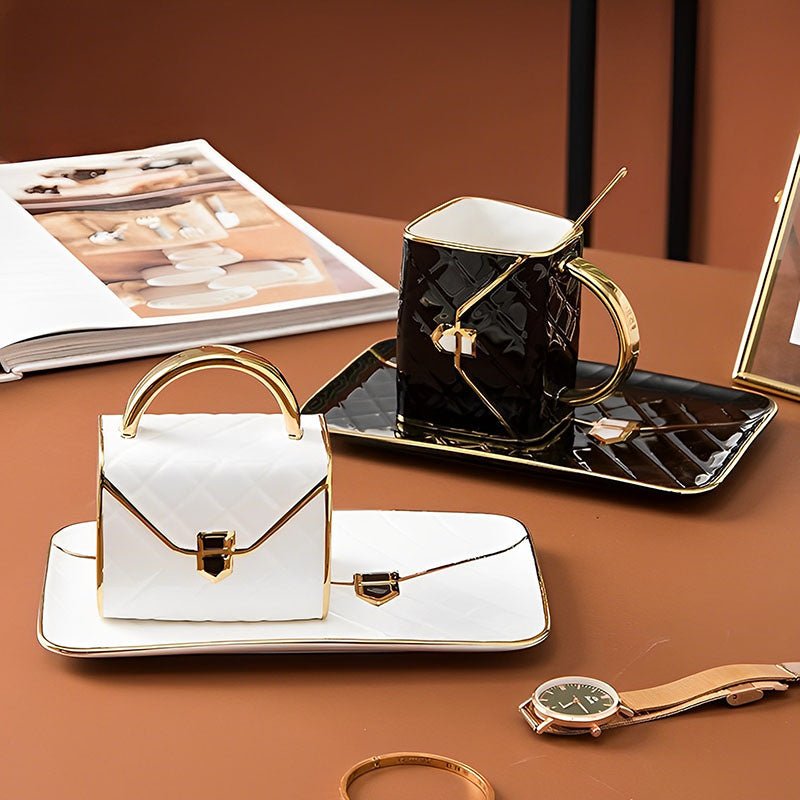
Unique Design Coffee Mugs Compact Kitchen Practical Purchase Checklist
Measure the cabinet opening, mug's widest point, handle projection, counter landing zone, and rack clearance before buying. We map those checks to the Handbag, Rhombus, and The Crane designs while ...
Read more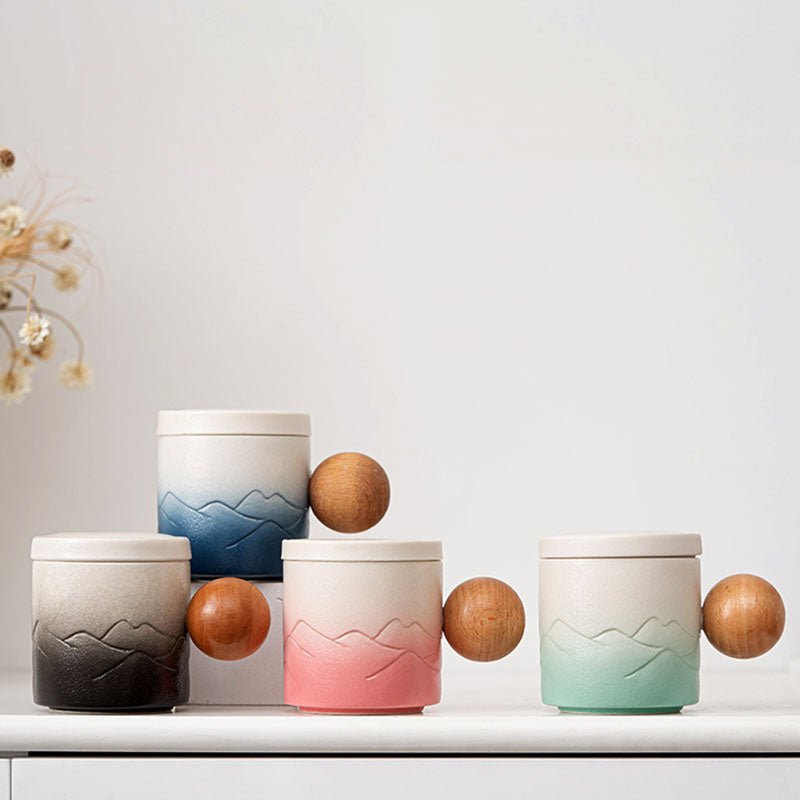
Flat White Cup Weekend Coffee Product Shortlist Guide: 3 Sizes Compared
Compare the Pleated 200 ml, Ball Handle 250 ml, and Emerald 270 ml by weekend pour size, preferred headroom, grip, cleanup, and reasons to skip.
Read more
Leave a comment
This site is protected by hCaptcha and the hCaptcha Privacy Policy and Terms of Service apply.