
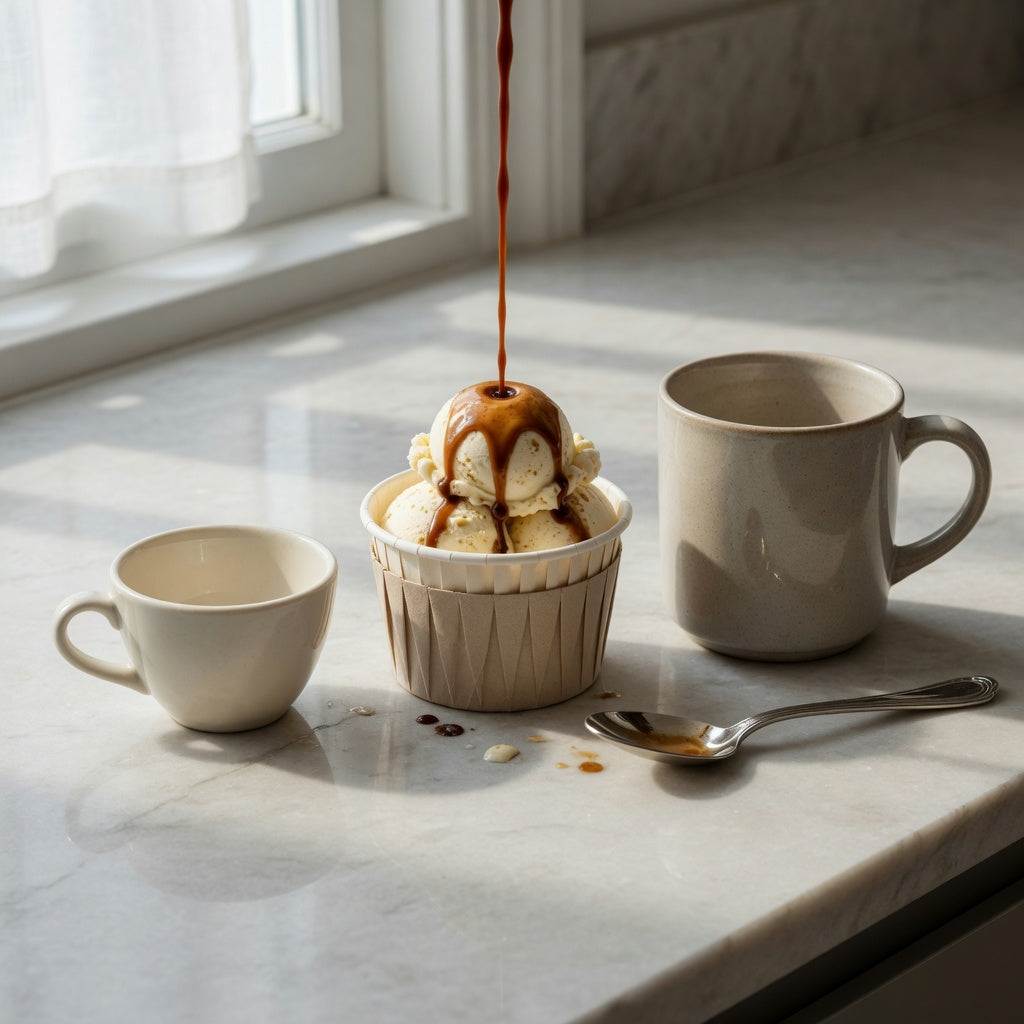
Affogato Dessert Cup: Compare 170, 200, and 270 ml
Reading time: about 8 minutes
A scoop can look generous in the freezer and oddly small once it lands in an oversized mug. Add espresso, and the practical problems appear quickly: too little headspace, awkward spoon access, or so much empty space that the dessert looks unfinished. A useful affogato dessert cup matches the serving you actually make. In our store, we compare the three catalog options below using facts we can verify: capacities of 170 ml, 200 ml, and 270 ml, plus each cup's visible shape.
Which affogato dessert cup size fits your usual serving?
Capacity is the best starting point, but it is not a universal serving formula. One person's scoop may be compact and firm; another may use a wide scoop, extra espresso, or toppings. The cold portion also displaces liquid, so a cup that holds your ingredients separately can still feel crowded once they are combined.
Our practical kitchen-counter check takes only a few minutes:
- Portion the gelato or ice cream with the scoop you normally use.
- Place it in a measuring vessel and add your usual espresso amount gradually.
- Allow room for melting, spoon movement, and a controlled pour below the rim.
- Repeat with any toppings you regularly add rather than estimating their space.
This test gives you a working volume based on your own dessert. It is more reliable than assuming that every one-scoop affogato needs the same cup. If your test lands close to a capacity limit, move up rather than expecting the rim to provide usable headspace.
170 ml, 200 ml, or 270 ml: where does each option fit?
The three CoffeifyMug choices differ clearly in listed capacity and visible silhouette. Each suits a different type of shopper, and each has a limitation worth considering.
- Compact serving: The 170 ml Retro coffee tea cup is the smallest option and has a visible retro cup profile. It is the logical starting point for a restrained serving where you want less empty volume around the scoop. It offers the least margin for a large scoop, extra espresso, or toppings.
- Middle-ground capacity: The 200 ml Pleated coffee tea cup adds 30 ml over the Retro and has a visibly pleated shape. It suits shoppers who want some extra working room without moving to the largest option. The pleating is a style feature; it does not establish an interior measurement or performance claim.
- Larger serving or mug look: The 270 ml Emerald coffee tea mug has the highest listed capacity and a visible mug silhouette. It gives a larger serving more room, but a small scoop and short pour may look sparse inside it.
| Option | Verified capacity | Visible shape | Likely buyer fit | Main trade-off |
|---|---|---|---|---|
| Retro | 170 ml | Compact retro profile | Restrained dessert serving | Least room for extras |
| Pleated | 200 ml | Pleated profile | Serving with added margin | Still compact for generous portions |
| Emerald | 270 ml | Mug silhouette | Larger serving or mug-style presentation | Small portions can look undersized |
The step from 170 ml to 200 ml is modest. The move from 200 ml to 270 ml is more noticeable. That does not make the largest cup automatically better. For affogato, unused volume changes the presentation just as surely as insufficient volume creates mess.
Does the visible shape leave enough room for a spoon?
An affogato is eaten as well as sipped, so the opening and interior path matter. Product photos can help you assess shape, but they do not replace listed dimensions. We avoid claiming an exact mouth width, height, or base measurement where one has not been verified.
- Opening: Look for a top view and compare the rim visually with the bowl of the dessert spoon you use at home.
- Wall path: A narrow lower interior can make the final spoonful harder to reach, even if the rim appears generous.
- Height: A tall vessel can hide a smaller scoop. A lower-looking profile keeps more of the dessert visible during the pour.
- Base: Look for a clear product image showing how the cup meets the counter. Spoon pressure is easier to manage in a vessel that appears stable.
Do not infer measurements from the product name alone. Pleated describes a visible design treatment, Retro identifies a style direction, and Mug describes a silhouette. If precise spoon clearance is essential, confirm current dimensions on the listing or measure a cup you already find comfortable.
Is a regular coffee mug good enough for affogato?
It can be. The word affogato on a product page is less useful than capacity and accessible shape. A very large everyday mug can make a compact dessert look lost, while a tiny espresso cup can leave no room for the pour. A tall, narrow glass may display layers but still be frustrating once the spoon reaches the bottom.
- Choose 170 ml if your measured serving is small and a compact presentation is the priority.
- Choose 200 ml if you want a little more margin or are unsure how much the scoop will displace.
- Choose 270 ml if your portion test needs the room or you specifically prefer a mug-style silhouette.
Daily use changes the decision. The 170 ml option is not intended to replace a large office coffee mug, and the 270 ml option may be excessive for a tightly plated dessert. Gift buyers should also consider what the recipient drinks most often, not just which cup looks distinctive in an unboxing photo. If everyday coffee matters as much as dessert, compare the wider unique coffee mugs collection before settling on a compact capacity.
Which material, care, and temperature claims should the listing confirm?
A photo cannot prove that a cup is ceramic, stoneware, tempered glass, or borosilicate glass. It also cannot establish dishwasher, microwave, freezer, or thermal-shock performance. Because those details are not among the verified facts used for this comparison, we do not assign them to the Retro, Pleated, or Emerald options here.
Check the current product listing for the details that affect your routine:
- The specifically named material, rather than a guess based on surface appearance.
- Dishwasher or hand-wash instructions before the first cleaning cycle.
- Microwave and freezer guidance if either use matters to you.
- Any warning about sudden temperature changes.
- External dimensions if cupboard clearance or spoon access is critical.
- The included quantity and contents rather than assuming a spoon, saucer, food, or other serving accessory is supplied.
At unboxing, place the empty cup on a flat counter, inspect the rim and body for visible damage, and check that the base sits as expected before washing or serving. Do not use a dishwasher cycle or a rapid freezer-to-hot-pour change as an experiment when the listing does not authorize it. Those are care decisions, not shortcuts for testing quality.
How can serving order reduce overflow and early melting?
The cup cannot correct a portion that is too large, but a controlled setup gives you a cleaner result. We use the same sequence when checking how a compact dessert will behave on a real kitchen counter:
- Prepare the cold portion and espresso separately.
- Keep the cup at a condition allowed by its care instructions; do not assume freezer suitability.
- Place the scoop in the cup and check the remaining space before pouring.
- Keep the spoon beside the cup until the pour is complete to avoid splashing.
- Add espresso gradually and stop before the liquid approaches the rim.
Serve promptly after the pour. This sequence manages timing and headspace, but it is not a claim of insulation, thermal resistance, or drink-specific engineering.
Frequently asked questions
What size affogato dessert cup is best for one scoop?
Compare 170 ml and 200 ml first, then test your actual scoop and espresso portion. The 170 ml Retro favors a compact serving, while the 200 ml Pleated option provides 30 ml more room. Choose 270 ml only when your measured portion or preferred presentation benefits from the extra capacity.
Is 170 ml too small for an affogato?
Not for every serving. It can fit a restrained scoop and pour, but it leaves less allowance for toppings, a larger scoop, or extra espresso. Measure your normal ingredients together rather than judging by the scoop alone.
Can I use a regular mug instead of a special affogato cup?
Yes. A regular mug works if its capacity matches your portion and its shape allows comfortable spoon access. Avoid choosing a large mug by default, because too much empty volume can make a small dessert look unfinished.
Should I chill an affogato cup before serving?
Only if the product's care guidance supports that use. Do not assume a cup can move safely from a freezer or very cold environment to contact with hot espresso. A room-temperature cup and a prompt, controlled pour are the more cautious approach when temperature-change performance is not stated.
Can these cups go in the dishwasher?
Use the care instructions on the current product page or packaging. Capacity and visible shape do not establish dishwasher safety, and surface appearance is not enough to identify the material. If dishwasher guidance is absent, do not present it as a verified feature.
Your final buying check: measure your usual scoop and pour, select 170 ml, 200 ml, or 270 ml, inspect the visible opening and silhouette, and verify every material or care requirement on the current listing. Then compare the three linked products with the broader collection and choose the cup that fits how you will actually serve dessert.
More from our blog
Read more
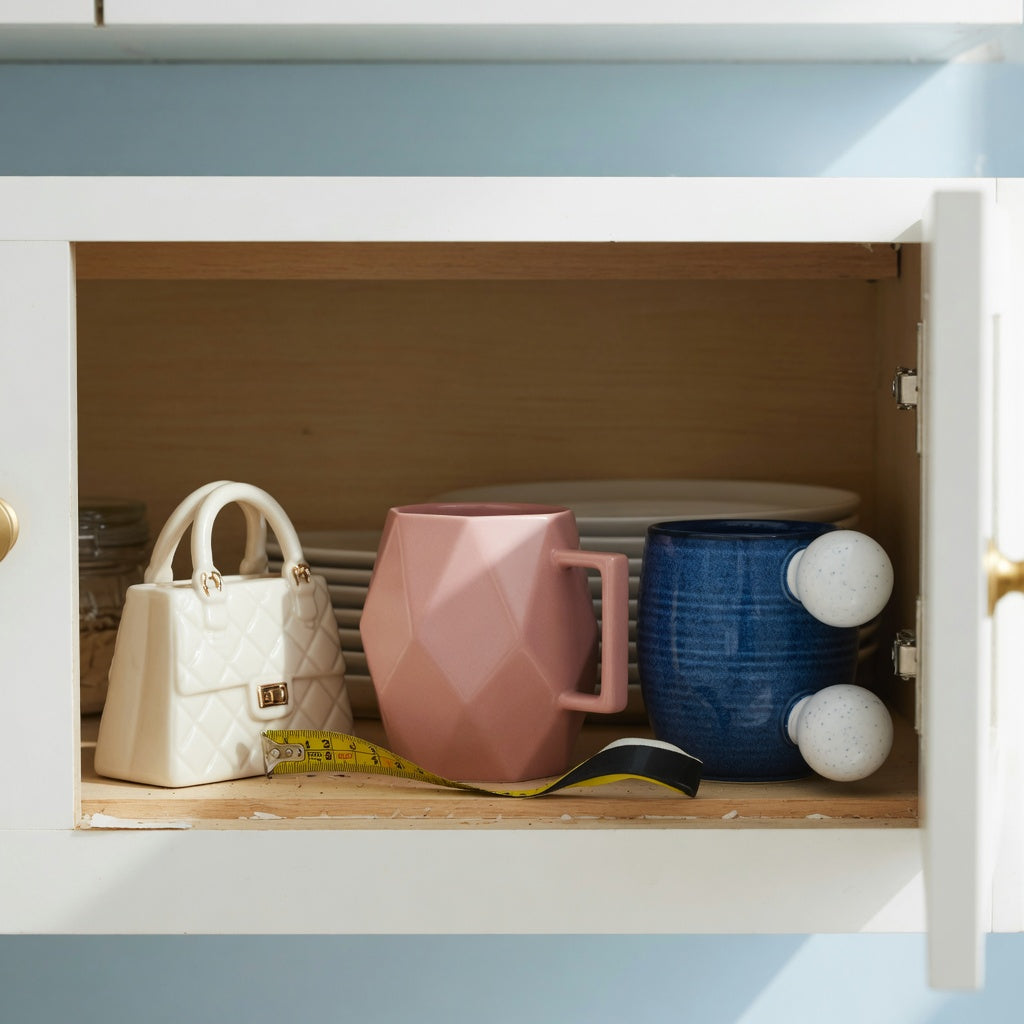
Coffee Mugs Unique Shape Storage Fit Guide for Shelves and Cabinets
Compare the storage needs of CoffeifyMug's handbag, rhombus, and ball-handled ceramic mugs. See what to measure for shelf depth, cabinet doors, racks, and desks without relying on invented dimensions.
Read more
Mocha Ceramic Mug: Compare 400, 440, and 480 ml Sizes
Compare CoffeifyMug's 400 ml, 440 ml, and 480 ml options by serving size, cabinet and desk fit, handle comfort, glaze care, and home use. This guide also explains when an open ceramic mug is the wr...
Read more
Leave a comment
This site is protected by hCaptcha and the hCaptcha Privacy Policy and Terms of Service apply.