Affogato Cup for Small Coffee Setup: Compare 170, 200 & 270 ml
Reading time: about 9 minutes
A cup that looks compact on a product page can become awkward once it has to share a narrow shelf with coffee beans, filters, and everyday mugs. We see this most often in small kitchens and office coffee corners, where every item needs a clear place. Choosing an affogato cup for small coffee setup is therefore less about finding the smallest possible cup and more about balancing storage space, serving headroom, and a shape you will enjoy using.
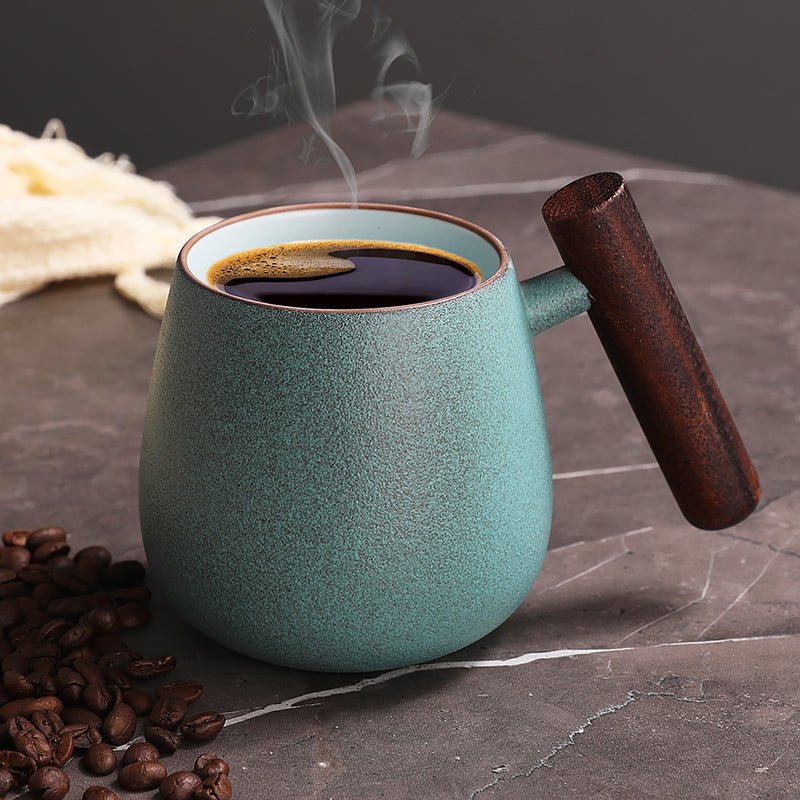
Our current comparison is deliberately narrow: the unique coffee mug collection includes compact-looking options with different capacities and visible profiles, but those differences matter in practical ways. The Retro Coffee Tea Cup is 170 ml, the Pleated Coffee Tea Cup is 200 ml, and the Emerald Coffee Tea Mug is 270 ml. We compare those verified capacities and the shapes shown in their listings without assuming unlisted dimensions, accessories, care performance, or drink-specific engineering.
How much shelf space should an affogato cup for small coffee setup use?
Start with the storage location, not the cup photo. A small coffee station may have enough counter area for brewing but very little clear shelf height or cabinet depth. Before ordering, measure the actual space where the cup will live. Record the clear height between shelves, the usable depth with the cabinet door closed, and the width left after your other cups are in place.
Capacity does not provide exact exterior dimensions. A 170 ml cup will usually represent a smaller serving commitment than a 270 ml mug, but milliliters alone cannot tell you the base diameter, handle projection, rim width, or overall height. Use the product photographs to compare the visible silhouette, then check the current listing for any measurements available at the time you buy.
- Open shelf: Compare the cup's full outline with the depth of the shelf, including any visible handle projection.
- Closed cabinet: Check clear height and make sure the door will not meet the rim or handle.
- Countertop station: Leave enough working room to place and remove the cup without moving the grinder, brewer, or storage containers.
- Office desk: Consider the complete occupied area, not just the base. A projecting handle can matter beside a keyboard or notebook.
If your main constraint is a very tight shelf, begin with the 170 ml Retro option and compare its listing images with your measurements. Shoppers who want a broader capacity comparison before deciding can also use our small ceramic coffee cup size and shape comparison.
170 ml, 200 ml, or 270 ml: where does the extra capacity go?
The three verified capacities create distinct buying choices. There is a 30 ml step from 170 ml to 200 ml, followed by a larger 70 ml step from 200 ml to 270 ml. From smallest to largest, the total difference is 100 ml. That does not prescribe a serving recipe, but it does show how much additional internal capacity you are choosing.
| Current option | Capacity | Situation it suits | Trade-off to consider |
|---|---|---|---|
| Retro Coffee Tea Cup | 170 ml | A shopper prioritizing a smaller serving format and compact visual presence | Least headroom of the three capacities |
| Pleated Coffee Tea Cup | 200 ml | A shopper wanting a middle capacity with a visibly pleated profile | More capacity than 170 ml, but 70 ml less than the largest option |
| Emerald Coffee Tea Mug | 270 ml | A shopper who values more internal headroom and likes the visible emerald mug format | Largest capacity in this comparison and potentially more cup than a very small serving needs |
For a small affogato portion, 170 ml may be enough when the goal is a restrained presentation and minimal unused volume. The limitation is straightforward: it provides the least room for variation. If you tend to add a larger portion or simply prefer more clearance near the rim, 200 ml gives 30 ml more capacity without moving directly to the largest choice.
The 270 ml Emerald mug offers the most flexibility in this group. It can make sense when the cup will serve more than one role at the coffee station or when generous headroom matters more than minimizing capacity. It is not the obvious choice for someone who specifically wants the smallest visual serving format. For a deeper capacity-only breakdown, see our 170 ml, 200 ml, and 270 ml affogato cup capacity guide.
Which visible shape works best in a compact coffee corner?
Shape influences how a cup looks among the equipment you already own. In our store, shoppers often focus first on color or surface detail, then realize that the overall silhouette is what they notice every day. For this comparison, the useful visible distinctions are the Retro styling, the Pleated surface, and the Emerald mug presentation.
The Retro 170 ml cup is the logical starting point for a vintage-leaning setup or a buyer seeking the smallest capacity here. Its styling gives it a more specific decorative direction, which may not suit a minimal, uniform set of plain cups. The practical next step is to inspect the current Retro cup photographs at full size and compare the rim, body, base, and handle outline with your shelf.
The Pleated 200 ml cup makes its surface pattern part of the presentation. That visible texture can add definition to a simple coffee corner, but it may feel busy if your shelves already contain several patterned pieces. Buyers weighing that middle capacity can review our focused article on the Pleated Ceramic Coffee Cup 200 ml before opening the product listing.
The Emerald 270 ml option has the strongest color cue in its name and the largest verified capacity. It fits a shopper who wants the cup to be easy to distinguish from neutral drinkware and who has room for the larger capacity choice. It is less suitable if your priority is a visually tiny cup or a neutral, matching set. Review the Emerald Coffee Tea Mug for its current visible shape and listing details.
What should you check when the cup will serve more than affogato?
In a small setup, single-purpose objects have to earn their space. Many shoppers therefore compare an affogato cup with the cups they already use for coffee or tea. Capacity is the reliable starting point: 170 ml keeps servings compact, 200 ml provides a middle option, and 270 ml offers the most headroom in this group.
Think through one normal week rather than an idealized serving occasion. A cup used only for an occasional dessert may be easy to store if it is the 170 ml option, but it still occupies shelf space between uses. A 200 ml cup may be easier to justify if that middle capacity matches more of your usual servings. The 270 ml mug may have broader day-to-day appeal for someone who routinely prefers more room, though that same capacity can feel oversized for a deliberately small presentation.
- List the two or three servings you actually make most often.
- Estimate which verified capacity gives those servings enough headroom without leaving an unnecessarily large cup.
- Check the visible rim, body, base, and handle profile in the listing photographs.
- Measure the intended shelf or desk area rather than relying on the word small.
- Choose the product only after both the capacity and visible style pass those checks.
This process also helps gift buyers. A distinctive retro, pleated, or emerald appearance may suit the recipient, but capacity should still match how they drink and how much storage they have. Do not assume photographed props, serving pieces, food, or drink components are included. Confirm the current product listing before ordering.
Which product details still need confirmation before purchase?
Capacity and visible shape do not answer every ownership question. We can stand behind the listed 170 ml, 200 ml, and 270 ml capacities used in this comparison, but we do not infer unlisted material specifications, exact exterior dimensions, temperature-change performance, or care instructions. Those points can affect daily use and should be confirmed on the live product page.
- Material: Verify the current listing rather than assuming a composition from appearance or product category.
- Exterior measurements: Look for total height, rim or body width, base width, and handle projection where provided.
- Care: Do not assume dishwasher or microwave suitability unless the listing explicitly states it.
- Temperature changes: Do not infer resistance to rapid heating or cooling from shape, color, or capacity.
- Included pieces: Check exactly what the listing says is included; styling props in photographs should not be treated as package contents.
If any of those details are essential to your routine and are not stated, pause before buying. A different cup with clearly documented measurements or care guidance would be a better choice than guessing. This is especially relevant for very shallow cabinets, shared office kitchens, or households with a fixed cleaning routine.
Frequently asked questions
What capacity is best for an affogato cup for small coffee setup?
Choose 170 ml if minimum capacity and a small serving format are the priorities. Choose 200 ml for 30 ml of additional headroom, or 270 ml when flexibility matters more than keeping the serving visually compact. The right answer depends on your portions and storage measurements, not capacity alone.
Is a 170 ml cup too small for affogato?
Not necessarily. The Retro cup's verified 170 ml capacity can suit a restrained serving, but it provides the least headroom of these three choices. If your portions vary or you prefer more clearance below the rim, compare it with the 200 ml Pleated cup.
Does a 270 ml affogato mug take up more shelf space?
The Emerald mug has the largest capacity in this comparison, but capacity alone does not establish exact exterior dimensions or shelf footprint. Check the current listing photographs and any stated measurements, including the visible handle projection, before deciding that it fits your cabinet.
Can I put these cups in a dishwasher or microwave?
Do not assume either form of care from the cup's name, shape, or capacity. Review the current product page for explicit care instructions and material details. If the required information is not listed, choose an option whose care guidance matches your routine.
Do the product photos show everything included with the cup?
Product photographs may use surrounding items for presentation. Confirm the listing's description of included pieces before purchasing, and do not assume that serving accessories, food, or drinks are supplied.
A short checklist before you choose
For the smallest verified capacity here, compare your shelf measurements with the 170 ml Retro cup. For a middle capacity and visible pleated profile, review the 200 ml Pleated cup. For the most headroom and a distinct emerald mug presentation, inspect the 270 ml Emerald option.
- Measure clear shelf height, width, and depth.
- Choose among 170 ml, 200 ml, and 270 ml based on real serving habits.
- Compare the visible rim, body, base, and handle outline.
- Confirm material, exterior dimensions, care instructions, and included pieces on the live listing.
- Reject any option that asks you to guess about a detail essential to your routine.
Once those checks are complete, return to the CoffeifyMug unique coffee mug collection and compare the current product pages side by side. The best small-space choice is the cup whose verified capacity fits your serving and whose visible shape fits the place where it will actually live.
Read more
Ceramic Wide Bottom Coffee Mugs Shape and Handle Guide: 3 Options
Compare the Round, Spittoon, and The Rock ceramic mug profiles by visible body shape, handle clearance, listed dimensions, and capacity. This practical guide covers desk fit, cupboard space, giftin...
Read moreClay Pottery Coffee Mugs Comparison: Which Fits Your Routine?
Compare the current Mountain Sea, Great Mountain, and Landscape coffee and tea mug options by the routines that make a design feel right on the counter, desk, or gift table. We separate visible pro...
Read more
Leave a comment
This site is protected by hCaptcha and the hCaptcha Privacy Policy and Terms of Service apply.