
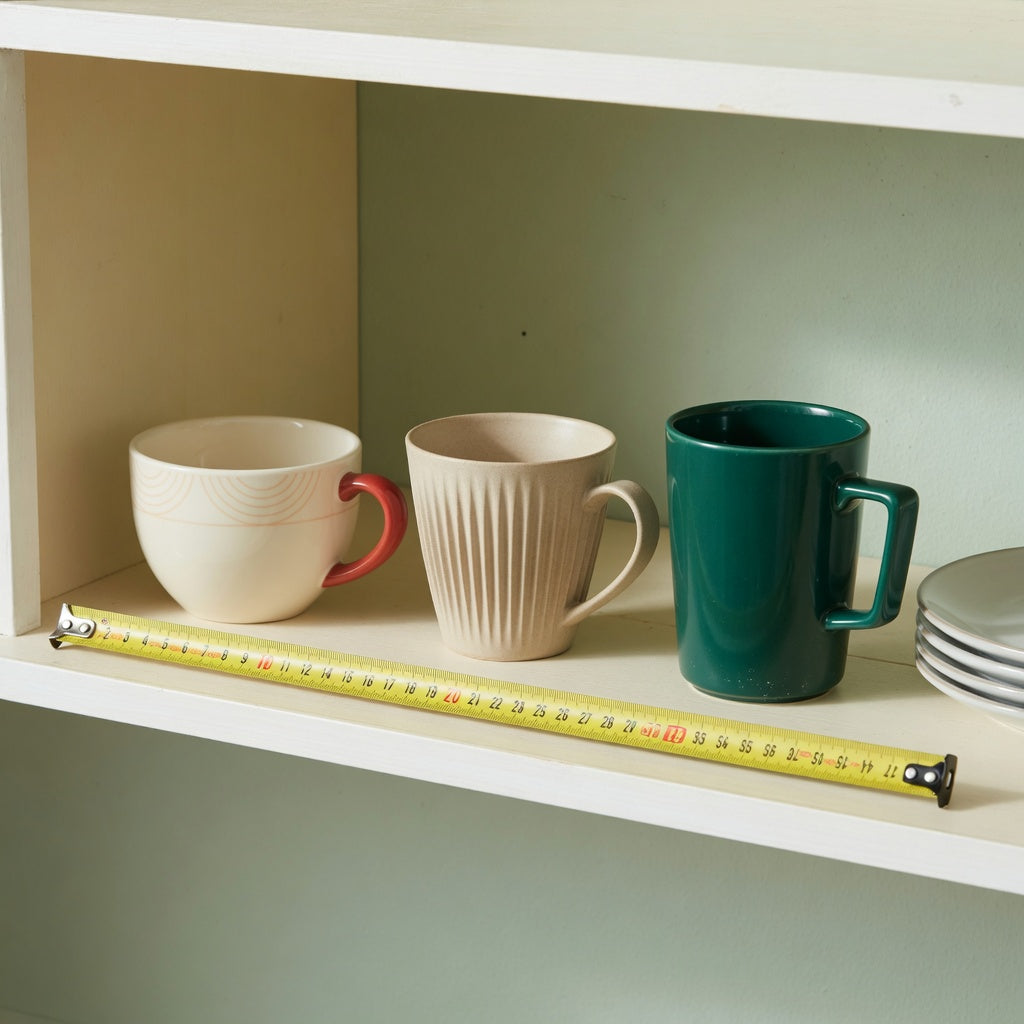
Affogato Cup Storage Fit Guide: Retro, Pleated, or Emerald?
Reading time: about 9 minutes
A handled cup can clear the front of a shelf and still stop the cabinet door from closing because the handle reaches into the door path. We see the same geometry while handling products at our packing table: the cup body is only part of the space a shopper needs to plan for. This affogato cup storage fit guide compares three current CoffeifyMug options by verified capacity and visible form, then gives you a practical way to test your own storage.
The verified catalog facts are specific: the Retro Coffee & Tea Cup is 170 ml, the Pleated Coffee & Tea Cup is 200 ml, and the Emerald Coffee & Tea Mug is 270 ml. Their visible profiles are rounded, pleated, and upright, respectively. Because our verified comparison data does not include a complete set of exterior measurements, we will not invent heights, diameters, or handle projections. This article also concerns the cup or mug itself; it does not assume that serving accessories, coffee, or dessert are included.
Affogato cup storage fit guide: what should you measure first?
Cabinet fit is determined by the narrowest usable space, not the generous-looking space behind it. A face frame, shelf lip, hinge, or partially inset door can reduce access even when the interior shelf appears deep enough. Our team evaluates storage in two parts: the space the cup occupies while resting and the path your hand uses to put it away or remove it.
- Measure the shelf opening height. Measure from the shelf surface to the lowest obstruction directly above it. Use the opening, not only the taller cavity farther inside.
- Measure usable depth with the door closed. Measure from the back panel to the inside face of the closed door. A cup that extends beyond the shelf edge may still interfere with the door or its hardware.
- Account for the full handled width. The relevant envelope runs from the far side of the cup body to the outermost edge of the handle. Product photos can show the handle, but perspective cannot provide a dependable measurement.
- Leave retrieval room. A cup that technically fits between two items can still be awkward to grip. Allow enough space for your fingers without dragging the cup against a plate stack, hinge, or neighboring mug.
- Test the route to a high shelf. Upper cabinets often require the cup to be tilted during removal. The opening must accommodate that movement, especially if a handle catches on the face frame.
There is no universal cabinet size and no fixed finger-clearance number that suits every shopper. Hand size, door style, shelf position, and neighboring items all change the result. A fit that requires the handle to scrape a hinge or another cup is not a useful everyday fit.
How do the three current shapes compare at a glance?
| Style | Verified capacity | Visible profile | Practical shortlist | Fit detail to verify |
|---|---|---|---|---|
| Retro | 170 ml | Rounded cup profile | Crowded cabinets, compact coffee stations, or smaller servings | Overall handled width and door clearance |
| Pleated | 200 ml | Vertically pleated body | Open shelves or shoppers balancing moderate capacity with visible texture | Widest points of the pleats and finger access |
| Emerald | 270 ml | Upright mug profile | Roomier serving preferences and storage areas already used for larger mugs | Opening height, usable depth, and handle envelope |
The table is a shortlisting tool, not a dimensional guarantee. Retro has the lowest listed capacity, but milliliters do not prove that it is the shortest or narrowest in every exterior direction. Emerald has the highest capacity and the most upright visible profile, but capacity alone cannot tell you exactly how its height compares with your shelf. Pleated sits between them by capacity, while its ridges make the outer contour more relevant than a simple smooth-body estimate.
Which profile is the strongest candidate for a crowded cabinet?
For a shallow upper cabinet or a shelf already holding plates and spice jars, we would investigate the Retro first. Its 170 ml capacity is the lowest of the three, and its rounded visible form has fewer pronounced exterior ridges than the Pleated option. That combination makes it a sensible candidate for constrained storage, though we would not promise that it has the smallest exterior footprint without verified measurements.
The trade-off is serving room. A shopper who regularly wants more space inside the cup may find 170 ml restrictive. In that situation, forcing the smallest capacity to solve a cabinet problem creates a different annoyance at the counter. Check the 200 ml Pleated next if you can give its textured body comfortable side access, or reconsider the shelf rather than buying a capacity that does not suit your usual portion.
If maximum storage density is your main requirement, a product explicitly listed with overall dimensions or verified stackability would be a better choice than relying on appearance. None of these three should be treated as stackable based on this guide.
How do handles and pleats change everyday shelf access?
The handle is often the first part to conflict with a cabinet door, hinge, or neighboring item. Rotating a cup can reduce its front-to-back reach, but that may increase the side-to-side space it occupies. Before ordering, place a handled cup you already own in the intended spot and rotate it through the same path your new cup would take. Pay attention to the outer handle edge, not just the base.
The Pleated 200 ml requires a second visual check. Its vertical texture defines the outside surface, so assess the widest visible points rather than imagining the profile as a smooth cylinder. We do not assign a required gap because the verified data does not provide exterior dimensions, but your fingers should reach the handle or body without pressing the cup into its neighbor.
This matters even more on a high shelf. A cup may rest comfortably once it is inside yet catch on the frame when you tilt it downward for removal. In our experience, testing the retrieval angle with an existing handled cup reveals more than measuring the empty shelf alone.
Which cup suits an open shelf, office desk, or gift setup?
Open kitchen shelf with room for visible texture
The Pleated 200 ml is the most direct shortlist for a shopper who wants the cup's surface detail to remain visible rather than disappear in a tightly packed cabinet. Its middle capacity offers 30 ml more than Retro and 70 ml less than Emerald. Place it where the pleated body has enough clearance for straightforward removal, then confirm the handle will not project into a walkway or busy preparation area.
Small office cupboard or compact desk coffee area
The Retro 170 ml is the practical first option if the storage area is shared with supplies or has limited leftover space. The lower listed capacity and rounded profile support that scenario better than a roomier upright mug. It is not the right choice if your priority is the largest available capacity, and its exact desk footprint still needs to be checked against your available surface.
Gift for someone who already stores larger mugs
The Emerald 270 ml makes more sense when the recipient uses upright mugs and has a known cabinet, mug rail, or open shelf for them. Its larger listed capacity is useful for a shopper seeking more room than the 170 ml and 200 ml options, but the gift recipient also inherits the storage requirement. If you do not know their shelf setup, compare the visible profiles in our unique coffee mugs collection against a cup they already use rather than choosing only by appearance.
What does capacity reveal about shelf fit, and what does it hide?
Capacity is an interior volume, not an exterior measurement. The three verified figures provide useful serving context: Retro is 170 ml, Pleated is 200 ml, and Emerald is 270 ml. The difference from Retro to Emerald is 100 ml, but that number cannot tell you how the added volume is distributed across height, width, wall shape, or handle placement.
If by affogato mug you mean a more upright vessel with the highest listed capacity in this comparison, Emerald is the closest match by visible form and volume. If you want a smaller dessert-style presentation, Retro is the more relevant starting point. Pleated occupies the middle by capacity and adds a visibly textured profile, making it useful for shoppers who can spare access space around the body.
These products should not be presented as specially engineered for one drink based on this comparison. We are evaluating existing coffee and tea cup or mug listings for an affogato use case. Storage fit also says nothing about dishwasher use, microwave use, or performance during abrupt temperature changes; follow only the care information stated on the current product listing.
A five-minute shelf check before placing your order
- Record the narrowest shelf opening height, usable depth to the closed door, and available width between neighboring items.
- Use an existing handled cup to test the route through the cabinet opening, including any tilt needed for a high shelf.
- Choose Retro 170 ml as the first candidate for constrained storage, then confirm that its capacity suits your usual serving.
- Choose Pleated 200 ml if you want the middle capacity and visible texture, with enough access room around the ridged body.
- Choose Emerald 270 ml if you prefer the highest listed capacity and already have space suited to an upright mug profile.
- Do not treat product-photo scale, capacity, or a cup's ability to rest on the shelf as proof that the cabinet door will close.
This is the central limit of any affogato cup storage fit guide: we can compare verified capacity and visible form, but your cabinet determines the final answer. Measure first, shortlist by serving size, and use the product links to inspect the current imagery and listing details before checkout.
Frequently asked questions
How can I use an affogato cup storage fit guide without exact dimensions?
Use the guide to narrow the choice by verified capacity and visible profile, then measure the narrowest part of your own cabinet. Do not convert milliliters into exterior size. Confirm any current measurements on the product listing before treating the fit as certain.
Which current cup should I consider first for a crowded upper cabinet?
Start by investigating the Retro 170 ml because it has the lowest listed capacity and a rounded visible profile. That makes it a reasonable first candidate, not a guaranteed smallest cup. Check its full handled envelope against the cabinet opening and closed-door depth.
Does the Emerald's 270 ml capacity mean it is definitely taller?
No. Capacity confirms interior volume, not exact exterior height or width. Its visible profile is more upright than the other two, so both shelf height and door clearance deserve attention, but only verified product measurements can establish the precise difference.
Will Pleated 200 ml cups fit tightly side by side?
The visible pleats form the outer contour, so check the body's widest points and leave room to grip each cup. We cannot provide an exact side gap without verified dimensions and details about your shelf. If maximum-density storage is essential, choose a style explicitly documented for that purpose.
Which option is the safer gift if I do not know the recipient's shelf size?
Retro 170 ml is the first candidate for limited space, while Emerald 270 ml better suits someone who already stores upright, roomier mugs; Pleated 200 ml sits between them and emphasizes visible texture. Before ordering, compare the recipient's existing cup capacity and profile, check their cabinet opening if possible, and review the current CoffeifyMug collection for the closest practical match.
More from our blog
Read more
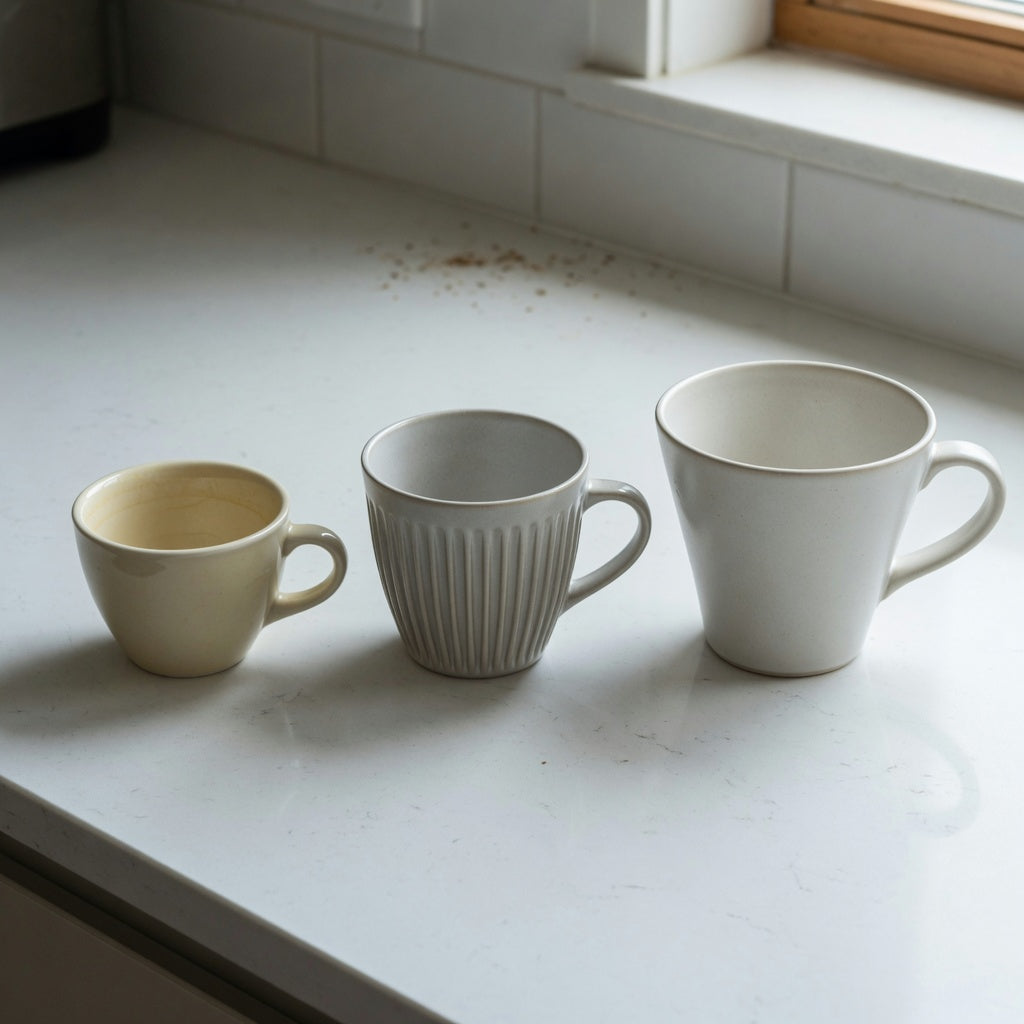
Affogato Cup Size Decision Guide: 170, 200, or 270 ml?
Compare the 170 ml Retro, 200 ml Pleated, and 270 ml Emerald using the serving you already make. See where each size feels practical, where it falls short, and how visible shape affects the present...
Read more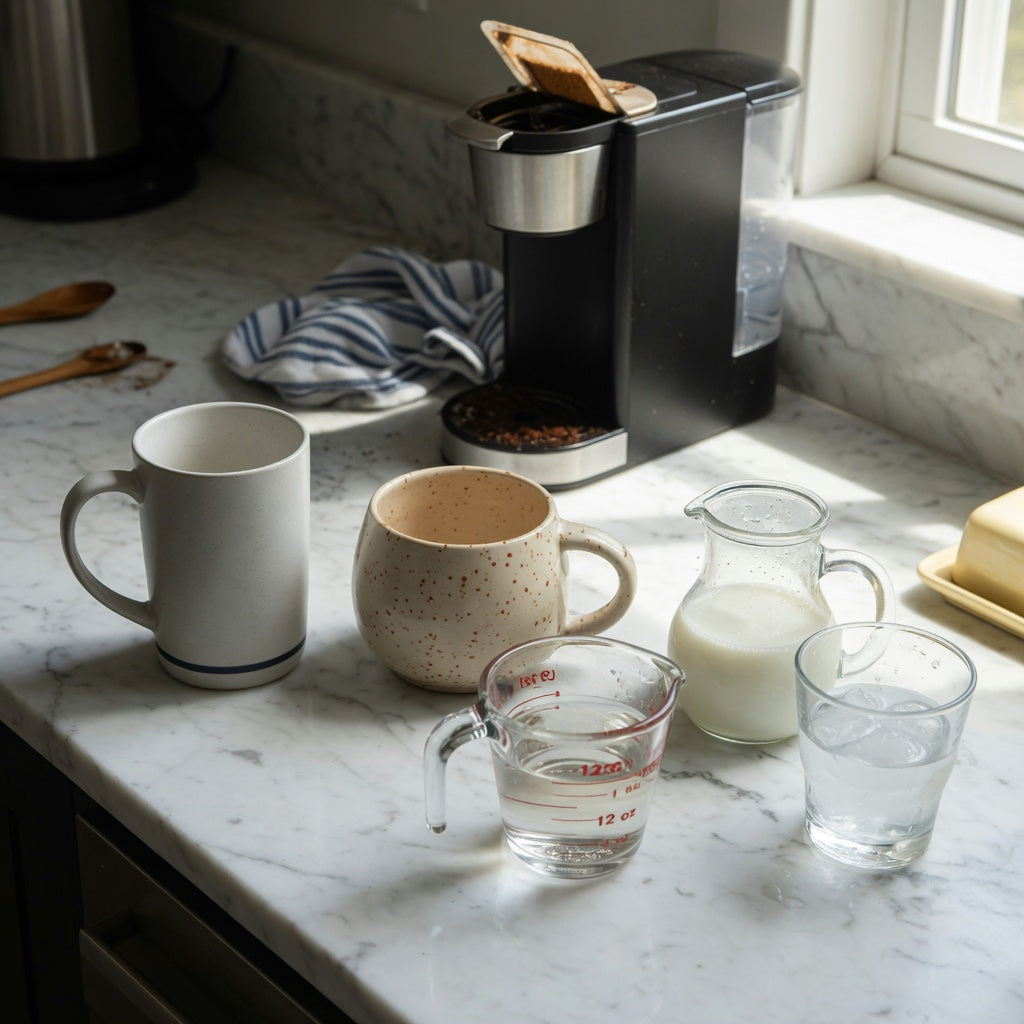
12 Oz Ceramic Coffee Mugs Size Decision Guide: Size Up or Down?
Compare a 12 oz mug with smaller and larger capacities using your measured pour, milk or ice, brewer clearance, storage, and refill routine. Then match the result to CoffeifyMug's current tall and ...
Read more
Leave a comment
This site is protected by hCaptcha and the hCaptcha Privacy Policy and Terms of Service apply.