
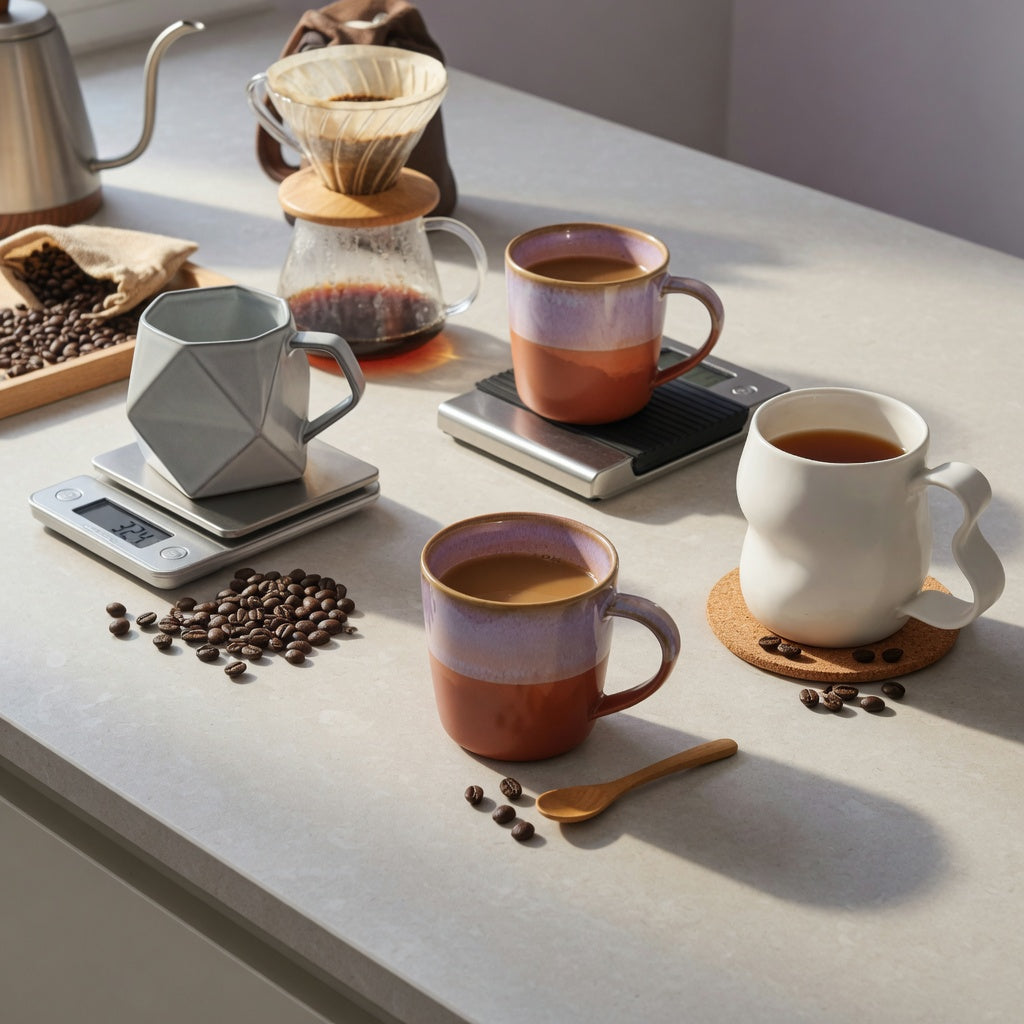
Abstract Coffee Mug Home Coffee Station Practical Purchase Checklist
Reading time: about 11 minutes
The first mug often gets chosen after the grinder, kettle, and brewer are already in place. Then the practical problem appears: the only clear patch of counter is narrow, the cup sits below a cabinet, and a 400 ml shape that looked balanced in a product photo crowds the scale. Our abstract coffee mug home coffee station practical purchase checklist starts with that ordinary moment: measure the working space and match the mug to the drink you actually make.
In our store, we handle and sell mugs as objects that have to work through a routine, not just look good in a thumbnail. We compare the listed capacity, examine the base and rim, consider the path of a hand beside nearby gear, and think about rinsing, drying, and storage. The verified facts for this set are specific: Rhombus is a 250 ml geometric form, Gradient is a 400 ml color-transition finish, and The Flow is a 400 ml form with sculptural curves. Here, abstract is a shopper's style lens. It does not establish a creator, named art movement, production method, edition status, or institutional provenance.
Abstract coffee mug home coffee station practical purchase checklist: start with the counter
A station has traffic. The mug moves from its resting spot to your hand, then back to a drying rack or shelf, while the kettle, scale, dripper, spoon, and coffee container remain in use. Measure after that equipment is in place rather than measuring an empty counter.
- Landing zone: Record the smallest clear width and depth where the mug can sit without covering the scale or another working surface.
- Vertical clearance: Check the space above the rim if the mug will live beneath a cabinet or shelf.
- Hand path: Simulate lifting and setting the mug down. A side projection or handle that enters the path can be irritating even when the mug technically fits.
- Storage and drying: Decide where the mug will go after washing. A piece that works on the counter may be awkward on a narrow shelf or in a crowded rack.
Capacity is not a measurement of external footprint. The catalog facts used here confirm the volume and visual form, but they do not establish complete width, depth, or height for every option. A 400 ml mug can have a very different profile from another 400 ml mug, so use the current product page details and photographs for the final fit check. Do not infer compatibility with a particular coffee machine, dripper arm, cup holder, or kettle from capacity alone.
Will 250 ml or 400 ml suit the drink you actually brew?
The listed volume is the cleanest starting comparison in this range. It helps narrow the choice before personal taste, but it is not the same as usable fill volume: coffee, milk, ice, and the space needed to lift the cup all compete for room.
| Option | Verified catalog detail | Starting situation | Trade-off to check |
|---|---|---|---|
| Rhombus | 250 ml geometric form | Shorter coffee or tea serving and a lower-volume routine | Less room for additions; verify its external dimensions and care guidance |
| Gradient | 400 ml color-transition finish | Larger coffee or tea serving where the surface color is part of the station look | More volume may require more counter and storage room; it is not automatically a tall tumbler |
| The Flow | 400 ml sculptural curves | Larger serving where the mug's silhouette is meant to be noticed | Curves may make drying and close storage more involved; inspect the profile before ordering |
Use a measuring cup once to record the drink you actually pour. Note the liquid on its own, then account for milk, sweetener, or ice if those are part of the routine. A 250 ml mug may suit a short serving but leave little margin near the rim. A 400 ml mug gives more headroom, not a promise that it will accommodate a large iced drink comfortably.
If your priority is a tall wall, a straw, a lid, or spill-resistant travel use, a dedicated tumbler or travel mug is likely the better tool. The listed abstract forms are presented here as coffee and tea mugs, not as verified lidded travel vessels.
Which stocked form fits a tight counter, a color-led setup, or a focal point?
Once the counter and volume questions are answered, choose the visual role deliberately. The three options solve different shopper situations, even though two share the same listed capacity.
- Small, shorter-serving routine: Start with the Rhombus Coffee Tea Mug if 250 ml matches your usual drink and a geometric form is the style you want. Its lower listed capacity is the reason to investigate it first, not an assumption that its outside footprint is smallest. Next step: compare the product page's current width, depth, height, material, and care information with your measured landing zone.
- Visible station where color does the work: Open The Gradient Coffee Tea Mug if you want 400 ml capacity and a color-transition finish to remain part of the counter display. It suits a station that stays visible between brews, but the finish should be evaluated alongside storage and cleaning needs. Next step: review the current photos and listed care guidance before treating it as an all-day counter piece.
- Open counter and shape-led focal point: Consider The Flow Coffee Tea Mug if 400 ml fits your routine and sculptural curves are more important than compact storage. Curves can need more deliberate placement and drying than a simple wall. Next step: inspect the side profile, grip area if shown, and the place where you will store it after washing.
These are situation-based starting points, not claims that one mug works for every station. If two options fit your volume, let the actual counter photo, storage shelf, and daily grip decide the final page you open.
What should an abstract mug feel like after the photo becomes a daily object?
Abstract shapes are easiest to judge in three settings: on screen, on the counter, and in the hand. Our handling checklist focuses on ordinary failure modes that a polished product image cannot reveal.
- Base contact: Set the empty mug on the counter and rotate it a quarter turn. Rocking, an uneven contact point, or a base that catches on the surface is a reason to pause before use.
- Drinking edge: Inspect the rim under bright side light for a chip, rough spot, or hairline crack. The rim is where a small defect is noticed on every sip.
- Grip and clearance: Lift the mug with the amount of liquid you normally use. Check knuckle clearance and make sure the grip area does not collide with nearby equipment or your desk setup.
- Surface finish: View a color-transition finish in both daylight and indoor light. Screen settings can change how a finish reads; small surface pinholes or an unexpectedly rough area are separate physical checks.
- Drying: Rinse the mug and look for droplets that remain beneath curves, around the base, or in a recessed detail. Trapped water turns an attractive shape into a storage nuisance.
These are inspection points, not claims that the Rhombus, Gradient, or The Flow has a particular defect. If you find damage during an unboxing, do not use the mug until you have resolved it through the seller's support or order process. Capacity and appearance also cannot establish flatness, heat resistance, or long-term durability.
What material and care details should you verify before ordering?
Material is a purchase field, not something to infer from an opaque surface or a product photograph. The verified catalog information supplied for these three mugs does not specify whether the body is porcelain, stoneware, glass, or another material, and it does not confirm dishwasher, microwave, or thermal-shock ratings.
Before ordering, check the current product page and any included care information for:
- the body material and finish description;
- external width, depth, height, and weight, if listed;
- dishwasher and microwave guidance;
- restrictions on sudden temperature changes;
- special instructions for a color-transition surface or sculptural recesses.
Follow the supplied instructions first. If hand washing is recommended, a soft non-abrasive sponge and thorough drying are sensible habits. If a product is explicitly marked dishwasher-safe, position it so the rim does not strike neighboring dishes and avoid packing curved pieces where rinse water cannot drain. Let a hot mug cool before a sudden cold rinse unless the care guidance says otherwise, and do not continue using any mug with a chip or crack.
A dishwasher cycle is a useful reality check for your routine, but it is not evidence of compatibility by itself. We keep that distinction clear in our store because an attractive finish should not be mistaken for a care rating.
How do office desks, gifts, tea, and iced coffee change the choice?
The same abstract coffee mug can feel right in a kitchen and inconvenient beside a keyboard. The best option depends on what happens after the first pour.
- Office desk: If you drink a shorter serving and have a fixed clear spot, the 250 ml Rhombus is a logical starting point because its listed capacity limits the amount you are planning around. Next step: verify the actual footprint and grip clearance against your keyboard, notebook, and desk edge. If you need a lid or frequent room-to-room carrying, choose a travel style instead.
- Gift unboxing: Match the recipient's routine before choosing the visual cue. Gradient fits a color-transition preference, The Flow fits a sculptural silhouette, and Rhombus fits a lower-volume coffee or tea habit. Next step: confirm material and care details on the relevant product page so the gift is practical after the first impression.
- Tea: Measure the amount you steep rather than assuming every tea session needs the larger mug. Rhombus may suit a shorter cup; either 400 ml option may be the better starting page for a larger serving, provided the counter and care requirements work.
- Iced coffee: The 400 ml options may leave more room for ice and additions than the 250 ml option, but volume does not confirm a tall wall, straw clearance, or spill control. Choose a dedicated tumbler if those features matter more than an abstract countertop silhouette.
When is a plain cylindrical mug the better tool?
An abstract mug is not automatically an upgrade. A conventional profile is more practical when the workflow rewards repetition and easy storage over visual variation.
- You need a set of identical cups that stack neatly in a shared kitchen.
- Your office desk is frequently bumped by laptops, notebooks, or passing hands.
- Your main drink needs a tall tumbler shape, a lid, or a travel-friendly grip.
- Dishwasher, microwave, or rapid temperature-change ratings are essential but cannot be confirmed for the abstract option.
The three stocked forms should not be selected on assumptions about outdoor use, freezer-to-hot transitions, or appliance fit. If one of those requirements controls the purchase, a simpler style with explicitly listed specifications is the more honest recommendation. Use abstract styling only when it supports the way the mug will actually live.
Can you run the purchase checklist in five quick checks?
Use this abstract coffee mug home coffee station practical purchase checklist in order:
- Measure the clear counter width, depth, and overhead space after your brewing gear is arranged.
- Record your usual liquid volume and additions, then compare it with 250 ml and 400 ml without filling to the rim.
- Choose the role you want the mug to play: geometric accent, color-transition detail, or sculptural focal point.
- Verify the product page's current external dimensions, material, dishwasher guidance, microwave guidance, and temperature-care notes.
- Plan the mug's drying and storage position, including room for any curves or projections.
- After arrival, inspect the base, rim, grip, finish, and drying behavior before putting the mug into daily rotation.
Those checks turn a style preference into a purchase decision. Start with the product page that matches your situation, then compare the other two only if the capacity and counter measurements still line up.
Frequently asked questions
What should an abstract coffee mug home coffee station practical purchase checklist include for a small counter?
It should include the measured landing zone, your actual drink volume, and a check for storage and drying space. It should also identify unknowns such as external dimensions, body material, and dishwasher guidance so you can verify them on the product page instead of guessing from the photo.
Is the 250 ml Rhombus a sensible choice for a small home coffee station?
The Rhombus has the lowest listed capacity in this comparison, 250 ml, and a geometric form, so it is a sensible starting point for a shorter drink or a lower-volume routine. That does not prove its outside footprint is smaller, so compare the current listed dimensions with your counter before ordering.
How do the 400 ml Gradient and The Flow mugs differ?
Both are listed at 400 ml, but Gradient is identified by its color-transition finish while The Flow is identified by sculptural curves. Choose Gradient if the surface color is the visual priority and The Flow if the silhouette is the priority. Confirm material, dimensions, and care guidance for the specific product before buying.
Can I put these mugs in the dishwasher or microwave?
The verified facts provided for this comparison do not confirm dishwasher or microwave suitability for any of the three mugs. Check the current product page, packaging, or care instructions before using either appliance. Do not treat a finish photograph as a safety or durability rating.
Is a 400 ml abstract mug suitable for iced coffee at an office desk?
It may provide more room for ice and additions, but 400 ml alone does not tell you the mug's height, opening, straw clearance, or spill behavior. Measure the desk landing zone and verify the profile first. A lidded travel tumbler is a better choice if carrying and spill control are central to the routine.
Take your counter measurements and drink volume with you, then open the unique coffee mugs collection to compare the available forms. From there, use the product page for the Rhombus, Gradient, or The Flow that matches your space, capacity, and care requirements.
More from our blog
Read more
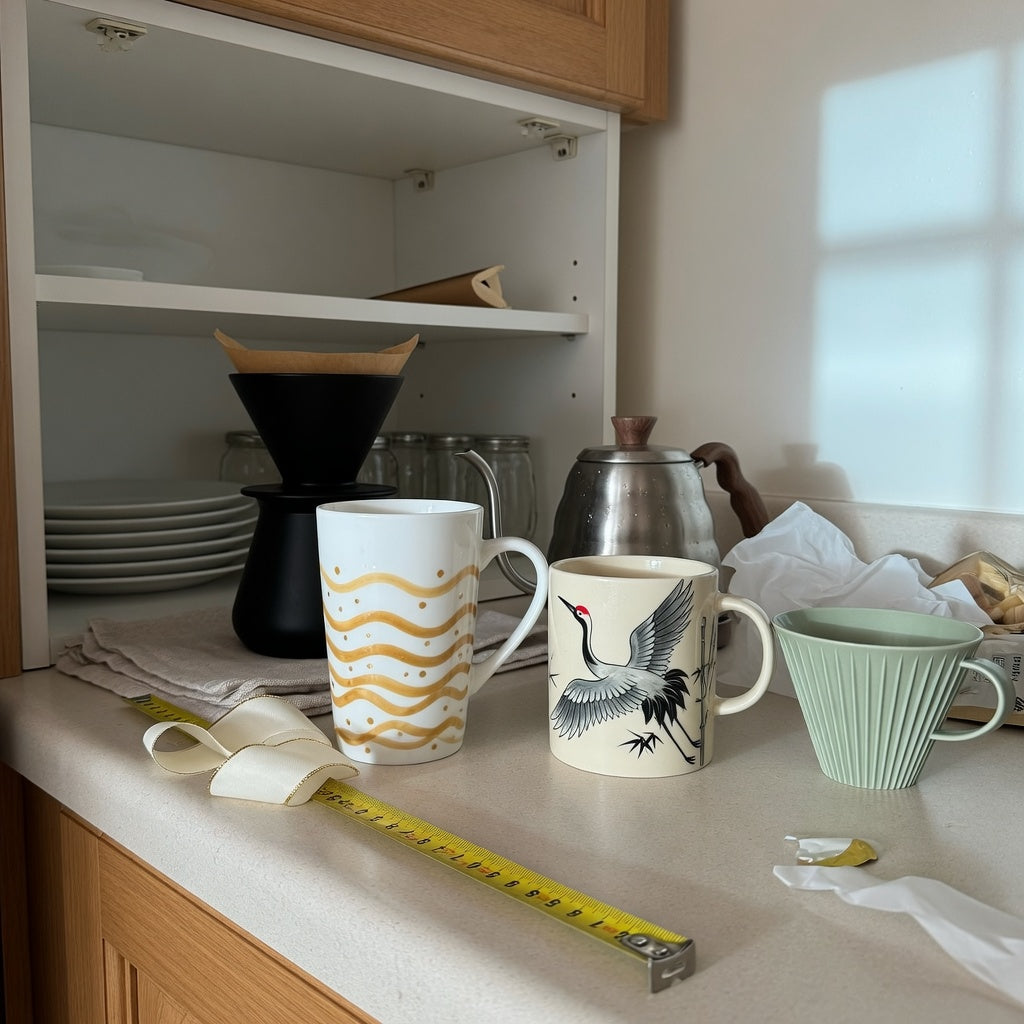
Coffee Mug Wedding Gift Home Coffee Station Product Shortlist Guide
Compare three CoffeifyMug wedding gift options by counter clearance, drink routine, design, care, and order quantity. Each recommendation includes a reason to choose it, a reason to skip it, and th...
Read more
Decaf Coffee Cup Home Coffee Station Product Shortlist Guide
Compare the Retro 170 ml, Pleated 200 ml, and Emerald 270 ml using verified capacity, serving preference, station space, and practical handle checks. Each recommendation gives a clear reason to cho...
Read more
Leave a comment
This site is protected by hCaptcha and the hCaptcha Privacy Policy and Terms of Service apply.