
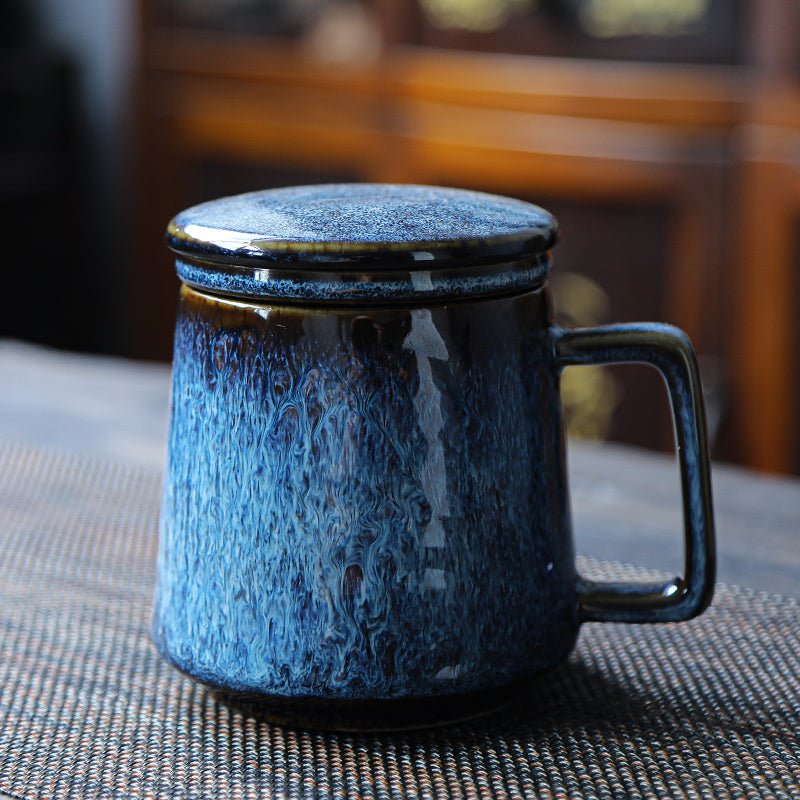
Abstract Coffee Mug Compact Kitchen Practical Purchase Checklist
Reading time: about 10 minutes
A mug can sit neatly beside the coffee maker and still fail a compact kitchen: the cabinet door catches its widest point, the drying rack has no stable space left, or the listed capacity does not match the drink you make every morning. Our abstract coffee mug compact kitchen practical purchase checklist starts with those friction points, then uses only the catalog facts we can verify: the Rhombus is a 250 ml geometric form, the Gradient is a 400 ml mug with a color-transition finish, and The Flow is a 400 ml mug with sculptural curves.
We sell and handle distinctive mugs in our store, and the mistake we try to prevent is treating a styled photo as proof of fit. A compact-kitchen decision needs three answers: where the mug will live, how much you actually pour, and which specifications still need confirmation. We use abstract as a shopper's style lens for geometry, color transition, and sculptural curves, not as a claim about a designer, named art movement, production method, edition status, or provenance.
Where will the mug live: cabinet, counter, or drying area?
Choose one primary parking place before comparing silhouettes. The same mug can work on an open shelf but frustrate you inside a framed cabinet, where hinges, shelf lips, and the closed door reduce usable space. A counter position also has to coexist with the kettle lid, coffee maker reservoir, spoon rest, and the route your hand takes during a pour.
- Cabinet: Measure the clear opening width, usable shelf depth to the inside plane of the closed door, and vertical lift-out space. Record intrusions such as hinges or a shelf lip instead of measuring only the bare shelf board.
- Counter: Mark the area available after the coffee maker, kettle, and other daily items are in place. A mug that technically fits but blocks a switch, reservoir, or cupboard door has not passed the practical test.
- Drying area: Check where the mug can stand after washing and how you will lift it without knocking the faucet, rack tines, or a neighboring glass. In a one-basin setup, drying space can be more restrictive than storage.
Do not convert 250 ml or 400 ml into an outside footprint. Capacity describes beverage volume, not width, depth, height, base size, or handle clearance. Check those exterior measurements on the current product page or confirm them with our team if they are not stated.
250 ml or 400 ml: which capacity matches your real pour?
Fill your current everyday mug with cool water to the level you normally use, then transfer that water to a marked measuring jug. Include the space you usually need for milk, foam, or ice. This is more reliable than calling your drink small or large, and it avoids assuming that a listed capacity is the same as your preferred fill line.
If your finished drink sits comfortably within 250 ml, the Rhombus is the logical first product to investigate. If your routine needs more than 250 ml, the two 400 ml options provide the relevant capacity range. Gradient and The Flow share that verified capacity, so the next decision is visual: color-transition finish or sculptural curves.
A 400 ml capacity is not automatically better. If you regularly make a shorter drink, unused volume may not justify the model's exterior envelope, which still has to be verified. For iced coffee, count the ice displacement in your test; for hot tea, include any milk or other additions. Capacity alone does not verify thermal-shock resistance, heat retention, or suitability for sudden temperature changes.
Rhombus, Gradient, or The Flow: which constraint points to each mug?
| Reader situation | Best starting point | Why it fits the brief | Confirm before buying |
|---|---|---|---|
| Your measured drink fits comfortably within 250 ml, and geometry is the main style priority. | Rhombus 250 ml geometric mug | The verified 250 ml capacity matches a shorter serving, while the geometric form supplies the abstract look. | Exterior dimensions, material, empty weight, care, any handle projection, and stackability. |
| You are shopping in the 400 ml range and want color to define the design. | Gradient 400 ml color-transition mug | Its verified distinction is a 400 ml capacity paired with a color-transition finish. | Outside dimensions, finish-care guidance, material, weight, and appliance compatibility. |
| You are shopping in the 400 ml range and want curves to create the visual focus. | The Flow 400 ml sculptural mug | It combines the verified 400 ml capacity with sculptural curves. | Widest exterior point, base footprint, cabinet clearance, material, weight, and care. |
This table creates a shortlist; it does not prove that the Rhombus occupies the least shelf space. The supplied facts do not include external dimensions, and lower capacity does not guarantee a narrower or shorter body. If your cabinet requires tight stacking, do not assume any of these forms will nest until that feature is explicitly confirmed.
Which unlisted specifications should pause checkout?
The verified facts available for this comparison do not include material, outside dimensions, empty weight, stackability, or microwave and dishwasher status. Those are not minor details in a compact kitchen. They determine how the mug fits, feels when full, and moves through your washing routine.
- Complete exterior envelope: Look for full width at the widest point, overall depth, height, base footprint, and any handle projection. A body-only width can understate the actual cabinet space required.
- Material and empty weight: These affect handling and care, but we will not assign a material or weight that is not verified. A 400 ml label tells you beverage capacity, not how heavy the filled mug will feel.
- Cleaning and appliance guidance: Confirm dishwasher, microwave, hand-washing, and sudden-temperature-change instructions. Do not transfer care assumptions from another mug that looks similar.
- Interior access and stackability: Exterior planes or curves do not prove that the interior has the same geometry. They also do not establish whether one mug can be safely stacked on another.
- Finish care: For the Gradient, confirm how the color-transition finish should be cleaned. Do not use an abrasive pad unless the current care instructions explicitly permit it.
If a specification affects your daily routine and is absent from the listing, pause instead of filling the gap with a generic assumption. In our store experience, this is especially important for shoppers who have only one shelf, a countertop dishwasher, or a sink with little drying space.
What should you check at unboxing, the sink, and the office desk?
A mug can match the measurements and still need a careful arrival check. The following are general inspection steps for any mug shipped by parcel, not a statement that Rhombus, Gradient, or The Flow is prone to damage.
- Unbox over a clear table or folded towel, and retain the packaging until inspection is complete.
- Use side lighting to inspect the rim, body, base, and finish for chips, hairline cracks, or scratches. If the selected mug has a handle, visually check both attachment areas. Do not run a bare finger across a suspected chip.
- Set the empty mug on a clean, dry, level counter. Press lightly near different points of the rim; unexpected rocking can indicate debris under the base or an uneven contact surface. Clean the base and retest before use.
- Check that your normal sponge or brush can reach the interior without being forced against the rim. Do not assume a geometric exterior creates an angular interior, or that sculptural outer curves make the inside harder to clean.
- Verify care instructions before the first dishwasher cycle, microwave reheating, or abrasive cleaning. If the guidance is unclear, ask before testing an appliance setting.
- Place the empty mug in its intended cabinet or desk position. Close the cabinet door slowly without forcing it, and make sure the base sits fully on the desk rather than partly on a mat edge or near charging cables.
Gift buyers should complete the same check before wrapping. Keep the product information with the mug, avoid promising unverified appliance compatibility, and consider whether the recipient normally drinks closer to the 250 ml or 400 ml capacity range.
Abstract coffee mug compact kitchen practical purchase checklist
Use this abstract coffee mug compact kitchen practical purchase checklist as a stop-or-go sequence rather than a style quiz. If a critical answer is missing, stop and verify it before ordering.
- Assign a home: Decide whether the mug will primarily live in a cabinet, on an open shelf, beside the coffee maker, or on an office desk.
- Measure usable space: Record the clear opening, shelf depth to the closed-door plane, vertical lift-out room, and any hinge or appliance obstruction.
- Measure your drink: Use cool water in your current mug to calculate the normal finished volume, including space for milk, foam, or ice.
- Choose the capacity brief: Start with Rhombus if the drink fits comfortably within 250 ml. Start with Gradient or The Flow if you need the 400 ml range.
- Choose the visual brief: Rhombus provides geometry, Gradient provides a color-transition finish, and The Flow provides sculptural curves.
- Verify the unknowns: Confirm exterior dimensions, material, empty weight, care, appliance compatibility, and stackability where those details affect your routine.
- Plan washing and drying: Check brush access, sink clearance, drying-rack space, and the current care guidance.
- Inspect before use: Check the rim, base, finish, and any handle attachments, then test the intended storage position while the mug is empty.
The buying path is direct: choose Rhombus for a measured 250 ml routine with a preference for geometry, Gradient for a 400 ml routine led by color transition, or The Flow for a 400 ml routine led by sculptural curves. Each recommendation remains conditional on the unlisted fit and care details matching your kitchen.
When is a simpler mug the better compact-kitchen purchase?
An abstract mug is not automatically the right tool for maximum storage density. A more conventional shape with clearly published dimensions and care information may suit you better if any of these situations apply:
- You must stack every mug in one crowded cabinet, and stackability is not confirmed.
- You need a lidded, leak-resistant travel vessel; no travel or lid feature is verified for these three mugs.
- Dishwasher or microwave compatibility is essential, but you cannot confirm it for the selected model.
- You are buying several matching mugs and have not verified how their full exterior envelopes sit side by side.
- You are giving a gift without knowing the recipient's pour size, shelf space, or cleaning setup.
Choosing a simpler mug in those cases is not giving up on style. It is prioritizing documented fit and daily usability. An abstract form earns compact-kitchen space only when its capacity, exterior dimensions, care needs, and storage behavior all work together.
Frequently asked questions
What should an abstract coffee mug compact kitchen practical purchase checklist include?
It should cover the usable storage envelope, measured beverage volume, cleaning and drying route, and model-specific unknowns. For this catalog set, capacity and visual form are verified, while exterior dimensions, material, weight, stackability, and appliance compatibility still need confirmation. Stop the purchase if an essential detail remains unknown.
Is the 250 ml Rhombus guaranteed to use less cabinet space than the 400 ml mugs?
No. The 250 ml figure describes beverage capacity, not outside dimensions. Confirm the full width, depth, height, base footprint, and any handle projection before treating Rhombus as the more compact physical option.
Should I choose the 400 ml Gradient or the 400 ml The Flow?
Choose Gradient if the color-transition finish is the main reason you want an abstract mug. Choose The Flow if sculptural curves are the stronger preference. Since both have a verified 400 ml capacity, let confirmed dimensions, care, and storage fit break the tie.
Can Rhombus, Gradient, or The Flow go in a dishwasher or microwave?
That cannot be confirmed from the supplied catalog facts. Check the current individual product page or ask our team before using either appliance. Do not assume compatibility based on appearance or on the care instructions for a different mug.
Take your current mug to its intended shelf, measure your normal pour with cool water, and write down every specification you still need. If none of the three passes that check, browse our unique coffee mugs collection and apply the same fit-first test before choosing.
More from our blog
Read more

Breakfast Coffee Cup Compact Kitchen Product Shortlist Guide: 3 Sizes
Compare the Retro 170 ml, Pleated 200 ml, and Landscape Tall 350 ml using the space that matters: counter parking zone, cabinet clearance, and refill routine. Each pick includes a clear reason to c...
Read more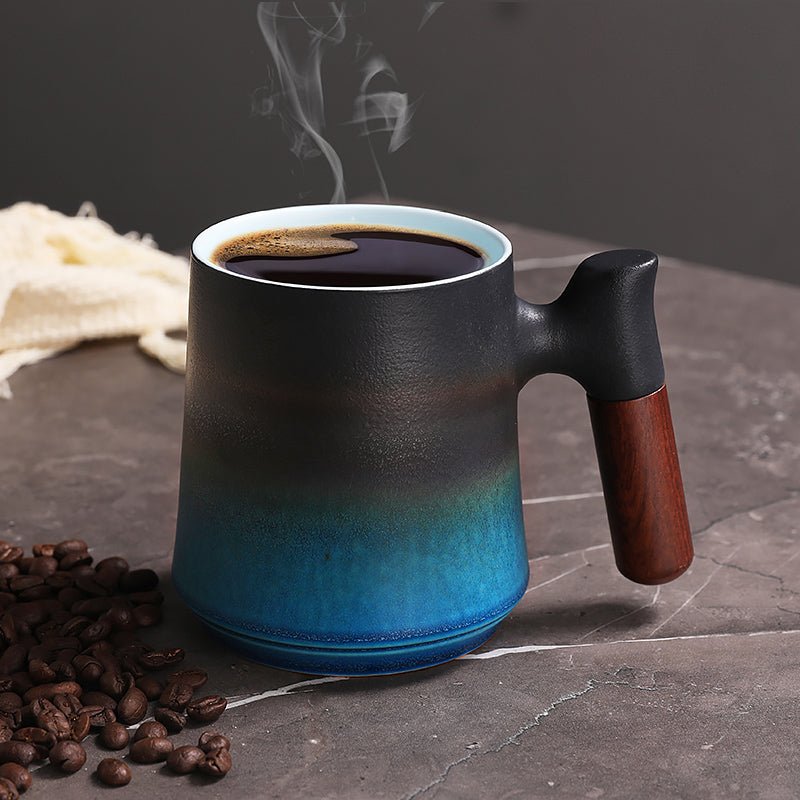
Hot Cocoa Mug Weekend Coffee Product Shortlist Guide: 3 Practical Fits
Compare The Rock at 480 ml with The Gradient and The Flow at 400 ml. This scenario-based shortlist explains serving fit, carrying trade-offs, care checks, and when to skip each mug.
Read more
Leave a comment
This site is protected by hCaptcha and the hCaptcha Privacy Policy and Terms of Service apply.