



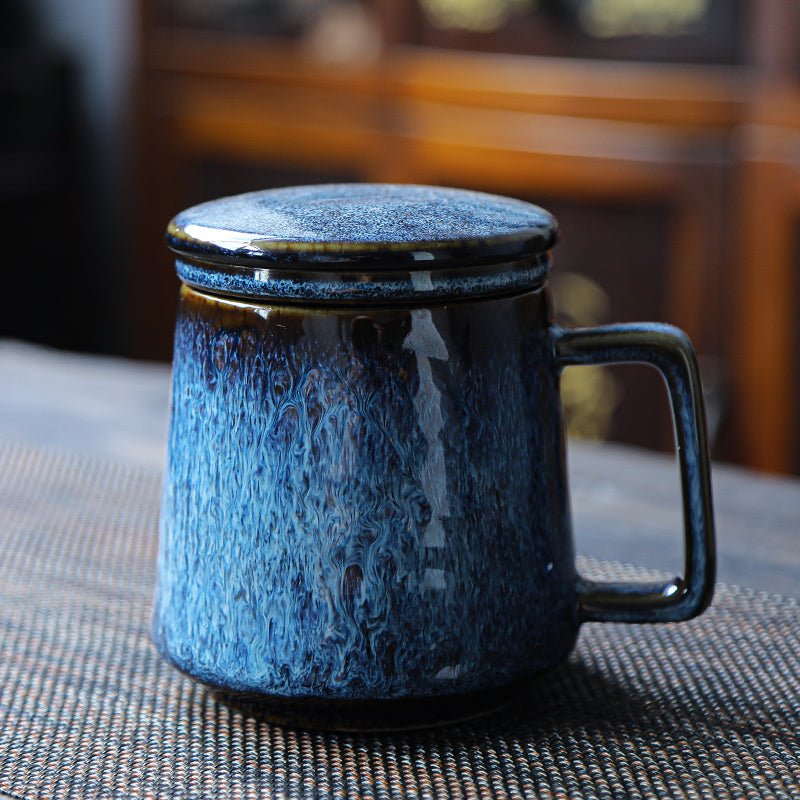
15 Oz Ceramic Coffee Mugs Size Decision Guide: 400 vs 440 vs 480 ml
Reading time: about 11 minutes
Customers email us about mug size more than almost anything else in the catalog. The message usually opens the same way: the 15 oz mug 'doesn't hold 15 ounces.' Then the follow-up arrives. They filled it to the rim and it did measure close to 15 fl oz, about 444 ml. But with cream, foam and a spoon inside, that same mug suddenly felt cramped. That gap between what a listing prints and what a real pour looks like is the entire decision, and it is where this 15 oz ceramic coffee mugs size decision guide starts.
Worth saying plainly: no standard defines a '15 oz coffee mug.' In FDA guidance on ceramic hollowware, the working example of a cup or mug is about 240 ml (8 fl oz) — a reminder that the official reference size sits far below what listings call large. Capacity, empty weight and handle opening are set piece by piece, so 15 oz is a target you compare against, not an industry promise.
15 oz ceramic coffee mugs size decision guide: what the label actually measures
One US fluid ounce is 29.5735 ml by definition, so 15 fl oz comes to roughly 444 ml. That conversion is the only fixed point in this conversation. Everything else — how the mug was measured, how much it weighs empty, whether four fingers clear the handle — belongs to the individual piece in your cart.
Two numbers matter, and listings usually publish only the flattering one:
- Brim capacity: the volume if you fill to the very edge. This is what gets printed, because it is the biggest number available.
- Usable fill: what you actually pour when you plan to carry the mug from the kitchen to the desk without watching your step.
You can measure your own usable fill in two minutes. Set your current mug on a kitchen scale, tare it, pour your normal amount of water, and note the grams. Water and brewed coffee are close enough in density that grams read as millilitres within a few percent. That number — not the listing — is what you should be shopping for.
Brim versus pour, in practice
If your usual pour is 350 ml of coffee plus a splash of milk, a mug with 440 ml of brim capacity leaves you comfortable. If your usual pour is 400 ml topped with foamed milk, the same mug becomes a near-rim experience and 480 ml is the calmer choice. Same label, different verdict.
Which of our three capacities lands closest to 15 oz?
Our lineup is metric, which is where much of the confusion begins. Three current designs bracket the 15 oz mark:
| Mug | Stated capacity | Approx. fl oz | Position against a 15 oz target |
|---|---|---|---|
| The Flow | 400 ml | ~13.5 fl oz | Below — comfortable with a 12 oz pour |
| Morning and Night | 440 ml | ~14.9 fl oz | Closest — effectively the 15 oz slot |
| The Rock | 480 ml | ~16.2 fl oz | Above — a 15 oz pour with headroom |
The Morning and Night mug at 440 ml is the nearest thing we make to a 15 oz mug: 440 ml converts to about 14.9 fl oz, roughly a tenth of an ounce short. If '15 oz' in your head means a genuinely large pour with room left over for foam, The Rock at 480 ml is the better match at about 16.2 fl oz. And The Flow at 400 ml (~13.5 fl oz) is the honest answer for anyone who searched 15 oz but whose real pour measures nearer 12.
All three sit in our unique coffee mugs collection, so you can open them side by side rather than comparing capacities in isolation.
When the smaller 400 ml option is the smarter buy
In our store, the 400 ml Flow most often goes to shoppers who started out searching 15 oz and then measured what they actually drink. Four situations come up again and again:
- A 10–12 oz brew plus cream. The mug reads full, which matters more than raw volume if an overfilled mug makes you walk carefully.
- Grip and hand strength. Less liquid means less weight at the end of your arm after ten minutes of holding it.
- Tight shelf clearance. Taller mugs lose to the cabinet shelf long before they lose to the coffee.
- Tea drinkers who take several small rounds rather than one long one, and gifts for someone whose current mug has been in service since university.
What it is not: a mug for someone who genuinely pours 16 ounces in a single sitting. They will refill twice, and the extra trip defeats the point of buying bigger in the first place.
When the larger 480 ml option earns its counter space
The 480 ml Rock makes sense when the pour itself is large and topped. Think a single-serve pod brewed over ice, a latte with a full cap of foam, a long tea session with a strainer basket left in, or the person who makes one mug and takes it to a desk for two hours. About 16.2 fl oz of working volume means a 15 oz pour still has room to stir.
The trade-offs are real. A bigger mug is heavier when full and needs more vertical clearance on the shelf — check the height and base diameter on the listing against your cabinet before committing to a set of four. Be sceptical of 'stays hot for hours' copy, too: we have not seen published lab comparisons for ceramic mugs at this size, so preheating with hot water and how fast you drink matter more than capacity alone. If temperature retention is your actual priority, an insulated vessel will beat any ceramic mug, ours included.
Handle clearance, empty weight and balance — the specs photos hide
Empty weight is the most-omitted number on mug listings and the one that decides whether a full mug feels pleasant or tiring. Run the arithmetic: 15 fl oz of coffee weighs roughly 444 g (about 15.7 oz) before the mug counts at all. A piece that feels fine on a shelf can feel very different after a full pour, which is why we tell shoppers to ask for empty weight before ordering a set.
- Handle opening: can you get three fingers through, and do your knuckles clear the body when the mug is full?
- Balance: a handle set high on the body tips differently from one set low. Both work, but they suit different grips.
- Base diameter: wider bases are steadier on a couch arm; narrower ones pack better into a crowded cupboard.
If grip strength is a concern — arthritis, recovery from injury, small hands — a smaller capacity in the same handle style usually beats a bigger mug with a bigger handle. Less liquid, less load. In our experience the shoppers who regret buying large are almost never the ones who measured first.
Care and glaze: why 'ceramic' is not a care instruction
Three claims get blurred together on listings: microwave safe, dishwasher safe, and lead free. They test entirely different things, and size tells you nothing about any of them.
On lead, FDA compliance guidance for ceramic cups and mugs sets a guideline of 0.5 micrograms per ml of leaching solution in any one of six units, tested by methods that include ASTM C738 and AOAC 973.32/973.82. The same guidance notes that ware containing extractable lead should not carry a 'Lead Free' label at all, and FDA has reported imported traditional pottery labelled 'Lead Free' that still leached lead. Cadmium has separate guidance: 0.5 micrograms per ml for small hollowware under 1.1 litres, and 0.25 for larger ware. Every mug discussed here sits far below 1.1 litres, so it falls in the small-hollowware bracket.
Coffee and tea deserve extra care. The California Department of Public Health points out that lead cannot be seen in glaze or paint, that acidic drinks like coffee and tea leach lead from contaminated ware faster than non-acidic drinks, that microwaving speeds the process, and that repeated dishwashing can damage a glaze and make later leaching more likely. CDPH also notes that lead is rarely found in plain white dishes — heavily decorated, imported or amateur-made pieces are where the risk concentrates.
There is a labelling trap as well. Under 21 CFR 109.16, decorative ceramicware that looks food-safe is treated as foodware unless it carries a specific warning ('Not for Food Use. May Poison Food') both conspicuously and permanently on the base, or has a hole through the potential food-contact surface. A souvenir-style mug with a metallic rim and no care instructions belongs on a shelf, not in a dishwasher.
What to verify on any listing before buying:
- Care marks in writing — microwave, dishwasher, or hand-wash only.
- Whether the decoration sits under the glaze or on top of it. Metallic rims and applied decals are usually the latter.
- Any published leach testing; ASTM C738 results are the useful ones.
- Whether a 'lead free' claim refers to the finished, fired piece or only to raw materials.
Glaze and decoration change between designs, so check these marks on the listing for the exact piece in your cart rather than assuming they carry across a whole ceramic range.
Gifts, shared offices and single-serve brewers
For a gift, capacity stands in for personality. The friend who treats coffee as a project gets the larger mug. The colleague who drinks tea in three small rounds, or the parent who finds a full pint of liquid heavy, is better served closer to 400 ml. Compare downward on the full collection page before you default to the biggest option.
In a shared office kitchen, capacity becomes logistics. Identical 440–480 ml mugs look generous and are easy to claim in a crowded cupboard, but they occupy more shelf height and more dishwasher space per mug than 11–12 oz designs. If the office runs one loaded cycle a day, that difference decides whether everyone's mug fits.
For single-serve brewers, capacity tells you nothing about clearance. Check the machine's stated maximum cup height both with and without the drip tray, then compare it against the listed height on each product page — handle position matters too, since a high handle can foul a narrow dispenser well.
Five checks before a 15 oz mug goes in the cart
- Measure your real pour on a scale, then add 60–80 ml of headroom for milk, foam or stirring.
- Translate the label to metric: 440 ml is the 15 oz slot, 480 ml sits above it, 400 ml below.
- Ask for empty weight if it is not listed, then add roughly 444 g for a full 15 oz pour.
- Check handle opening and overall height against your shelf and your brewer's cup clearance.
- Read the care and glaze notes — microwave, dishwasher, decoration placement, and any leach testing.
If your measured pour lands under 400 ml, the Flow is the honest choice. Around 430–440 ml, the Morning and Night is your 15 oz answer. Closer to 470 ml with foam on top, take The Rock and stop arguing with the label. Open the collection, pull up the three listings, and compare capacity, empty weight, handle opening and care marks in that order.
Frequently asked questions
Is a 440 ml mug the same as a 15 oz ceramic coffee mug?
Close enough that the difference will not change your morning. One US fluid ounce is 29.5735 ml, so 15 fl oz is about 444 ml and 440 ml converts to roughly 14.9 fl oz. Throughout this 15 oz ceramic coffee mugs size decision guide, we treat the 440 ml Morning and Night as the 15 oz option in our lineup.
How much coffee fits in a 15 oz mug once I add cream or foam?
No published rule sets a usable-fill figure below the rim, so measure your own. Pour your normal amount into a tared mug on a kitchen scale, note the grams, then add 60–80 ml for cream, foam and stirring room. A 440 ml mug leaves less headroom than a 480 ml mug for the same pour.
Will a 480 ml mug fit under my single-serve coffee machine?
Capacity tells you nothing about clearance. Check the brewer's stated maximum cup height both with and without the drip tray, then compare it against the mug's listed height and handle position. If clearance is tight, a lower-profile design is the safer bet, but confirm the dimensions on the current listing first.
Are 15 oz ceramic mugs microwave and dishwasher safe?
It depends on the glaze and the decoration, not the size. Metallic rims and applied decals are frequently hand-wash only, and microwave-safe does not imply lead-free — those are separate claims tested separately. Read the care marks on the specific listing and look for published leach testing if heavy metals are a concern.
How heavy is a 15 oz ceramic mug when it is full?
Take the empty weight and add roughly 444 g, since 15 fl oz of coffee weighs about that much. Most listings publish capacity but not empty weight, so ask before ordering a set. If the total sounds heavy for one hand, moving down to the 400 ml Flow cuts the liquid load and lets you pick a lighter body.
More from our blog
Ready to pick your mug? Two ways to save on today's order:
Ordering 1–3 mugs? Get an extra 10% off your 1st order with code 10_OFF Apply 10% Off & Shop Wooden-Handle Mugs →
Gifting 4+ mugs? Buy 3, Get the 4th Free applies automatically at checkout (no code needed; offers do not stack) · Free standard shipping (Nov pre-Christmas delivery: 15–20 calendar days US) · Free replacement if chipped in transit.
Popular mug buying guides: Ceramic Tea Cups & Infuser Mugs · Ceramic Mugs with Lids Compared · Wooden-Handle Tea Infuser Mugs Compared · Christmas & Secret Santa Mugs 2026 · Espresso & Cortado Cups Guide · Cup & Saucer Gift Sets · All 25 Mugs Spec Table · Mug Size Guide · Shipping & Promo FAQ
FIRST ORDER 10% OFF (CODE: 10_OFF) · OR BUY 3, GET THE 4TH FREE


Read more
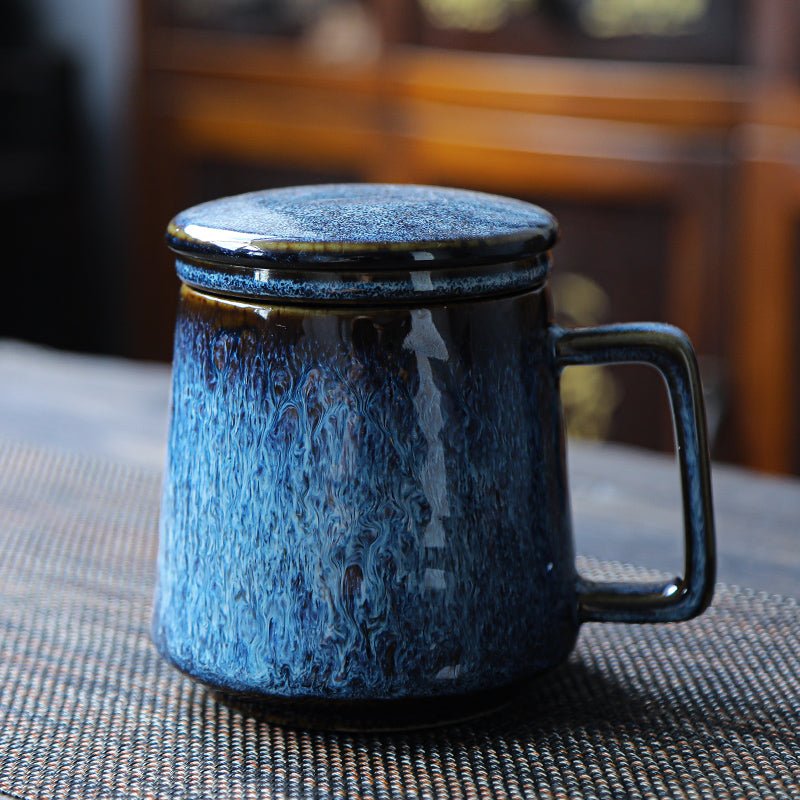
Coffee Mugs With Big Handles Storage Fit Guide: Shelf Depth by Shape
Three shapes, three listed capacities, one shelf to fit them into. A practical look at handle projection, cabinet depth, and grip comfort before you buy.
Read more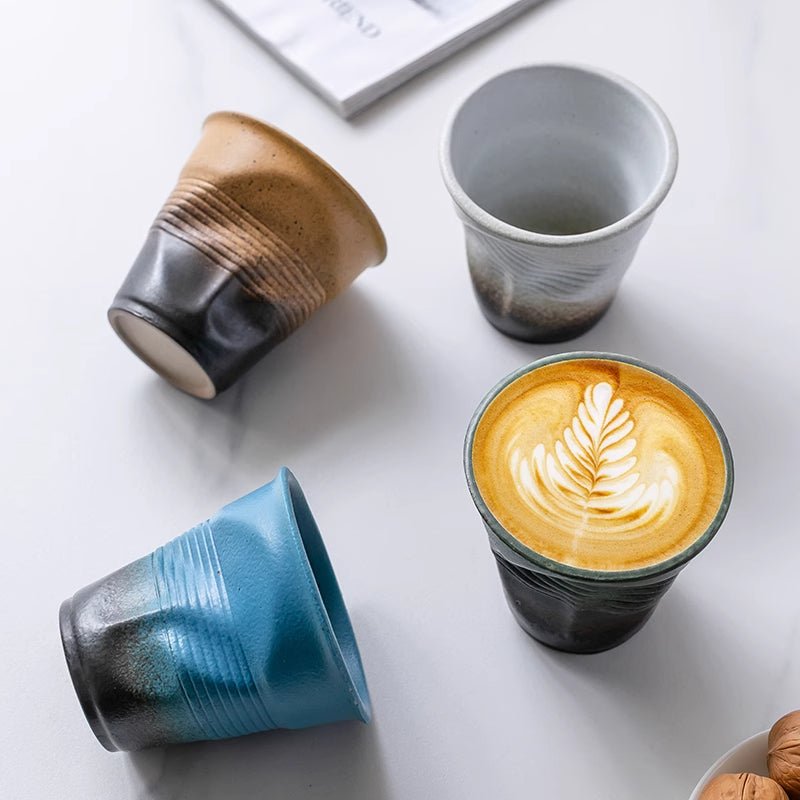
Coffee Mug Gifts Ideas Storage Fit Guide: 3 Shapes, Shelf Needs
A 200 ml cup, a 400 ml mug, and a 440 ml mug can all look giftable on a shelf, but only one may fit the recipient's cabinet. This coffee mug gifts ideas storage fit guide compares listed capacity, ...
Read more
Leave a comment
This site is protected by hCaptcha and the hCaptcha Privacy Policy and Terms of Service apply.