



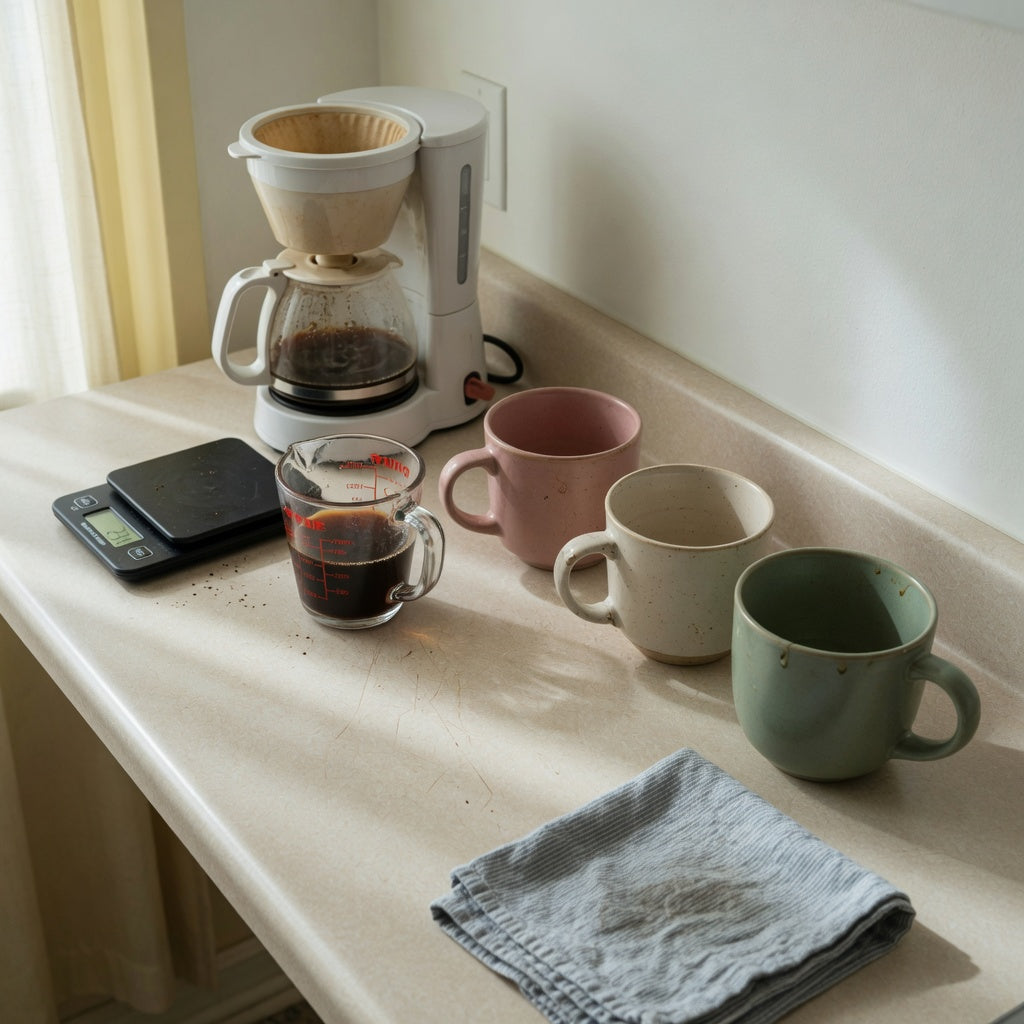
14 oz Ceramic Coffee Mugs for Small Coffee Setup: What to Compare
Reading time: about 11 minutes
A 440 ml mug does not look like a space problem until it is sitting next to a grinder, a kettle, and a drying mat that was already too small. That is the moment most of our customers stop browsing colors and start doing math — will the handle clear the shelf above the counter, and will the base sit flat on the mat? So when we talk about 14 oz ceramic coffee mugs for small coffee setup, we mean three separate questions: how much you can actually pour, how much surface the mug claims, and what the care label really says.
What does 14 oz actually pour into the cup?
One U.S. fluid ounce is 29.57353 ml under the NIST conversion, so 14 oz works out to roughly 414 ml. For scale, FDA's guidance on ceramic cups and mugs uses a typical example of about 240 ml — around 8 fl oz. A 14 oz mug is a deliberately generous everyday cup, closer to a diner mug than a café serving.
The number on the listing is usually not the number you drink. Most specs quote brim capacity, meaning the volume measured to the very top of the rim. Fill it that far and there is no headroom for a splash of milk, a layer of foam, or a lid that sits down inside the rim. A mug sold as 14 oz can realistically hold 11 to 12 oz of drinkable coffee once you leave a sensible gap.
Two questions settle it faster than any product photo:
- Is the stated capacity brim-full or a comfortable fill line?
- Does the interior leave enough height above that fill line for what you actually make?
In our experience packing and shipping this category, the shoppers who end up happiest are the ones who compare stated millilitres rather than ounces. Millilitres are harder to round up for a headline.
Which of our sizes lands closest to a real 14 oz pour?
Our current range publishes capacity in millilitres rather than a single rounded ounce figure, which makes the comparison honest. All three are handled ceramic mugs in the same store; the difference is how much they hold and how much shelf they claim.
| Mug | Stated capacity | Where it fits in a small setup |
|---|---|---|
| The Flow | 400 ml (~13.5 fl oz) | A tighter everyday pour and the smallest body of the three. Not the pick if you routinely fill a 16 oz tumbler. |
| Morning and Night | 440 ml (~14.9 fl oz) | Closest to a 14 oz target with a little margin above it. Confirm exterior height and handle opening on the listing. |
| The Rock | 480 ml (~16.2 fl oz) | Larger lattes, iced coffee, or a long tea morning. More footprint and more mug than a small drip pour needs. |
The Flow is listed at 400 ml, which sits just under a true 14 oz fill. If your daily coffee is closer to 10 or 12 oz and your cabinet is tight, that smaller body is the whole point. It is the wrong choice if you like a lot of milk or tend to overfill.
Morning and Night is listed at 440 ml — about 14.9 fl oz. That is the closest of our three to the 14 oz shoppers search for, and the extra margin means you can leave proper headroom and still get a full mug. Check the current listing for exterior height and handle clearance before you commit; those two numbers decide whether it clears a brewer spout or a shallow shelf.
The Rock is listed at 480 ml, roughly 16.2 fl oz. It suits a milk-heavy latte, an iced coffee with ice taking up volume, or a tea drinker who wants one mug for the whole morning. For a small 8 oz drip pour it is simply more vessel than the job requires, and the extra base diameter shows up fast on a crowded counter.
You can see the full range on our unique coffee mugs collection page, but do not pick from the thumbnail. The table above is the capacity map; the next checks are the ones listings routinely skip.
How much counter and cabinet does a full 440 ml mug really take?
Two mugs with the same capacity can have completely different footprints. Volume tells you nothing about exterior height, rim diameter, base diameter, or how far the handle sticks out. We have watched shoppers buy the right capacity and then discover the handle fouls a cabinet shelf or the base will not sit inside a drying rack slot.
Measure four things before you buy:
- The clear gap between shelves where the mug will live, measured at handle height.
- The depth of the counter run under your brewer, kettle, or grinder.
- The base diameter against your coaster, cup holder, and drying mat.
- The handle opening against your hand while the mug is full.
Weight matters as much as width. A 14 oz pour is about 414 g of liquid before you add the mug itself, so a full mug is a genuinely one-handed lift only if the empty weight is reasonable. If empty weight is not published, ask — a mug that feels fine empty can feel clumsy after a full pour.
Handle clearance is its own small-space problem. A generously looped handle can look roomy in a photo and still put your knuckles near a hot wall. Our breakdown of ceramic coffee mugs with large handles goes deeper on that fit question. And on a very tight shelf, a mug that stacks with its handle offset often saves more room than a slightly smaller mug that does not stack at all. If 14 oz is turning out to be more than you pour, our 12 oz ceramic coffee mugs for small coffee setups comparison is the step down.
Porcelain, stoneware, double-wall ceramic, or ceramic-lined steel?
"Ceramic" is not one material, and the difference is not academic on a narrow counter. The body changes weight, heat loss, chip risk, and how much floor space the mug needs for a given capacity.
- Porcelain can be made thinner and lighter for the same volume, which helps on an overhead shelf. It can also feel less substantial in the hand, and a thin rim chips if it meets a sink edge.
- Stoneware is typically thicker and heavier. It holds heat well, but a full 14 oz stoneware mug is a two-hand lift for some drinkers.
- Double-wall ceramic uses an air gap, so the outside stays cooler and the coffee holds temperature longer. The trade-off is width: the same capacity often needs a larger outer diameter.
- Ceramic-lined steel is a steel body with a ceramic interior. The ceramic contact surface helps with taste and staining, but the metal shell usually rules out the microwave — check the care line on that exact piece.
We do not assume a body type from a product photo, and neither should you. Confirm the material on the current listing for the specific mug you are buying. If lifting matters more than heat retention, favor the lighter body; if you sip slowly at a desk, favor the thicker wall. Our ceramic vs porcelain coffee mugs comparison covers the feel and care differences in more detail.
What changes when a mug has a gold handle or a decal on the lip?
Care claims belong to the piece, not the collection. A plain glazed body may be fine in a microwave and dishwasher while the same shape with a metallic handle, a painted rim, or an overglaze decal is excluded. Metal trim can arc in a microwave. Overglaze decoration can dull or wear through repeated dishwasher cycles even when the underlying ceramic is tough.
Read the care block line by line and write down the answers:
- Microwave: yes or no, for this exact piece.
- Dishwasher: top rack or bottom rack, and whether decorated versions are excluded.
- Oven and broiler: separate claims — never assume one implies the other.
- Freezer: relevant if you chill cold brew or iced coffee in the mug.
If a gold-handled version says hand wash, believe it. Saving one dishwasher cycle is not worth dulling a metallic finish you paid for. For a daily mug on a small counter, a plain glaze is the lower-maintenance answer.
How do you read a "lead free" claim without a lab report?
FDA treats cups and mugs as their own ceramicware category, with an action level of 0.5 micrograms of lead per millilitre of leaching solution, judged on any one of six units using methods such as ASTM C738. For cadmium, the small-hollowware action level is also 0.5 micrograms per millilitre. Those limits exist because acidic drinks — coffee included — can pull metals out of a poorly fired or improperly glazed surface.
"Lead free" and "lead safe" are not the same promise. The California Department of Public Health separates lead-free tableware, which contains no lead, from lead-safe tableware, which may contain some lead but does not leach above the state's Proposition 65 threshold. A mug can be legal to sell with a warning and still not be what you want for a daily coffee.
FDA has also warned that some imported pottery labelled "Lead Free" still released extractable lead, in some cases above the action levels. The useful question is not "is it lead free?" but "do you have a leach-test statement for this glaze and this shape?"
Three practical checks:
- Look for a statement that names both lead and cadmium, not just a badge or an icon.
- Ask where the decoration sits. A decorated lip or interior deserves more scrutiny than a plain white interior.
- Inspect for crazing, chalky glaze, or a chipped rim. CDPH notes you cannot tell by looking whether a dish contains lead, but damaged or chalky glaze is a higher-concern sign.
Decorative ceramicware that looks like a mug but is not meant for food must carry a "Not for Food Use" warning or be physically disabled for food contact under 21 CFR 109.16. If a novelty mug has a decorative interior and no food-use marking, keep coffee out of it. CDPH also advises against microwaving or dishwashing ware that contains or might contain lead, since heat and repeated washing can worsen leaching and can contaminate other dishes. None of this means every ceramic mug leaches — it means the claim should be backed by testing, not a sticker.
What is the two-minute shelf check before you add to cart?
Run this on any two mugs that look nearly identical:
- Confirm the capacity basis. Is 14 oz brim-full or a comfortable fill? Compare stated millilitres.
- Measure the slot. Shelf gap, counter depth, brewer clearance, and cabinet height beat any photo.
- Check the handle. Opening size and projection decide comfort and shelf clearance together.
- Estimate full weight. Roughly 414 g of liquid at 14 oz, plus whatever the empty mug weighs.
- Read care by piece. Microwave, dishwasher, oven, and freezer can change with trim or decals.
- Ask for lead and cadmium test detail. A test statement outranks a "food safe" icon.
- Match the mug to the drink. 400 ml for a modest drip pour, 440 ml for a near-14 oz target, 480 ml for a latte or iced drink.
If you want the closest thing to a true 14 oz mug, start with Morning and Night at 440 ml. If shelf height is your binding constraint, look at The Flow at 400 ml. If your usual drink is closer to 16 oz, check The Rock at 480 ml and verify the base diameter before checkout. All three sit side by side on the unique coffee mugs collection, which is the fastest honest comparison you will get.
Frequently asked questions
Are 14 oz ceramic coffee mugs for small coffee setup too tall for a single-serve brewer?
Height is the spec that decides it, not capacity. A 14 oz mug can be short and wide or tall and narrow, and the exterior height plus your brewer's drip tray clearance determines fit. If exterior height is not published, ask before buying — do not infer it from the ounce rating.
Does a 14 oz mug hold 14 oz of drinkable coffee?
Not necessarily. Many listings quote brim capacity, so the usable pour is smaller once you leave headroom for milk, foam, or a lid. Compare the stated millilitres and confirm whether the figure is to the rim or to a comfortable fill line.
Can I microwave a 14 oz ceramic mug with a gold handle?
Do not assume so. Metal trim, metallic paint, and some decals can make an otherwise ceramic mug unsafe in a microwave. Check the care instructions for that exact piece; if it says no microwave, keep a plain glazed mug for reheating.
How can I tell whether a ceramic mug's glaze is lead-safe?
You cannot tell by looking. Ask for a lead and cadmium leach-test statement covering that glaze and shape. "Lead free" and "lead safe" are different claims, and FDA has found pottery labelled lead free that still released extractable lead.
Will a 14 oz handled ceramic mug fit a car cup holder?
Check base diameter and handle projection. A handled ceramic mug often will not sit in a standard cup holder even when the capacity is right. If in-car use matters, measure the base against the holder first, or keep the ceramic mug at the desk and use a dedicated travel mug in the car.
Ready to pick your mug? Two ways to save on today's order:
Ordering 1–3 mugs? Get an extra 10% off your 1st order with code 10_OFF Apply 10% Off & Shop Wooden-Handle Mugs →
Gifting 4+ mugs? Buy 3, Get the 4th Free applies automatically at checkout (no code needed; offers do not stack) · Free standard shipping (Nov pre-Christmas delivery: 15–20 calendar days US) · Free replacement if chipped in transit.
Popular mug buying guides: Ceramic Mugs with Lids Compared · Wooden-Handle Tea Infuser Mugs Compared · Christmas & Secret Santa Mugs 2026 · Espresso & Cortado Cups Guide · Cup & Saucer Gift Sets · All 25 Mugs Spec Table · Mug Size Guide · Shipping & Promo FAQ
FIRST ORDER 10% OFF (CODE: 10_OFF) · OR BUY 3, GET THE 4TH FREE


Read more
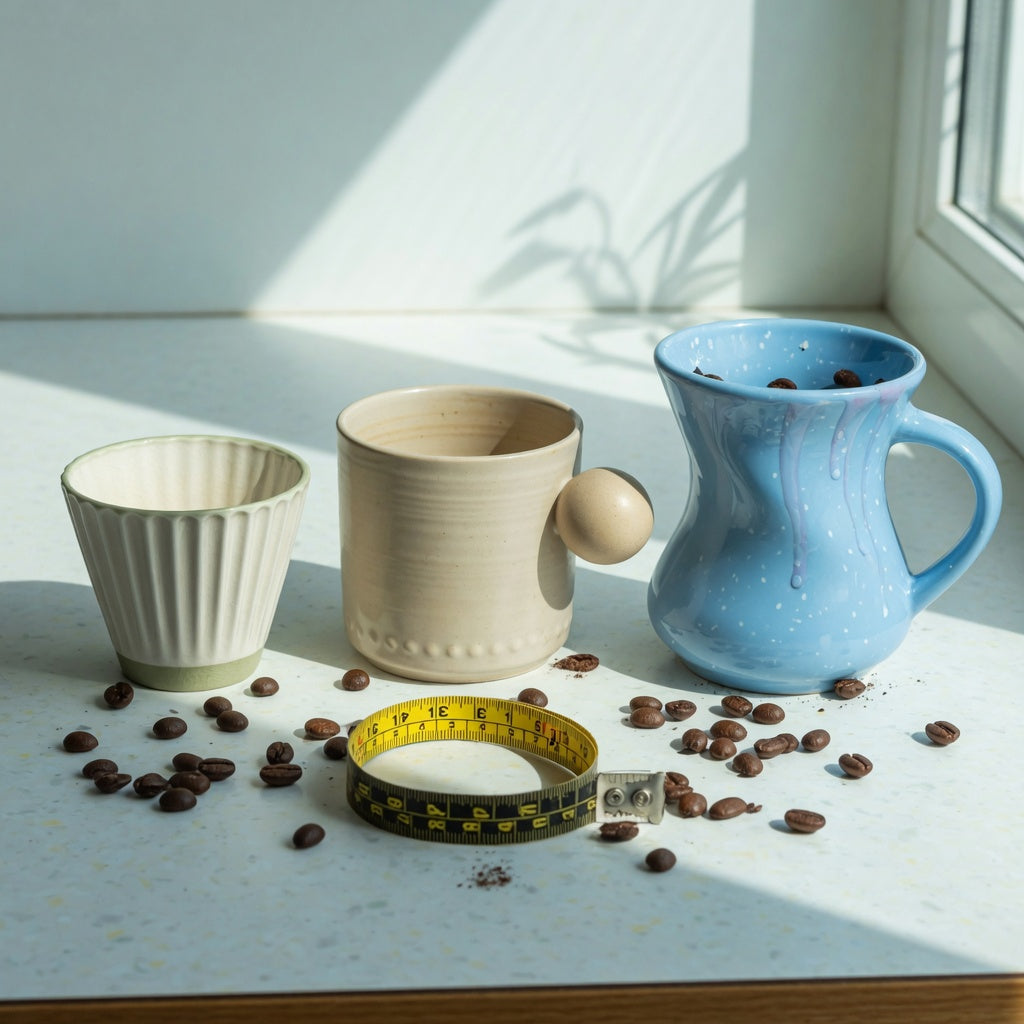
Ceramic Mug Shapes Shape and Handle Guide: 3 Current Mugs
A practical comparison of three current ceramic mugs by silhouette, handle geometry, and listed capacity: 200 ml pleated, 250 ml ball handle, and 400 ml flow. Includes rim, spout-clearance, and foo...
Read more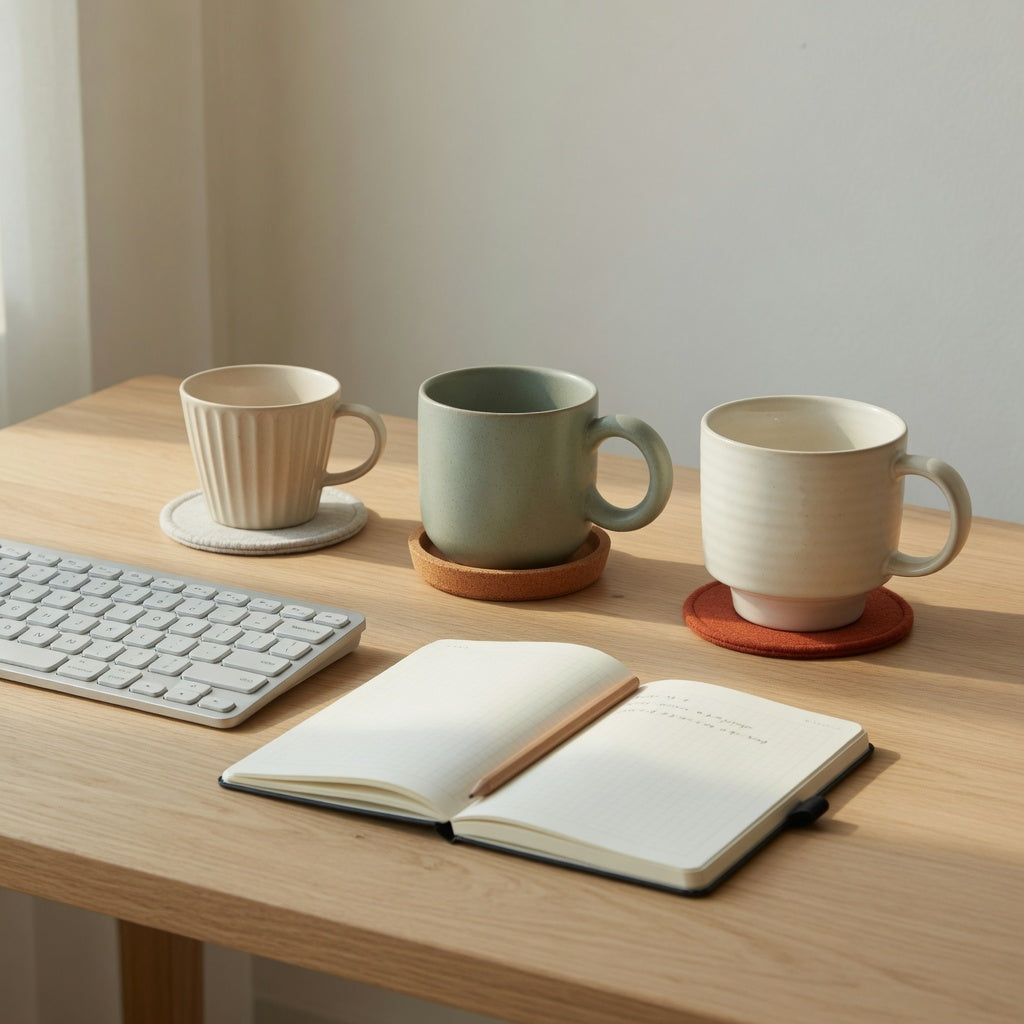
Ceramic Mug Shapes for Desk Use: Capacity, Footprint, Handle Fit
A desk mug is a footprint decision before it is a style one. We compare our 200 ml, 250 ml, and 400 ml ceramic silhouettes by refill math, handle projection, rim comfort, and the space left beside ...
Read more
Leave a comment
This site is protected by hCaptcha and the hCaptcha Privacy Policy and Terms of Service apply.