
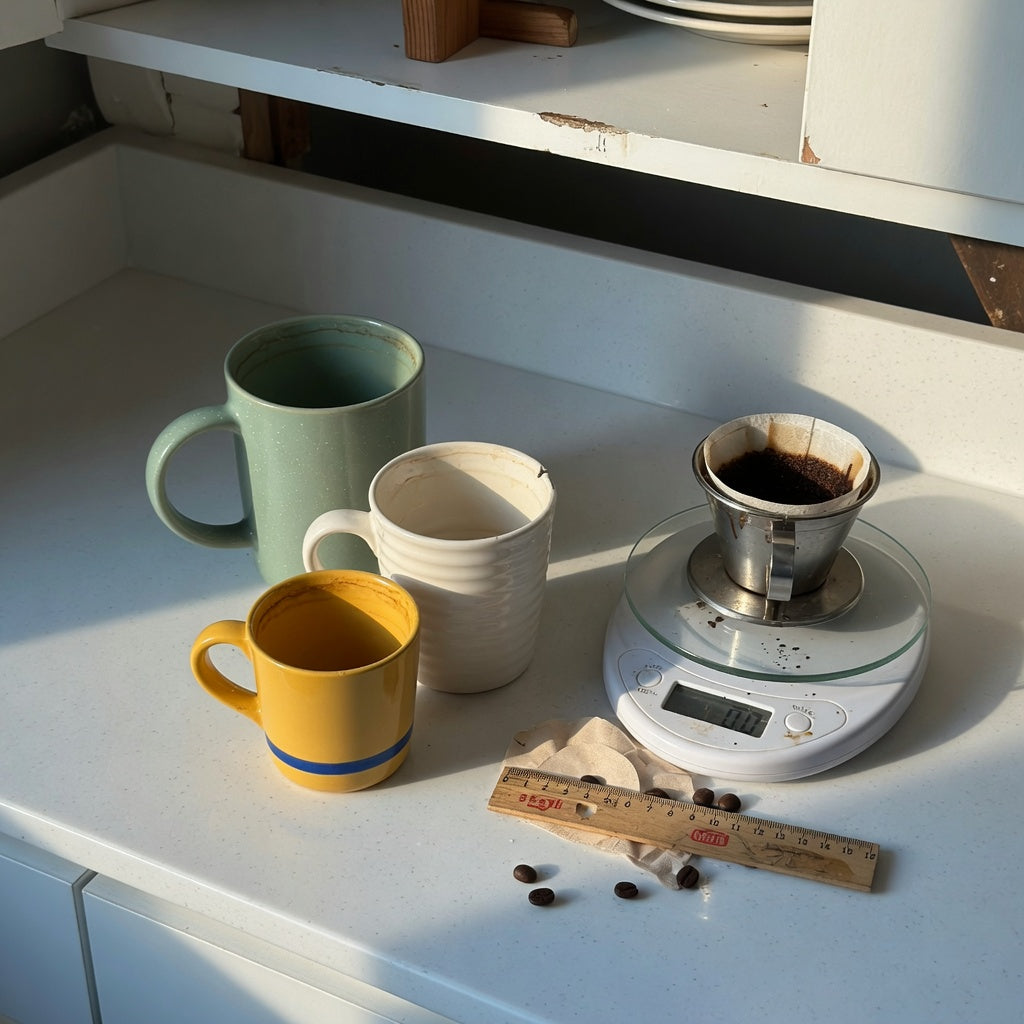
14 Oz Ceramic Coffee Mugs Comparison: Which Option Fits?
Reading time: about 10 minutes
A mug listed as 14 oz can pour like a 12 oz cup once you leave room for milk, a lid, or a steady hand. That gap is the first thing we check in any 14 oz ceramic coffee mugs comparison — not the number on the box, but what actually reaches your mouth without spilling over the rim.
We see the same pattern in our store: shoppers moving up from an 8 oz cafe cup want more coffee, but they do not want a mug that feels like a bowl or will not fit under the brewer. The useful comparison is capacity plus headroom plus handle clearance, not capacity alone. This is a handled-mug comparison, not a travel mug with a lid, so if you need a sealed commute mug, start elsewhere.
What does 14 oz mean once you account for headroom?
14 U.S. fl oz is about 414 ml. NIST lists the U.S. fluid ounce as 29.57353 milliliters, so the conversion is not a rough guess. FDA describes a typical cup or mug as about 240 ml (8 fl oz), which makes 14 oz a larger everyday vessel rather than a standard cafe size.
But many listings quote brim capacity. A mug filled to the absolute rim is not the same as a mug filled to a comfortable drinking line. If you add milk, a lid, or a spoon, the usable pour drops. Before you compare two mugs, ask whether the stated number is brim-full, a working fill, or measured with a lid inset. That one question prevents most size disappointments.
A 14 oz target is also not a universal target. A 10 oz drip coffee in a 440 ml mug can taste cool before you finish it. A 16 oz iced coffee in a 400 ml mug will be tight. Match the mug to the pour you actually make.
14 oz ceramic coffee mugs comparison: which current capacity fits your pour?
Our current coffee and tea mugs give us three practical capacities around the 14 oz shopper’s target. Capacity is the spec we can state plainly from our catalog. Material, exterior dimensions, and care lines can change by batch, so confirm those details on the live product page before ordering.
| Current mug | Stated capacity | Approx. U.S. fl oz | Best routine fit |
|---|---|---|---|
| The Flow | 400 ml | ~13.5 | Closest numerical match to 14 oz; good for a 10–12 oz pour with headroom |
| Morning and Night | 440 ml | ~14.9 | Just over 14 oz; suits a 12 oz coffee with milk or a modest latte |
| The Rock | 480 ml | ~16.2 | Large latte, iced coffee, or desk refill; heavier when full |
For the full current lineup, browse our unique coffee mugs collection.
Which routine makes each size the better buy?
The Flow 400 ml: the closest literal match to 14 oz
If you drink a 10–12 oz drip coffee, a strong tea, or a small latte, The Flow 400 ml is the least oversized option in this comparison. It sits about 14 ml under a true 414 ml fill, so it is the closest numerical match to 14 oz. The trade-off is headroom: fill it to the brim and you have very little room for milk or a confident carry. If you regularly make 14 oz or more, this is not the mug to choose. For a smaller routine, it is the cleaner fit. Our 12 oz ceramic mug comparison is the better next read if you are stepping down rather than up.
Morning and Night 440 ml: the just-over-14 oz option
Morning and Night 440 ml is about 14.9 fl oz. That makes it the first current size above the 14 oz line. It suits a 12 oz coffee with a splash of milk, a modest latte, or a tea drinker who wants a wider fill without moving to a 16 oz mug. The limitation is the same in reverse: it is more mug than a small 8–10 oz pour needs, and a wide body can let a small coffee cool faster. If you want one mug for a standard morning coffee and an occasional latte, this is the middle path.
The Rock 480 ml: the extra-room option
The Rock 480 ml is about 16.2 fl oz. That extra 40 ml over Morning and Night matters when you add ice, a large milk portion, or a full 14 oz brew plus foam. It is also the size that feels most different when full: a larger mug plus liquid gets heavy, and the handle has to do more work. It is not the right pick for a 10 oz drip coffee or a small tea serving. It is the right pick for iced coffee, a milk-heavy latte, or a desk mug you refill less often.
Handle clearance, weight, and cabinet fit: what the photo won't show
Product photos flatter proportion. They rarely show the handle opening, exterior height, empty weight, or foot diameter — the measurements that decide whether a full mug is comfortable one-handed. Before you buy any 14 oz ceramic coffee mug, run this checklist:
- Handle opening: measure the height and width of the gap. A full 14 oz mug is heavy; if your knuckles touch the hot wall, the handle is too tight for you.
- Exterior height: check it against your cabinet shelf gap, single-serve brewer clearance, and car cup holder. Capacity does not tell you clearance.
- Base diameter: a wide foot may not fit a cup holder or a small coaster; a narrow foot can feel tippy on a soft surface.
- Empty and full weight: thick stoneware and double-wall ceramic can feel different in hand. A 480 ml mug full of coffee is a different lift than a 400 ml mug.
- Stackability: if you store mugs in a cabinet, check whether the handle and rim allow stacking without wedging.
For our current mugs, use the live product page for exterior dimensions and handle measurements if they are listed. If they are not, ask before ordering. Do not judge capacity from the photo alone; perspective makes a 400 ml mug look like a 480 ml mug and the reverse.
Microwave, dishwasher, and metal trim: read the care line piece by piece
Ceramic is a broad label. Porcelain, stoneware, double-wall ceramic, and ceramic-lined steel behave differently in heat, weight, and chip resistance. The care line matters more than the category name. A collection may say microwave-safe while one handle, rim, or overglaze decal on the same shape is not.
Metal trim is the common trap. A gold handle or metallic paint can arc in a microwave even when the ceramic body is rated safe. If the listing does not explicitly say the whole piece — handle and decoration included — is microwave-safe, treat it as not microwave-safe or verify with the seller. For dishwasher care, repeated cycles can dull overglaze decals and damage a crazed glaze. Hand washing is gentler on decorated rims, but it is not a substitute for a care line that names the piece.
California Department of Public Health notes that microwaving or dishwashing can worsen leaching only for ware that contains or might contain lead. That does not mean every ceramic mug leaches. It means a mug with a damaged, chalky, or suspect glaze deserves more caution, especially with an acidic drink like coffee. Our thick ceramic mug comparison is useful if weight and heat retention are your main concerns.
Lead-free, lead-safe, and cadmium: what a label can and cannot tell you
This is where a 14 oz ceramic coffee mugs comparison has to slow down. FDA sets an action level of 0.5 micrograms of lead per milliliter of leaching solution for cups and mugs, judged on any one of six units using ASTM C738 or the specified AOAC methods. FDA still treats cups and mugs as a distinct ceramicware category, and a 14 oz fill is well above the agency’s typical about-8 fl oz mug example. A 14 oz mug is still far below FDA’s 1.1 liter large-hollowware threshold, so the cup-and-mug rules are the relevant ones.
For cadmium, FDA’s ceramicware action level is 0.5 micrograms per milliliter for small hollowware, again judged on any one of six units. FDA also warns that decorative ceramicware can look food-safe even when it is not. Under 21 CFR 109.16, ornamental or decorative ceramicware that looks suitable for food is treated as for food use unless it carries a required “Not for Food Use” warning or is physically disabled for food contact. That matters for souvenir mugs and hand-painted pieces sold as decoration.
“Lead free” and “lead safe” are not the same claim. California Department of Public Health defines lead-free tableware as containing no lead, while lead-safe tableware may contain some lead but does not leach above California Proposition 65 standards. CDPH also says you cannot tell whether a dish contains lead just by looking; plain white dishes are less often a concern, while damaged or chalky glaze, decoration on top of the glaze, and bright color on the food-contact surface deserve a closer look. Coffee is acidic, which increases the chance of leaching when lead is present.
FDA has found imported traditional pottery labeled “Lead Free” that still contained extractable lead, in some cases above the action levels. So a label is a starting point, not a test report. Ask for a leach-test statement tied to FDA cup-and-mug limits or a state warning if the glaze is decorative, damaged, or imported without clear documentation. Our ceramic glazed mug comparison covers glaze appearance in more detail.
Glaze, rim, and stain behavior after repeated dishwasher cycles
A glossy interior is easier to inspect for coffee oil film and easier to wipe. A matte interior can look refined but hold oils in its texture. Crazing — the fine web of cracks in an aged glaze — can trap residue and make stains harder to remove. Chips are worse than stains because they expose the body underneath the glaze. Inspect the rim and the handle join, not just the pretty side of the mug.
Rim decoration deserves its own check. Decoration at the lip is not the same as decoration on the exterior wall. A thin rim can feel delicate and drip more easily; a thick rim can feel sturdy but hold a puddle if the curve is wrong. If you drink tea, tannins will show staining sooner on a light, matte interior than on a glossy one. None of this makes a mug unsafe by itself. It tells you what to inspect after the first month of dishwasher cycles.
Frequently asked questions
Is a 14 oz mug big enough for a latte?
A useful 14 oz ceramic coffee mugs comparison starts with your drink, not the number. A 14 oz mug can work for a modest latte, but many milk-heavy cafe lattes are served in 14–16 oz cups. If you want a lot of foam and milk plus a double shot, The Rock 480 ml gives more headroom; Morning and Night 440 ml is closer to a standard 14 oz target.
Should I measure capacity with the mug filled to the brim?
No. Brim capacity is not what you drink. Leave headroom for milk, a lid, or walking. Ask whether the listed milliliters are brim-full or a working fill; a 440 ml mug may pour well under the brim figure in real use.
Can I microwave a ceramic mug with a gold handle?
Only if the care line explicitly says the whole piece — handle and decoration included — is microwave-safe. Metallic trim can arc. If the listing only says “ceramic” or shows a gold rim without a microwave claim, treat it as not microwave-safe or verify with the seller.
How do I compare lead-free and lead-safe mugs?
Lead-free means no lead; lead-safe may contain some lead but does not leach above California Proposition 65 standards. Neither phrase replaces a leach-test statement. Look for a statement tied to FDA cup-and-mug action levels or a state warning, and avoid damaged glaze or decoration on the food-contact surface.
Will a 440 ml mug fit under my single-serve brewer?
Measure the exterior height with the drip tray in place. Capacity does not tell you clearance. A tall 440 ml mug can hit the brewer head even when a shorter 400 ml mug fits, so check height and base diameter before ordering.
Start with the pour you actually drink, then use the table above to choose between 400 ml, 440 ml, and 480 ml. If you want to see the full lineup in one place, browse our unique coffee mugs collection, and confirm the care line and exterior dimensions on each live listing before you commit.
Read more
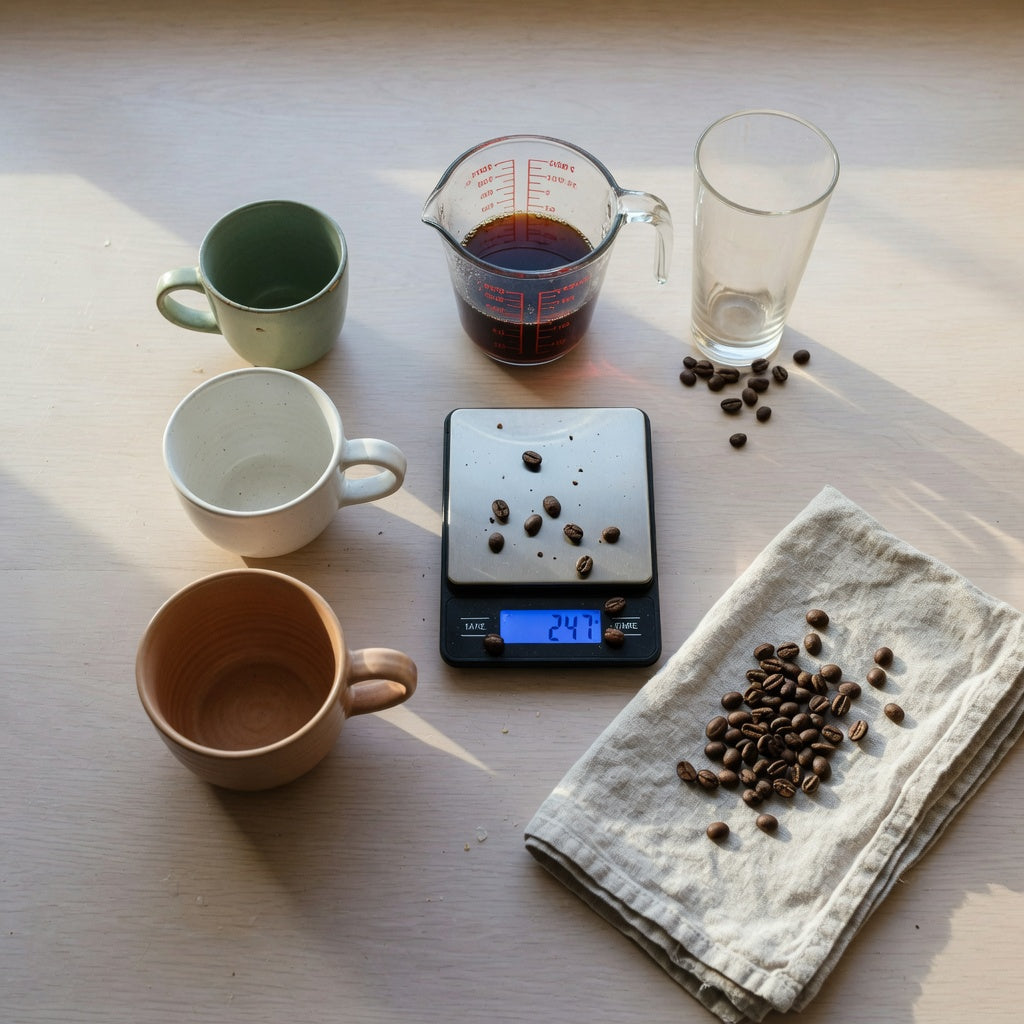
14 Oz Ceramic Coffee Mugs Capacity Guide: 400 vs 440 vs 480 ml
A 14 oz mug rarely delivers a 14 oz pour. We compare our 400 ml, 440 ml, and 480 ml ceramic mugs by real fill, refill habits, handle fit, and the care and safety details worth confirming before you...
Read more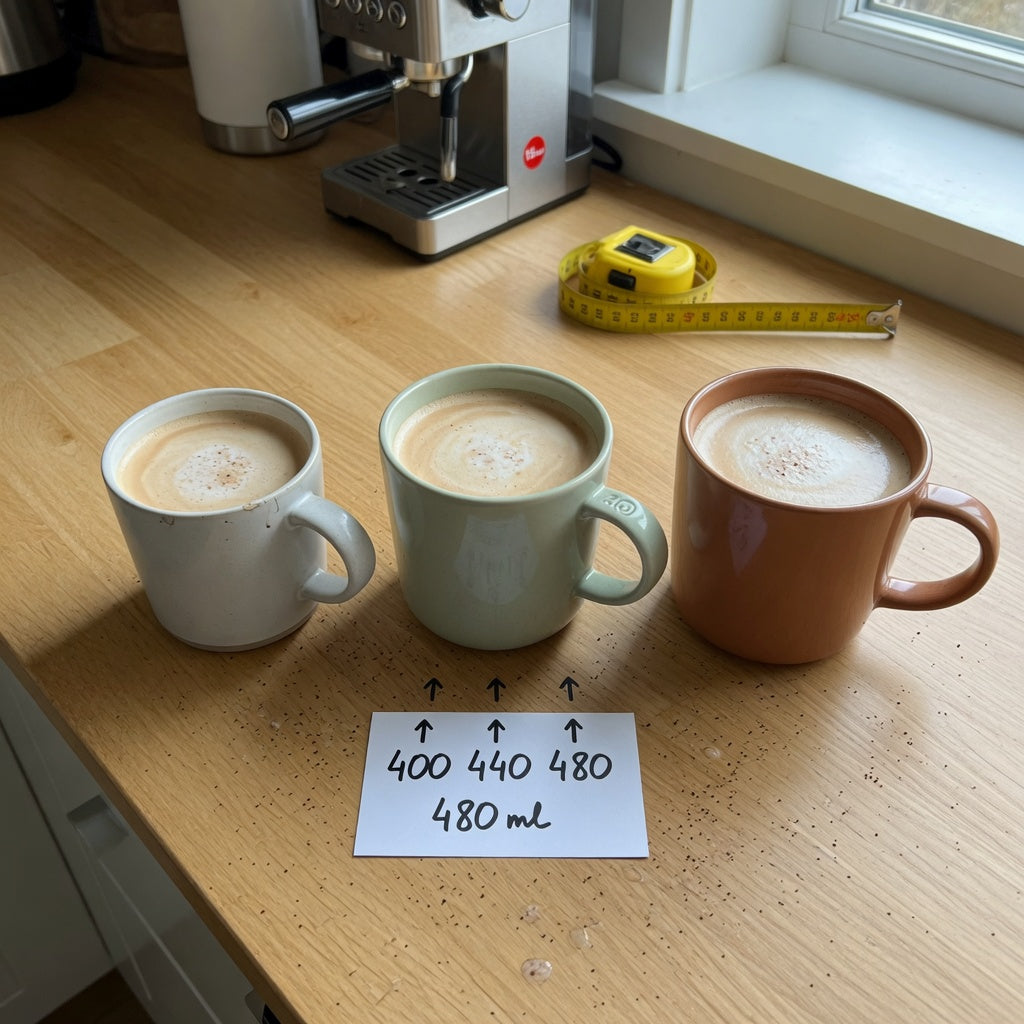
Big Latte Mug Capacity Guide: 400, 440, or 480 ml?
This big latte mug capacity guide compares 400 ml, 440 ml, and 480 ml mugs by refill pattern, handle comfort, desk footprint, and the daily routine each one suits.
Read more
Leave a comment
This site is protected by hCaptcha and the hCaptcha Privacy Policy and Terms of Service apply.