
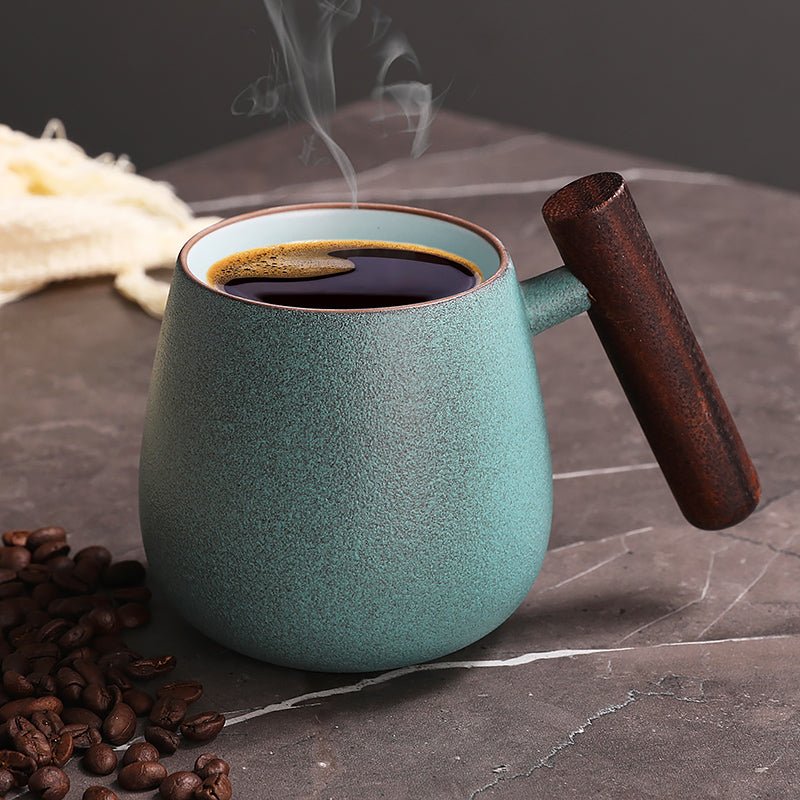
Loose leaf tea mug capacity guide: 250 ml vs. 390 ml vs. 400 ml
Reading time: about 9 minutes
A 500 ml pot of tea exposes a capacity mismatch quickly. A 250 ml mug represents two full listed-capacity equivalents on paper, while a 400 ml mug represents one full equivalent plus another 100 ml. Actual pours need room below the rim, so our loose leaf tea mug capacity guide compares both the catalog numbers and the way those numbers affect everyday refills.
At CoffeifyMug, we often hear capacity questions bundled with assumptions about built-in strainers. The Ball Handled Coffee Tea Mug and the other mugs covered here are drinkware only. They do not include unlisted brewing accessories or filters. You can also view the current styles together in our unique coffee mug collection before comparing individual listings.
Loose leaf tea mug capacity guide: what changes at 250 ml, 390 ml, and 400 ml?
| Mug | Listed capacity | Verified size or opening detail | Capacity position |
|---|---|---|---|
| Ball Handle Mug | 250 ml | The listing states an 11.2 cm diameter. This should not automatically be treated as the interior opening measurement. | Smallest current option |
| Round Coffee Tea Mug | 390 ml | Use the current product images to assess the visible opening; no numerical opening measurement is established here. | 140 ml more than the Ball Handle Mug |
| Spittoon Coffee Tea Mug | 400 ml | Use the current product images to assess the visible opening; no numerical opening measurement is established here. | Largest option, 10 ml above the Round Mug |
The meaningful split is between 250 ml and the two larger mugs. Moving from 250 ml to 390 ml adds 140 ml of listed capacity, while moving to 400 ml adds 150 ml. The gap between 390 ml and 400 ml is only 10 ml, so those two belong to essentially the same refill category for most routines.
Listed capacity is a comparison value, not a direction to pour tea to the rim. Your normal working volume will be lower once you leave carrying room or insert your own brewing basket.
Which capacity matches your refill routine?
A measured single serving with a fresh refill
Situation: You usually prepare about one small mug at a time and do not mind returning to the kettle. Why it fits: At 250 ml, the Ball Handle Mug is the most deliberate single-serving option. It is not the best fit for someone trying to minimize refills during a long desk session. Next step: Check the current 250 ml Ball Handle Mug listing and compare your normal pour with its stated capacity.
A larger cup without moving into a different capacity class
Situation: Your usual serving is above 250 ml but close to the upper 300 ml range. Why it fits: The 390 ml Round Mug gives 140 ml more listed room than the Ball Handle Mug while remaining only 10 ml below the largest option. A prepared 390 ml batch would leave no theoretical headspace, so measure the amount you actually pour rather than matching the number at the brim. Next step: Review the 390 ml Round Coffee Tea Mug.
The largest listed capacity among these three mugs
Situation: Your priority is getting the highest current capacity in this comparison. Why it fits: The Spittoon Mug is listed at 400 ml, which can reduce refill frequency compared with 250 ml when the same working fill approach is used. It is only 10 ml larger than the Round Mug, so it is not a substantial capacity upgrade from 390 ml. Next step: Inspect the visible opening and form on the 400 ml Spittoon Coffee Tea Mug product page.
For a 500 ml prepared amount, the simple capacity arithmetic looks like this:
- 250 ml: two listed-capacity equivalents.
- 390 ml: one listed-capacity equivalent plus 110 ml.
- 400 ml: one listed-capacity equivalent plus 100 ml.
That math is useful for comparison, but it is not a recommended fill plan. Leaving headspace means your real refill count may be higher.
How much working room should you leave below listed capacity?
There is no single headspace number that fits every tea routine. A mug carried from the kitchen counter to an office desk needs more room below the rim than one left beside the kettle. A personal infuser also displaces some water, and expanding leaves occupy space inside the basket.
In our experience, a cold-water test gives shoppers a more useful number than guessing from a favorite mug's outside dimensions:
- Fill your current mug with cold water to the level you normally drink from.
- Transfer that water into a marked measuring jug and record the volume in milliliters.
- If you use your own infuser, repeat the test with the empty infuser positioned in the mug.
- Compare that working volume with 250 ml, 390 ml, and 400 ml rather than comparing brim capacity alone.
Use cold water for this measurement. There is no reason to move boiling water between vessels just to check capacity.
What does the visible opening tell you about your own infuser?
The opening matters because a personal basket or strainer must pass through the rim and remain easy to remove. A visibly broad opening can also offer better access for a sponge during hand cleaning. Product photography, however, cannot guarantee accessory compatibility because camera angle and image scale can distort apparent size.
The Ball Handle Mug has a listed 11.2 cm diameter, but that figure should not be relabeled as an interior mouth diameter without a specific opening measurement. For the Round and Spittoon mugs, this comparison makes no numerical opening claim. Use the most top-down product image available and check the inner rim rather than the mug's widest outside point.
- Measure your filter at its widest fixed rim, not only across the mesh basket.
- Check that the basket body can enter the mug without forcing it.
- Allow room to lift a wet basket without scraping it against the rim.
- Ask for clarification before ordering if filter fit is essential and no interior measurement is stated.
For a broader discussion of openings and everyday brewing arrangements, see our loose leaf tea mug guide to capacity, opening, and daily use. Remember that any filter shown with your existing setup is separate from the drinkware linked in this article.
Does the 10 ml difference between 390 ml and 400 ml matter?
It rarely changes the basic refill pattern. For an 800 ml prepared batch, two 400 ml listed-capacity equivalents reach 800 ml, while two 390 ml equivalents reach 780 ml and leave 20 ml. Once practical headspace is included, both mugs may still require more than two actual pours.
If 390 ml already feels too small, 400 ml is unlikely to solve the problem. Choose between these two by comparing their visible openings and overall catalog form, or seek a clearly larger style with an explicitly listed capacity.
Kitchen counter, office desk, and gift routines
| Buyer situation | Best current fit | Reason and next step |
|---|---|---|
| One measured cup near the kettle | 250 ml Ball Handle Mug | The smaller listed capacity suits a short serving routine where a fresh refill is acceptable. Compare your cold-water measurement with the Ball Handle listing. |
| Longer office serving above 250 ml | 390 ml Round Mug | It adds 140 ml of listed capacity without a meaningful capacity gap from the 400 ml option. Review the visible opening before buying. |
| Largest capacity in this set | 400 ml Spittoon Mug | It has the highest listed number, although only by 10 ml over the Round Mug. Choose it only if that maximum matters or you prefer its visible form. |
| Gift recipient's serving size is unknown | Measure or compare first | Use the recipient's regular mug as a quiet reference if possible. Do not present any of these drinkware products as a complete loose leaf brewing kit. |
At gift unboxing, inspect the visible rim and body for chips or hairline cracks before washing or use. Capacity cannot compensate for transit damage. If the recipient also drinks coffee, our coffee mug sizes guide for daily use provides additional context for comparing their usual pour.
What this capacity comparison cannot promise
- Material and care compatibility: This article does not rank the mugs by material, microwave use, dishwasher use, or heat retention. Check the current listing and care information before placing any mug in a dishwasher cycle.
- Exact working volume: Headspace, a personal filter, tea leaves, milk, and ice can all reduce the liquid volume you can comfortably add.
- Guaranteed infuser fit: A visible opening is useful for screening options, but it is not a measured compatibility test.
- Included brewing equipment: These products are drinkware only and do not include unlisted filters, baskets, lids, or other brewing accessories.
If you need an integrated infuser, a sealed travel lid, or explicitly documented appliance compatibility, a different product style with those features clearly listed will be a better fit.
Five checks before you add a mug to cart
- Measure your normal cold-water pour in milliliters.
- Decide how many refills you accept during one tea session.
- Leave room for carrying and for your own loose leaf filter.
- Inspect the current product photos for the visible opening, without treating photo scale as a measurement.
- Verify material, care, and included-item details on the live listing, then compare all current options in the CoffeifyMug collection.
Frequently asked questions
What mug size does this loose leaf tea mug capacity guide suggest for fewer refills?
The 400 ml Spittoon Mug has the largest listed capacity, so it can require fewer fills than the 250 ml Ball Handle Mug for the same total amount of tea. The 390 ml Round Mug is only 10 ml smaller, making its refill pattern very similar. Actual results depend on how much headspace you leave.
Is a 250 ml mug large enough for one loose leaf tea serving?
Yes, if your measured working pour fits below 250 ml after accounting for your own infuser and headspace. It is less suitable for a large desk serving or a drink with additions that occupy part of the mug.
Will my loose leaf infuser fit the Ball Handle Mug's 11.2 cm diameter?
The listing states an 11.2 cm diameter, but that should not be assumed to be the interior opening measurement. Measure the widest fixed part of your infuser and request clarification if exact fit determines your purchase.
Do these mugs include a loose leaf tea filter or brewing basket?
No unlisted filter, basket, or other brewing accessory is included with the linked drinkware. Plan to use a separate infuser only after confirming that its dimensions suit the mug opening.
Where can I compare the 250 ml, 390 ml, and 400 ml mugs?
Start with the current CoffeifyMug collection, then open each product page to compare the listed capacity and visible opening. Keep your measured working pour beside you so the final choice reflects your actual tea routine.
More from our blog
Read more
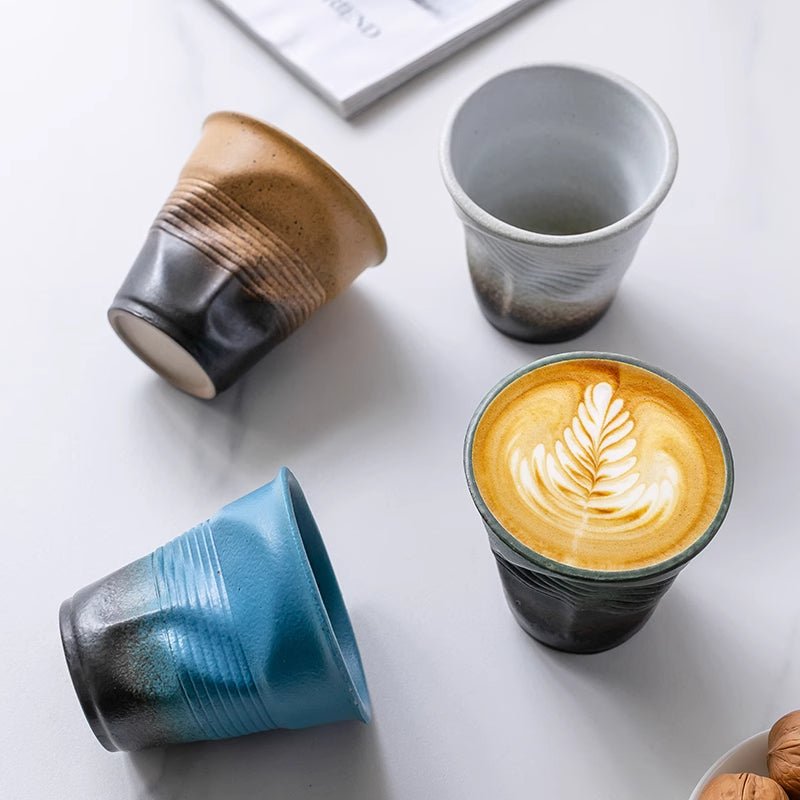
Ceramic Cortado Cup Capacity Guide: 170 ml, 200 ml, 270 ml
Compare CoffeifyMug's current 170 ml, 200 ml, and 270 ml ceramic options using finished drink volume, practical headroom, and refill habits. Includes exact fit examples and honest limitations.
Weiterlesen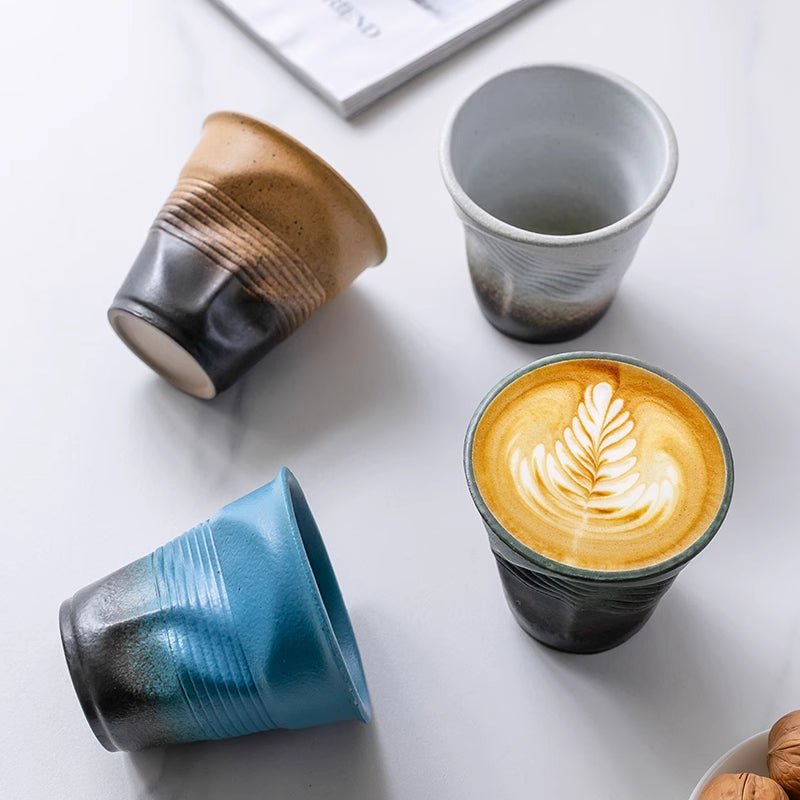
Affogato Cup Capacity Guide: 170 ml, 200 ml, or 270 ml?
Compare CoffeifyMug's 170 ml Retro, 200 ml Pleated, and 270 ml Emerald formats by serving routine, top-up habits, and visible profile. This guide also explains where listed capacity stops being eno...
Weiterlesen
Hinterlasse einen Kommentar
Diese Website ist durch hCaptcha geschützt und es gelten die allgemeinen Geschäftsbedingungen und Datenschutzbestimmungen von hCaptcha.