
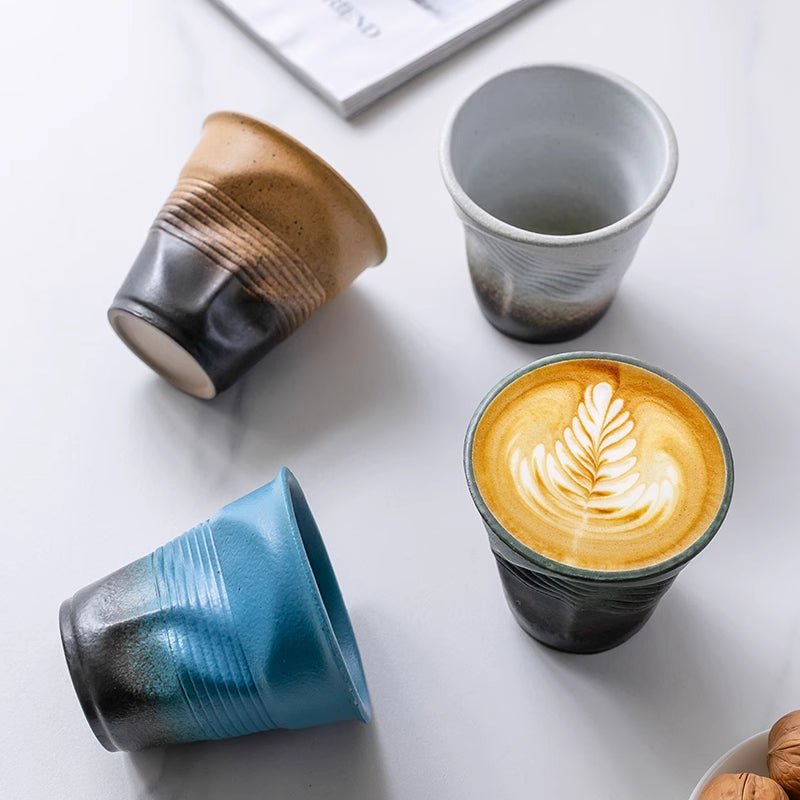
Affogato Cup Capacity Guide: 170 ml, 200 ml, or 270 ml?
Reading time: about 9 minutes
A compact scoop can sit neatly in one cup, then reach uncomfortably close to the rim after the coffee pour. We see that mismatch most often when a shopper chooses from a photograph instead of comparing milliliters. This affogato cup capacity guide covers the three current, verified capacities in our store: Retro at 170 ml, Pleated at 200 ml, and Emerald at 270 ml.
Our team treats this as a volume-and-routine decision, not a claim that any cup has special affogato engineering. These are coffee and tea cup or mug formats being compared through listed capacity and visible shape. Capacity alone does not establish material, care requirements, heat retention, resistance to temperature changes, external dimensions, or package contents.
For a quick reference point, open the Retro Coffee Tea Cup, then compare its scale and styling with the current unique coffee mug collection. The choice becomes easier once you decide how much room your usual scoop, pour, and optional top-up require.
Affogato cup capacity guide: what changes from 170 ml to 270 ml?
| Current format | Listed capacity | Difference in this range | Likely routine fit | Main trade-off |
|---|---|---|---|---|
| Retro Coffee Tea Cup | 170 ml | Smallest starting point | Compact scoop and restrained pour | Least room for additions or rim clearance |
| Pleated Coffee Tea Cup | 200 ml | 30 ml more than Retro | Compact dessert with occasional extra coffee | Only a modest increase over 170 ml |
| Emerald Coffee Tea Mug | 270 ml | 70 ml more than Pleated and 100 ml more than Retro | Larger serving or additions kept in one vessel | A small portion can look less substantial inside it |
The capacity steps are uneven. Moving from 170 ml to 200 ml adds 30 ml, while moving from 200 ml to 270 ml adds 70 ml. The middle option is therefore closer to the smallest cup than to the largest mug.
Treat the listed milliliters as a comparison number, not a guaranteed working fill line. A scoop displaces volume, toppings occupy more space, and most people want some clearance below the rim. Because we do not have verified internal dimensions for this comparison, we will not assign exact scoop or coffee quantities to any cup.
Retro 170 ml: is the smallest cup enough after dinner?
The 170 ml Retro Coffee Tea Cup fits a shopper who prefers one compact scoop, a measured coffee pour, and no planned top-up in the same vessel. Its smaller listed capacity also suits a deliberately modest after-dinner presentation.
This size asks for the most controlled serving routine. A broad scoop, several toppings, or a generous pour can use the available volume quickly. It is not the best choice for someone who regularly reaches the rim or wants room to adjust the serving after it reaches the table.
Choose Retro when compact capacity and its visible retro-style profile are both part of the appeal. If you currently use a small dessert cup without needing extra room, 170 ml is the closest match in this three-product range.
Pleated 200 ml: when does an extra 30 ml matter?
The Pleated Coffee Tea Cup occupies the middle position at 200 ml. It suits the shopper who finds 170 ml a little restrictive but does not want to move directly to the 270 ml mug format.
An additional 30 ml is useful as a small buffer, not as another full dessert serving. It can make sense when your usual issue is an occasional top-up or slightly larger scoop rather than a heavily layered dessert. If 170 ml already feels substantially too small, this modest step may not solve the problem.
The visible pleated exterior also gives this option a different table presence from the smoother-looking alternatives. That surface detail is a styling distinction only in this comparison; we do not infer grip, insulation, cleaning ease, or durability from the pleated appearance.
Emerald 270 ml: who needs the largest current format?
At 270 ml, the Emerald Coffee Tea Mug is the largest of the three current choices. It offers 100 ml more listed capacity than Retro and 70 ml more than Pleated, making it the clearest step up rather than a small adjustment.
This format fits someone who serves a larger scoop, adds coffee in stages, or wants to keep toppings and later additions in one vessel. Its mug silhouette can also make more sense for a shopper who expects to use the same item for a regular coffee or tea routine outside dessert service.
Emerald is not automatically better because it holds more. A compact affogato can leave more visible empty space, and buyers seeking a tight restaurant-style presentation may prefer 170 ml or 200 ml. At the other end, 270 ml is still not a high-volume choice for a long, ice-filled drink.
One pour or repeated top-ups: which capacity matches?
Refill count depends on how much you actually consume, but the pattern still provides a useful buying clue. In our experience, shoppers make a better choice when they describe the full serving routine instead of naming a cup size from memory.
- One compact serving and no top-up: Start with 170 ml. It provides the smallest scale for a controlled scoop-and-pour routine.
- An occasional extra pour: Consider 200 ml. The 30 ml step adds a little flexibility without moving to the largest format.
- Several additions kept in one vessel: Consider 270 ml. The larger jump provides the most nominal room of these three options.
- Repeated coffee refills through a work session: Even 270 ml may feel small. A larger mug category could fit that routine better.
A practical kitchen-counter check is to view 30 ml and 70 ml in a marked measuring jug. Those are the actual jumps between these products, and seeing them is often more useful than comparing product photos taken from different angles. Then account for the space your usual scoop occupies and the rim clearance you prefer.
Visible shape: what can product photos tell you?
Photos help with style, but they are unreliable for estimating volume. Camera distance, angle, and nearby objects can make a 170 ml cup appear closer in size to a 200 ml cup than the listings indicate. Use the stated milliliters for capacity and the images for visible design.
- Retro: A compact, retro-style cup profile for a more traditional presentation.
- Pleated: A visibly pleated exterior that makes surface pattern part of the design.
- Emerald: A mug-format silhouette paired with the largest listed capacity in this comparison.
Visible shape does not prove wall thickness, balance, handle comfort, stackability, brewer clearance, or care compatibility. For gift orders, we suggest matching the recipient's routine first and using shape as the second filter. A compact dessert habit points toward Retro; an uncertain middle ground points toward Pleated; regular mug use makes Emerald more relevant.
Shoppers comparing factors beyond this narrow capacity question can use our affogato cup guide to capacity, shape, and serving. It covers the broader decision without changing the verified size differences discussed here.
Daily kitchen and office use: will these sizes feel too small?
All three capacities are below 300 ml. That makes them compact relative to many everyday drink vessels, even though 270 ml looks generous beside 170 ml. The right daily fit depends on whether you value a smaller serving or dislike frequent refills.
- 170 ml: Best aligned with short servings and shoppers comfortable returning for another pour.
- 200 ml: A middle step for short coffee or tea routines that need slightly more room.
- 270 ml: The strongest option here for reducing refill frequency, assuming the total amount consumed stays the same.
For an office desk, 270 ml may be more practical than 170 ml, but it can still be undersized for someone accustomed to a large breakfast coffee. Ice also occupies capacity, so none of these should be selected as a large iced-coffee vessel merely because Emerald is the biggest of the three.
If affogato is only one planned use, compare these figures with the cup already in your kitchen. Our coffee mug sizes guide for daily use provides additional context. Capacity still cannot confirm that a cup will fit beneath a particular brewer, inside a shallow cabinet, or in a cup holder; those decisions require verified external measurements from the current listing.
Five checks before choosing 170 ml, 200 ml, or 270 ml
- Name the usual serving: Decide whether your scoop and coffee pour are compact, variable, or deliberately generous.
- Count additions: Note whether coffee, toppings, or a second pour need to stay in the same vessel.
- Compare the real jumps: Retro to Pleated adds 30 ml; Pleated to Emerald adds 70 ml.
- Pick the visible profile: Choose among retro styling, a pleated exterior, and the larger mug silhouette.
- Verify everything capacity cannot answer: Check the live product listing for current material, dimensions, care directions, package contents, and availability before ordering.
Within this affogato cup capacity guide, the shortest decision is straightforward: 170 ml for a compact routine, 200 ml for a modest buffer, and 270 ml for the largest serving range. A different style or a larger mug is the better choice if none matches your normal volume.
Frequently asked questions
Is a 170 ml cup large enough for one affogato?
It can be large enough for a compact scoop and restrained coffee pour. The answer depends on scoop displacement, toppings, and preferred rim clearance, so 170 ml should not be treated as a guaranteed recipe size. Choose 200 ml or 270 ml if your servings regularly feel crowded.
Is 200 ml the safest first choice for an affogato cup?
This affogato cup capacity guide treats 200 ml as the middle option, not a universal winner. It gives you 30 ml more than Retro while remaining 70 ml below Emerald. It fits shoppers who want a small buffer, but it may be too close to 170 ml for generous servings.
Will a 270 ml mug make a small affogato look too small?
It can leave more visible empty space around a compact portion than the 170 ml or 200 ml options. That may be welcome if you prefer room around the serving, but it is less suitable for someone seeking a tight, compact presentation.
Do these products include a spoon, saucer, dessert, or coffee?
Capacity and product name do not establish package contents. This guide does not promise that serving accessories, food, or drinks are included. Review the current product page for the exact contents before placing an order.
Are these cups dishwasher-safe or suitable for rapid temperature changes?
Those properties are not verified by this capacity comparison, and visible shape cannot answer them. Check the live product listing and follow its current care directions. If a specific care method or temperature-change performance is essential, do not choose on capacity alone.
Next step: Select the capacity that matches your scoop, pour, and refill pattern, then review the current options in the CoffeifyMug unique coffee mug collection and confirm the live listing details before adding one to your cart.
More from our blog
Read more
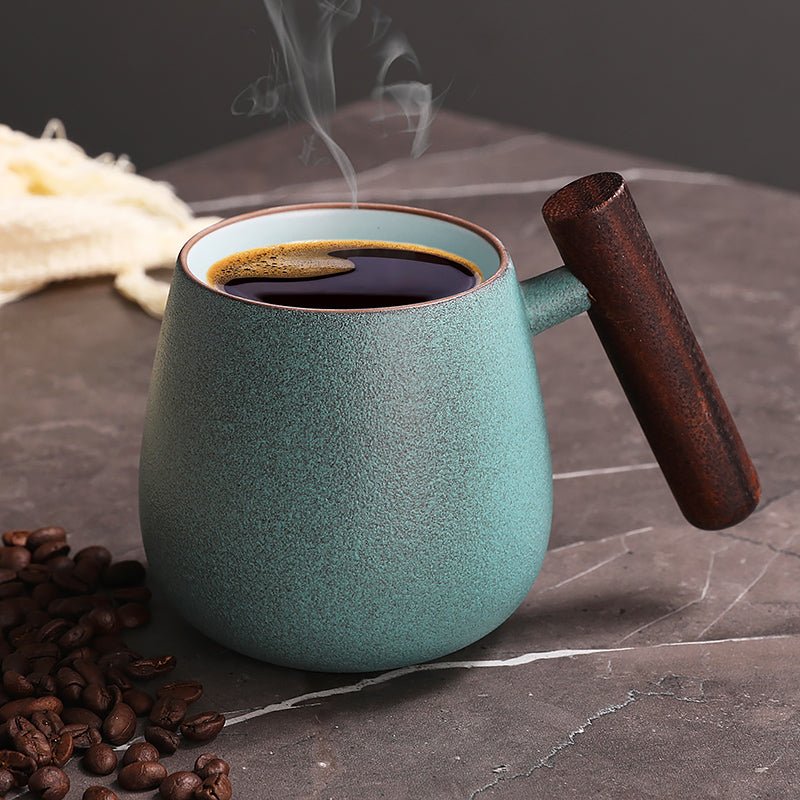
Loose leaf tea mug capacity guide: 250 ml vs. 390 ml vs. 400 ml
Compare CoffeifyMug's current 250 ml, 390 ml, and 400 ml drinkware by listed capacity, refill rhythm, and visible opening. This guide also explains headspace, personal-infuser fit, office use, and ...
Weiterlesen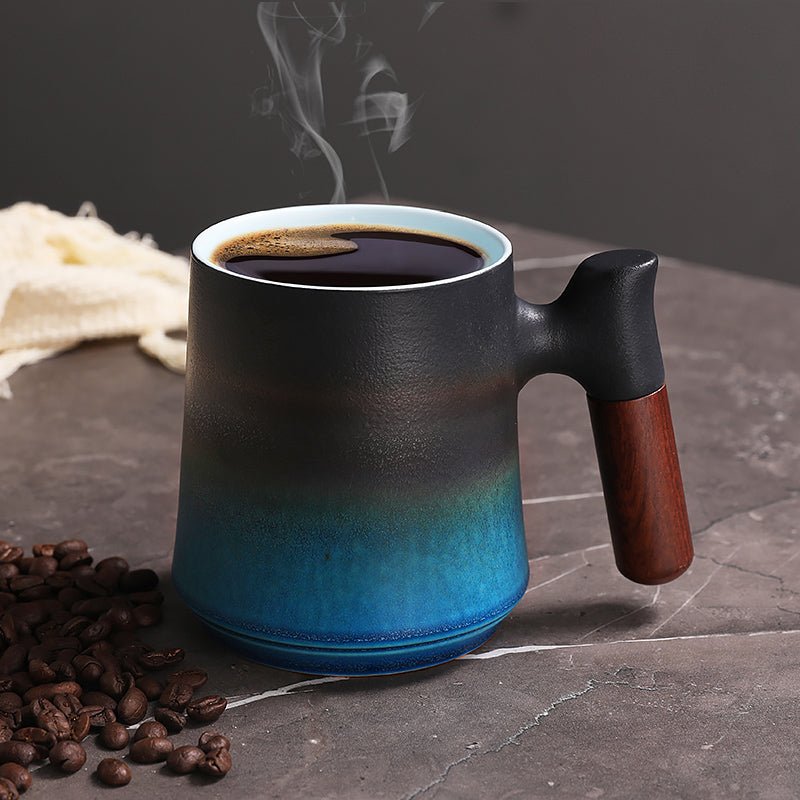
Hot Cocoa Mug Capacity Guide: 400 ml vs 480 ml Daily Fit
Compare The Gradient and The Flow at 400 ml with The Rock at 480 ml. See the nominal headroom for 250-400 ml servings, refill implications, and the routines each size fits.
Weiterlesen
Hinterlasse einen Kommentar
Diese Website ist durch hCaptcha geschützt und es gelten die allgemeinen Geschäftsbedingungen und Datenschutzbestimmungen von hCaptcha.