
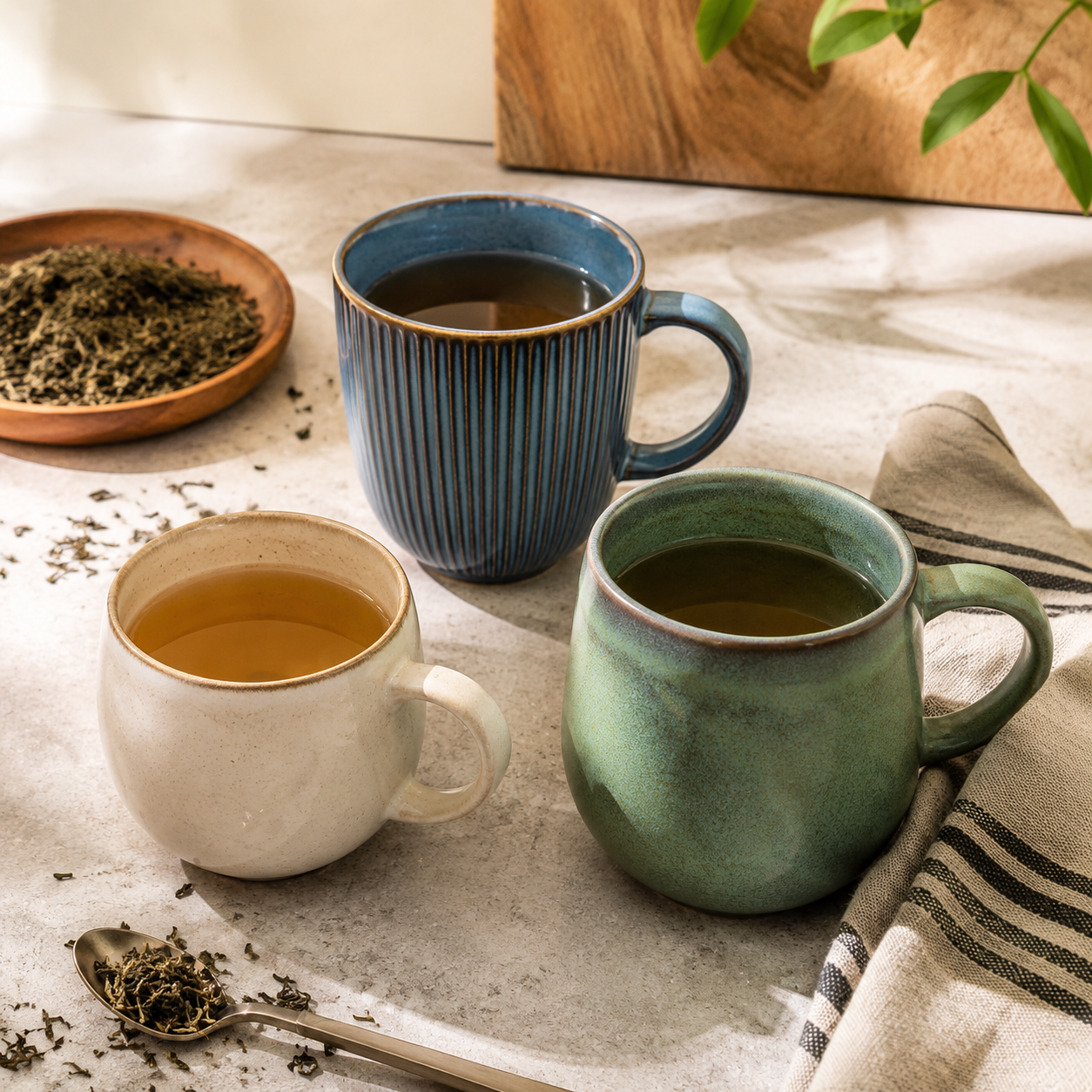
Loose Leaf Tea Mug Buying Guide: Capacity, Opening, Everyday Use
Reading time: about 9 minutes
A basket infuser that rocks on the rim is frustrating. So is opening a gift box and discovering that the expected filter was never part of the product. A loose leaf tea mug should be chosen by separating three questions: how much tea you drink, how accessible the opening appears, and what brewing equipment you plan to use with it.
At CoffeifyMug, we compare the facts actually supplied for each piece of drinkware. The Ball Handled Coffee Tea Mug is listed at 250 ml with an 11.2 cm diameter, while the broader unique coffee mug collection includes 390 ml and 400 ml options. These linked products are mugs only. They do not include an infuser, filter, tea ball, lid, or other unlisted brewing accessory.
Catalog details in this comparison were checked on July 22, 2026. Product listings can change, so confirm the current page before ordering. We compare listed capacity and the visible opening without claiming an unlisted inner-rim measurement.
Which loose leaf tea mug capacity fits one steep?
Listed capacity gives you a useful starting point, but it is not the same as a comfortable working fill. Loose leaf brewing usually needs space for an infuser and a little headroom below the rim. A basket also displaces liquid, so pouring a full 400 ml of water into a 400 ml mug may leave no practical room for the brewing tool.
| Drinkware | Listed capacity | Opening information | Best starting situation |
|---|---|---|---|
| Ball Handled Coffee Tea Mug | 250 ml | 11.2 cm listed diameter; inner opening is not separately specified | A smaller serving that can be finished and refreshed |
| Round Coffee Tea Mug | 390 ml | Use the product photography to assess the visible rim; no measured inner opening is supplied here | A longer desk or kitchen serving without moving to oversized drinkware |
| Spittoon Coffee Tea Mug | 400 ml | Use the visible opening as a shape reference, not as a fit measurement | The largest listed serving among these three choices |
The difference between 390 ml and 400 ml is only 10 ml. That is too small to make capacity the sole deciding factor for most buyers. The jump from 250 ml to 390 ml is 140 ml, which is much more relevant during a long meeting or an uninterrupted reading session.
A 250 ml mug makes sense for short steeps, stronger teas served in smaller portions, or anyone who dislikes letting the final third of a drink sit and cool. The 390 ml and 400 ml mugs reduce refill frequency, but they also hold more tea than some people want in one sitting. If you routinely stop halfway through a large drink, the smaller capacity may be the more practical purchase.
Why does the visible opening matter for loose leaf brewing?
The opening affects access for adding an infuser, lifting it after the steep, and wiping away leaves that cling near the rim. A visibly open top is also easier to inspect in product photography than the interior of a narrow or strongly tapered form. It does not, however, prove that a particular accessory will fit.
Basket infusers have two measurements that matter: the basket body must pass through the mug opening, and the flange or handles must rest securely across the rim. A listing that gives only the mug's overall diameter cannot confirm either measurement. The Ball Handled model's listed 11.2 cm diameter is useful for understanding its general scale, but we do not treat that number as a confirmed 11.2 cm inner opening.
Use product images to check these visible details:
- Rim exposure: A clearly visible rim makes it easier to judge whether the opening looks accessible for filling and cleaning.
- Wall taper: An infuser can clear the top and still stop against inward-sloping walls lower in the mug.
- Handle clearance: A wide infuser arm should not interfere with the mug handle or leave the basket sitting at an angle.
- Removal space: You need enough room to lift a hot, wet basket without dragging leaves across the rim.
If exact accessory compatibility is essential, buy the mug first and measure the inner opening at the rim before choosing a rigid basket. A flexible paper tea filter or appropriately sized tea ball is less dependent on the rim width, though coarse perforations can allow fine rooibos or broken tea particles into the drink.
Which CoffeifyMug shape fits your routine?
Capacity narrows the choice, but daily context should make the final call. Each recommendation below connects a real use case to the product fact we can verify.
- For a compact serving: Choose the 250 ml Ball Handled mug if you prefer a smaller pour and its distinctive handle-focused design. Its listed 11.2 cm diameter helps communicate overall scale, but confirm any infuser separately. It is not the strongest fit for someone who wants one large brew to last through a long work session.
- For a substantial everyday cup: The 390 ml Round Coffee Tea Mug gives you 140 ml more listed capacity than the Ball Handled option. It suits a desk, breakfast table, or evening reading routine where an extra refill would be inconvenient.
- For the largest listed option: The 400 ml Spittoon Coffee Tea Mug is the capacity leader in this comparison. Choose it because you prefer its visible form and want a larger serving, not because 10 ml will create a meaningful advantage over the 390 ml Round mug.
If none of those shapes feels right, scan the full collection and compare the rim, handle, and overall silhouette in the product images. Do not assume two mugs with similar capacity will accept the same infuser.
What brewing setup works with drinkware-only mugs?
A mug can hold loose leaf tea without being a self-contained brewer. In our store, one of the most useful distinctions we can make for shoppers is between drinkware and a mug-and-filter set. The three products discussed here are drinkware only, and no unlisted brewing accessories or filters are included.
- Use a separate basket infuser: This gives leaves room to expand, but the basket body and supporting flange must match the opening.
- Fill a disposable paper tea filter: This avoids rigid fit issues and keeps small leaves contained. Leave enough empty space in the filter for rolled or twisted leaves to unfurl.
- Brew in a teapot: Pour strained tea into the mug after steeping. This is the simplest option if several people are drinking or if exact infuser fit is uncertain.
- Steep directly and strain while pouring: This can work at a kitchen counter, but it is less tidy at an office desk and makes leaf cleanup more involved.
Do not order one of these mugs solely because you expect an integrated filter. A shopper specifically seeking a lidded infuser mug, travel brewer, or all-in-one tea system should choose a product that explicitly lists those components.
How do these sizes behave at a desk and in the kitchen?
On a crowded desk, capacity is only part of the story. A 390 ml or 400 ml mug reduces trips to the kettle, but it also holds more liquid near a keyboard or paperwork. Keep the mug on a level surface with enough clearance to lift the infuser straight up. A small saucer or dedicated rest for the wet basket prevents tea from pooling beside the mug.
At a kitchen counter, the visible opening matters during both brewing and cleanup. Wet leaves often cling where the interior wall meets the base or around changes in contour. Our practical cleanup sequence is simple:
- Remove the wet leaves or filter as soon as the steep is finished.
- Rinse the mug with warm water before tea residue dries onto the interior.
- Use mild dish soap and a soft sponge for remaining residue, especially near the rim and lower interior.
- Check the current product page before using a dishwasher; we do not assume dishwasher compatibility when that care fact is not supplied.
- Let the mug dry fully before returning it to a closed cabinet.
Abrasive pads can mark some decorated or glossy surfaces, so use them only if the product's care directions allow it. Buyers comparing material behavior, stain visibility, and general size categories can also consult our tea mug materials and sizes guide. For a broader look at handles, shapes, and serving sizes across drinkware, see the coffee mug size and shape guide.
When is this style of tea mug the wrong purchase?
These mugs are not sealed travel vessels, and the listed products should not be treated as insulated commuter cups unless a current product page explicitly says so. They are also a poor match for a buyer who requires a guaranteed basket fit before the mug arrives because verified inner-opening measurements are not provided in this comparison.
For gift unboxings, set expectations clearly. The recipient receives drinkware, not a complete loose leaf starter kit. If you add tea or a filter separately, present those as separate gift components rather than included product features.
Frequently asked questions
Does this loose leaf tea mug include an infuser?
No. The Ball Handled, Round, and Spittoon products linked here are drinkware only and do not include an unlisted infuser, filter, lid, or brewing accessory. Plan to use your own compatible filter or brew the tea separately.
Is a 250 ml mug large enough for loose leaf tea?
Yes, if you prefer a smaller serving and leave room for the infuser plus headspace below the rim. It is less suitable for someone who wants one brew to last through a long meeting or extended desk session.
Will my basket infuser fit these mugs?
Fit cannot be guaranteed from the supplied facts because a measured inner opening is not listed. Compare the basket body and flange with the mug's inner rim after measuring, and remember that the Ball Handled mug's 11.2 cm listed diameter is not confirmed as an opening measurement.
Is there a noticeable capacity difference between 390 ml and 400 ml?
The listed difference is 10 ml, so most buyers should decide between those mugs by visible shape, opening, and handle preference. Both are substantially larger than the listed 250 ml option.
Can these tea mugs go in the dishwasher?
Use the care instructions on the current product page rather than assuming dishwasher compatibility. If the listing does not confirm it, hand-wash with mild soap and a soft sponge to avoid unnecessary wear.
Your 30-second comparison checklist
- Pick 250 ml for a compact serving or 390-400 ml for fewer refills.
- Judge the visible opening, but do not mistake overall diameter for inner-rim width.
- Measure separately before buying a rigid basket infuser.
- Remember that the linked mugs do not include filters or brewing accessories.
- Check current care directions before using a dishwasher.
Start with the CoffeifyMug unique mug collection, then compare the 250 ml, 390 ml, and 400 ml listings side by side using capacity, visible opening, and your actual brewing setup.
More from our blog
Read more
Mocha Mug Buying Guide: 400 ml, 440 ml, or 480 ml?
Compare 400 ml, 440 ml, and 480 ml mugs by usable headspace, filled weight, desk fit, cabinet space, and drinking pace. Choose a practical size for your coffee-and-cocoa drink without assuming ever...
Read more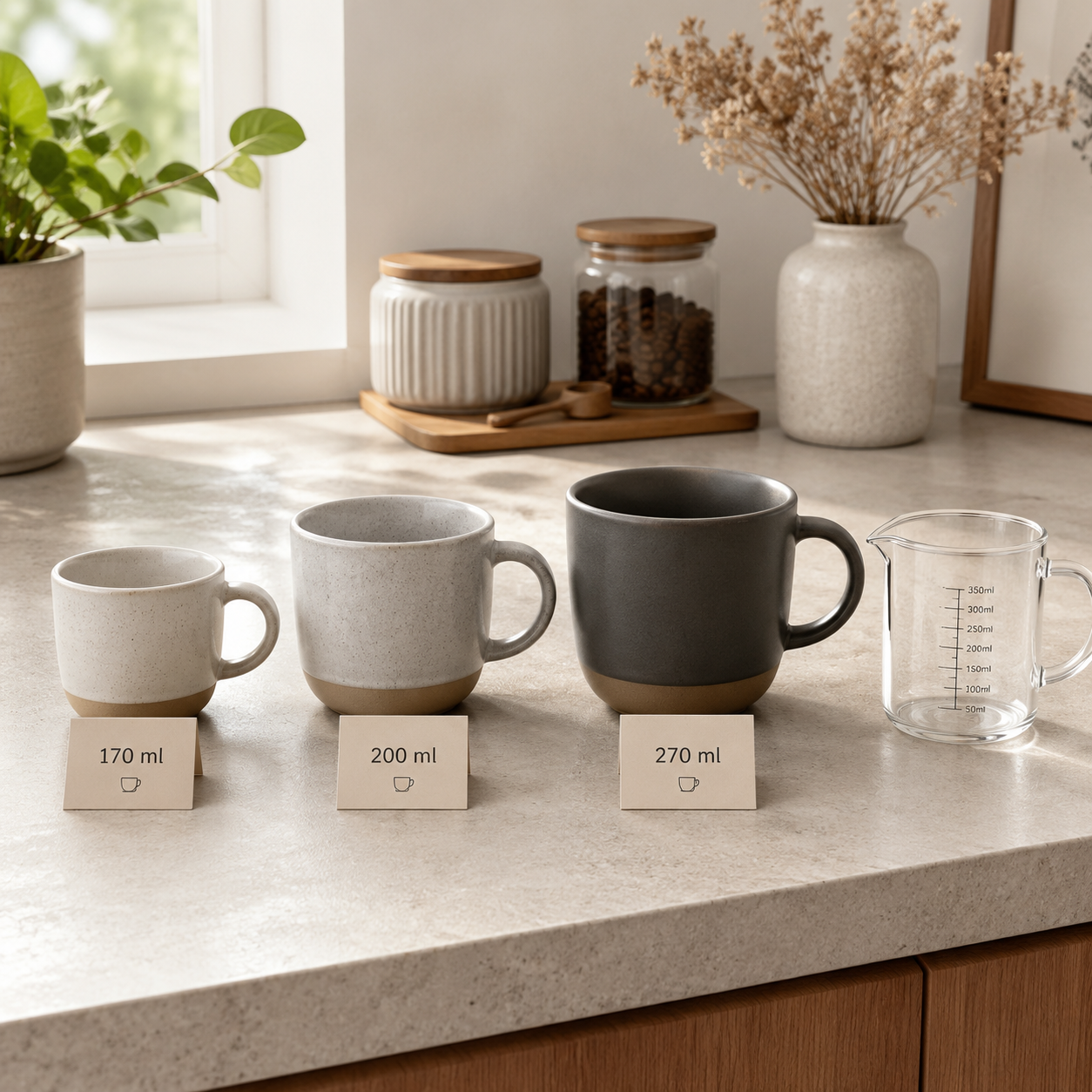
Lungo Coffee Cup Buying Guide: Capacity and Headroom
Compare 170 ml, 200 ml, and 270 ml CoffeifyMug options for a longer coffee pour. This guide explains how listed capacity affects practical headroom, counter space, gifting, and daily use.
Read more
Leave a comment
This site is protected by hCaptcha and the hCaptcha Privacy Policy and Terms of Service apply.