
Yellow Ceramic Coffee Mug Shared Household Practical Purchase Checklist
Reading time: about 10 minutes
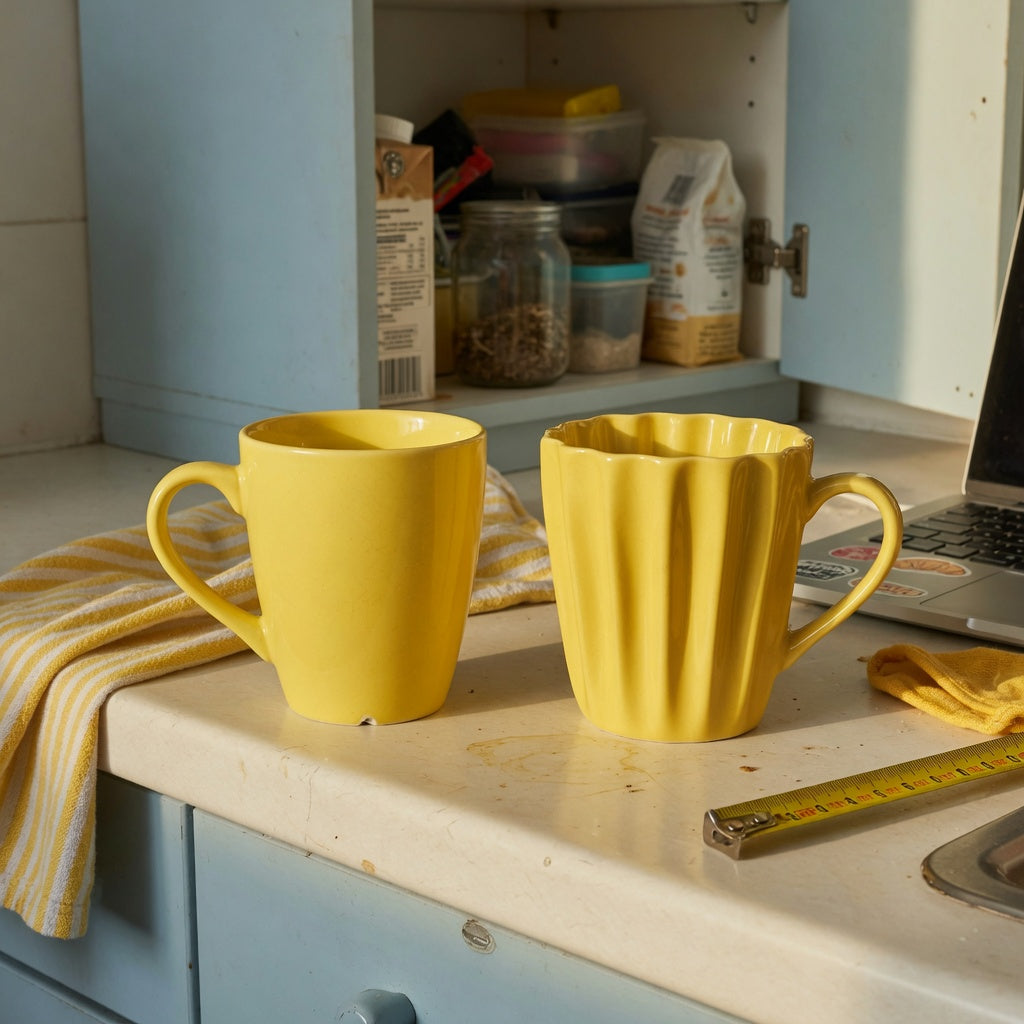
At 7:15 a.m., a shared upper cabinet can turn one missing mug into a small household dispute. One roommate wants a short coffee before leaving; another is looking for a cup that is still clean for tea. A yellow cup can be easy to spot beside the sink, but color does not tell you if its capacity or silhouette suits the cabinet. That is the practical problem behind this yellow ceramic coffee mug shared household practical purchase checklist.
We handle ceramic coffee and tea cups in our store, and we see the same buying error: shoppers choose a color first, then discover that the cup is too small for one user or awkward beside the mugs already on the shelf. For this comparison, we stay with the facts recorded for CoffeifyMug's yellow Retro and Pleated listings: ceramic construction, listed capacity, visible form, compact-use trade-offs, and Yellow variant status. Exact outside dimensions, microwave safety, dishwasher safety, and espresso-machine fit are not established here.
Use the checklist as a short household decision. Match the listed milliliters to real pours, match the visible form to the cabinet, and confirm the live variant before ordering.
What does a yellow mug solve when several people share one cabinet?
Yellow can work as a visual ownership cue. On a crowded kitchen counter or in a sink with several neutral cups, a bright color may help someone identify the cup they meant to use without moving every item. That can reduce searching, but it does not solve a capacity mismatch, a cramped shelf, or an unclear care routine.
- Shared weekday mornings: a visible color helps separate cups when one person is rinsing and another is pouring.
- Shared office desks: yellow can be easier to recognize at a communal sink or beside a laptop, but the smaller listed capacities may mean more refills during a long work block.
- Housewarming gifts: the color makes the choice feel deliberate at unboxing, yet the recipient's normal drink size and cupboard space still decide if it becomes a daily cup.
In our experience, the color question is easiest after everyone agrees on its job: identification, a coordinated look, or a gift preference. Treat that choice separately from the measurable capacity and storage questions.
Which listed capacity matches each person's normal pour?
The clearest verified difference is capacity. The Retro coffee tea cup is listed at 170 ml; the Pleated coffee tea cup is listed at 200 ml. The gap is 30 ml. That difference is modest on paper, but in a two-person morning routine it can decide who needs a refill immediately.
| Style | Listed capacity | Likely household fit | Trade-off |
|---|---|---|---|
| Retro | 170 ml | A shorter coffee or tea serving, or a user who prefers several small rounds | Less margin for a larger pour or an ice-heavy drink |
| Pleated | 200 ml | A user who wants modestly more liquid before the next refill | Still a compact choice, not a natural match for an oversized drink |
Use the listed number as a serving comparison, not as an external measurement. Capacity does not tell you the rim diameter, handle projection, wall thickness, or exact clearance needed in a cupboard. If one household member regularly makes a large travel-style drink, neither option should be selected just because the yellow color is right.
Iced coffee needs another check: ice occupies part of the available space. A person who wants a substantial ice-filled drink should compare larger capacities in another listing instead of treating 170 ml or 200 ml as a flexible large mug.
How do the Retro and Pleated forms change shelf planning?
Capacity is only the inside number. The Retro has a cleaner, more traditional visible silhouette. The Pleated shows distinct folds along the body. Those visible differences are useful for comparing style and compact use, but the verified source for this article does not provide exact external width, depth, height, handle projection, or stackability for either option.
For a narrow cabinet gap, the Retro is the sensible first page to inspect because its simpler outline presents fewer contours to negotiate. That is a storage preference, not a measured promise. The Pleated can make more sense for a shopper who wants a more textured-looking form and has clearance around the widest part of the cup.
- Measure clear shelf depth from the back wall to the front edge.
- Measure the open width between neighboring mugs, including the handle area.
- Check vertical clearance under the cabinet lip and above the shelf.
- If the live listing provides dimensions, compare them with those measurements; do not estimate size from a lifestyle photograph.
If the Retro product page matches the available space, it is the direct next step for a tighter shelf. If the folds and 200 ml listing fit the household better, inspect the Pleated listing instead. Neither choice should be made from color alone.
How can you verify yellow availability without assuming a set?
Our catalog check recorded on August 12, 2026 showed active Yellow variants for both the Retro and Pleated listings. That is a dated catalog observation, not a guarantee of inventory at checkout or a promise that color options will remain unchanged. Open the live variant selector before paying.
The two cups have separate product pages, so do not read this comparison as a bundled roommate set. If several people need cups, confirm the selected color and quantity for each product page in the cart. If Yellow is listed for one style but not the other on the day you order, use the actual availability alongside capacity and shelf fit rather than planning around a future matching restock.
What ceramic checks matter at delivery and after the first wash?
Ceramic is the material category for these cups, but the material label does not replace an inspection. At gift unboxing or delivery, our team checks the points most likely to reveal shipping damage or a finish problem. These are condition checks, not claims that either yellow listing has a defect.
- Rim: inspect under a bright side light for chips, hairline cracks, or a sharp uneven edge.
- Handle-to-body junction: look for a visible crack, separation, or rough area that could catch a finger.
- Interior surface: check for flakes, pinholes, or fine crazing in the finish before the cup enters a communal rotation.
- Foot ring: set the cup on a flat counter and check for a rough contact point or damage that could mark the surface.
If your household depends on dishwasher cycles, find explicit dishwasher guidance on the live product page before ordering. The evidence for this comparison does not establish dishwasher safety or microwave safety, and ceramic alone is not enough reason to infer either. We also do not claim espresso-machine fit, certified drink performance, or temperature limits from the listed capacity.
After the first wash permitted by the product instructions, inspect the rim and handle again before returning the cup to the shared shelf. A clear care instruction is part of a good purchase decision; if it is missing, ask the store rather than guessing from the material.
When is a different shape a better shared-household purchase?
These yellow options are compact cups with listed capacities of 170 ml and 200 ml. They are not good choices for every shared routine. A different shape is the better next step in any of these situations:
- Large or ice-heavy drinks: if someone expects a substantial iced coffee, large hot chocolate, or repeated top-ups, compare larger capacities in the unique coffee mugs collection.
- Stack-first storage: if the cabinet only works with deep nesting or confirmed stackability, choose a listing that states or clearly shows that arrangement; do not assume either visible form will nest securely.
- Stability-first counters: if a wide base is a requirement near a busy sink or office keyboard, compare the actual base shape and dimensions of another listing before choosing yellow.
- Documented care or machine fit: if dishwasher, microwave, or espresso-machine compatibility is non-negotiable, select a product page that gives the specific information you need rather than inferring it from this comparison.
The collection is a comparison route, not a guarantee that every mug there shares Yellow availability, capacity, or care instructions. Read each listing on its own.
Yellow ceramic coffee mug shared household practical purchase checklist: the cabinet test
Before ordering, put the actual household constraints on one note. This keeps a bright color from hiding a practical mismatch.
- Measure a normal serving. Ask each regular user to pour the drink they actually make, including ice if applicable, and record the approximate milliliters.
- Match the number. Start with the Retro at 170 ml for the shorter-serving user; consider the Pleated at 200 ml for the person who wants modestly more room. Use the live product pages to confirm the listing has not changed.
- Measure the parking place. Check shelf depth, clear width, vertical opening, and handle clearance. A capacity number cannot answer those external measurements.
- Choose the visible form. Favor the cleaner Retro outline when tight clearance is the main concern; favor the Pleated folds when visual texture matters and the widest point has room.
- Verify Yellow at checkout. Re-select the color on the live page and confirm quantity. Treat the two links as separate listings, not as proof of a matching set.
- Set the care rule. If the household uses a dishwasher or microwave, verify explicit instructions before purchase. Ceramic is not a substitute for care information.
- Inspect before communal use. At unboxing, check the rim, handle junction, interior finish, and foot ring; set aside anything chipped or cracked.
- Change direction if one test fails. If the capacity, clearance, or care documentation is wrong, use the unique coffee mugs collection to compare another shape instead of hoping the mismatch will disappear.
That sequence gives each shopper a clear reason to choose Retro, Pleated, or another listing. It also leaves room for different serving preferences without presenting one yellow style as a universal household answer.
Frequently asked questions
Is the 170 ml Retro or 200 ml Pleated better for roommates?
Retro is the closer match for a person who normally makes a shorter coffee or tea serving. Pleated gives 30 ml more listed capacity for someone who wants modestly more room. Let the household's actual pour and shelf clearance decide; neither is a large-volume option.
What should I check in a yellow ceramic coffee mug shared household practical purchase checklist before ordering?
Record each user's normal serving, measure the cabinet space, compare the Retro and Pleated silhouettes, and confirm Yellow on the live product page. Then verify the care information your household requires and inspect the cup at unboxing.
Are the yellow Retro and Pleated cups sold as a roommate set?
The comparison uses two separate product pages, one for Retro and one for Pleated. The available evidence does not establish a bundled roommate set, so review the quantity and variant details shown for the listing you choose.
Does the Pleated form require more cabinet clearance than the Retro?
The Pleated has visible folds, while Retro has a cleaner silhouette, so the widest part and neighboring handles deserve attention. We do not have verified external measurements or a stackability claim in this comparison, so measure your shelf and check any dimensions shown on the live page.
Are these yellow ceramic mugs microwave-safe or dishwasher-safe?
The available evidence does not establish either safety claim. Check the live product instructions or ask CoffeifyMug before relying on a dishwasher cycle or microwave routine; do not infer care suitability from the word ceramic.
Take one normal serving measurement and three cabinet measurements before opening a product page. Then compare the Retro listing and Pleated listing; if either capacity, clearance, or care information fails your household's test, continue to the unique coffee mugs collection and choose a listing whose facts you can verify.
More from our blog
Read more
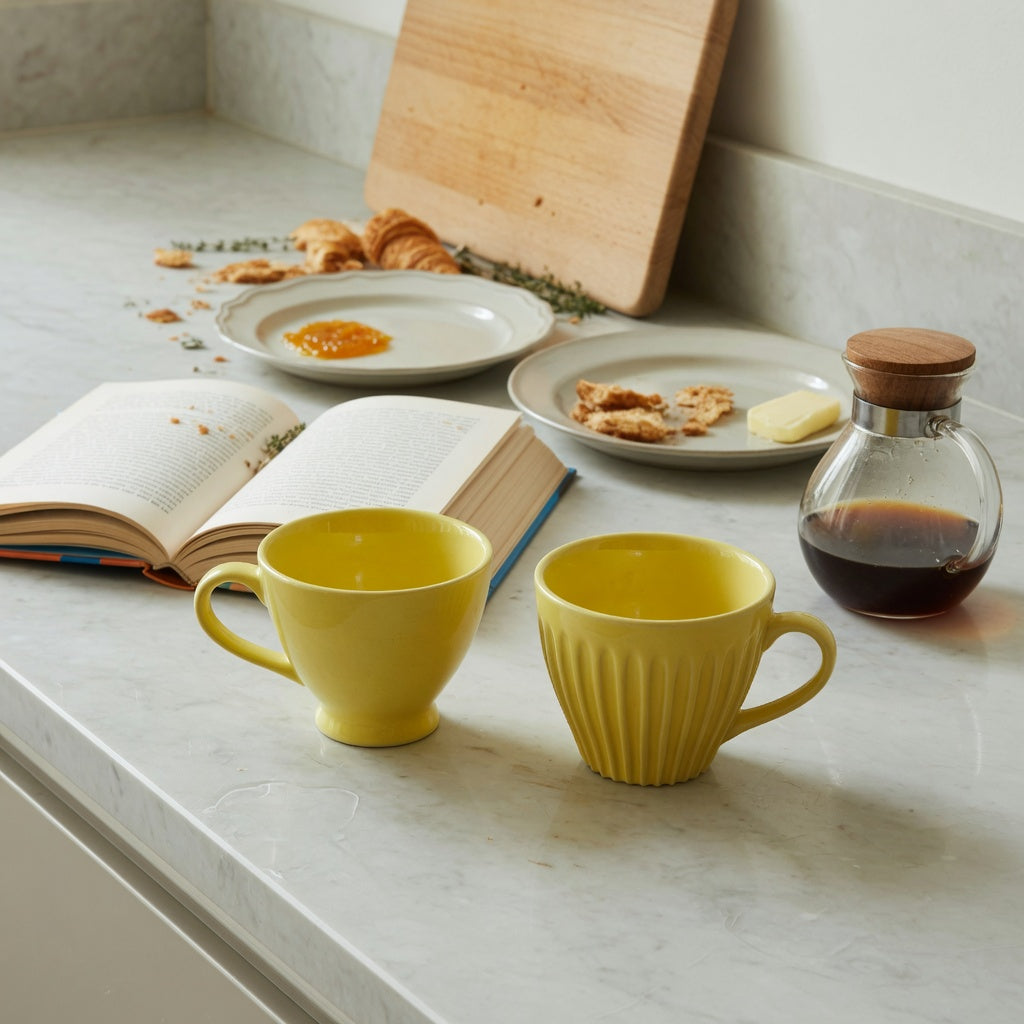
Yellow ceramic coffee mug weekend coffee practical purchase checklist
Compare CoffeifyMug's listed yellow Retro (170 ml) and Pleated (200 ml) ceramic cups for slower weekend coffee. This checklist covers visible form, compact-use trade-offs, care checks, color status...
Read more
yellow ceramic coffee mug home office product shortlist guide
Compare CoffeifyMug's listed 170 ml Retro and 200 ml Pleated yellow ceramic coffee cups for home-office meetings, desk space, breaks, gifting, and care questions. This scenario-based shortlist expl...
Read more
Leave a comment
This site is protected by hCaptcha and the hCaptcha Privacy Policy and Terms of Service apply.