
Yellow Ceramic Coffee Mug Capacity Guide: 170 ml vs 200 ml
Reading time: about 10 minutes
A normal-looking mug can disappoint on the first pour if the buyer expected a large breakfast coffee and the cup was designed for a compact serving. This yellow ceramic coffee mug capacity guide focuses on the two current Yellow variants we can verify in our store: the Retro at a listed 170 ml and the Pleated at a listed 200 ml. The goal is to match those published capacities to your actual pour, refill pattern, desk or kitchen setup, and gift recipient before you order.
From handling and selling compact ceramic cups, we know that listed capacity and comfortable working capacity are not always treated the same way by shoppers. Milk, a tea bag or infuser, and ordinary spill headroom all use part of the available space. We have not assigned a separate comfortable-fill volume to either product, so this comparison does not invent one. It also does not claim espresso-machine clearance, certified heat performance, microwave safety, or dishwasher safety.
Yellow ceramic coffee mug capacity guide: what changes between 170 ml and 200 ml?
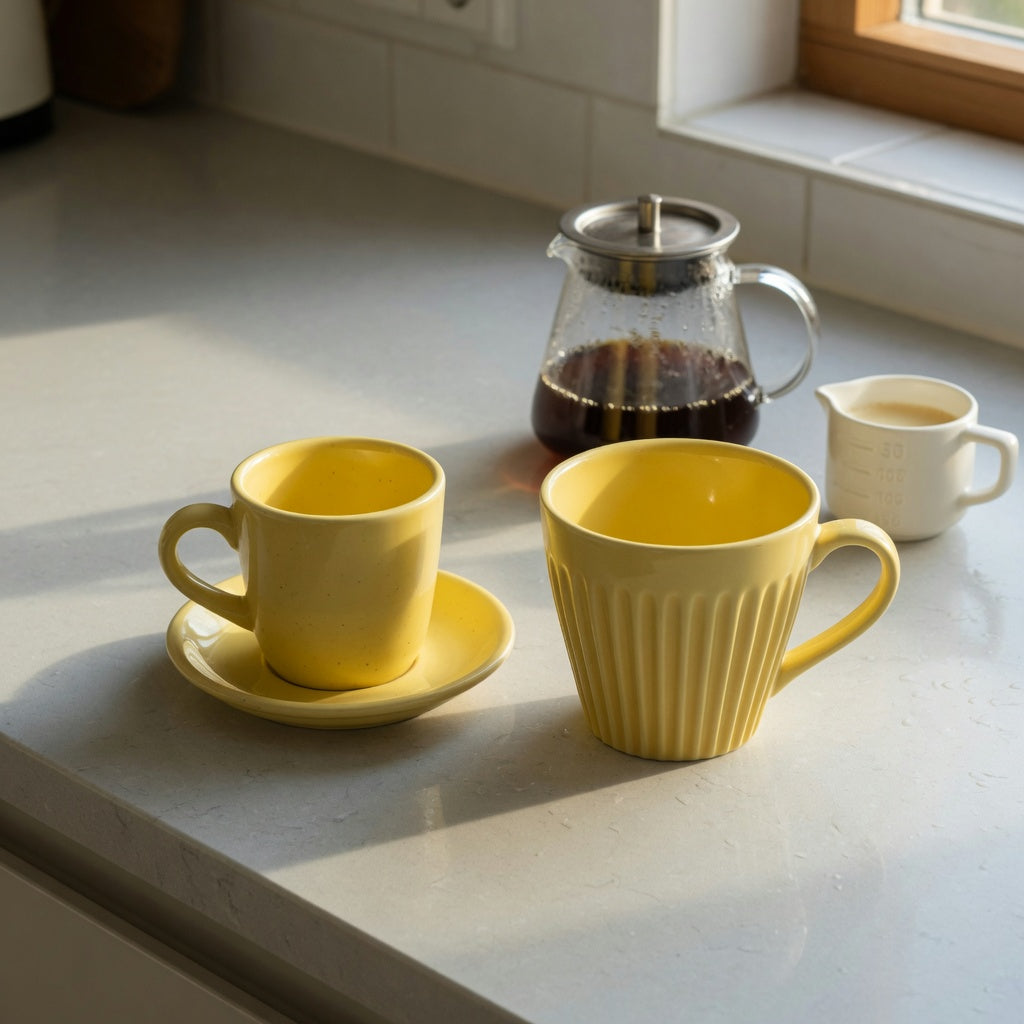
The yellow Retro coffee tea cup is listed at 170 ml. The yellow Pleated coffee tea cup is listed at 200 ml. Both are ceramic, and both Yellow variants were active in our catalog when this guide was prepared. Live inventory can change, so the product page remains the place to confirm availability before checkout.
| Buyer variable | Retro | Pleated |
|---|---|---|
| Listed capacity | 170 ml | 200 ml |
| Capacity difference | Baseline option | 30 ml more |
| Visible style | Retro form | Pleated exterior |
| Best capacity match | Smaller measured pours | Pours that need extra room |
| Current color in this comparison | Yellow variant listed | Yellow variant listed |
The 30 ml difference matters most if your drink is already close to the smaller mug's limit. For example, a measured 150 ml finished drink sits within both listed capacities. On paper, it leaves 20 ml in the Retro and 50 ml in the Pleated, although neither figure should be treated as a prescribed fill line. A 180 ml finished drink exceeds the Retro's listed capacity and leaves only 20 ml against the Pleated's listed maximum, which may still feel tight if you need carrying room.
If both options are smaller than your normal drink, browse our unique coffee mugs collection for other listed capacities and forms. Choosing a larger mug is more practical than repeatedly overfilling a compact one.
Which yellow mug fits a short coffee or tea routine?
The smaller option makes sense when the serving itself is intentionally compact. It should not be chosen simply because the mug looks neat in a product photo. Measure the finished drink you already make, including milk or other additions, and compare that total with the listed capacity.
- Small measured coffee or tea pour: Choose the 170 ml yellow Retro cup if your finished drink remains comfortably below 170 ml and you like returning for smaller refills.
- Compact drink with added milk: Consider the 200 ml yellow Pleated cup when the extra 30 ml gives your usual addition more room.
- Drink near or above 200 ml: Skip both compact options and compare larger capacities in the collection instead.
Tea drinkers should account for their own brewing setup. A tea bag or separate infuser occupies some room, and lifting it from a mug filled close to the rim can cause drips. We do not prescribe a brewing ratio here, but if your established method already uses around 200 ml of water before allowing headroom, the 170 ml option is not a practical match.
For a gift, capacity deserves the same attention as color. A recipient who uses small servings may appreciate the 170 ml Retro, while someone who adds milk or stays in longer meetings may get more use from the 200 ml Pleated. Sharing the listed capacity with the recipient is more reliable than guessing from the mug's appearance.
Will an extra 30 ml change office refill patterns?
It can, but the effect depends on the total amount consumed during the work block. If a person plans to drink 400 ml over a morning and could use the full listed capacities, two 200 ml fills equal that total. Two 170 ml fills equal 340 ml, leaving another 60 ml to pour. Real fills are often lower because people leave room below the rim, so this arithmetic is directional rather than a promise of an exact refill count.
The 200 ml Pleated is the more logical choice if you are regularly near the 170 ml boundary and want a little more time between kitchen trips. The advantage is modest. It will not turn a compact cup into an all-morning mug, and it may not remove a refill if your total drink volume is well above 200 ml.
Refill habits also matter. Some people refresh their drink at every scheduled break regardless of how much remains. For that routine, the smaller Retro can fit just as well because the refill timing is controlled by the schedule, not the capacity. Use this quick check:
- Measure one normal finished drink in milliliters.
- Include milk or other additions in that total.
- Record how much you usually drink between breaks.
- Leave carrying headroom rather than planning to fill to the rim.
- Choose 200 ml only if the extra 30 ml solves a real shortfall.
How do the Retro and Pleated forms affect compact placement?
Capacity alone does not tell you a mug's exterior dimensions. Ceramic cups with similar capacities can differ in wall shape, rim width, handle projection, base size, and height. A 170 ml listing therefore does not guarantee the smallest cabinet footprint, and a 200 ml listing does not confirm clearance below a shelf or appliance.
The two products are visibly different. The Pleated cup has a more textured, dimensional exterior, while the Retro cup presents a contrasting retro-style form. That visual distinction may matter on an open kitchen shelf or a desk where the mug remains in view, but it should not replace a physical space check.
- Crowded office desk: Mark out the space beside your keyboard, notebook, and charging cables, then review the current product imagery and any live dimensions before ordering.
- Low kitchen shelf: Measure the available height and depth. Do not infer shelf fit from milliliters.
- Gift box or unboxing: Confirm the listed capacity so the recipient understands that both are compact cups, not large-format mugs.
We also do not use these capacity figures to claim cup-holder, travel-lid, stacking, or espresso-machine compatibility. Buyers who need one of those specific fits should verify it separately rather than relying on the 170 ml or 200 ml label.
How much room do milk, tea accessories, and ice require?
There is no universal headroom number because people carry mugs differently and add different amounts. The most dependable approach is to reproduce your normal drink in a measuring jug. Measure the coffee or tea first, add the milk you actually use, and note the finished total before comparing it with either mug.
- Black coffee or plain tea: Base the decision on the measured liquid plus enough room for comfortable carrying.
- Coffee with milk: Compare the finished drink, not only the initial coffee pour. The Pleated's extra 30 ml may prevent the addition from pushing the drink too close to the listed limit.
- Tea with a separate infuser: Allow for the accessory to displace liquid and for space to remove it without spilling.
- Iced coffee: Ice occupies a substantial part of a compact cup. Neither listed capacity is a strong fit for a large iced drink with plenty of ice and milk.
This is where the 200 ml option earns its place. It offers more flexibility than 170 ml, but only within a compact serving range. Shoppers who routinely build layered, iced, or heavily milked drinks are usually better served by a larger listed capacity.
What should buyers not assume about these ceramic mugs?
Both products are ceramic, but material alone does not establish every care or performance claim. This article does not confirm microwave or dishwasher suitability, and it does not make promises about heat retention. Check the current product page for any care guidance available at the time you order.
At unboxing, inspect the ceramic body, rim, and handle before first use. A chip at the drinking edge or a crack around the handle is a reason to stop and contact our store. For routine handling, avoid knocking ceramic against a sink, faucet, or another mug, since impact is a common cause of chips regardless of cup style.
The active Yellow variant status used for this comparison is not a guarantee of permanent inventory. Confirm the selected color and current availability on the live product page before checkout.
Neither option is intended here as a travel tumbler, oversized breakfast mug, or one-fill solution for a long work session. If any of those describes your routine, a different style and capacity will suit you better.
Who should choose the 170 ml Retro or 200 ml Pleated?
Choose the 170 ml Retro if your measured finished drink stays below its listed capacity with the headroom you prefer, you intentionally use smaller servings, and the Retro form fits your visual preference. It is also the more direct choice for someone who likes brief coffee or tea breaks and does not mind refilling.
Choose the 200 ml Pleated if your normal drink is too close to 170 ml, you add milk, or a 30 ml buffer could make carrying and sipping more comfortable. Its pleated exterior also gives it a visibly different presence, so it fits buyers who want texture as well as the larger of the two listed capacities.
Skip both if your finished drink exceeds 200 ml, you use a large amount of ice, or you require a verified appliance, lid, or holder fit. The yellow ceramic coffee mug capacity guide is meant to narrow a real capacity decision, not persuade you to accept a cup that is too small for your routine.
Five checks to make before ordering
- Measure your normal finished coffee or tea, including milk.
- Decide how much room you prefer below the rim for carrying.
- Compare 170 ml with 200 ml and ask whether 30 ml changes the fit.
- Measure your desk or shelf instead of using capacity as a size estimate.
- Open the live product page to confirm Yellow availability and current care details.
If your answers point to a compact, intentionally small serving, start with the Retro. If they point to a little more room without moving out of the compact category, compare the Pleated. If neither capacity clears your measured total, move directly to the collection rather than forcing the smaller option.
Frequently asked questions
Is a 200 ml yellow mug much bigger than a 170 ml mug?
The listed difference is 30 ml. That can be useful for milk, headroom, or a slightly larger pour, but it does not make the 200 ml Pleated a large-format mug. The difference matters most when your finished drink is already close to 170 ml.
Which current yellow ceramic mug is better for coffee with milk?
The 200 ml Pleated is usually the better capacity candidate if your coffee plus milk would sit close to or above 170 ml. Measure the finished drink before ordering, since even 200 ml may be tight if you use a generous amount of milk and want carrying room.
What does this yellow ceramic coffee mug capacity guide recommend for an office desk?
Choose the 170 ml Retro for a measured small pour and planned refill breaks. Choose the 200 ml Pleated if the extra 30 ml could delay a refill or accommodate milk. Check the physical desk space separately because listed capacity does not confirm exterior dimensions.
Are the Retro and Pleated yellow ceramic mugs microwave or dishwasher safe?
This guide does not make either claim. Review the live product page for current care information, and do not assume appliance compatibility from the ceramic material alone. Contact our store before ordering if a specific care method is essential to your decision.
Should I skip both yellow mugs if I usually drink more than 200 ml?
Yes, especially if you want the full drink in one pour or regularly add ice. Start with the current unique coffee mug collection, compare the listed capacities with your measured drink, and choose a form that leaves practical room below the rim.
More from our blog
Read more
Pink Ceramic Coffee Mug Shape and Handle Guide: 3 Current Options
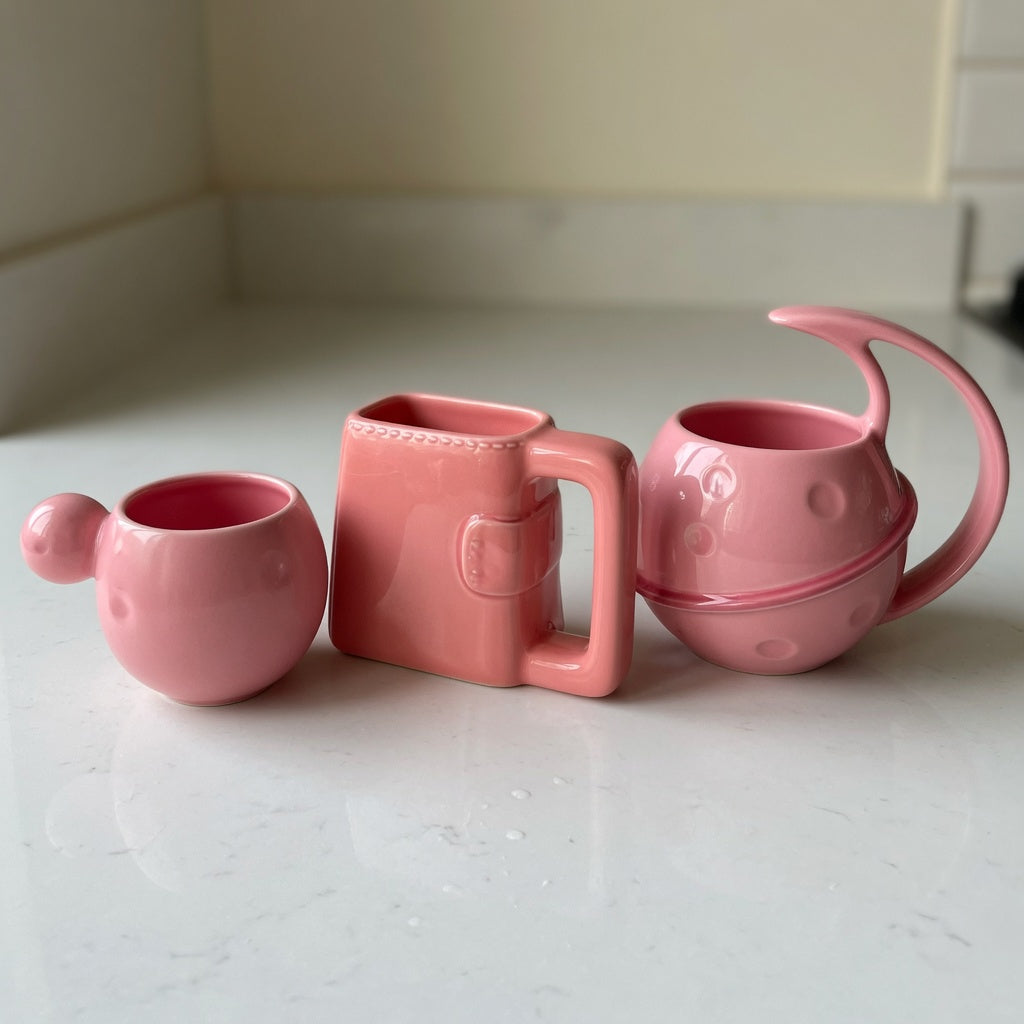
Compare CoffeifyMug's three current pink ceramic options by listed capacity, visible silhouette, and handle form: Ball Handle 250 ml, Handbag 310 ml, and Planet 380 ml. Use the scenario-based short...
Read more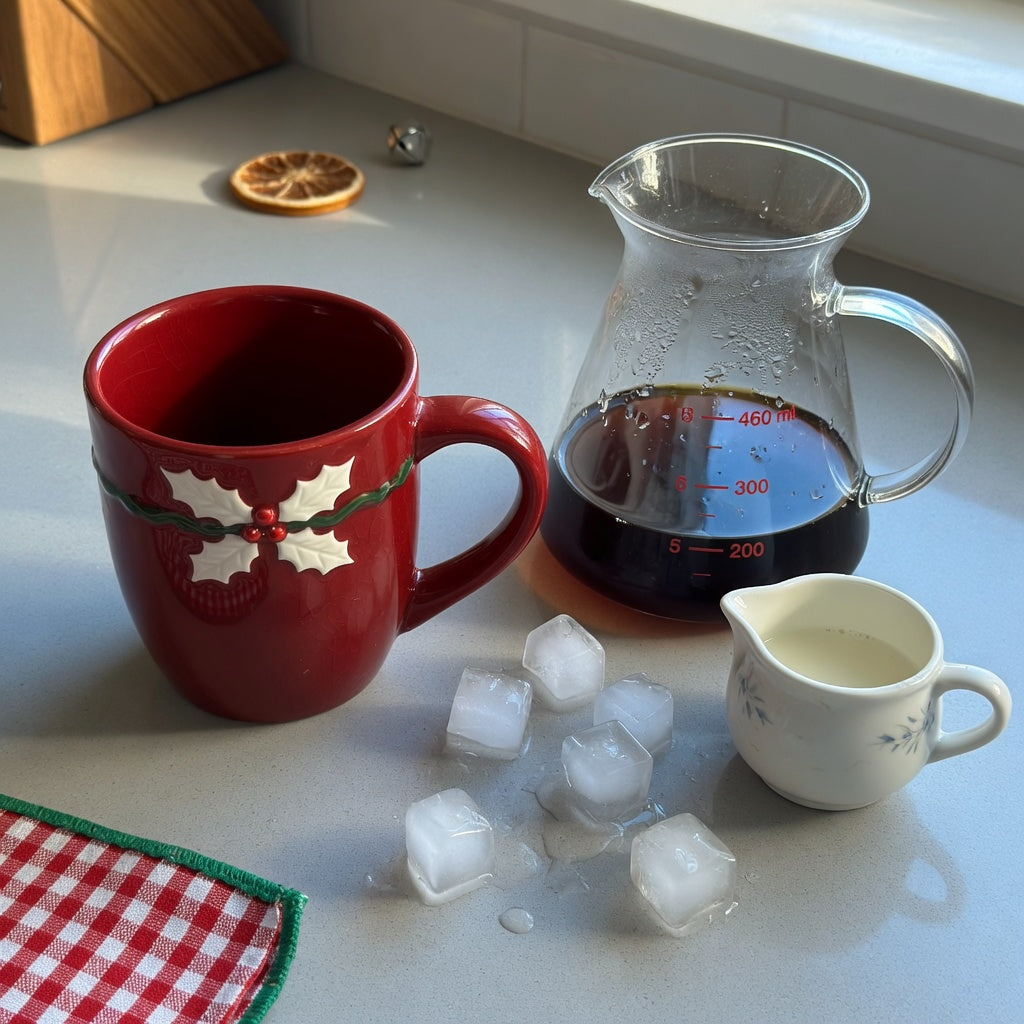
Red Ceramic Coffee Mug Capacity Guide: Is 460 ml Right?
The current Red variant is ceramic and listed at 460 ml, about 15.6 US fl oz. Compare that capacity with milk, ice, refill habits, seasonal styling, and care limits before choosing it.
Read more
Leave a comment
This site is protected by hCaptcha and the hCaptcha Privacy Policy and Terms of Service apply.