



Unique Tea Mug for Home Decor: What to Compare Before Buying
Reading time: about 10 minutes
A customer sent us two photos last month. In the first, her new mug looked terrific on an open shelf beside a tin of oolong. In the second, the same mug had a brown tea ring creeping across its unglazed foot. She had bought it for the shelf, poured into it every morning, and never turned it over. That gap between looking right and working right is the entire decision with a unique tea mug for home decor. The piece has two jobs — hold hot tea comfortably and read as an object you chose on purpose — and those jobs pull against each other more often than listings admit.
What follows is the sequence we use in our own store when a new piece lands on the sample shelf.
Is a unique tea mug for home decor drinkware or display-only?
Turn the mug upside down before you fall for the glaze. That is step one, and it settles more questions than any styled photo.
FDA's compliance guide for pottery and ceramics (CPG Sec. 545.450) describes cups and mugs as small ceramic hollowware used for hot beverages such as coffee or tea, normally — though not exclusively — around 240 mL (8 fl oz), and manufactured with a handle. That is the reference shape for a hot-tea vessel, not a guarantee that a heavily decorated mug was built to that size or intended for daily pouring.
The labeling rule is the practical test. Under 21 CFR 109.16, ceramicware that appears suitable for food use is treated as food use unless it carries both a conspicuous stick-on warning and a permanent version of that warning on the exterior base, or has a hole bored through the potential food-contact surface. A removable label on the packaging does not meet that bar. So: permanent marking on the base, or treat the piece as decorative and nothing more.
Keep a real listing open while you read this. Our Ball Handled Coffee Tea Mug puts the handle at the center of the silhouette — the sort of piece that earns a spot on a shelf rather than disappearing into a cabinet. Set it beside the wider unique coffee mugs collection to see how much shape variation exists in the category. We deliberately do not restate material, capacity, or care details in this article, because the current product page and the base of the mug are the authority, and listings do change.
What does a “lead free” sticker actually prove on handmade pottery?
Less than most shoppers hope. FDA states there is no known safe level of exposure to lead, and lead used in pottery glazes can leach into food and drink. For ceramic cups and mugs, FDA's action level under CPG Sec. 545.450 is 0.5 micrograms of lead per milliliter of leaching solution.
Firing is where this stops being abstract. Lead may be present in glazes or decorations on traditional pottery, and if the ware is not fired at the proper temperature for the proper time, that lead may not fuse into the glaze and can contaminate what you drink. Fired correctly, essentially all of it binds into the glaze. No home process fixes a bad firing — washing, boiling, and scrubbing cannot remove lead from pottery.
FDA has also reported traditional pottery labeled “lead free” that contained extractable lead comparable to lead-glazed ware, and in some cases above action levels for ceramic tableware. That is why we ask makers for two things: the food-contact glaze statement and the firing details. A phrase on a box is not either of those.
FDA's consumer guidance flags particular categories for extra care — handmade pottery with a crude or irregular shape, antique pieces, damaged or excessively worn pieces, flea-market and street-vendor buys, and bright orange, red, or yellow decoration. Commercially made everyday pottery is described as much less likely to have a lead problem. A home swab kit can flag a concern, but it is not a clearance certificate for glazed drinkware.
And if the glaze is chipped, crazed, or worn, stop pouring hot tea into it until the maker confirms the piece is still suitable. Crazing — the fine web of cracks across a glaze — is the defect we see most often on decorative mugs that quietly became daily drivers.
Stoneware, porcelain, earthenware, or glass: which body survives your shelf?
Body material drives weight, how the glaze reads in daylight, and how much attention the mug demands. Use the listing to confirm the actual body, firing, and food-contact glaze rather than inferring from the product name.
| Body | What we notice in a decor mug | What to confirm on the listing |
|---|---|---|
| Stoneware | Often heavier and opaque, with room for matte and reactive glazes. Two pieces from one run can differ in tone and speckling. | Firing details, food-contact glaze statement, empty versus full weight, dishwasher and microwave guidance. |
| Porcelain | Finer-walled and smoother, with a crisp look on open shelving and less visual weight. | Chip resistance, usable capacity, whether metallic trim is applied, hand-wash requirements. |
| Earthenware | Warm and rustic, and usually more porous unless the body is fully glazed. | Whether the glaze covers all food-contact surfaces, crazing guidance, hand-wash requirements. |
| Glass | Shows the tea liquor, which is half the appeal for oolong and green tea drinkers, and looks light on a shelf. | Thermal-shock instructions for hot pours, whether an infuser or lid is included, staining care. |
Where the ball-handled mug fits: the handle is the visual event, so it suits someone who wants the mug itself to be the decor detail on a coffee bar or open shelf. It is a poor fit if your priority is tight cabinet stacking, a plain silhouette you can replace without thinking, or a mug that vanishes into a matched row. Read the current listing for the details that decide it for you. For a broader material and style comparison, our guide to unique coffee mugs for home decor lovers digs into silhouettes and finishes.
Will a sculptural mug pour short? Capacity, handle clearance, and infuser math
Listed capacity is not usable capacity. A mug advertised at 16 ounces will not hand you 16 ounces of drinkable tea once thick walls, a rounded base, an infuser basket, and a splash of milk take their share. Sculptural forms are the worst offenders, because the outside looks generous while the interior drinks smaller.
Handle geometry decides whether you actually reach for it. A ball or looped handle can look beautiful empty and crowd your knuckles when the mug is full and hot. Three questions worth answering before checkout:
- Can two fingers pass through the opening without scraping?
- Is there a comfortable spot for your thumb, or does it land on a slick glazed shoulder?
- Does the base feel planted when you set it down full, or does a tall narrow profile make it feel tippy on a soft shelf liner?
Loose-leaf drinkers should also confirm whether an infuser basket and lid are included rather than assuming from a photo where a lid happens to appear. Removing a wet basket mid-steep changes how the mug behaves on the shelf, too.
Are dishwasher, microwave, and metallic trim the same answer?
No, and treating them as one question is where most of our post-purchase questions come from.
- Dishwasher: heat, detergent, and crowding dull metallic accents, wear decals, and chip rims. “Ceramic” on a listing says nothing about rack safety.
- Microwave: gold trim, metallic luster, and painted metallic accents stay out unless the maker explicitly permits it. Arcing damage may not show until the next use.
- Crazing: that fine crackle is a care signal. Ask the maker whether the piece is still appropriate for hot tea and how to clean it.
- Tea staining: rinse soon after use. A baking soda and water paste is a common household step for stained interiors, but keep it off metallic trim and unglazed surfaces unless the maker approves.
When general advice conflicts with the maker's instructions, follow the maker. Hand-wash only is not a flaw — it is a mug that belongs to a different routine than yours.
One hero mug or a matched pair? Kiln variation decides it
One standout mug is the safer decor purchase. Reactive glazes and handmade forms vary in tone, speckling, and profile from piece to piece, and that variation is the reason many people buy them. A matched set is a different promise entirely. If you need two mugs that read as a pair, ask whether they came from the same batch and request a photo of the actual pieces. Do not assume “set” in a title means “identical.”
For gifting, one mug plus a short care card is easier to get right than a pair that arrives with visible differences. If the mug is destined for a two-person coffee bar, browse the collection first and check what else shares the same glaze family. Our Christmas coffee and tea mug gift guide is seasonal, but the matching logic in it applies year-round.
How do you display it without shelf rings and rim chips?
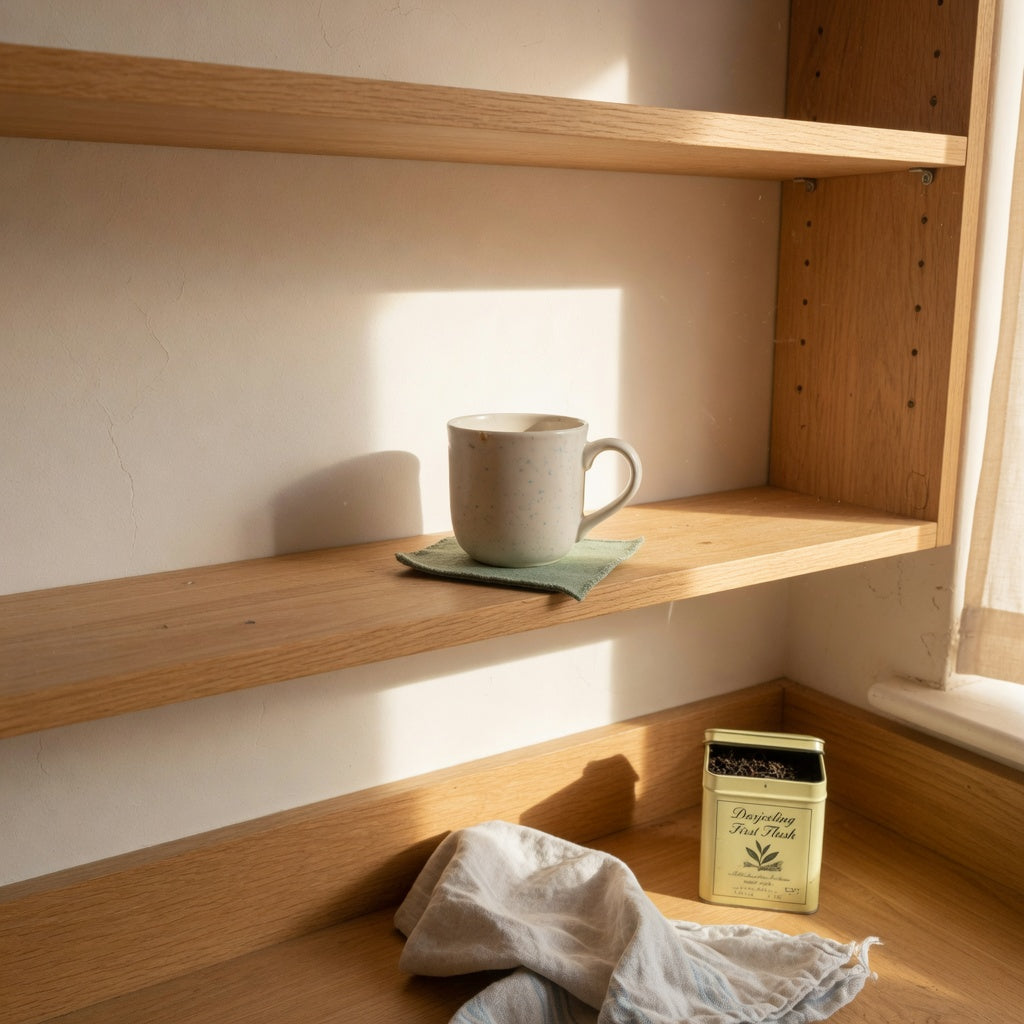
The unglazed foot ring is the usual culprit. It can be mildly abrasive against painted wood, open shelving, and stone counters. Felt pads, cork liner, or a small coaster under each mug reduce scuffing and stop the piece sliding when you reach past it. Avoid stacking heavy mugs rim to rim; if you must stack, put a felt or paper barrier between rims. And do not hang a heavy mug from a delicate handle just because the handle looks like a hook.
Placement matters. An open shelf beside the stove collects a film of steam and cooking grease, so wipe both mug and shelf regularly. Rotate any piece that faces window light for months on end. Leave breathing room, too — a crowded shelf with a wide ball handle catching on its neighbor is exactly where chips happen.
For the full pre-purchase sequence, our six checks before buying a ceramic tea mug goes deeper on glaze and handling questions.
Frequently asked questions
Is a unique tea mug for home decor safe for daily hot tea?
Only if the listing identifies it as food-contact drinkware and gives care instructions you can follow. Check the base for a permanent “Not for Food Use” marking; under FDA rules that marking plus a conspicuous warning means the piece should stay decorative. If the maker cannot confirm a food-safe glaze and proper firing, do not pour tea into it.
Can a mug with gold trim go in the microwave?
Treat metallic luster, gold trim, and painted metallic accents as microwave-unsafe unless the maker explicitly says otherwise. Arcing and heat damage are the risks, and the damage often does not appear until the next use. Hand washing is the safer default for any metallic decoration.
How can I tell whether a handmade glaze is lead-safe?
Ask for the food-contact glaze statement and the firing information, and look for a permanent food-use marking rather than a removable sticker. FDA's action level for ceramic cups and mugs is 0.5 micrograms per milliliter under CPG Sec. 545.450, but a “lead free” label alone has not always matched test results. Chipped, crazed, or worn glazes should come out of daily rotation.
What capacity should I check before buying a decor tea mug?
Look for usable capacity, not the number in the title. FDA's reference for a cup or mug is about 240 mL (8 fl oz), while many decor mugs are sold larger; leave headroom for an infuser, a lid, and milk. If the handle is sculptural, confirm finger clearance and stability when full before you commit.
Will a handmade mug look exactly like the product photo?
Usually not exactly. Reactive glazes and handmade forms vary in tone, speckling, and profile from piece to piece, and that is part of the appeal. If you need two mugs that read as a pair, ask whether they come from the same batch before ordering.
Before you add anything to the cart, run this five-point check: permanent food-contact marking on the base, a glaze and firing answer from the maker, usable capacity rather than listed capacity, handle clearance with a full mug, and care rules that match how you actually live. Then decide whether you want one hero piece or a pair. If the ball handle is the detail you keep circling back to, open the Ball Handled Coffee Tea Mug and confirm the current listing details. If you would rather compare silhouettes first, start with the full collection of unique coffee mugs and shortlist two.
Ready to pick your mug? Two ways to save on today's order:
Ordering 1–3 mugs? Get an extra 10% off your 1st order with code 10_OFF Apply 10% Off & Shop Wooden-Handle Mugs →
Gifting 4+ mugs? Buy 3, Get the 4th Free applies automatically at checkout (no code needed; offers do not stack) · Free standard shipping (Nov pre-Christmas delivery: 15–20 calendar days US) · Free replacement if chipped in transit.
Popular mug buying guides: Ceramic Tea Cups & Infuser Mugs · Ceramic Mugs with Lids Compared · Wooden-Handle Tea Infuser Mugs Compared · Christmas & Secret Santa Mugs 2026 · Espresso & Cortado Cups Guide · Cup & Saucer Gift Sets · All 25 Mugs Spec Table · Mug Size Guide · Shipping & Promo FAQ
FIRST ORDER 10% OFF (CODE: 10_OFF) · OR BUY 3, GET THE 4TH FREE


Read more

Brunch Ceramic Mug Gift: Size, Care & Safety Checks
A brunch ceramic mug gift can become a daily favorite or a shelf prop. We compare capacity, care wording, print methods, food-contact questions, and gift packaging so you can choose a mug that surv...
Read more
Planet Mug for Coffee Lovers Home Decor: A Buyer's Comparison
A planet mug has to survive coffee, a sink, and a shelf. We compare heat-reveal, printed ceramic, stoneware, and enamel, then walk through capacity, care lines, and the planet-accuracy checks worth...
Read more
Leave a comment
This site is protected by hCaptcha and the hCaptcha Privacy Policy and Terms of Service apply.