
Unique Pottery Coffee Mugs Size Decision Guide: Small or Large?
Reading time: about 9 minutes
A mug can fit the shelf and still be wrong by 150 ml. On a crowded office desk, a 350 ml mug may be more than you want to lift and reposition all morning. During a long tea session, a 200 ml mug can mean another trip to the kettle. Our unique pottery coffee mugs size decision guide starts with that practical gap and compares the current options by how shoppers actually pour, carry, store, and gift them.
The current listings span 200-350 ml. We sell and handle this category, and in our experience the useful question is not which capacity is universally better. It is where the mug will sit, how much you normally pour, and how often you are willing to refill it. The capacities and designs discussed below come from the product listings; the use-case advice is general buying guidance rather than a promise about heat retention or drink performance.
Unique pottery coffee mugs size decision guide: what changes from 200 ml to 350 ml?
The difference between the two ends of this range is 150 ml. That is enough to change how the mug fits into a routine, especially once milk, ice, or other additions take up part of the available space.
A listed capacity is also not necessarily your comfortable everyday pour. Many people leave room below the rim so they can carry the mug without sloshing. Measure the amount you actually drink rather than assuming that the largest number offers the best value.
- Start near 200 ml if you make short pours, finish drinks promptly, have limited desk space, or enjoy preparing a fresh second cup.
- Choose a middle option if your routine changes between coffee and tea or if several people will share the mug.
- Move toward 350 ml if you want more room for a longer pour, milk, or ice and would rather make fewer return trips to the kitchen.
Capacity alone cannot tell you how long a drink will stay hot. Wall thickness, vessel shape, starting temperature, room conditions, and the amount poured all affect cooling. It also cannot confirm external dimensions, because two pottery mugs with similar capacities may have different wall profiles, bases, and proportions.
Is the smaller Rhombus option better for short pours and tight desks?
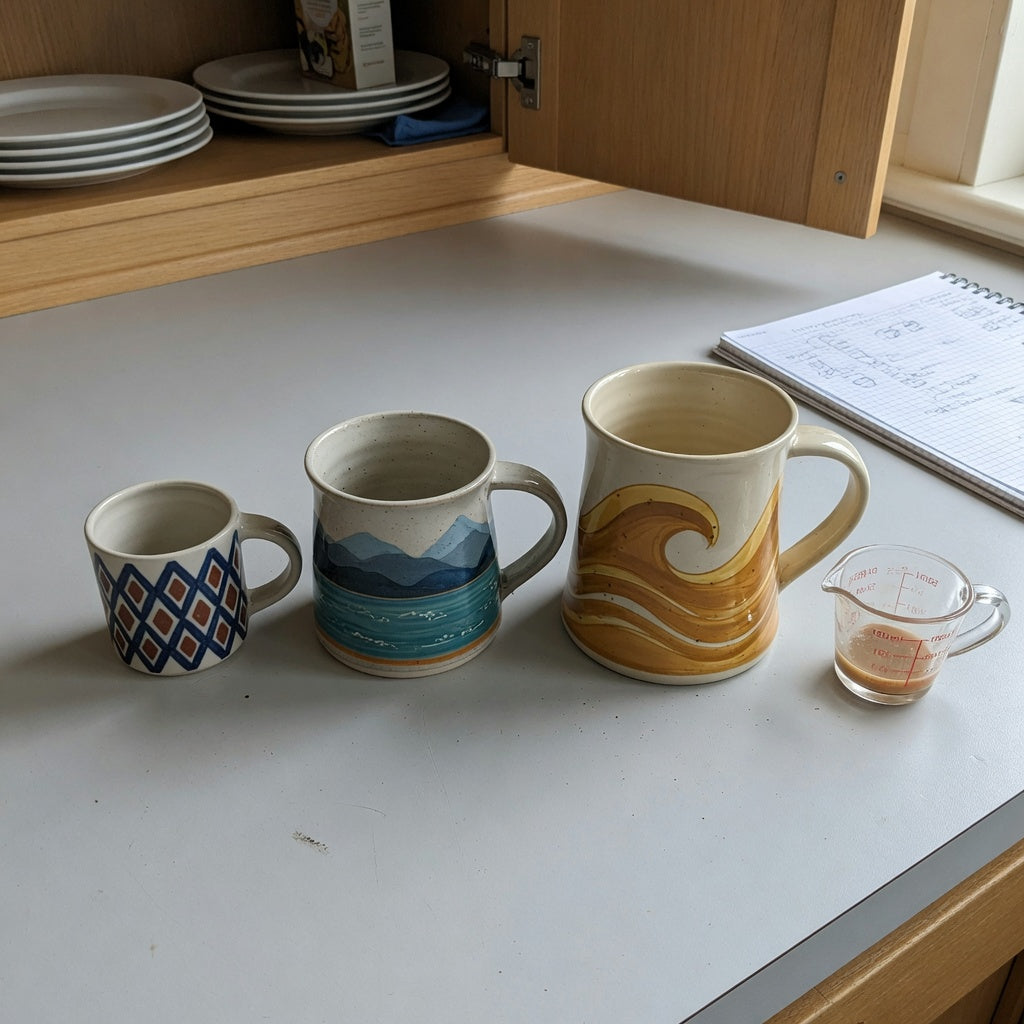
The Rhombus coffee tea mug is the first product page to open if you are leaning toward the smaller end of the current range. It makes the most practical sense for a measured morning coffee, a short tea break, or a workspace already occupied by a keyboard, notebook, phone, and charging cable.
The fit is straightforward: a smaller pour means less liquid to carry and less unfinished drink left behind if you tend to leave your desk after twenty minutes. It can also be a sensible choice for a kitchen where mugs compete with bowls, glasses, and pantry items for limited shelf space.
The trade-off is refill frequency. Rhombus is not the strongest match for someone who wants one large drink to last through a long meeting, and it gives you less spare capacity once ice or milk is added. If either of those describes your routine, compare it with the middle and larger options before ordering.
Does Mountain Sea fit a routine that changes from day to day?
The Mountain Sea coffee tea mug is the useful comparison point for shoppers who do not consistently prefer the smallest or largest pour. A middle option can work for coffee on weekday mornings, tea in the afternoon, and occasional guest use without committing to either endpoint of the 200-350 ml span.
This is also where we direct gift buyers who know the recipient likes pottery but do not know the exact capacity of their favorite mug. The middle position reduces the chance of choosing an option that feels unusually small or cumbersome. That does not make it a universal answer. Someone who only takes compact pours may still prefer Rhombus, while a person who fills a mug with ice before adding a drink may need the larger capacity.
When does Golden Waves Kio earn the larger capacity?
The Golden Waves Kio coffee tea mug is the relevant next step for shoppers considering the larger end of the current range. It suits a longer desk session, a relaxed reading chair, or a kitchen-counter routine where the mug is filled once and remains in one stable place.
The larger capacity also leaves more room for additions. Ice, milk, and other ingredients occupy part of the mug before the main drink is poured, so a smaller vessel can reach its comfortable carrying level quickly. This is a space decision, not a claim that one recipe requires a specific mug size.
More capacity also means more liquid weight when the mug is full. Golden Waves Kio is not the practical choice for everyone who carries a drink repeatedly between rooms or has a narrow shelf. If loaded weight or storage clearance is a concern, test the feel by filling a mug you already own with a similar measured volume and carrying it through your usual routine.
How do shelf clearance, loaded weight, and ice change the choice?
Milliliters are only one part of the decision. At our packing table, the questions that settle a size choice are often about the surrounding space: the cabinet shelf, the drying area beside the sink, or the small section of desk that remains clear during a video call.
- Measure your normal pour. Fill your current mug as you normally would, then transfer the drink or water into a kitchen measuring jug. Do not estimate from the mug's apparent size.
- Include your usual additions. Add milk or ice before measuring if those are part of your normal routine. Ice displaces liquid and can make a compact mug feel full sooner.
- Simulate the loaded weight. Put the same measured volume of water into a ceramic mug you already own. Lift it, carry it to your desk, and notice whether repeated one-handed use feels comfortable.
- Check the full storage envelope. Look at shelf height, base area, handle clearance, and the space needed to remove the mug without striking the one beside it.
- Confirm the current listing. Review the product page for the stated capacity, dimensions if provided, and care directions before checkout. Do not assume that all pottery mugs share the same external measurements or care requirements.
This short test is more dependable than choosing by a styled product photograph. Camera angle and surrounding props can make a mug appear larger or smaller than it is.
What should a gift buyer check before the unboxing?
For a gift, start with evidence the recipient has already given you. Look at the mug they reach for most often. Is it filled close to the rim or only halfway? Does it stay on a kitchen table, sit beside a computer, or travel around the house? Those observations reveal more than asking whether they prefer a large mug.
- Choose the smaller direction for a compact desk, short coffee breaks, and a recipient who likes making a fresh second pour.
- Choose Mountain Sea as the middle comparison when the recipient alternates between drink types or the buyer is unsure about capacity.
- Choose the larger direction for longer seated sessions, drinks with ice or milk, and a recipient who dislikes frequent refills.
Pottery mugs are not substitutes for sealed travel vessels. If the recipient needs a leak-resistant lid, a confirmed car cup-holder fit, or an insulated container intended for commuting, a different product category is the more honest recommendation.
During unboxing, inspect the rim, handle joints, and foot ring at the base before the mug is used. Any piece that arrives chipped or cracked should be set aside rather than placed into service. That inspection is particularly useful for gifts that will be wrapped again after delivery.
How should your washing routine influence mug size?
A larger mug can take more room in a drying rack or dishwasher, but capacity does not establish whether a specific piece is dishwasher or microwave compatible. Use the care directions on each current product page as the authority. Do not infer compatibility from the word pottery or from appearance alone.
If dishwasher use is stated, leave clearance around the rim and handle so the mug cannot knock against plates, cutlery, or another ceramic piece during a cycle. If machine washing is not addressed on the listing, hand washing is the conservative option. The same principle applies to microwave use: follow the product-specific direction rather than making a category-wide assumption.
Storage matters after washing, too. Do not assume that unique pottery mugs are designed to stack. A smaller mug that sits securely on your shelf may be more useful than a larger one that must be stored in an inconvenient spot.
Current pottery mug options side by side
| Current option | Position in the range | Practical starting point | Main trade-off |
|---|---|---|---|
| Rhombus | Smaller end | Short pours, compact desks, limited storage | Less room for additions and more frequent refills |
| Mountain Sea | Middle comparison | Changing routines, shared use, uncertain gift preferences | Not as compact as the smallest or as roomy as the largest |
| Golden Waves Kio | Larger end | Longer seated sessions, milk, ice, fewer refills | More liquid weight and potentially more clearance needed |
Use this table to identify the first listing to inspect, then verify the current capacity and any stated dimensions. The right result may still be a different style if your priorities are stackability, a sealed lid, or extended insulation.
Frequently asked questions
How do I use the unique pottery coffee mugs size decision guide for 200 ml versus 350 ml?
Measure your normal finished pour, including milk or ice, and compare it with the current 200-350 ml range. Choose near 200 ml if the amount fits with comfortable room below the rim. Move toward 350 ml if your measured drink needs more space or you want fewer refills.
Is a 200 ml pottery mug too small for coffee with milk?
Not necessarily. It depends on the combined amount of coffee and milk you actually use, not on a universal drink standard. Measure your normal recipe in a kitchen jug; if it leaves little carrying room in 200 ml, compare the middle or larger option.
Which current pottery mug is better for a crowded office desk?
Start with the smaller Rhombus option if desk area and repeated lifting matter most. Mountain Sea can make sense if you need more flexibility during longer work sessions. Golden Waves Kio is better reserved for a stable desk with enough room and a preference for a larger pour.
Which size makes more sense for iced coffee or tea?
The larger end gives ice more room without using most of the mug's capacity before the drink is added. A smaller mug can still work for a compact iced serving, but measure the ice and liquid together. Mug size alone does not make a piece insulated or prevent exterior moisture.
Can these pottery mugs go in a dishwasher or microwave?
Check the care directions on the individual product page before either use. Pottery and ceramic labels alone do not confirm dishwasher or microwave compatibility. If a method is not stated, do not assume it is approved.
Your next step: measure one normal pour, check the shelf or desk where the mug will live, and decide how much refill inconvenience you will accept. Then compare Rhombus, Mountain Sea, and Golden Waves Kio in the current unique coffee mugs collection and confirm the listing details before choosing.
More from our blog
Read more
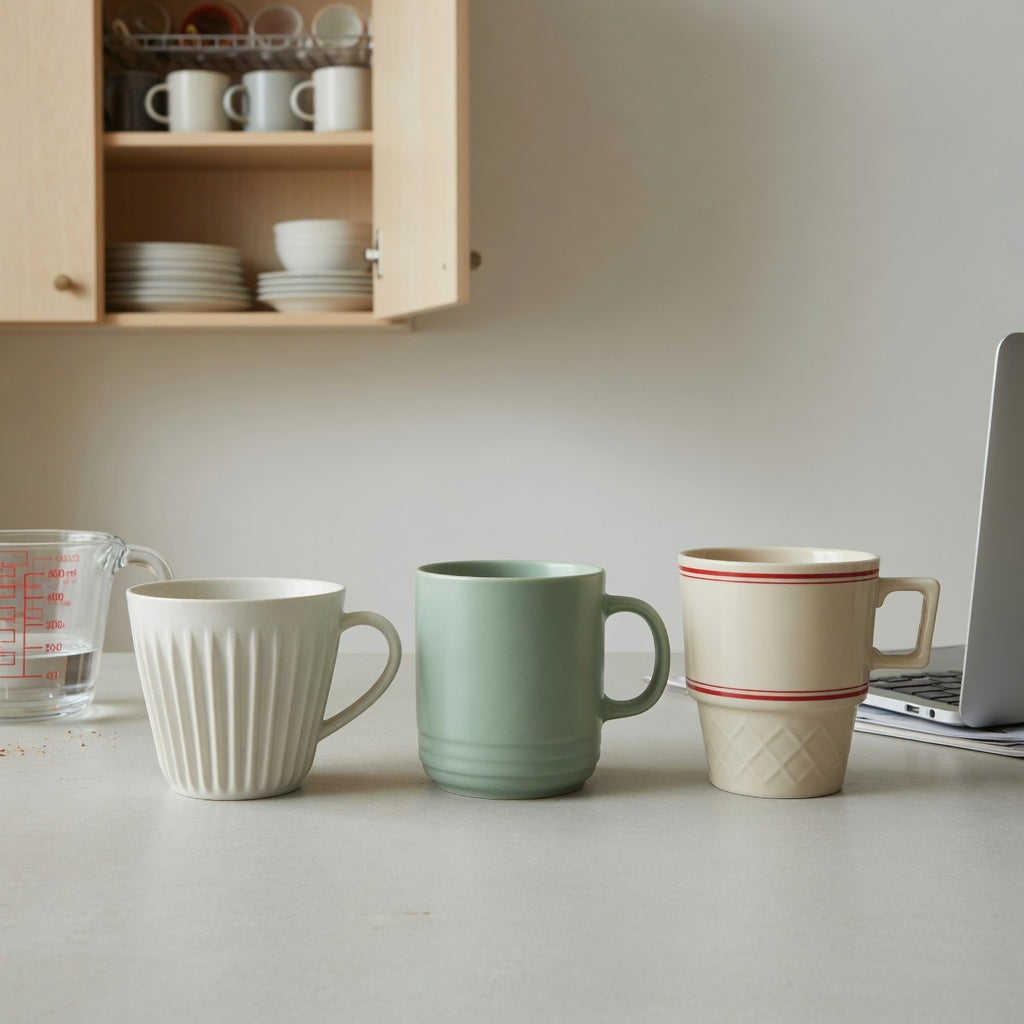
Minimalist Ceramic Mug Size Decision Guide: 390 to 480 ml
Compare CoffeifyMug's current 390 ml, 400 ml, and 480 ml ceramic options by measured pour, available space, visible shape, and handle. See when a smaller-capacity mug or the larger option is the mo...
Read more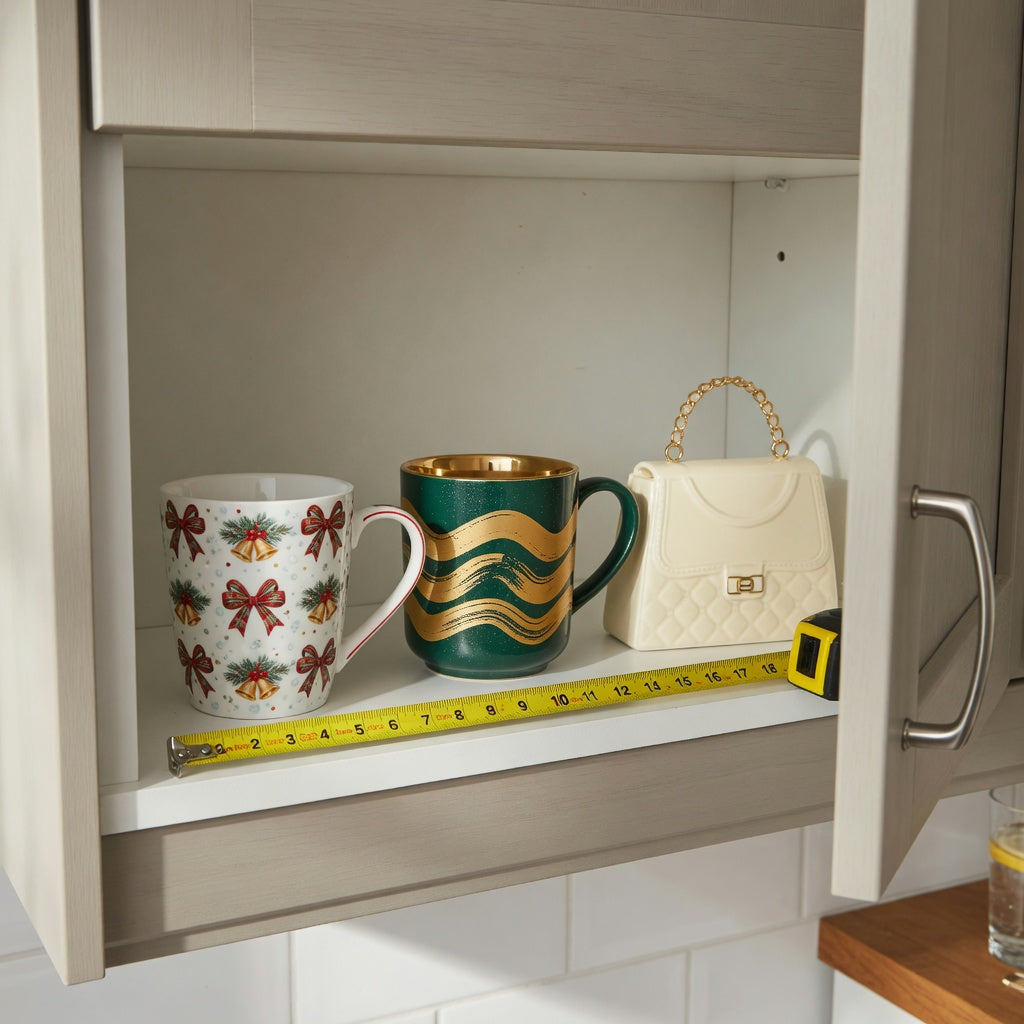
Unique Christmas Coffee Mugs Storage Fit Guide: Shelf Planning
Compare the visible forms of the Christmas Coffee Tea Mug, Golden Waves Kio, and Handbag mug against handle clearance, cabinet depth, shelf height, and display space. We separate confirmed product ...
Read more
Leave a comment
This site is protected by hCaptcha and the hCaptcha Privacy Policy and Terms of Service apply.