
Tea Mug vs Coffee Mug Differences Crane: A Practical Comparison
Reading time: about 8 minutes
Last month a customer emailed us a photo of her kitchen shelf — six mugs, all nearly identical in shape — with one question underneath: do I really need a separate mug for tea? She'd been steeping green tea in a thick-walled coffee mug, leaving it through a phone call, and coming back to a cup that had turned bitter. That shelf photo is the clearest illustration we know of the tea mug vs coffee mug differences crane shoppers ask us about most: rim shape, wall thickness, and what heat does to your drink while you're not watching.
We pack and ship mugs every day, and this comparison reaches our inbox constantly — in gift orders, in office-buyer emails, in pre-purchase questions. Here is how the two styles genuinely differ, where a crane design fits, and what to verify before you spend anything.
Why tea mugs and coffee mugs ended up shaped differently
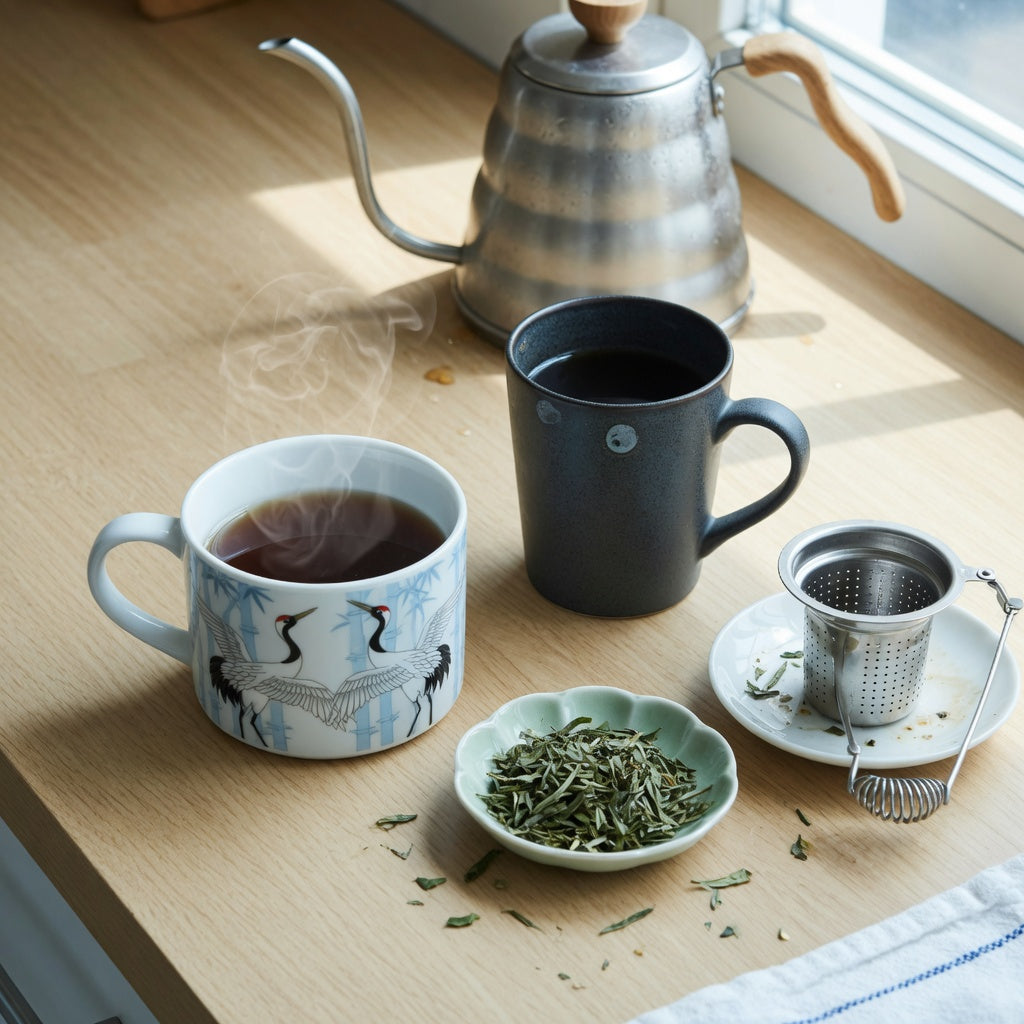
Set a traditional tea cup beside a coffee mug and the split is obvious. The tea side runs wider and shallower, often porcelain, with a rim that flares outward. The coffee side is taller, narrower, and thicker-walled, usually stoneware. That division isn't styling. It's thermodynamics.
Heat loss scales with exposed surface area — the relationship physics courses teach as Newton's law of cooling. A wide, flared rim spreads tea across more surface, releasing aroma quickly and pulling the temperature down toward sipping range sooner. A tall, narrow, thick-walled mug does the opposite: less exposed surface and more thermal mass in the walls, so coffee brewed near boiling stays hot through a slow morning.
Brewing temperatures explain how the split happened in the first place. Consumer Reports, citing tea experts and the Tea Association of the USA, lists black tea at 205–212°F for 3–5 minutes and green tea at 175–180°F for 2–3 minutes. Green tea held too hot for too long over-steeps and turns bitter, so a shape that sheds heat is doing real work for green and white teas. Coffee has no such sensitivity. Hot is the point.
One honesty note before we go further: we have never seen an independent lab test timing a 13 oz-class crane infuser mug against a standard 11–15 oz coffee mug, and we won't invent one. Treat the direction — wide rims cool faster, thick walls hold longer — as reliable, and any specific minute count as unmeasured.
The tea mug vs coffee mug differences crane buyers actually notice
The crane motif adds a wrinkle. In Japanese tradition the crane is associated with longevity and good fortune, which is why crane mugs dominate our wedding, retirement, and housewarming orders — we read the gift notes every day. But "crane mug" describes two different products, and mixing them up is the source of most disappointed reviews:
- Decoration-first crane mugs: crane artwork printed on a standard tall coffee-mug body. Attractive and giftable, but functionally a coffee mug — expect coffee-mug heat behavior.
- Tea-first crane designs: the motif on a wide, flared body, sometimes built as an infuser mug with a removable stainless-steel basket. Infuser-style crane mugs on the market commonly sit around 13 oz, though specifications vary considerably from seller to seller.
The bird doesn't change how your drink behaves. The body does. That's the single most useful thing we can tell anyone standing in front of a shelf of crane mugs, and it's why our The Crane Coffee Tea Mug carries both drinks in its name — the listing is where you confirm what that means in practice. If cranes aren't the look at all, our unique coffee mugs collection gives you other designs to run through the same criteria.
Can one mug handle both drinks?
Short answer: yes, for most people on most days. The trade-offs are real, though, and worth knowing before one mug gets both jobs:
- Over-steeping: a mug that holds heat well keeps leaves extracting after the steep should have ended. Pull the bag or infuser promptly and most of the risk disappears.
- Aroma: a tall, narrow mouth traps steam and funnels it to your nose — excellent for coffee, though some tea drinkers find it mutes the top notes a wide rim would release.
- Staining: coffee tannins can mark pale interior glazes over weeks of daily use. A quick rinse after each cup mostly prevents it.
- Temperature mismatch: a tea-first shape cools coffee noticeably faster; a coffee-first mug keeps green tea scalding past the point where the flavor holds.
If your rotation is milk-heavy coffee or bagged black tea, none of this will register. If you brew delicate greens or nurse a single pour for an hour, it will — and our round tea mug vs coffee mug comparison covers how curved bodies change the heat math.
The Crane Coffee Tea Mug: five things to verify on the current listing
Listings change and variants differ, so in our experience you're better off confirming five details on the product page than taking any blog post's word for them — including ours:
- Capacity in ounces. Standard coffee mugs commonly run 11–15 oz; check where this model lands and whether that matches your usual pour.
- Material. Porcelain and thick stoneware differ noticeably in weight, chip resistance, and heat retention.
- Rim profile. Flared or straight? That single line decides which drink the mug favors.
- Included accessories. Does the model ship with an infuser or a lid, or is it an open mug? Don't judge from photos.
- Care instructions. Decorated finishes sometimes specify hand-washing; confirm before its first dishwasher cycle.
Be equally honest about what it isn't. A ceramic crane mug is not a travel tumbler — if your coffee rides in a car cup holder for 45 minutes, a double-walled style will serve you better, and we'll say so rather than lose the sale. For the desk-and-kitchen-counter reality most mugs actually live in, check the current listing for The Crane Coffee Tea Mug and run the five points above before adding to cart.
Porcelain, stoneware, or something in between?
| Attribute | Tea-leaning mug | Coffee-leaning mug | Dual-purpose crane mug |
|---|---|---|---|
| Typical body | Thin porcelain or fine ceramic | Thick stoneware | Varies — check the listing |
| Rim | Wide, flared | Narrower, straight | Verify before buying |
| Heat behavior | Cools to sipping range faster | Holds heat longer | Depends on wall thickness |
| Best fit | Green, white, oolong teas | Black coffee, lattes, long sits | Both drinks, with trade-offs |
Three defect modes we see in returns and reviews that generic guides skip: thin porcelain rims chip easily when knocked against a faucet or a crowded dish rack; heavily decorated exteriors can dull under harsh dishwasher cycles, which is why some listings specify hand-washing; and thick stoneware is heavy enough to scratch wooden shelves if you slide it instead of lifting. None are dealbreakers. They're just the things you notice after handling a few hundred mugs.
Shape and size interact with the design more than buyers expect — our landscape mug shape and size comparison runs the same trade-offs on a different design if you want a second data point.
When a dedicated mug beats a dual-purpose one
Three situations where we steer customers away from an all-in-one crane mug, with what we'd suggest instead:
- A serious green or white tea habit: a small lidded porcelain cup gives shorter, more controlled steeps than any 13 oz-class mug. If the ritual matters more than the design, go smaller.
- Coffee that sits: double-walled or lidded mugs hold serving temperature far longer than any open ceramic body, crane or otherwise.
- Harsh office dishwashers: finely decorated finishes take a beating in commercial machines; a plain stoneware daily driver survives better.
Where a dual-purpose crane mug genuinely shines is the gift lane. The longevity symbolism does half the emotional work at weddings and retirements, and the recipient ends up with one mug that fits whichever drink they actually pour. Our crane mug gift-buyer comparison breaks down what to check before you wrap one.
Six checks before you order any mug
Five minutes of checking prevents most of the returns we process:
- Measure your usual pour — the mug should match the drink, not the other way around.
- Match rim shape to the primary drink: flared for tea-forward use, straight and tall for coffee.
- Check interior glaze color if coffee is in the rotation; pale glazes show tannin stains sooner.
- Read the care line on the listing before assuming dishwasher or microwave safety.
- Answer the infuser question honestly — loose leaf daily means it's worth having; bags only means skip it and save the money.
- Measure cabinet clearance; wide-flared and tall mugs eat shelf height.
Frequently asked questions
What's the real difference between a tea mug and a coffee mug?
Shape, wall thickness, and the heat behavior that follows. Tea mugs tend to run wider with flared rims and thinner walls, so the drink cools to sipping temperature faster and releases aroma; coffee mugs are taller, narrower, and thicker-walled to hold brewing heat longer. Either will physically hold either drink — the differences are about temperature and flavor timing.
Can I use a coffee mug for tea every day?
Yes. Watch two things: remove the bag or infuser once the steep is done so residual heat doesn't push the tea bitter, and rinse pale interior glazes after coffee to prevent tannin marks. For daily bagged tea, most people won't notice a meaningful difference.
Does mug shape really change how fast a drink cools?
It does, through surface area: heat loss scales with exposed surface, which is why a wide flared rim sheds heat faster than a tall narrow opening. How much faster depends on fill level, wall thickness, and room temperature, so treat it as a tendency rather than a stopwatch.
Which tea mug vs coffee mug differences should crane mug shoppers check first?
Capacity, material, rim profile, and care instructions — in that order. In our inbox, the tea mug vs coffee mug differences crane buyers flag most come down to heat behavior: two crane mugs can look nearly identical and perform completely differently because one is a wide tea body and the other is artwork on a standard coffee mug. Verify each point on the current listing before buying.
Is a crane mug a good wedding or retirement gift?
Often, yes — cranes are associated with longevity and good fortune in Japanese tradition, which makes crane mugs a common pick for weddings, retirements, and housewarmings. Match the shape to the recipient's drink: a tea-leaning body for a loose-leaf drinker, a taller coffee mug for a latte person.
Still deciding? Pull up The Crane Coffee Tea Mug and our unique coffee mugs collection side by side, run the six checks above, and the right choice usually becomes obvious within a few minutes.
Read more

Unique Gradient Coffee Tea Mug Gift: What to Compare Before You Buy
Two gradient mugs can look identical in a photo and age completely differently on the counter. Our store team explains how to compare glaze type, real capacity, handle comfort, and lead safety so t...
Read more
What Size Cup for a Cortado? 4–4.5 oz Answer + 170–270 ml Picks
A cortado is roughly equal parts espresso and steamed milk, and most cafés serve it in 120–135 ml. We compare that classic pour with our 170, 200 and 270 ml ceramic cups, explain the headroom math,...
Read more
Leave a comment
This site is protected by hCaptcha and the hCaptcha Privacy Policy and Terms of Service apply.