
Round Ceramic Mug for Morning Coffee Routine: Buyer Checks
Reading time: about 10 minutes
The mug that looks balanced in a product photo can feel wrong as soon as it is filled: your knuckles touch the warm wall, the rim crowds your nose, or the last third cools before breakfast is finished. A shopper comparing a round ceramic mug for morning coffee routine use should judge it full and hot on a real counter, not only empty in a styled image.
In our store, we assess this category by running a finger around the rim, checking both handle joints, looking at the interior glaze, and setting the foot ring on a flat surface. We also consider where the mug will live after the gift unboxing or first dishwasher cycle. Those checks catch the reasons an attractive cup becomes a cabinet spare: wobble, tight finger clearance, an awkward sip angle, or care instructions that do not fit a weekday schedule.
Does a round ceramic mug for morning coffee routine use fit your pace?
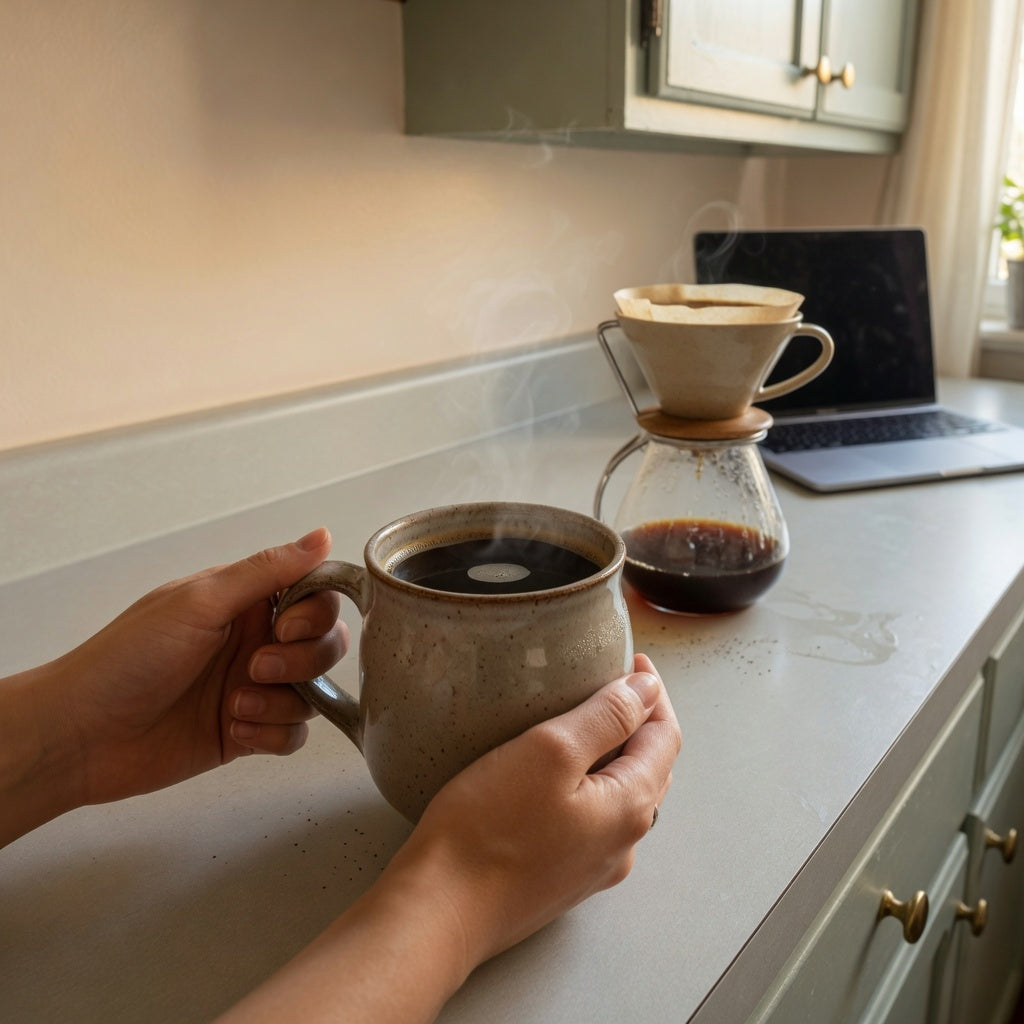
A rounded ceramic form makes the most sense for coffee poured and enjoyed at a kitchen counter, breakfast table, or office desk. It gives you a curved body to cradle, but that comfort still depends on wall temperature, handle position, and the mug's filled weight.
If a slow, two-handed counter routine describes your morning, inspect the current Round Coffee Tea Mug page. It is the direct next step when the round silhouette is your main variable; confirm the material, capacity, dimensions, and care information shown on the live listing before deciding.
- Seated breakfast or desk coffee: A standard ceramic mug can suit an open-rim, unhurried drink.
- Brewing directly into the mug: Rim diameter, total height, and clearance under the brewer matter as much as body shape.
- Small apartment cabinet: Check the widest point of the body. A bulbous mug can use more shelf width and may not stack unless designed to do so.
- Commute or bag carry: An open ceramic mug is the wrong tool if you need a seal, a cup-holder fit, drop resistance, or heat that lasts for hours.
If you have not settled on a rounded body, compare it with taller and more detailed forms in our collection of distinctive coffee mug shapes. Start with silhouette and daily use, then let color or decoration break the tie.
Round body, straight sides, or tumbler: what changes at 7 a.m.?
Roundness is not a heat-retention rating. A thick, heavy straight-sided mug may hold warmth better than a thin rounded one, while a wide bowl-like opening can release heat faster than a narrower rim. The shape does affect hand contact, cabinet footprint, aroma at the opening, and how the mug balances when full.
| Buyer variable | Round-bodied ceramic | Straight-sided ceramic | Vacuum-insulated tumbler |
|---|---|---|---|
| Two-handed hold | More curved body to cradle; exterior temperature still needs checking | Usually encourages a handle-first grip | Designed mainly for a one-handed hold |
| Aroma and cooling | A wider opening can make aroma more noticeable but speed cooling | Depends on the actual rim width, not the straight walls alone | A lid limits aroma while helping retain heat |
| Cabinet fit | Measure the widest body and do not assume it stacks | A uniform footprint may be easier to line up | Tall storage space may be required |
| Travel | Poor fit for bags, walking, and most vehicle use | Also poor unless specifically designed with a secure lid | Best category for sealed transport and long heat retention |
No reliable heat-loss number can be inferred from shape alone. A useful comparison would need matched wall mass, opening size, beverage volume, and starting temperature. For everyday buying, decide whether two-handed comfort and open-rim aroma matter more than shelf efficiency or all-morning heat.
Handle clearance, rim width, and serving size on a real counter
Handle photographs can be misleading because an empty mug places no load on your wrist. Once filled, the weight pulls the body downward and can move a rounded wall closer to your knuckles. A large-looking loop may still offer little usable space if the belly intrudes into the opening.
- Measure your normal serving. Pour one typical brew into a measuring jug and record the actual ounces or milliliters.
- Add milk without filling to the rim. Leave enough headspace to carry the mug from the counter to a table without spilling.
- Measure a handle you already like. Note its interior height and width, plus how many fingers you comfortably use.
- Check brewing clearance. If you use a pour-over dripper, espresso machine, or single-serve brewer, compare the mug's listed height and rim diameter with the available space.
- Measure storage at the widest point. Rim diameter alone will not tell you whether a round belly fits beside plates or bowls.
After delivery, inspect before the first pour. Put the empty, dry mug on a level counter and press lightly near four points around the rim to check for wobble. Run a fingertip around the drinking edge, inspect both handle attachments for hairline cracks, and look for rough glaze spots inside the cup. A sharp rim chip or cracked handle is a reason not to put the mug into daily service.
These checks are especially useful for gifts. A mug can make a strong first impression in the box and still miss the recipient's routine if it will not fit under their brewer, into their cabinet, or comfortably into their hand.
Will ceramic keep coffee warm through breakfast?
Thicker, heavier ceramic has greater thermal mass, so it can retain warmth better than a very light cup. That mass also absorbs heat from the first pour when the mug starts cold. Preheating reduces that initial temperature drop: fill the mug with hot water while the coffee brews, empty it, and pour immediately.
- For a hotter last sip: Choose a manageable serving, preheat the mug, and favor a less-open rim if aroma is not the top priority.
- For stronger aroma at the rim: A wider opening can make the coffee smell more present, but accept faster evaporative cooling.
- For a long desk session: A suitable cover can help if the mug is designed for one.
- For heat lasting several hours: Choose a vacuum-insulated tumbler rather than expecting ordinary ceramic to do that job.
For a round ceramic mug for morning coffee routine, open aroma and prolonged warmth pull in different directions. An open ceramic rim may make coffee seem more expressive because aroma contributes strongly to flavor perception. A lidded tumbler protects temperature better, but it changes the smelling and sipping experience.
Food-contact glaze, lead questions, and unknown pottery
Food-contact information deserves more attention than glaze color. The FDA guidance on lead-glazed traditional pottery explains that some traditional pieces may contain lead in glazes or decoration and can leach it if they were not made properly. Hot, acidic drinks such as coffee can increase leaching when leachable lead is present.
Unknown does not automatically mean unsafe, but an unverified glaze is not a sound choice for hot coffee every morning.
For thrifted, vintage, imported, or handmade pottery without clear information, ask the maker about food-contact use. The FDA also notes that consumers can use lead-testing kits on the food-contact surface. Such a kit screens for a lead concern; it does not establish microwave suitability, dishwasher durability, or every other aspect of ceramic safety.
- Food-contact statement: Addresses whether the maker intends the piece for food or beverages.
- Microwave-safe statement: Addresses reheating and should not be inferred from appearance.
- Dishwasher-safe statement: Addresses machine washing, not resistance to collisions with other dishes.
- Metallic trim or decoration: Keep it out of the microwave unless the manufacturer explicitly states otherwise.
We would use unmarked pottery as decoration until its food-contact status is verified. If a piece tests positive for leachable lead, FDA advice is not to use it for preparing, serving, or storing food and drinks.
Microwave, dishwasher, and damage checks after daily use
Microwave-safe is a manufacturer claim, not something you can confirm by tapping the mug or looking at the glaze. ASTM C1607 is a published test method for determining whether ceramicware is suitable for microwave reheating. Shoppers cannot infer that testing or compliance from a product photo, so rely on the current care statement.
- Rim chips: Retire a mug with a sharp drinking edge rather than continuing to scrape or sip over the damaged area.
- Handle-joint cracks: Stop using the mug if a crack appears where the handle joins the body. A full hot mug puts stress on those points.
- Crazing: Fine crackle lines in the glaze can collect visible coffee staining. New or worsening crazing is a reason to check with the maker.
- Foot-ring roughness: An unglazed base can scratch a counter or rub against other dishes, so inspect it before regular use.
- Dishwasher contact: Even dishwasher-safe ceramic can chip if its rim or handle knocks against another item during a cycle.
If the listing permits dishwasher use, load the mug with enough clearance to prevent contact. If it calls for hand washing, use mild dish soap and a soft sponge rather than an abrasive scouring pad. Microwave-safe also does not promise that the handle will remain cool, so handle any reheated ceramic carefully.
Which CoffeifyMug path matches your morning?
- You drink slowly at home and the rounded silhouette is the point: Review the round-option product page, then match its current listed capacity, dimensions, and care details to your measurements.
- You want a more visibly detailed profile: Compare the round option with the Pleated Coffee Tea Cup listing. Study the current photos for hand contact and consider how any surface detailing will fit your cleaning routine.
- You are buying a gift or remain unsure about shape: Use the wider mug assortment to compare silhouettes, openings, and handles around the recipient's actual coffee habits.
- You need a sealed cup for commuting: Skip an open ceramic mug and choose travel drinkware built for transport and longer heat retention.
The live product listing should remain the source of truth for each item's material, size, capacity, and care instructions. A product name or photograph should never be used to assume microwave or dishwasher suitability.
Frequently asked questions
Does coffee taste better in a ceramic mug than in a thermal tumbler?
An open ceramic rim can make coffee aroma more noticeable, which may make the flavor seem clearer or fuller. A lidded thermal tumbler retains heat longer but limits aroma at the nose. Choose ceramic for an open, seated sip and a tumbler for transport or extended heat.
How can I keep coffee warm longer in ceramic without using a thermos?
Preheat the mug with hot water, pour a serving you can finish, and avoid an extremely wide opening if temperature matters more than aroma. A heavier ceramic body and a suitable cover can also help. Ordinary ceramic will still lose heat faster than vacuum-insulated drinkware.
Is a round ceramic mug for morning coffee routine use good for lattes?
It can be if its capacity leaves room for the espresso, milk, and carrying headspace you normally need. A wider opening offers aroma and a broad sipping surface but can cool a milk drink faster. Check the listed volume and rim dimensions rather than assuming every round mug suits the same latte size.
How can I tell if a handmade or thrifted ceramic mug is food-safe?
Look for a clear food-contact statement from the maker and ask about the glaze if the piece is unmarked. FDA guidance says some traditional pottery can contain leachable lead, and a home lead-test kit can screen the food-contact surface. Do not assume that a food-safe statement also means microwave-safe or dishwasher-safe.
What mug capacity should I choose for my morning coffee?
Measure your normal brewed coffee once, add the milk or foam you actually use, and leave carrying headspace. Compare that total with the capacity on the current listing. Oversizing can leave a shallow serving that cools quickly, while undersizing creates spills at the counter.
A six-point cart check before you choose
- Confirm the current material and food-contact information.
- Match listed capacity to your measured coffee and milk volume.
- Compare handle clearance with a mug already comfortable in your hand.
- Decide whether an open, aromatic rim or slower cooling matters more.
- Check the widest body, total height, brewer clearance, and cabinet space.
- Read microwave and dishwasher instructions, then inspect the rim, handle joints, glaze, and foot ring after delivery.
If a two-handed rounded hold is the deciding factor, compare the rounded coffee-and-tea listing against those six checks. If shape is still open, scan the full unique mug selection and remove any option that fails your serving-size, handle, care, or storage requirements.
More from our blog
Read more
Ceramic Mugs for Coffee Station: Size, Glaze, and Fit
A coffee-station mug must clear the brewer, feel balanced when full, wash clean, and store without chipping. Compare ceramic body, glaze, capacity, dimensions, heat behavior, handles, and care befo...
Read more
Office Desk Tall Ceramic Mug: Compare Size, Stability and Care
A tall ceramic mug may reclaim desk width, but base shape, handle projection, capacity, glaze, cleaning, and vertical clearance still decide the purchase. Use this practical comparison before choos...
Read more
Leave a comment
This site is protected by hCaptcha and the hCaptcha Privacy Policy and Terms of Service apply.