



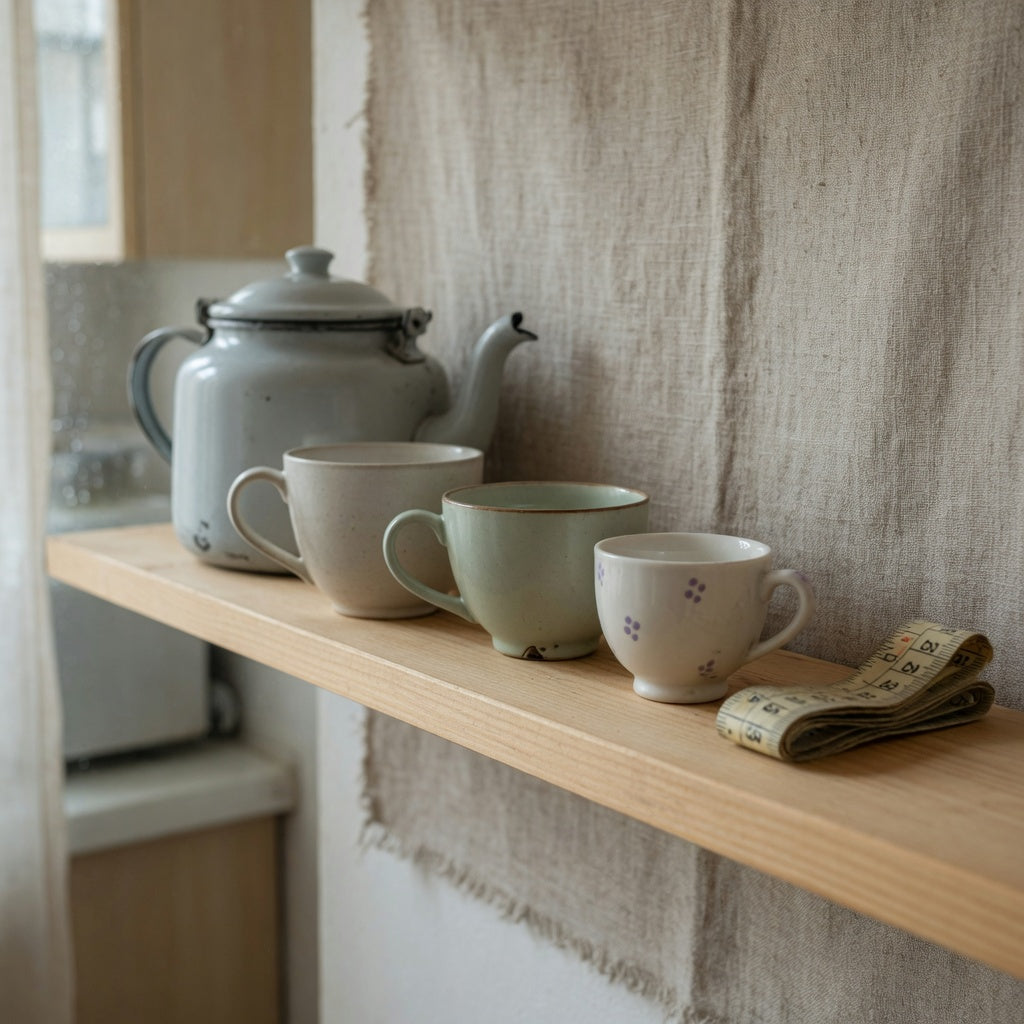
Pottery Tea Cups Compact Kitchen Product Shortlist Guide: 170–250 ml
Reading time: about 9 minutes
A 250 ml cup and a 170 ml cup can eat the same square of shelf. Capacity tells you how much tea goes in; it says nothing about how wide the bowl sits, how far a handle projects, or whether your fingers clear the shelf above. That gap between how much it holds and how much room it takes is where most small-kitchen cup purchases go sideways.
We sell these cups, so we wrote this as a working shortlist instead of a catalogue tour. Three ceramic options, three deliberate pour sizes: Retro at 170 ml, Pleated at 200 ml, and the Ball Handle mug at 250 ml. Each entry below names the routine it suits and the reason to walk away — because a shortlist you cannot say no to is just a wish list.
Why the shelf sets the shortlist before the cup does
Take four measurements before you open a product page: the clear height between shelves, the usable depth, the reach-through gap at the front, and how far the cabinet door swings into your workspace. A cup that fits on paper can still fail the fourth test, because you lift it up and out rather than sliding it in.
The number people forget is handle projection. On a handled cup the widest point usually runs from the far rim edge across to the outside of the handle, and that figure is larger than the bowl diameter. We do not publish exterior dimensions for the three cups below, so ask us for overall height, depth and maximum width before you commit to a tight shelf. Capacity will not answer that question, no matter how carefully you compare it.
Then check the counter, not the cabinet. If the cup lives beside the kettle, you need a clear patch to set it down and enough clearance to pour without the spout fouling a handle. In a compact kitchen that patch is often the true bottleneck.
What do 170 ml, 200 ml and 250 ml actually pour?
All three cups here have ceramic bodies, and their listed capacities are the only figures we can confirm for this comparison. Line them up against your routine:
| Cup | Listed capacity | Best fit | Walk away if |
|---|---|---|---|
| Retro | 170 ml | Short, frequent pours with the pot within reach | You want one pour to last a whole meeting |
| Pleated | 200 ml | A middle pour with a visibly different silhouette | You need the largest serving or a plain-sided look |
| Ball Handle | 250 ml | Fewer refills, mug-leaning serving size | Shelf space is your hard limit and dimensions are unconfirmed |
For scale, the FDA's guidance on ceramic hollowware describes a cup or mug as typically holding about 240 ml and normally being made with a handle. Read against that benchmark, the 250 ml Ball Handle is the only one of the three that leans mug-sized, while the 170 ml Retro sits well below the midpoint most shoppers picture when they read the words tea cup.
One honest caveat on the numbers: listed capacity is not a comfortable working fill. You leave headspace so a hot drink does not slop over on the walk to the sofa. So if you brew single 150 ml steeps, the 170 ml Retro is a sensible landing spot; if you routinely combine two steeps, the 250 ml mug saves you a trip.
The shortlist: three routines, three cups, and when to walk away
Retro, 170 ml — for the drinker who refills in place
Choose the Retro coffee and tea cup when your tea break is short and the kettle or teapot stays within arm's reach. At 170 ml it is the smallest listed capacity in this group, which suits a single steep of green or oolong tea and keeps the cup from sitting half-full and going cold.
Skip it if you carry your cup to a desk and expect it to survive a meeting, or if you drink big, milky mugs in the morning. Refilling is the trade-off, and it is a real one on a rushed weekday. Skip it too if you are assuming it is the physically smallest cup here — 170 ml describes volume, not footprint, and we have not confirmed exterior width or height for this model.
Pleated, 200 ml — for the middle pour with a visible difference
Pick the Pleated coffee and tea cup if 170 ml leaves you wanting a second steep but 250 ml feels like more tea than you finish. Its pleated form is the reason to choose it over a plain-sided bowl, and we treat that as a visual decision rather than pretending the shape changes how the cup performs.
Skip it if a confirmed storage footprint matters more to you than a distinctive look, or if you specifically want the largest pour on this list. One thing to check rather than assume: whether the pleating carries into the inside wall. A textured interior takes more rinsing after milky tea, so if that would bother you, ask us before ordering.
Ball Handle, 250 ml — for the morning cup that has to last
Choose the Ball Handle coffee and tea mug when fewer refills matter more than a dainty pour. At 250 ml it holds the most of the three and lands closest to the mug-sized serving the FDA describes as typical for handled cups.
Skip it if your cabinet is the binding constraint and you cannot buy without confirmed overall dimensions, because the handle is part of the space it occupies. Skip it as well if you mostly drink delicate teas in small steeps — you will pour half of it away. Handle comfort is personal and we cannot judge it for your hand, so if grip decides the purchase, ask us for the handle's internal clearance first.
Where a capacity-based shortlist stops being useful
Being straight with you: this comparison answers a volume question and little else. It will not help if any of these apply.
- You need to stack cups. Stackability has not been verified for any of the three. Ask before you plan a stack, and request stacked height rather than guessing from photos.
- You need appliance guarantees. We cannot confirm dishwasher or microwave suitability for these models — see below.
- You want a saucer, infuser or gift box. Do not assume accessories are included with any of the three. Verify on the individual listing.
- You want a handleless yunomi, a lidded brewer or a matched set. Different brief. Browse the unique coffee mugs collection rather than forcing one of these three to be something it is not.
If your constraint is anything other than pour size, the collection is the better starting point than this page.
Glaze, rim wear and the checks we cannot run for you
Ceramic body is a material statement, not a food-contact certification. We have not verified food-contact status, lead-free labelling or finished-piece leach testing for the Retro, Pleated or Ball Handle cups, and we are not going to imply otherwise to close a sale. Ask us, or check the current listing, before buying a cup you plan to drink from daily.
Why it earns the space: in the FDA's own framing, lead can be present in the glazes or decorations on some traditional pottery, and if a piece is not properly manufactured and fired, lead can leach into food and drink. The agency's compliance policy sets a lead guideline of 0.5 micrograms per millilitre of leaching solution for cups and mugs, tested across six units, and it states plainly that washing, boiling or other processing does not remove lead from pottery. Properly made ceramicware can contain lead and still be legally sold — the real question is whether it stays locked in the glaze.
Two labels to read carefully. Lead free is not a free pass: the FDA says ware that fails the extraction test should not carry that term at all. Not for food use is a hard stop, not a suggestion, and decorative pottery that looks drinkable is treated as foodware unless it is permanently marked otherwise.
When the cup arrives, look at the surfaces that touch tea and your lips. Fine crackle lines in a glaze are usually cosmetic and hard to distinguish by eye from a structural crack — if a line catches a fingernail, or you can feel a step, treat it as damage and contact us before drinking from it. Chips on the rim, unexpected bare clay on the drinking edge, and dull worn patches all belong in the same conversation.
Dishwasher, microwave and the thermal-shock question
We have not confirmed dishwasher or microwave suitability for any cup in this shortlist. Ceramic is not a synonym for appliance-safe, and a care note written for a different maker's pottery tells you nothing about these three.
If you plan to reheat tea at a desk or run cups through a nightly cycle, make confirmed guidance a requirement rather than a bonus — and be prepared to choose a different cup if the answer does not come back. A few rules that hold regardless: keep metallic or overglaze decoration out of the microwave, avoid dumping boiling water into a cold cup (warm it first with tap water), and retire any piece with a crack, chip or warning label from drink duty.
Frequently asked questions
Which of these cups suits a small single-serving steep?
The Retro at 170 ml is the natural starting point, since it is the smallest listed capacity of the three and leaves little tea to cool unused. If you usually combine two steeps into one cup, move up to the Pleated at 200 ml or the Ball Handle at 250 ml instead.
Does a 250 ml cup take more cabinet space than a 170 ml cup?
Not necessarily. Capacity measures volume, while shelf fit depends on outside width, height and handle projection. Ask us for those dimensions on the specific cup before you plan around a narrow shelf.
Are these pottery tea cups food safe and lead free?
We have not verified food-contact status, lead-free labelling or finished-piece test results for these three products, so we cannot confirm it either way. Check the current listing or ask us for documentation on the exact cup before buying it for daily drinking.
Can I put them in the dishwasher or microwave?
That has not been confirmed for the Retro, Pleated or Ball Handle cups. Treat any appliance use as unverified until the listing or our team says otherwise for the specific item you ordered.
What should I ask before buying pottery tea cups for a small kitchen?
Four things: overall dimensions including the handle, whether the cup is intended for food and drink use, how to wash and heat it, and whether it is designed to stack. This pottery tea cups compact kitchen product shortlist guide narrows the field by pour size; those four answers settle the rest.
Your next step: measure once, then commit to a pour size
Run this in order and the decision takes about five minutes. Measure the clear shelf height, the depth, and the reach-through gap, then note how far the door swings. Ask us for overall dimensions on whichever cup you are leaning toward. Decide your pour size — 170 ml for a short steep you will refill, 200 ml for a middle serving, 250 ml for one cup that has to last. Then confirm food-contact and care details for that exact item before checkout.
If the dimensions come back tight or the care answers do not, do not force it. Our ceramic mug collection has other silhouettes worth measuring, and a cup that genuinely fits your shelf beats one you liked in a photograph.
Ready to pick your mug? Two ways to save on today's order:
Ordering 1–3 mugs? Get an extra 10% off your 1st order with code 10_OFF Apply 10% Off & Shop Wooden-Handle Mugs →
Gifting 4+ mugs? Buy 3, Get the 4th Free applies automatically at checkout (no code needed; offers do not stack) · Free standard shipping (Nov pre-Christmas delivery: 15–20 calendar days US) · Free replacement if chipped in transit.
Popular mug buying guides: Ceramic Tea Cups & Infuser Mugs · Ceramic Mugs with Lids Compared · Wooden-Handle Tea Infuser Mugs Compared · Christmas & Secret Santa Mugs 2026 · Espresso & Cortado Cups Guide · Cup & Saucer Gift Sets · All 25 Mugs Spec Table · Mug Size Guide · Shipping & Promo FAQ
FIRST ORDER 10% OFF (CODE: 10_OFF) · OR BUY 3, GET THE 4TH FREE


Read more
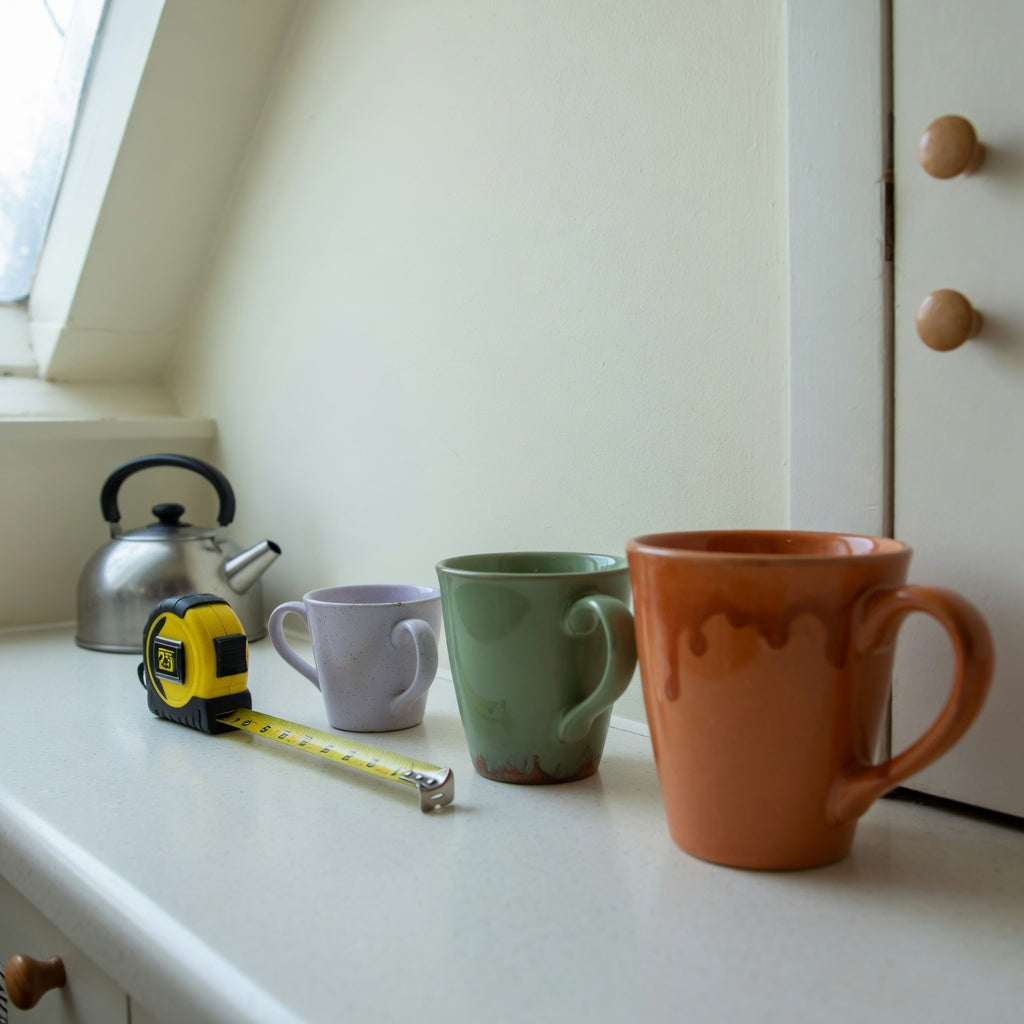
Coffee Mugs With Big Handles Compact Kitchen Product Shortlist Guide
Three mugs, three counter realities. We compare the 250 ml Ball Handle, the 400 ml Flow, and the 480 ml Rock by listed capacity and visible handle shape, plus the shelf, brewer, and grip checks tha...
Read more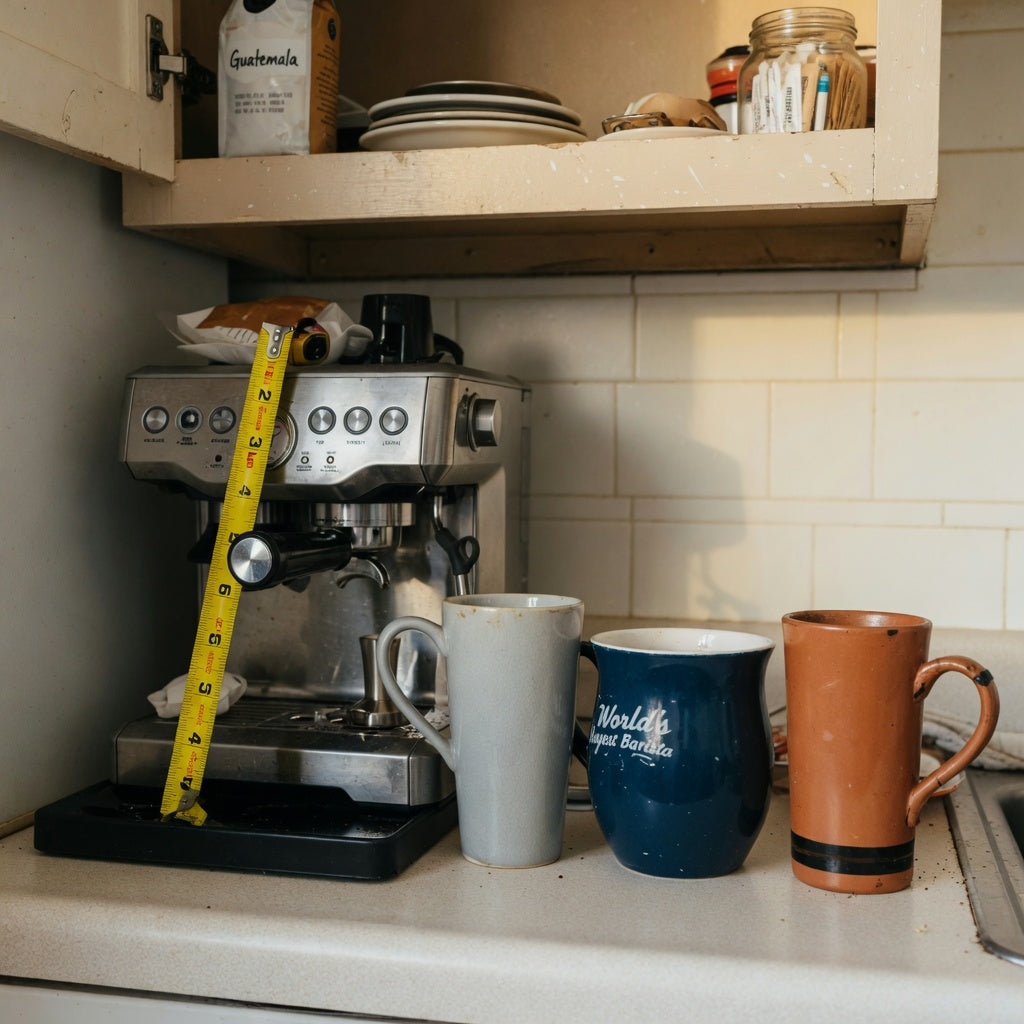
Latte Mugs Tall Compact Kitchen Product Shortlist Guide
A compact-kitchen shortlist built around listed capacities, brim versus fill, and the measurements shoppers forget: spout clearance, shelf height, and handle room. We compare 400, 440, and 480 ml v...
Read more
Leave a comment
This site is protected by hCaptcha and the hCaptcha Privacy Policy and Terms of Service apply.