

Oversized Ceramic Coffee Mugs: Weekend Coffee Purchase Checklist
Reading time: about 9 minutes
A slow Saturday exposes a bad mug quickly: the first pour leaves no room for milk, the handle crowds your knuckles, or the cup will not clear the coffee maker and has to be filled from a separate pitcher. Our oversized ceramic coffee mugs weekend coffee practical purchase checklist starts with those ordinary counter-and-sofa problems, because a larger mug only earns cabinet space when it fits the whole routine.
In our store, we separate confirmed product details from measurements a shopper still needs to make at home. We do not assume that oversized equals a standard capacity, that every ceramic body is dishwasher-safe, or that a larger mug keeps a drink hot for a stated length of time. Capacity, dimensions, material wording, and care instructions need to be checked on the exact product page. The guidance below is our buying method; product-specific notes stay within what the linked listings identify.
Does your weekend pour justify the extra size?
Start with the drink you actually prepare, not the largest capacity label you can find. A black coffee, a milk-heavy drink, loose-leaf tea, and iced coffee use the same mug space differently. Foam, milk, an infuser, or ice all reduce the amount of liquid you can add while leaving comfortable headspace below the rim.
Run a simple kitchen-counter test before shopping:
- Fill your current mug to the level that feels comfortable to carry, rather than to the brim.
- Pour that water into a marked measuring jug and record the amount in fluid ounces or milliliters.
- Add the extra room you normally need for milk, foam, an infuser, or ice.
- Note how often you still refill during a typical Saturday reading session, breakfast, or porch coffee.
This gives you a useful target instead of an abstract preference for a big mug. If you enjoy frequent, smaller fresh pours, a standard ceramic mug may suit you better. Oversized ceramic is most practical when fewer refills matter more than low carrying weight or compact storage.
Will the mug fit your brewer, hand, tray, and cabinet?
Capacity alone cannot answer that question. Two mugs with similar listed volume can differ in external height, rim width, handle projection, base footprint, and empty weight. We check those variables separately whenever we assess a mug for real household use.
| Checkpoint | Measure or verify | Why it affects the purchase |
|---|---|---|
| Useful capacity | Listed fluid ounces or milliliters and your comfortable fill line | You need headspace for carrying, milk, foam, or ice. |
| Brewer clearance | Distance from the drip tray to the coffee outlet compared with mug height | A tall mug may require removing a tray or pouring from another vessel. |
| Handle clearance | Inner handle height and width, including space for rings | An oversized body does not guarantee a roomy grip. |
| Base footprint | Base or foot-ring width compared with your coaster and serving tray | A mug that overhangs its usual surface is easier to knock. |
| Storage fit | External height, rim width, and handle projection | These measurements determine shelf and dishwasher-rack clearance. |
| Lifting load | Empty weight if listed, plus your normal filled volume | A solid feel can become tiring for shoppers with limited grip strength. |
Set a ruler beside your brewer and measure the usable cabinet opening, not just the distance between shelves. Hinges, shelf lips, and neighboring handles can take away space. For a couch tray or narrow side table, measure the flat usable area rather than the tray's full outside dimensions.
Oversized ceramic coffee mugs weekend coffee practical purchase checklist
Use this sequence for every candidate. It keeps confirmed facts, personal preferences, and unanswered questions from blending together.
- Define the serving. Write down your usual drink, additions, and number of refills.
- Measure your comfortable pour. Use a measuring jug instead of estimating from the mug's appearance.
- Compare external dimensions. Check height, rim diameter, base width, and handle projection if the product page lists them.
- Read the material wording. Ceramic is a broad category. Record any more specific material or glaze description shown on the listing without assuming details that are absent.
- Verify care instructions. Look for explicit dishwasher and microwave guidance. A missing instruction is an unknown, not automatic approval.
- Check grip and weight. Decide how many fingers you prefer inside the handle and how much filled weight you can hold comfortably.
- Map the resting surfaces. Compare the base footprint with your coaster, breakfast tray, desk, porch table, or sofa-side surface.
- Plan the storage quantity. One weekend mug may fit easily even when a set of four would crowd the cabinet.
- Resolve missing specifications. If a required dimension or care detail is not visible, ask before ordering rather than filling the gap with an assumption.
The last step matters. We would rather treat a specification as unknown than promise a fit the page does not establish. That is especially relevant for tall mugs, decorated finishes, small brewers, and tightly spaced dishwasher racks.
How should the handle, rim, and foot ring feel?
A good weekend mug has to work during repeated lifts and distracted set-downs. When we handle a sample, we grip it with dry hands, fill it with room-temperature water to a normal serving line, lift it from a flat counter, and hold it in a natural drinking position. That short test reveals cramped finger space, an uncomfortable thumb position, and front-heavy balance more reliably than appearance alone.
- Handle: Check the inner opening and both attachment points. A larger loop may relax the fingers, but it also increases the mug's total width in a cabinet.
- Rim: Look for chips, rough spots, or sharp glaze edges. The rim should feel comfortable at the point where you naturally drink.
- Foot ring: Set the empty mug on a known-flat counter and check for pronounced rocking. Also inspect the base for rough areas that could mark a finished table.
- Glaze: Compare color variation, pinholes, or fine surface lines with the listing images and description. Do not assume every visible variation is either intentional or defective without checking.
Ceramic has no flexible wall or soft grip to disguise a poor fit. If hand fatigue is already an issue, a smaller ceramic mug or lighter material is the more practical choice.
Which CoffeifyMug style belongs on your shortlist?
Product names can help narrow the visual direction, but they are not substitutes for specifications. We do not infer capacity, physical weight, stability, or appliance compatibility from a name. Use each linked page as the current source for any listed measurements, materials, and care directions.
- You prefer a flowing, organic design direction: Start with The Flow Coffee Tea Mug. Its name makes it a logical aesthetic shortlist for shoppers drawn to movement rather than a rigid geometric look. Next, confirm the listed capacity, dimensions, material, and care details against your measurements.
- You want a stronger, rock-inspired visual identity: Open The Rock Coffee Tea Mug. The name points to a different style preference, but it does not prove that the mug is heavier or has a wider base. Use the page specifications, where provided, to judge physical fit.
- A tall silhouette and white-and-golden wave styling are priorities: Review the White Golden Waves Tall Coffee Tea Mug. The product name explicitly signals the tall format and decorative direction. Measure brewer and shelf clearance, then read the stated care instructions rather than assuming that every decorated ceramic mug shares the same dishwasher or microwave guidance.
- You are still deciding by shape and finish: Compare the broader unique coffee mugs collection. Keep your measurement notes beside you and eliminate any design that leaves a required specification unresolved.
This situation-to-product approach keeps style in the decision without letting it override practical fit. A mug can look right in a product photo and still be wrong for a low brewer, narrow shelf, small hand, or crowded tray.
Will your Monday cleanup routine work with the mug?
Weekend use often ends with several cups, breakfast dishes, and one full dishwasher load. Confirm that the mug fits both the care instructions and the physical rack. A dishwasher-safe statement does not help if a tall body hits the upper rack or a wide handle prevents neighboring items from sitting securely.
- Follow the exact cleaning directions on the product page, especially for decorated or textured finishes.
- Use a nonabrasive sponge unless the maker's instructions state that another cleaning method is suitable.
- Avoid stacking mugs rim-to-rim where ceramic edges can knock together.
- Inspect a delivered or gifted mug before discarding the packaging. Check the rim, handle attachment points, body, and foot ring under clear light.
- Stop using a mug with a body crack or a crack running through a handle joint, and contact the seller for the appropriate next step.
These checks are more useful than assuming ceramic is either delicate or indestructible. The material can serve daily routines well, but impact at the rim and handle joints remains a real limitation.
Who should skip an oversized ceramic mug?
Choose a different format if you mainly drink while walking, need a leak-resistant lid, rely on a car cup holder, have very limited cabinet space, or want the lightest possible vessel. A smaller ceramic mug suits frequent short pours. A travel mug suits commuting, and a lighter non-ceramic option may be easier for reduced grip strength.
Oversized ceramic also makes less sense for a household that must stack every cup tightly. The added capacity comes with more weight and a larger storage footprint. Those are acceptable trade-offs for a stationary weekend routine, not universal advantages.
Frequently asked questions
What capacity counts as oversized for weekend coffee?
There is no capacity number you should accept from the word alone. Measure your current comfortable pour, include room for milk, foam, or ice, and compare that target with the capacity listed for the exact mug. A smaller mug remains the better choice if you prefer frequent fresh refills.
How do I use the checklist before ordering a mug?
Use the oversized ceramic coffee mugs weekend coffee practical purchase checklist to compare your pour volume, brewer clearance, hand fit, tray space, cabinet opening, and cleanup routine. Mark unlisted product details as unknown and resolve any requirement that could prevent normal use before buying.
Can an oversized ceramic mug go in the dishwasher or microwave?
Only rely on dishwasher or microwave compatibility when the exact product page states it. Ceramic material alone is not enough to answer, and decorative finishes may have product-specific restrictions. Also confirm that the mug physically clears your dishwasher rack and microwave interior.
Is a tall ceramic mug better for slow weekend coffee?
A tall mug can provide the visual profile or footprint you prefer, but height also affects brewer, shelf, and dishwasher clearance. It is not automatically more stable or better at retaining heat. Compare the listed external dimensions with your actual setup.
Which CoffeifyMug product should I compare first?
Begin with The Flow for a flowing design direction, The Rock for a stronger rock-inspired identity, or White Golden Waves Tall when a tall white-and-golden wave look is the priority. Then verify the practical specifications on that product page. Use the collection if you need to compare several shapes before settling on a style.
Put your current mug, a ruler, and a measuring jug on the counter before opening the CoffeifyMug collection of unique coffee mugs. Record your comfortable pour and five fit measurements, then keep only the candidates that meet every non-negotiable item without relying on an unlisted claim.
More from our blog
Read more
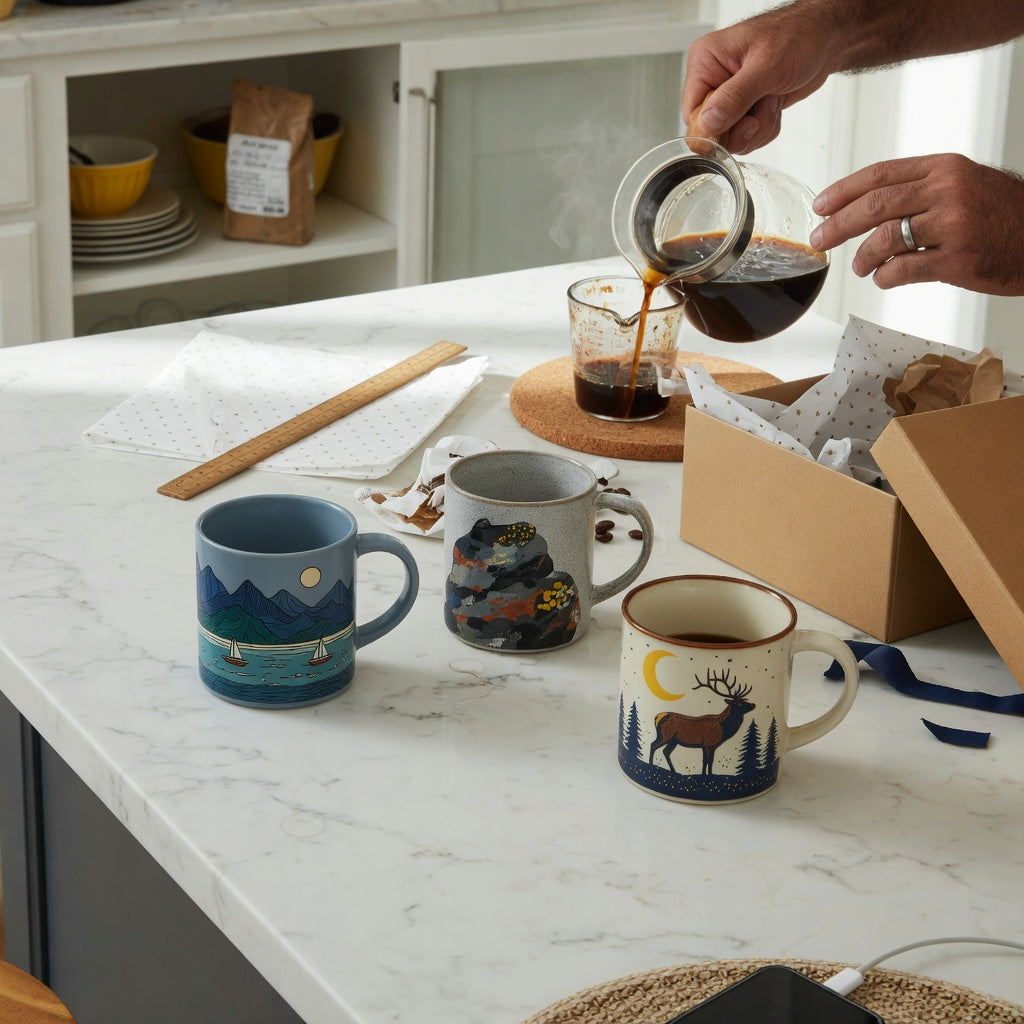
Coffee Mug Gift Ideas for Him: Weekend Coffee Purchase Checklist
Use his real Saturday routine to compare serving size, handle and shelf clearance, care, setting, and nature-themed artwork. This checklist maps three CoffeifyMug designs to specific gift situation...
Read more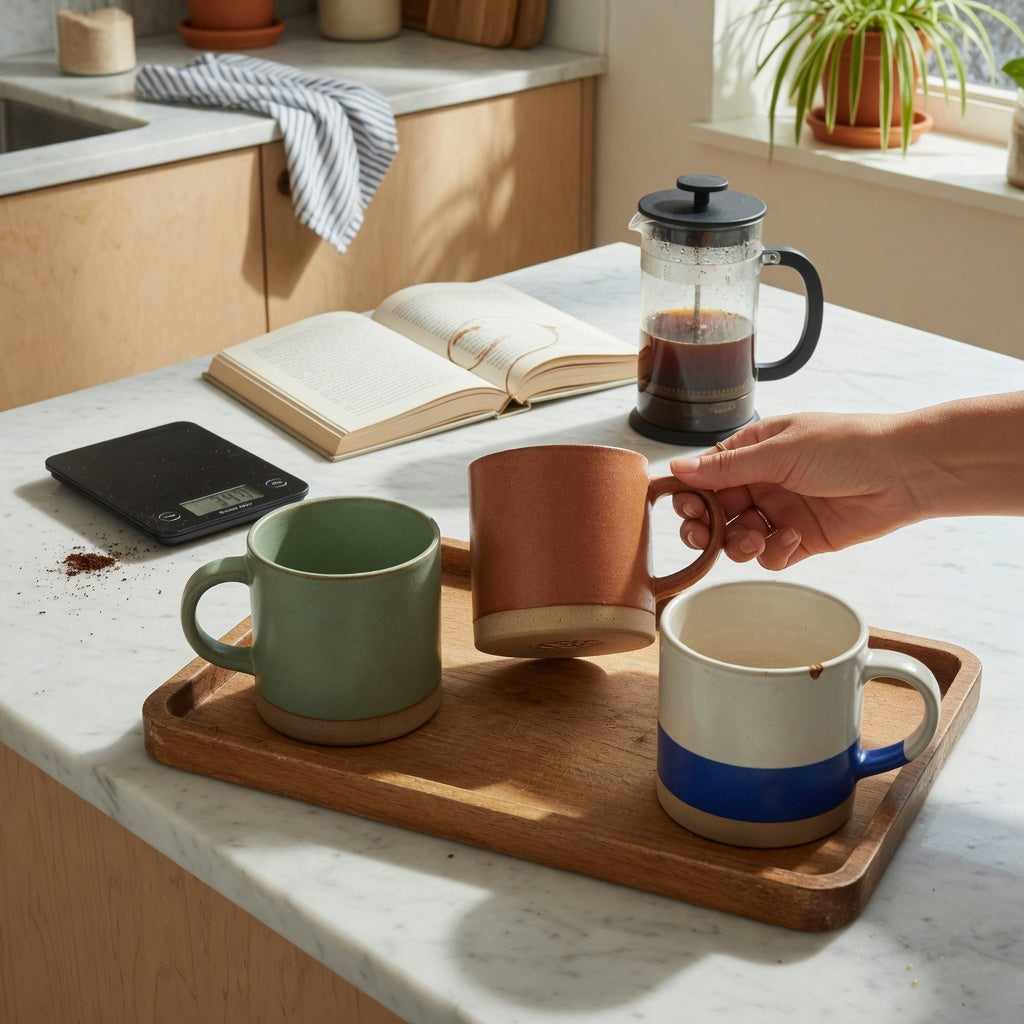
Heavy Ceramic Coffee Mugs Weekend Coffee Practical Purchase Checklist
Use this weekend-specific checklist to compare filled weight, handle control, base contact, cabinet fit, care, and unboxing condition. It also shows how to shortlist The Rock, Spittoon, and The Flo...
Read more
Leave a comment
This site is protected by hCaptcha and the hCaptcha Privacy Policy and Terms of Service apply.