

Oversized Ceramic Coffee Mugs: Everyday Mug Rotation Shortlist Guide
Reading time: about 11 minutes
An oversized mug can fit on a shelf and still fail the morning routine. Its handle catches on the cabinet frame, its footprint takes over a crowded desk, or it is always waiting to be washed when the next pour starts. We hear versions of that problem from shoppers who own plenty of mugs but repeatedly use the same one. This oversized ceramic coffee mugs everyday mug rotation product shortlist guide starts with the friction that decides actual use: where a mug lands, how often it is refilled, and what must happen before it is ready again.
In our store, we handle ceramic mugs while checking, packing, and presenting them for shoppers. The first places we examine are the rim, the handle-to-body joints, the foot ring, and the glaze because chips, hairline cracks, or rough contact points matter more in daily use than a styled photograph suggests. We also keep product-specific claims within the facts shown on each linked page. A product name or visual style does not prove balance, impact resistance, dishwasher compatibility, or microwave safety.
How many oversized mugs can stay reachable without creating clutter?
An active rotation is not every mug you own. It is the small group that remains easy to reach, gets washed on your normal schedule, and has a clear place to dry. For many shoppers, the lowest-risk starting point is one primary mug and one backup. That is a practical test, not a rule. A third mug earns its place only when it has a separate job instead of duplicating the first two.
- Primary weekday mug: the one that fits your usual drink, preferred cabinet position, and most common desk or counter landing spot.
- Clean backup: a second shape that remains available while the primary mug is in the sink, dishwasher, or drying rack.
- Optional third mug: a deliberate alternative for tea, a longer weekend drink, guests, or a more decorative table setting.
Frequency changes the decision. Someone who fills an oversized mug once on Sunday can accept more storage inconvenience than a person who reaches for it before work every day. Shared households add another variable: two visually distinct mugs are easier to identify in a crowded cupboard than several nearly identical pieces. We recommend starting small, watching what gets used for a week, and adding only the role that is genuinely missing.
Which cabinet, dishwasher, and desk measurements decide the shortlist?
Do not rely on a general impression that your cabinet is roomy. Oversized mugs interact with the shelf opening, face frame, nearby handles, dishwasher tines, and the objects already occupying your desk. Four checks reveal most fit problems before purchase.
- Measure the cabinet opening: record the clear height at the front edge as well as the shelf-to-shelf height inside. A cabinet lip or face frame can make the opening smaller than the space behind it.
- Compare the full mug envelope: use the product page's current overall height, widest span including the handle, and base footprint. If a needed measurement is not available, do not assume that an oversized mug will fit because a shorter mug does.
- Check the usual dishwasher lane: first confirm that the product's care instructions permit dishwasher use. Then look at top-rack clearance, tine spacing, and whether a wide handle would block the neighboring position.
- Reserve a real landing zone: place your current coaster beside the keyboard, notebook, kettle, or coffee maker. The useful measurement is the unobstructed space that remains during a normal day, not an empty counter cleared for a photograph.
Tall mugs need lift-out room too. A piece may technically sit under a shelf but still require awkward tilting if there is no space for your fingers above the rim. That repeated inconvenience is often what moves an otherwise appealing mug to a lower cupboard or open counter.
Oversized ceramic coffee mugs everyday mug rotation product shortlist guide: three daily roles
This is a scenario shortlist, not a best-to-worst ranking. Each option fills a different visual and practical role. Use the linked pages to verify current dimensions, capacity, materials, and care instructions before buying; our recommendations below do not add performance claims that the product information does not support.
For a mug that will remain visible on a desk or counter
Start with The Flow Coffee Tea Mug. It is the relevant first comparison for someone drawn to the Flow design direction and looking for a coffee-and-tea mug that can become part of a visible workspace. Check its listed height, handle span, base footprint, and capacity against the exact area beside your keyboard or kettle. Choose it if those current specifications fit and the product-page photos show a style you will still want in view after the first week.
Skip it if your main requirement is a tall white-and-gold statement piece or if you are assuming that the name guarantees easier grip, lower weight, or better balance. Those qualities need evidence from listed specifications and your own handling preferences. A flowing visual design alone does not establish an ergonomic advantage.
For a shared cupboard where visual identity matters
Compare The Rock Coffee Tea Mug. This option makes sense for a shopper who prefers the Rock design direction and wants a mug that is visually distinct from plain household cups. In a shared kitchen, that distinction can be useful because the intended user can identify the mug quickly without buying a complete matching set. Confirm its current product-page measurements against your shelf and dishwasher arrangement before assigning it the high-frequency slot.
Skip it if the word Rock is leading you to assume extra impact resistance, weight, or countertop stability. A product name is not a durability specification. It is also the wrong first choice if your rotation needs a lighter visual style or an explicitly tall decorative piece rather than the Rock aesthetic.
For a tall decorative slot, weekend use, or gifting
Open the page for the White Golden Waves Tall Coffee Tea Mug. Its name provides three useful selection cues: it is presented as tall, white, and detailed with golden waves. Choose it when the rotation has room for a more decorative mug and you have measured enough vertical clearance to lift it in and out without scraping the shelf opening. It can also make sense as a gift when the recipient likes that visual style, although cabinet fit is harder to confirm for someone else's kitchen.
Skip it for a shallow shelf, a tightly packed top rack, or a low-maintenance routine unless the current care instructions match how you wash and reheat drinks. Do not infer dishwasher or microwave compatibility from the ceramic category or the color of the golden detail. Finish-specific care should be confirmed on the product page.
If none of those roles matches your room or taste, use the unique coffee mugs collection as the next comparison step. Filter mentally by the role you still need: daily desk mug, visually distinct shared-kitchen mug, or tall decorative piece. That keeps the collection from turning into an unstructured browse.
Which ceramic care details determine the weekday slot?
A mug used five days a week must fit the owner's real cleaning routine. Ceramic alone does not tell you whether a specific glaze, decoration, or finish belongs in a dishwasher or microwave. The product page's current care instructions control that decision.
- Inspect before the first wash: check the rim and foot ring for chips, examine both handle joints for hairline cracks, and look for rough or damaged areas in the glazed surface.
- Follow the stated first-cleaning method: use the recommended hand-wash or dishwasher process. Do not introduce an abrasive scrubber to a decorative finish unless its care instructions allow it.
- Match care to frequency: a hand-wash-only mug may suit a relaxed weekend role but become frustrating in an office or household that depends on dishwasher cycles.
- Dry before shelving: check the foot ring for retained water after washing, particularly before placing the mug on a wood shelf or stacking another item nearby.
- Avoid improvised stacking: do not place one mug inside another unless their shapes allow contact without pressure on the rim, handle, or glazed interior.
Coffee residue and tea staining are easier to address before they sit through several uses. A quick rinse after the drink is finished can reduce the work required during the next permitted wash. For a white mug or one with decorative details, the care routine is especially visible, so consider whether you will realistically follow it before giving that mug the busiest slot.
Why should the backup mug differ from the primary?
Two identical oversized mugs solve the clean-backup problem, but they also repeat the same storage footprint and clearance requirements. A contrasting pair gives the rotation more flexibility. One can occupy a shorter shelf position while the other fills a taller opening, or one can serve the daily desk role while the more decorative mug is reserved for tea, guests, or weekends.
- Primary role: optimize for the beverage and location you use most often.
- Backup role: choose a different silhouette or style that fits another available shelf or drying-rack position.
- Third role: add only after you can name a use that the first two do not cover.
In our experience, this role-based approach makes the buying decision easier to defend. You are not trying to predict which design will be your favorite forever. You are checking whether each mug has a place, a cleaning path, and a reason to be selected.
Who is better served by a smaller mug or a lidded travel cup?
Oversized ceramic is not the default upgrade for every coffee or tea drinker. It is a poor fit when the container must travel in a bag, fit a vehicle cup holder, or protect against spills while walking. A sealed travel cup is the more practical category for those situations.
- Choose a smaller mug if you make short drinks and usually finish them quickly.
- Choose a lighter or smaller format if a large filled mug causes grip or wrist discomfort.
- Choose a lidded travel cup if the drink regularly leaves the kitchen or office desk.
- Skip tall oversized options if your cabinet opening cannot provide both standing height and lift-out clearance.
- Avoid making a care-sensitive decorative mug your daily office option if the shared sink or dishwasher cannot support its instructions.
The honest shortlist sometimes ends with no oversized mug at all. That is better than buying a piece that lives permanently above eye level because it does not fit the routine.
Use a seven-day rotation audit before adding a third mug
Our oversized ceramic coffee mugs everyday mug rotation product shortlist guide is meant to remove weak candidates before checkout. A one-week audit of your current setup supplies better evidence than guessing from an empty shelf.
- Choose the cabinet position and counter or desk landing zone where the new mug would actually live.
- Measure the clear opening, usable shelf height, available width, and the footprint of the landing zone.
- Count how many times you reach for a large drink and how often your current mug is unavailable because it is dirty or drying.
- Watch one complete wash-and-dry cycle, including the dishwasher position or hand-wash space the mug would require.
- Identify the missing role: visible daily mug, shared-cupboard option, or tall decorative piece.
- Open the matching product page and compare its current specifications and care notes with your measurements.
- Buy the third mug only if the first two remain in regular use and a distinct role is still unfilled.
Frequently asked questions
How many oversized ceramic coffee mugs should be in an everyday rotation?
There is no universal number, but one primary mug and one clean backup are a practical starting point. Add a third only if it serves a different beverage, storage position, or use case. If one of the first two already stays untouched, adding more will not fix the mismatch.
What should I measure before buying a tall ceramic coffee mug?
Measure the cabinet's clear front opening, internal shelf height, usable width, and the room needed to lift the mug above the shelf edge. Compare those figures with the mug's overall height, widest span including its handle, and base footprint as listed on the current product page.
What should an everyday mug rotation shortlist compare?
A useful oversized ceramic coffee mugs everyday mug rotation product shortlist guide should compare frequency of use, cabinet clearance, handle span, base footprint, washing method, and the mug's assigned role. It should also explain why a shopper might skip each option rather than treating every product as suitable for every kitchen.
Are oversized ceramic mugs automatically dishwasher and microwave safe?
No. Ceramic material by itself does not establish dishwasher or microwave compatibility, especially when a mug includes decorative glaze or finish details. Follow the current care instructions on the specific product page and do not infer compatibility from appearance.
Which CoffeifyMug style should I compare first?
Start with The Flow for a visible desk or counter role, The Rock for a visually distinct shared-cupboard option, and White Golden Waves Tall for a measured tall and decorative slot. These are scenario starting points, not performance rankings; the listed dimensions and care instructions still need to match your setup.
Take four checks to the product pages now: cabinet opening, full handle-width allowance, usual wash position, and weekly use frequency. Open the option tied to your clearest role, verify its current specifications, and keep the third rotation slot empty until the first two prove they are genuinely useful.
More from our blog
Read more

Cacao Cup Everyday Mug Rotation Product Shortlist Guide: 3 Picks
Compare the Ball Handle 250 ml, Round 390 ml, and Spittoon 400 ml by finished pour, visible opening, washing frequency, and cupboard space. Each option includes a clear reason to choose it and a re...
Read more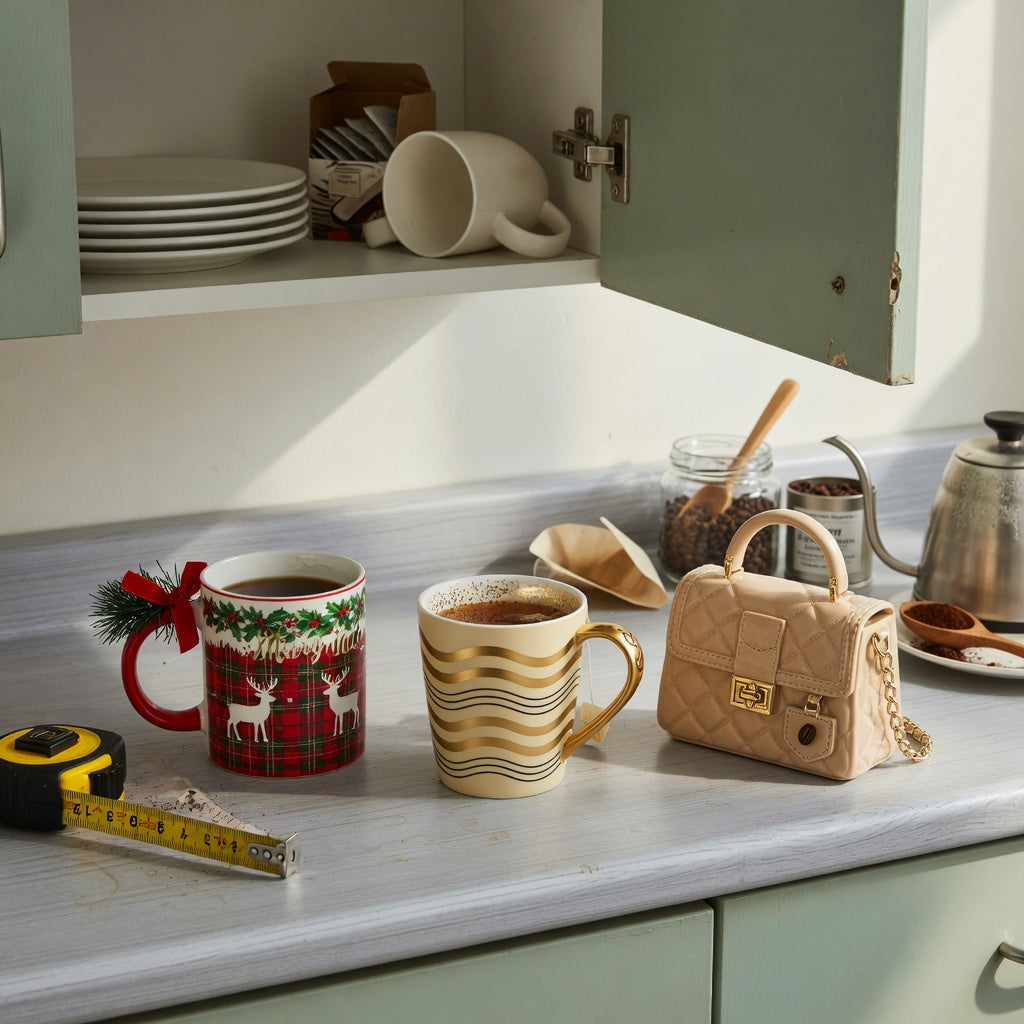
Unique Christmas Coffee Mugs: Everyday Mug Rotation Product Shortlist
Compare three CoffeifyMug designs by frequency of use, cupboard footprint, office fit, care routine, and gift appeal. Clear choose-or-skip guidance keeps the shortlist practical.
Read more
Leave a comment
This site is protected by hCaptcha and the hCaptcha Privacy Policy and Terms of Service apply.