
Macchiato Cup Size Decision Guide: 170, 200 or 250 ml?
Reading time: about 8 minutes
A compact espresso-and-foam pour can sit neatly in a 170 ml cup, then look unexpectedly low when moved into a 250 ml one. Add extra milk or a few ice cubes, and the smaller cup can run out of working room just as quickly. Our macchiato cup size decision guide starts with this familiar counter problem: choose for the drink you actually make, not for an assumed universal recipe.
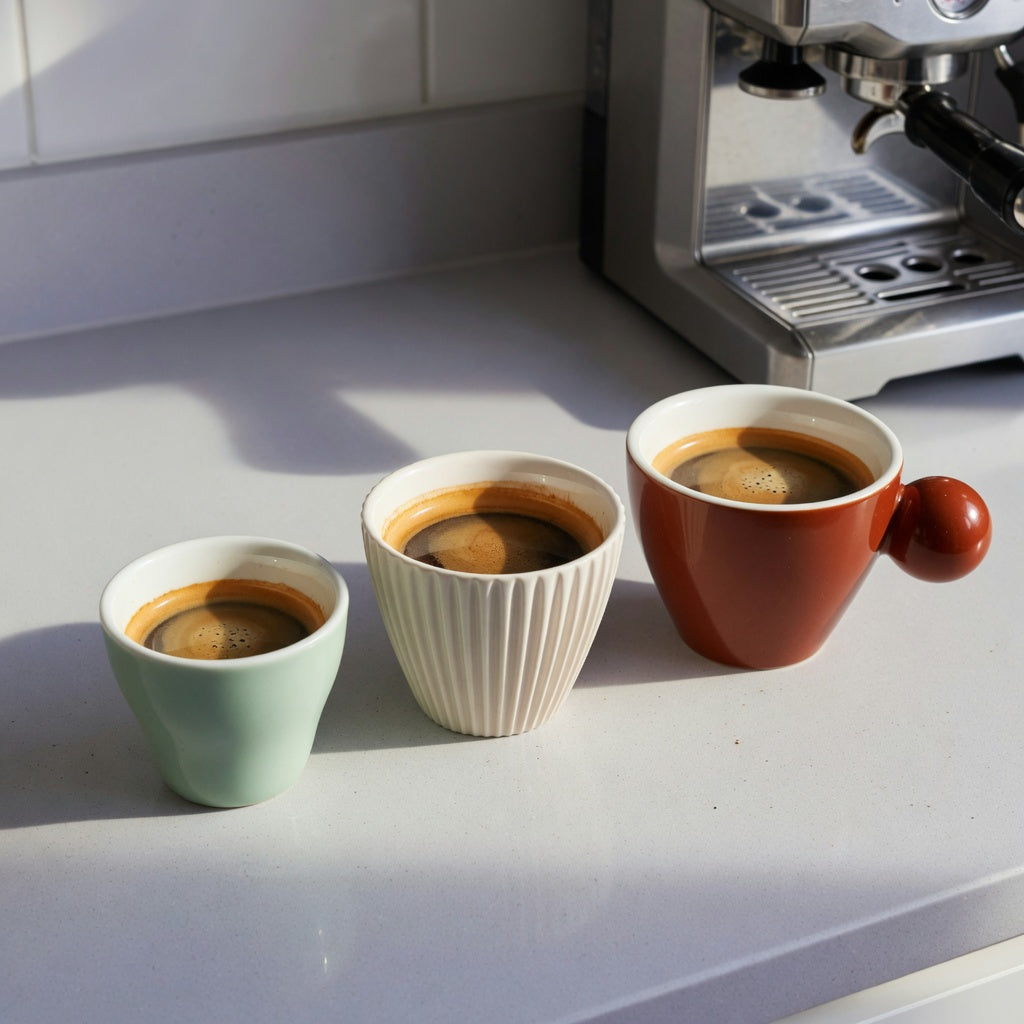
In our store, we separate listed capacity from practical headroom. The number on a product page is a comparison point, not an instruction to fill the cup to its rim. Foam, milk, ice and the walk from an espresso machine to a kitchen table all use space. The current options covered here are the Retro at 170 ml, the Pleated at 200 ml and the Ball Handle at 250 ml.
What changes between 170 ml, 200 ml and 250 ml?
All three options sit within a compact capacity range, but the differences are meaningful if your finished drink is close to the limit of the smaller cup. The 200 ml option adds 30 ml over the Retro. The 250 ml Ball Handle adds 50 ml over the Pleated and 80 ml over the Retro.
| Current option | Listed capacity | Practical match | Main trade-off |
|---|---|---|---|
| Retro Coffee and Tea Cup | 170 ml | A measured low-volume pour with limited milk, foam or other additions | Least room for ice, extra milk or changes in your routine |
| Pleated Coffee and Tea Cup | 200 ml | A compact drink that varies modestly from one preparation to the next | More empty space than the Retro for a very short pour, but less flexibility than 250 ml |
| Ball Handled Coffee and Tea Mug | 250 ml | Extra milk, ice or a preference for more open space above the drink | A small espresso-forward serving may look low in the cup |
Those capacity differences only become useful when compared with your own finished volume. Capacity does not confirm external dimensions, machine-spout clearance, shelf fit, weight or thermal behavior. Check the current product listing for those details if any of them affect where and how you will use the cup.
Use this macchiato cup size decision guide with your usual pour
The quickest way to avoid an unsuitable size is to measure one drink before ordering. Do not size the cup from the espresso portion alone if milk, foam, sweetener or ice is part of your normal preparation.
- Make the drink as usual. Include every addition you use on a normal morning rather than testing a stripped-down version.
- Record the finished volume. Use marked preparation tools, or note the fill line and recreate it safely with cool water in a measuring vessel.
- Look at the remaining room. Decide if you like a close, visually full serving or more space for carrying the cup across a kitchen or office.
- Allow for routine variation. If your measured drink plus preferred headroom sits too close to one listed capacity, compare the next size up.
Macchiato proportions vary between cafes, machines and households. Some people use little more than espresso and a mark of foam; others make a milkier or iced variation. We treat those proportions as context, not as a universal drink standard. Your repeated finished volume is the more reliable buying variable.
When does the 170 ml Retro make the most sense?
The 170 ml Retro cup is the most direct choice when your measured drink fits with the headroom you want and you prefer less empty space around a compact serving. It is also the smallest listed option for a crowded coffee station or a routine built around short pours, although capacity alone does not establish the cup's external footprint.
The visible retro form is an aesthetic choice rather than evidence of better heat retention, grip or durability. This size is not the practical pick if you regularly add ice, increase the milk portion or fill close to 170 ml before allowing room at the top. In those situations, moving to 200 ml is more useful than relying on a careful rim-level pour every day.
Why choose the 200 ml Pleated cup for a changing routine?
The 200 ml Pleated cup suits a shopper whose drink changes by a small amount from day to day. Its extra 30 ml over the Retro can accommodate a thicker layer of foam, a little more milk or simply a less exact pour without moving directly to the largest current option.
Its pleated exterior is also a visible and tactile design difference. Your fingers contact the raised and recessed form, but hand comfort is personal, so we do not describe the pleats as a guaranteed non-slip feature. The 200 ml size may be unnecessary if your compact drink already sits exactly as you like in 170 ml. It can also remain restrictive if ice or larger milk additions are a regular part of the drink.
When is the 250 ml Ball Handle worth the extra room?
The 250 ml Ball Handle option has the largest listed capacity in this group. It makes sense for a shopper who routinely needs more headroom, uses ice or prepares a longer variation while still shopping within the compact-cup selection. On an office desk, that additional room can also be preferable to filling a smaller cup close to the rim.
The ball-shaped handle is its defining visible form, but handle comfort depends on hand size and grip preference. Study the current product images and dimensions if that detail is central to your decision. This is not the strongest choice for someone who wants a very small serving to appear full, and extra capacity does not make an open cup leakproof or suitable for commuting.
How should material, handles and pleats affect the decision?
The verified comparison facts used in this guide establish the three listed capacities and visible forms. They do not establish dishwasher, microwave or rapid temperature-change compatibility. We recommend checking the material and care information on the current product page or packaging instead of treating cup size or surface appearance as proof of a care method.
- At gift unboxing: inspect the drinking rim, base and handle area under clear light. Do not use a cup with a visible chip or crack.
- At the handle junction: check for a fine crack after a drop or impact, even if the rest of the cup looks intact.
- On the counter: place the empty cup on a flat, dry surface. Retest on another surface if it rocks before deciding the base is uneven.
- During hand washing: move the cloth around the recesses of a pleated exterior and rinse them carefully. Avoid abrasive tools unless the listed material guidance permits them.
- Before dishwasher cycles: confirm that the current care instructions explicitly allow dishwasher use. A glossy or smooth-looking finish is not enough evidence.
These checks matter most after shipping, gift unboxing and accidental impact. They also prevent a capacity comparison from overshadowing the material and care requirements that affect day-to-day ownership.
Which size fits a kitchen counter, office desk or gift purchase?
The setting changes which trade-off matters most. We use the following scenario-to-size matches when helping shoppers narrow the current options.
- Fixed home espresso routine: Choose the 170 ml Retro if your measured short drink fits with comfortable headroom. Its smaller capacity avoids paying for flexibility you will not use.
- Shared kitchen or variable milk portion: Consider the 200 ml Pleated cup. The middle capacity allows modest changes while retaining a compact format.
- Office desk or regular iced variation: Start with the 250 ml Ball Handle if open space above the drink matters more than a visually full low-volume serving. Check external dimensions separately if desk space is tight.
- Gift with an unknown drink routine: The 200 ml option is the literal middle capacity, but it is not automatically right for every recipient. Compare the retro, pleated and ball-handle forms in our unique coffee mugs collection and use what you know about the recipient's usual drink.
Before checkout, confirm six points: finished drink volume, desired headroom, frequency of ice or extra milk, preferred visible form, external dimensions and the listed material-care instructions. A larger cup offers flexibility, while a smaller one usually gives a compact pour less unused visual space.
Frequently asked questions
Is 170 ml large enough for a macchiato with foam?
It can be if your complete drink, including foam, fits within 170 ml while leaving the headroom you prefer. There is no single macchiato ratio that makes 170 ml right for everyone. Choose 200 ml if your normal pour sits close to the top or changes often.
What is the practical difference between 170 ml and 200 ml?
The Pleated cup provides 30 ml more listed capacity than the Retro. That difference is useful for a little more foam, milk or carrying room, but it may leave more visible empty space around a very short pour.
Should I choose 200 ml or 250 ml for an iced macchiato?
The 250 ml option provides 50 ml more listed capacity for ice and liquid than the 200 ml option. A small iced preparation may still fit the Pleated cup, so measure the finished drink rather than choosing from the label alone. Follow the listed material guidance around rapid hot-to-cold temperature changes.
Does this macchiato cup size decision guide assume a standard drink ratio?
No. Macchiato recipes and serving styles vary, so this comparison uses listed cup capacity, practical headroom and your measured finished volume. It does not present one cafe or home recipe as a universal standard.
Are the Retro, Pleated and Ball Handle cups dishwasher safe?
Capacity and visible form do not establish dishwasher compatibility. Check the current material and care instructions on the linked product page or packaging before placing any cup through dishwasher cycles.
Measure your usual drink once, then choose the smallest listed capacity that still leaves the headroom your routine needs. Review the three current forms together in the compact and unique coffee mug selection before making the final size decision.
More from our blog
Read more
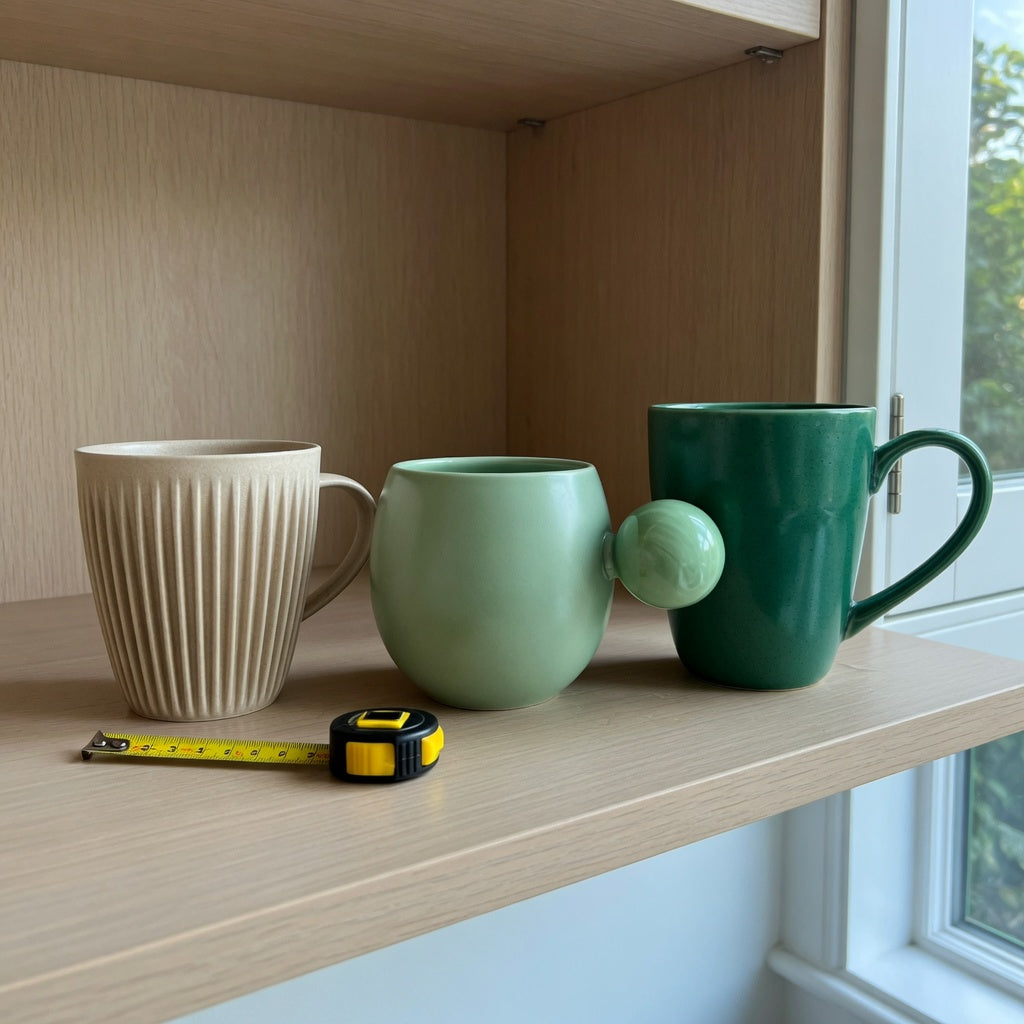
Flat White Cup Storage Fit Guide: Compare 3 Current Shapes
Compare the verified 200 ml, 250 ml, and 270 ml capacities against handle projection, cabinet depth, lift clearance, and daily storage habits. See which current CoffeifyMug shape suits your space a...
Read more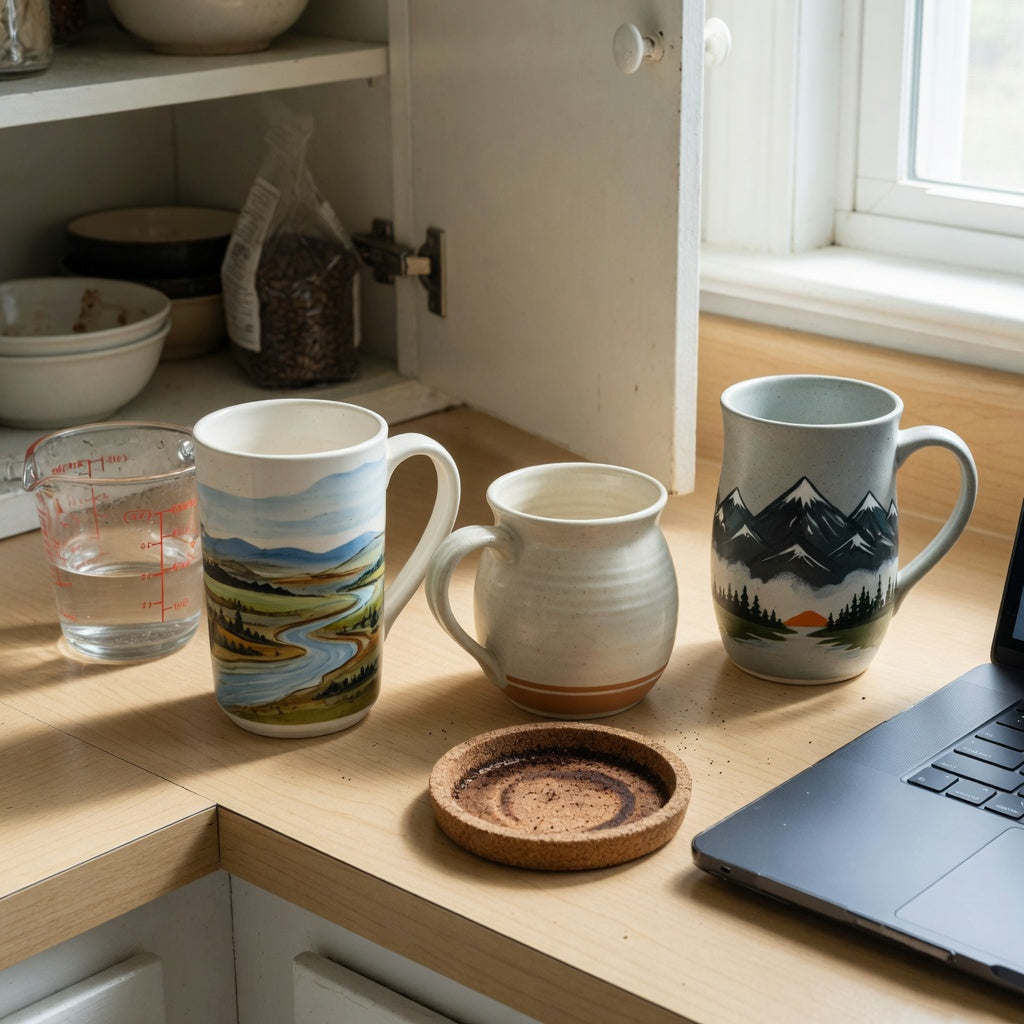
12 oz ceramic coffee mugs buying priorities: Capacity, Shape, Space
Compare measured drink volume, tall versus round profiles, handle clearance, and cabinet or desk space. We map those checks to CoffeifyMug's Landscape Tall, Round, and Mountain Tall options while f...
Read more
Leave a comment
This site is protected by hCaptcha and the hCaptcha Privacy Policy and Terms of Service apply.