



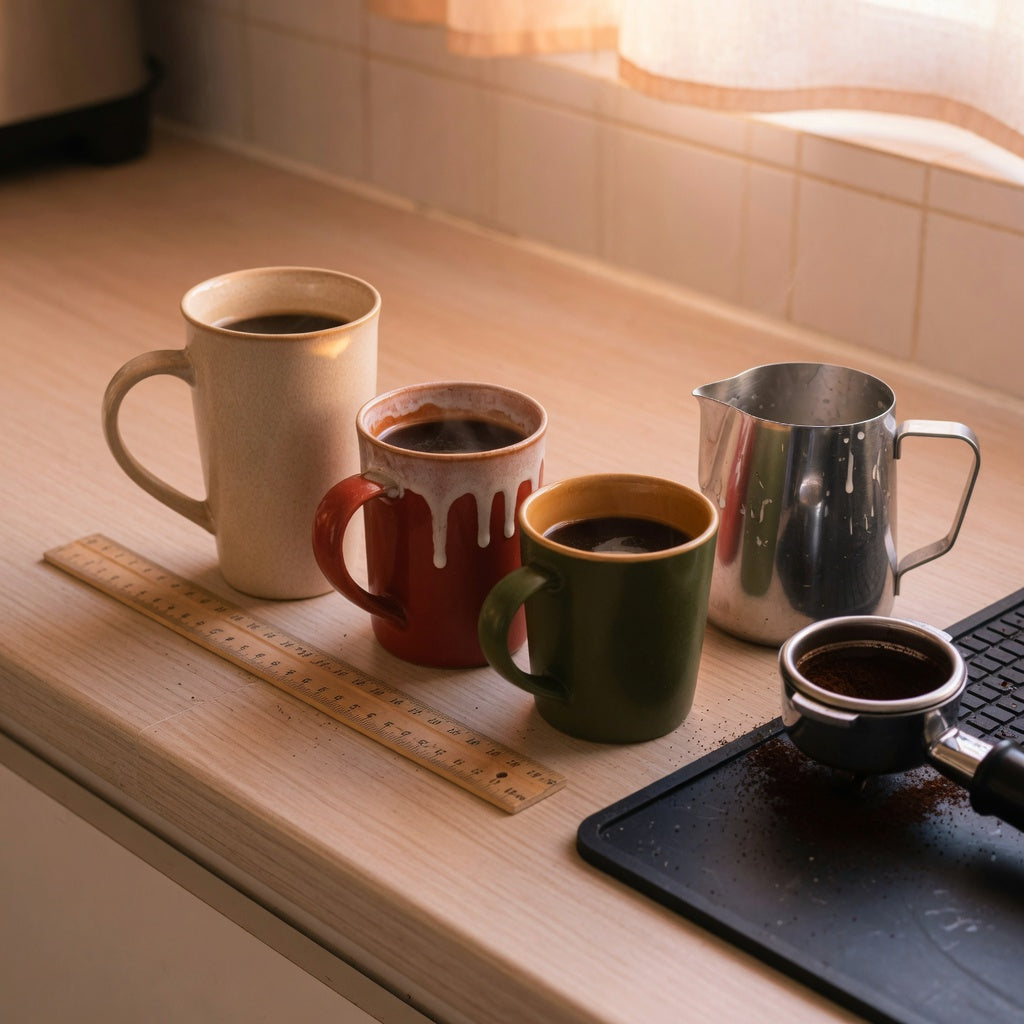
Latte Mugs Tall Shape and Handle Guide: 400, 440 or 480 ml
Reading time: about 11 minutes
Three mugs, three listed capacities, and one question we answer almost every week: will this one actually fit under my machine? Pulling a shot into a mug that sits too high forces you to brew into a pitcher first. A handle that crowds the wall presses your knuckles against hot ceramic. And a box that says tall latte mug might hold a narrow conical gift mug, a wide cafe cup, or an oversized everyday mug — three genuinely different products.
That gap is what this latte mugs tall shape and handle guide is for. We stock, pack, and photograph these mugs, so we'll stay with what you can see or measure before checkout: listed capacity, silhouette, handle form, and the clearances that decide whether a mug earns permanent counter space. Where a listing doesn't publish a number, we'll say so rather than guess on its behalf.
Three different products get sold as a tall latte mug
Search the phrase and the results split into three families. Knowing which one you're looking at prevents most bad purchases.
- The tall everyday mug. Straight or gently tapered walls, a full loop handle, built around volume. This is the family our 400–480 ml lineup belongs to.
- The wide cafe latte cup. Short, broad rim, often in the 6–8 fl oz range, shaped so a pitcher spout can hover just above the surface. Excellent for latte art, cramped for a big drink.
- The conical gift or photo mug. Frequently listed around 17 fl oz on print-on-demand sites, taller and narrower than a cafe cup, usually bought for the decoration rather than the pour geometry.
One regulatory detail is worth clearing up because it gets misquoted constantly. The FDA's ceramic guidance describes a typical cup or mug as holding about 240 ml — roughly 8 fl oz — made with a handle, and it separates a mug (straight cylindrical sides) from a cup (a base with curved sides). That is a description of tableware categories for testing purposes, not a rule that a latte has to be eight ounces. Plenty of home setups run double that and are perfectly happy.
Unit conversion trips shoppers up more than size does. NIST's approximate factor is 1 US fluid ounce = 29.57 ml, which puts 12 fl oz near 355 ml and 16 fl oz near 473 ml. A listing that quotes only one unit is quietly asking you to do that math at the worst possible moment — usually with a full pitcher in your hand.
Latte mugs tall shape and handle guide: comparing 400 ml, 440 ml and 480 ml
Our current tall lineup runs from 400 ml to 480 ml. Converted, that's roughly 13.5 to 16.2 fl oz — no small cups in this group, which matters if you're stepping up from an 8 oz mug and expecting a similar pour. To see these against everything else we stock, the unique coffee mugs collection lists the full catalog in one place.
| Mug | Listed capacity | About, in US fl oz | The drink it tends to suit | Worth confirming on the listing |
|---|---|---|---|---|
| The Flow Coffee & Tea Mug | 400 ml | ~13.5 | A double shot plus a modest stretch of milk, carried from kitchen to desk | Height, rim diameter, handle opening |
| Morning and Night Coffee & Tea Mug | 440 ml | ~14.9 | Milkier builds — flavoured lattes, mochas, chai with something on top | Height, and whether that height clears your spout |
| The Rock Coffee & Tea Mug | 480 ml | ~16.2 | 16 oz pours, iced lattes, Americano with a splash of milk | Base diameter, handle width, weight in hand when full |
400 ml — The Flow Coffee & Tea Mug. Start here if your latte is a standard double shot with a modest milk stretch and you'd rather not fight for headroom. Listed at 400 ml, it leaves the most margin of the three once you finish with a textured cap, and it's the size we reach for when someone wants one mug that does coffee and tea without looking oversized on a small table. What a photo can't tell you is the exact rim diameter or handle opening, so check the dimension block if you're trying to match a cup you already love.
440 ml — Morning and Night Coffee & Tea Mug. The middle size is where flavoured drinks live: syrups, cocoa, chai with a dusting on top, or a latte built with more milk than the classic ratio. At about 14.9 fl oz it takes a bigger pour without forcing you to give up the gap under the rim. If your usual drink already sits dangerously close to the top of a 12 oz mug, skip the 400 ml and start here.
480 ml — The Rock Coffee & Tea Mug. Listed at 480 ml, this is the 16 oz class. It makes sense for a big morning pour, for iced lattes where ice eats a third of the volume, or for an Americano you finish with milk. It's also the mug where handle and base matter most, because you're lifting close to half a litre of liquid before the mug's own weight is counted at all.
Read those as capacity choices, not shape verdicts. Two mugs with the same millilitre number can look completely different depending on how that volume is split between base, wall, and rim — and that split is what your hand, your shelf, and your cup holder actually feel. If you want the wider catalog in one view, our breakdown of mug sizes by ounce lays it out mug by mug.
Does height or capacity decide whether the mug fits under your spout?
Height. Always height. Capacity tells you how much the mug holds; it tells you nothing about whether the group head will clear the rim.
The measurement takes two minutes and saves a return:
- Espresso machine clearance. Measure from the drip tray grate to the lowest point of the group head or spout, then compare that against the mug's listed height — not its ounce rating. If the mug is taller, pull the shot into a small pitcher or demitasse and pour it in. A lot of tall-mug owners do this permanently; it stops being a workaround and becomes the routine.
- Upper cabinet spacing. Tall mugs with a narrow base stack badly rim-to-base and chip along the glaze line. Plan shelf space for them standing upright, in a single row, with a finger's width above the rim.
- Base diameter. A narrow base under a tall body tips easily near a laptop or a stack of papers. Check the base figure against your car cup holder too if the mug commutes with you.
- Handle stand-off. The gap between handle and body is what keeps your knuckles off hot ceramic. Wide loops with real distance are far more comfortable on a full mug than tight decorative ones.
Our notes on the three measurements tall mug buyers should compare go deeper on height, rim diameter, and base diameter, and on why a single capacity number can never stand in for them.
Handle form, and where the weight sits once the mug is full
A full mug changes the ergonomics completely. A 480 ml pour is close to half a kilogram of liquid held away from your body, and the handle you barely noticed while the mug was empty suddenly becomes the whole conversation.
- Multi-finger loops spread that load across three fingers instead of one, which is why larger cafe cups usually carry a taller loop.
- Sculpted single-finger handles photograph beautifully and feel fine empty. With a full 16 oz pour, the same handle can dig into the side of your index finger.
- High attachment points put the pivot close to the rim, which makes a tall mug read as tippier when you lift it one-handed.
- A small thumb rest on the top curve is underrated — it gives you a brace point and keeps the mug from rotating as you walk.
Here's the honest limitation: most listings don't publish handle opening width, handle thickness, or wall thickness at the rim. If grip comfort is your deciding factor — limited grip strength, small hands, a heavy daily pour — ask the seller or check the dimension block before ordering instead of assuming from a photograph. We'd rather you ask than return it.
If latte art is the goal, a tall mug is the harder tool
Latte art depends on getting the pitcher spout close to the surface so the foam lands on the crema rather than sinking under it. A wide, shallow cup lets you do that on the first pour. A tall, narrower vessel keeps the spout further from the liquid for longer, so you're tilting the mug harder and dropping the pitcher lower as it fills.
You can absolutely pour art in a tall mug. It just takes more tilt and better timing. So be honest with yourself about priorities: choose tall for footprint and volume, choose wide for art. And on the claim you'll see repeated online — that tall mugs keep coffee hotter — we don't have controlled testing behind that, so we won't sell you on it. Buy the shape that fits your counter and your hand.
Microwave, dishwasher and glaze: what we check before recommending a mug
Care instructions are product-specific, and we won't project them from one mug onto another. Here's the framework we use.
The USDA's guidance is simple: only cookware manufactured for microwave use belongs in a microwave, glass and ceramic containers that are safe are usually labelled for microwave oven use, and china with metallic paint or trim is not safe. There's also a practical test for anything unlabelled — heat the vessel for one minute beside a cup of water, and if the vessel itself gets warm or hot while the water stays cool, it isn't microwave safe.
On glaze safety, the FDA sets an action level for leachable lead in cups and mugs of 0.5 micrograms per millilitre of leaching solution, tested across six units using methods such as ASTM C738. The FDA also flags higher risk in glazed or crude pottery, antiques, damaged or worn pieces, flea-market finds of unknown origin, and brightly coloured orange, red, or yellow decoration — while describing everyday commercial factory pottery as much less likely to have lead problems. Washing or boiling does not remove lead from pottery, so a doubtful piece stays doubtful.
Dishwasher claims work the same way: only trust them when the maker states them for that specific mug. A glaze that survives hand-washing perfectly well can still dull over a few hundred hot cycles.
Matching the mug to your pour: three scenarios and a verification list
- You pull a double shot and stretch about 8 oz of milk. Go with the 400 ml Flow mug — it gives you a clean fill line with room left for foam, and it won't dominate a small kitchen counter.
- Your drinks run sweet and topped. The 440 ml Morning and Night mug absorbs the extra syrup, cocoa, or whipped layer without reaching the rim.
- You drink 16 oz, or you drink iced. Take The Rock at 480 ml and check the base diameter first, since this is the mug you'll be lifting heaviest.
Before you add anything to cart, confirm:
- Listed capacity, and whether you've converted it correctly — divide millilitres by 29.57 for ounces.
- Height, measured against both your machine clearance and your shelf gap.
- Rim diameter for sipping comfort and art, base diameter for stability and cup holders.
- Handle opening width, if grip is the deciding factor.
- Microwave and dishwasher statements in the maker's own words, not inferred from the material.
Frequently asked questions
How much headroom should I leave in a 400 ml mug for a latte?
We stop pouring about an inch below the rim on the 400 ml mug so the foam settles inside the wall instead of mushrooming over it. That margin also gives you somewhere for the drink to move when you pick the mug up and walk. If you routinely fill to the very top, the 440 ml gives you the same drink with more slack.
Is a 480 ml mug too big for a standard double-shot latte?
It's a lot of milk for one double shot, and the drink will taste milkier and less espresso-forward than the same shot in a 400 ml mug. That's not a defect — it's what a 16 oz latte is. The 480 ml earns its place with iced drinks, Americanos finished with milk, and anyone who genuinely wants a long, mellow pour.
Can you pour latte art into a tall mug instead of a wide cup?
Yes, with adjustments. Tilt the mug more steeply, start the pour from a little higher to set the base, then drop the pitcher close to the surface as the mug fills. It's simply less forgiving than a wide 6–8 oz cafe cup, where the spout sits near the crema from the first second.
How do I confirm a mug will fit my espresso machine before ordering?
Skip the ounce rating and use height. Measure from your drip tray to the underside of the group head, then compare that to the mug's listed height — this latte mugs tall shape and handle guide treats that one number as the deciding spec. If your clearance is tight, brew into a small pitcher and pour into the mug.
Which of the three tall sizes should I order first?
Match it to the drink you make most often: 400 ml for a classic double-shot latte, 440 ml for flavoured or generously milked drinks, 480 ml for 16 oz and iced pours. If you're still torn between two, browse the full unique coffee mug collection and compare the listed heights side by side before you commit.
More from our blog
Ready to pick your mug? Two ways to save on today's order:
Ordering 1–3 mugs? Get an extra 10% off your 1st order with code 10_OFF Apply 10% Off & Shop Wooden-Handle Mugs →
Gifting 4+ mugs? Buy 3, Get the 4th Free applies automatically at checkout (no code needed; offers do not stack) · Free standard shipping (Nov pre-Christmas delivery: 15–20 calendar days US) · Free replacement if chipped in transit.
Popular mug buying guides: Ceramic Tea Cups & Infuser Mugs · Ceramic Mugs with Lids Compared · Wooden-Handle Tea Infuser Mugs Compared · Christmas & Secret Santa Mugs 2026 · Espresso & Cortado Cups Guide · Cup & Saucer Gift Sets · All 25 Mugs Spec Table · Mug Size Guide · Shipping & Promo FAQ
FIRST ORDER 10% OFF (CODE: 10_OFF) · OR BUY 3, GET THE 4TH FREE


Read more
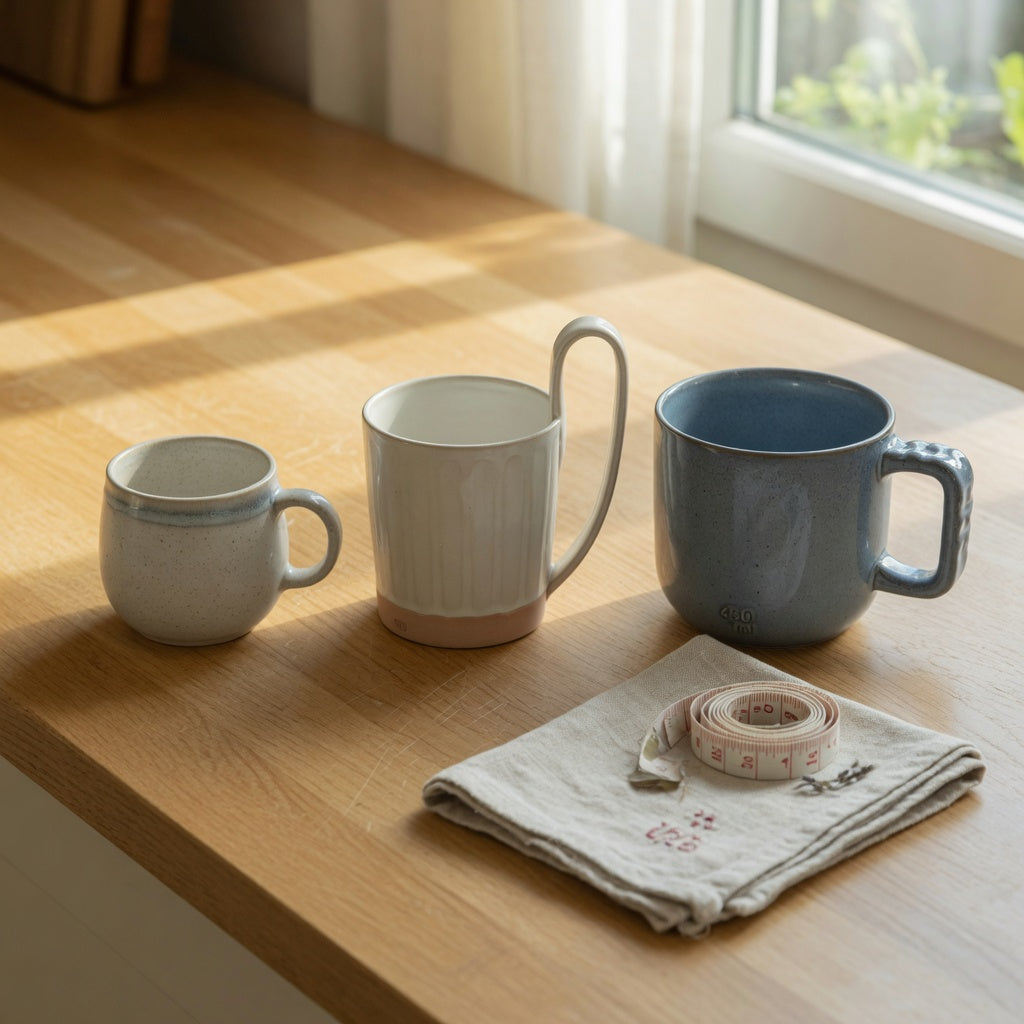
Coffee Mugs With Big Handles Shape and Handle Guide | CoffeifyMug
Listing photos flatter a loop that may still pinch your knuckles. We compare our three handle silhouettes by finger clearance, grip span and listed capacity so you can match the mug to your hand be...
Read more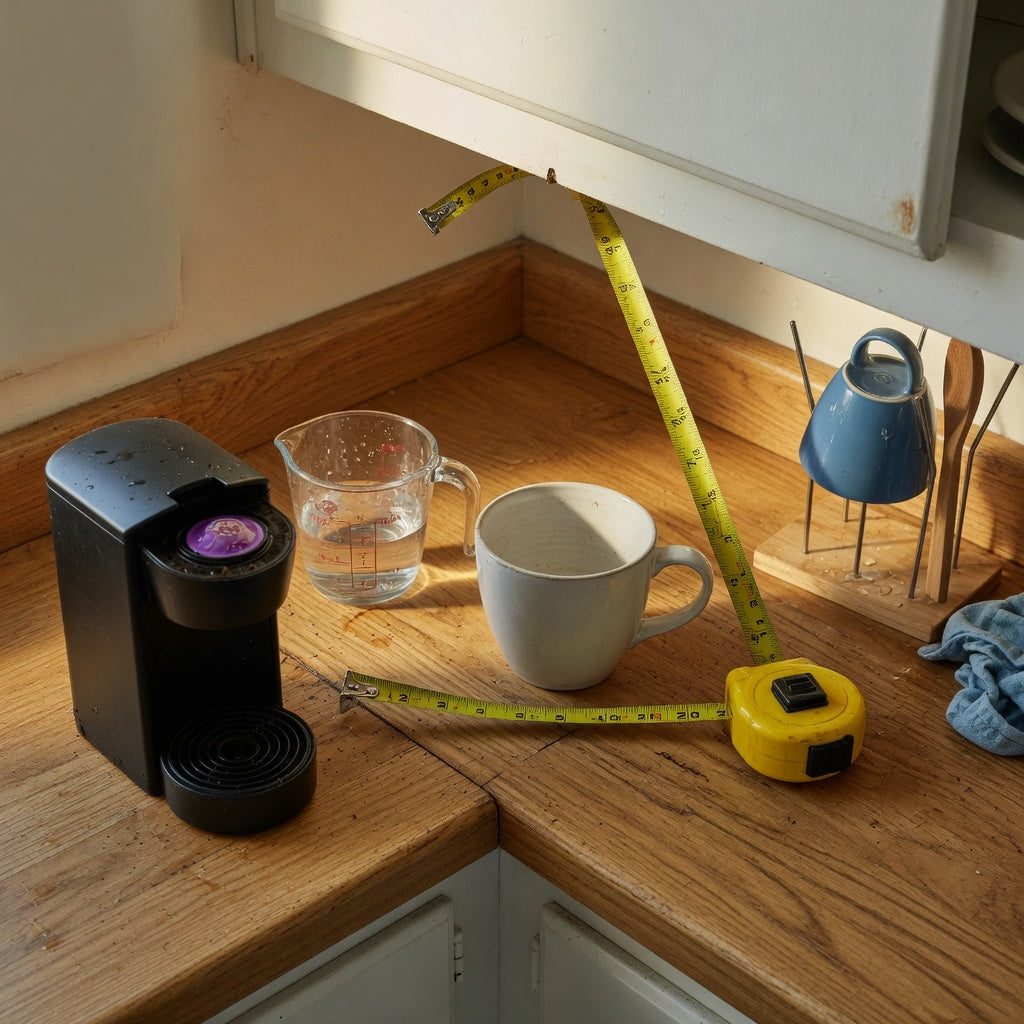
15 Oz Ceramic Coffee Mugs for Small Coffee Setup: Space and Fill
A 15 oz label is a ceiling, not a pour. We compare usable fill, counter footprint, handle clearance, full-mug weight, and glaze care so a big mug actually earns its space in a small kitchen.
Read more
Leave a comment
This site is protected by hCaptcha and the hCaptcha Privacy Policy and Terms of Service apply.