
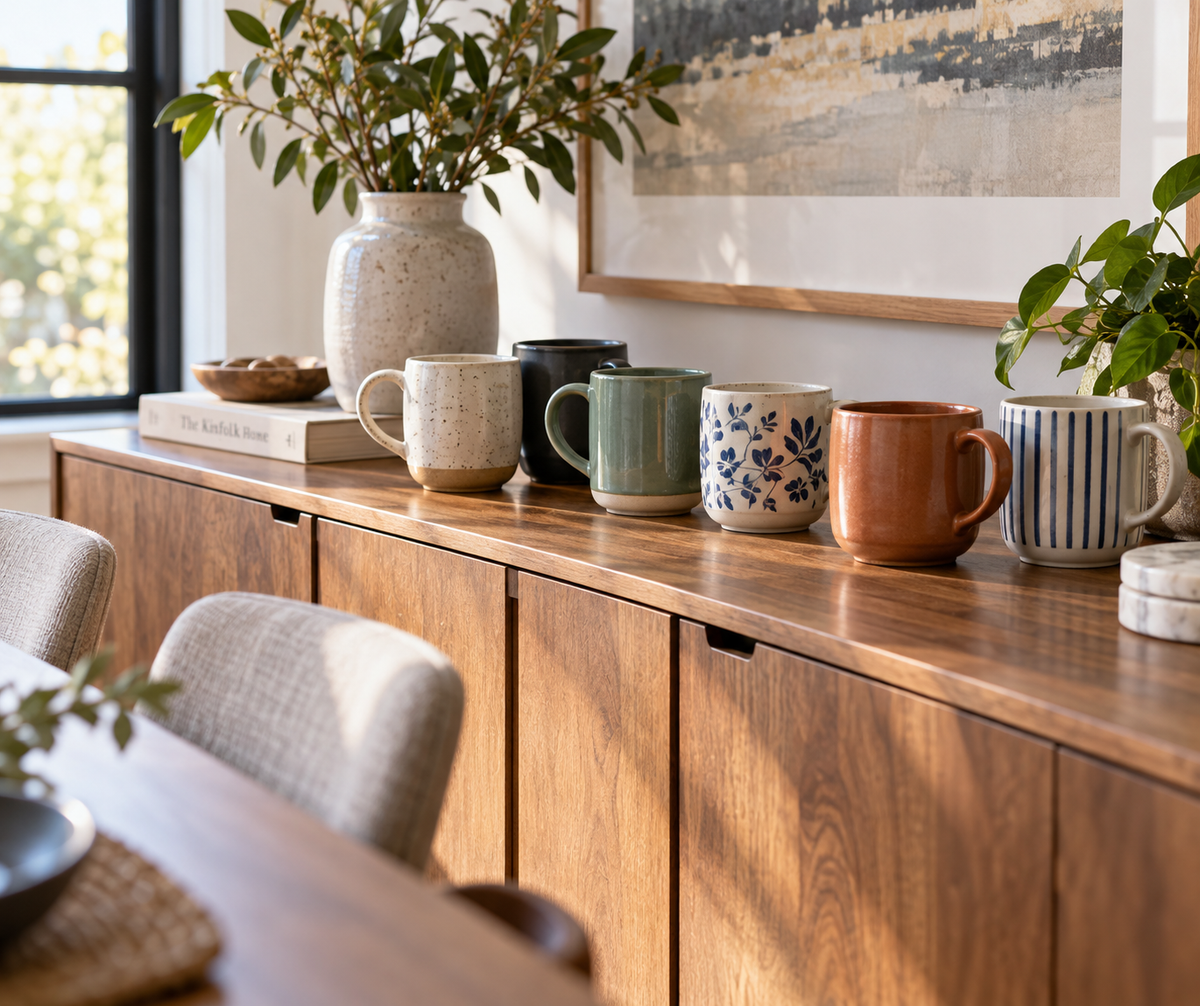
How to Choose Mugs for Sideboard: Size, Style, and Care Guide
Reading time: about 8 minutes
Picture this: You’ve just finished setting up brunch for friends, and your sideboard looks stunning with perfectly arranged mugs. Deciding how to choose mugs for sideboard can feel overwhelming with so many options. At CoffeifyMug, we’ve helped customers turn their sideboards into showpieces that reflect their style while standing up to real life.
What size mugs work best when displayed on your sideboard?
Size directly impacts how your sideboard looks and functions. Too small, and the mugs blend into the background. Too large, and they take over the shelf, making the display feel chaotic.
We recommend mugs that offer good visual weight. This size allows you to see the design without making the sideboard look top-heavy. For narrower shelves, go for slightly smaller options to keep things tidy.
Remember, the depth of the mug also matters. It should fit within your shelf’s dimensions to avoid tipping or sticking out awkwardly. If you’re unsure about the best fit for your space, check the dimensions on the current product listing before buying.
Another consideration is the overall footprint. Mugs with a stable base prevent accidents and keep your display looking intentional. We often see customers place mugs that are too tall on sideboards with limited height, leading to instability. In our store, we’ve watched buyers regret oversized options that crowd smaller dining spaces.
Which materials work best for mugs you display on your sideboard?
Material choice is one of the biggest decisions for sideboard mugs. The right one ensures your display stays beautiful for years.
Porcelain delivers that crisp, shiny look that pops in photos but requires extra care as it can chip easily. Stoneware is our go-to for durability - it withstands display use better and has a matte or textured finish that’s great for modern decor.
Ceramic offers more color options and patterns, making it easy to coordinate with any room. We always suggest testing the material in person because the feel and weight differ noticeably. A lightweight ceramic might seem fine but can feel unstable when displayed.
In our experience, for sideboard displays, stoneware or high-quality ceramic strikes the best balance. Avoid materials that are too thin or lightweight as they can feel cheap in the display. Also, consider food contact safety - since these are coffee and tea mugs, opt for ones labeled for that use to be safe. Porcelain might seem like the best option for a shiny display, but it can be more fragile in households with kids. Stoneware, on the other hand, offers a better trade-off for long-term display use without frequent replacements.
Our round coffee tea mug exemplifies a durable choice many of our customers love for both daily sipping and display.
How do you match mugs to your sideboard’s color palette and style?
Matching mugs to your sideboard is about creating harmony that makes the space feel intentional. Start with the main color of your sideboard - whether it’s wood grain, white, or painted.
For a neutral sideboard, go with mugs in warm earth tones or cool blues to add softness. If your sideboard has a bold accent color, incorporate it subtly into one or two mugs for a pop.
Consider the room’s overall style. In a minimalist kitchen, simple white mugs with thin handles work well. For a cozy farmhouse, choose mugs with rustic patterns.
We’ve seen great results with mixing textures - one glossy porcelain and one matte stoneware. This prevents the display from looking flat. Check out our unique coffee mugs collection for endless styling possibilities. The trade-off here is that bold patterns can dominate a neutral sideboard, so test small groups before committing to a full arrangement.
Why does handle design matter even when mugs are on display?
Handle design isn’t just for holding; it affects the overall look and how easy it is to use the mugs daily on your sideboard. A well-designed handle adds functionality while complementing the aesthetic.
Look for handles that are wide enough for comfort but not bulky. Some customers prefer no handle at all for a cleaner display, while others like a simple loop handle for character.
Pay attention to the connection - it should be sturdy so it doesn’t feel loose. The landscape tall coffee tea mug features a design that works perfectly for both display and use. Common mistake: Choosing handles that clash with the color scheme. We recommend testing a few to see how they sit on the shelf. In our store, we’ve noticed that a loose connection can make the mug seem less stable even when it’s not being held, especially on slightly uneven surfaces.
How do you style mugs on your sideboard for a polished look?
Styling is where your personal touch comes in. Arrange mugs in groups of 3-5 for visual interest, alternating heights to create depth.
- Place tallest mugs in the back
- Fill in with medium ones in front
- Leave space for smaller accent pieces
Use a decorative tray under the group to anchor it. Change up the arrangement every few weeks to keep it fresh. For seasonal updates, swap in lighter or darker mugs depending on the time of year. We’ve found that spacing matters more than you think - too many mugs close together can make the sideboard feel busy rather than intentional. The trade-off is that over-styling can hide the sideboard’s natural wood grain or finish, so leave breathing room for the furniture itself.
What care steps keep your displayed mugs looking great over time?
Proper care ensures your sideboard mugs stay in great condition. Clean them by hand with mild soap and warm water. Dry immediately to prevent water spots.
For delicate pieces, spot clean only. For the sideboard itself, dust regularly with a soft cloth to keep it from looking dusty. Avoid harsh chemicals that could damage finishes. Store mugs in a way that prevents chipping - use a shelf or drawer if possible. This maintenance makes a huge difference in how long your display stays appealing. In our experience, many customers notice that hand washing with mild soap prevents mineral buildup that can affect the look over time. We recommend checking for chips after every use in homes with pets or kids, as even small nicks can show up quickly on displayed items.
Frequently asked questions
How do I know which size mugs to choose for my sideboard?
Measure the space on your sideboard first. Aim for mugs that provide balance - not too small to be overlooked and not so large they crowd the area. Test a few by placing them on your actual shelf to see how they fit.
If your sideboard has limited depth, prioritize mugs with a narrower base. We suggest starting with options from our selection to find what works best for your setup. The trade-off is that larger mugs can hold more coffee but may feel top-heavy in smaller displays.
What material should I pick to avoid issues with sideboard display?
Choose materials that are durable yet attractive, like stoneware or ceramic. These handle bumps better than thinner options and look polished over time. Always check for food-safe certification since the mugs are intended for beverages.
In our experience, porcelain is beautiful but more prone to damage, so it’s better suited for less active display areas. Consider your home environment when deciding - if there are young kids around, go for more robust materials. The trade-off here is that more durable options like stoneware might cost a bit more upfront but reduce the need for replacements.
How can I make my mugs coordinate with the existing sideboard decor?
Look at the dominant colors in your sideboard material and room. Select mugs that echo those tones or provide nice contrast. Mixing similar mugs in complementary shades creates a layered look that’s both cohesive and interesting.
Try incorporating a few patterns or solid colors that complement your style. Our unique coffee mugs collection has pieces that fit many decor themes perfectly. The trade-off is that too many similar colors can make the display feel flat, so add one or two contrasting pieces for depth.
Is it okay to mix different mug styles on one sideboard?
Absolutely - mixing adds personality and prevents the display from looking too uniform. Focus on keeping the overall aesthetic consistent by choosing from a similar color family. This approach creates depth and invites guests to engage with the details. The trade-off is that mismatched handles or designs can draw attention away from the sideboard’s main features if not done carefully.
How often should I change up the mugs on your sideboard?
Change them every few weeks or for seasonal reasons to refresh the look. Rotate in mugs that match current trends or your current mood. This simple habit keeps the display feeling fresh and intentional without a big commitment. We’ve found that seasonal swaps based on weather or holidays keep the arrangement feeling current without overwhelming your budget.
More from our blog
Read more

Ceramic Coffee Cup for Cozy Home Corner: What Buyers Should Compare
Discover the key comparisons to make when buying a ceramic coffee cup for cozy home corner, from material and display to care and fit for real home use.
Read more
Best Open Shelf Ceramic Mug for Routine: Compare These Options
Our guide helps you compare open shelf ceramic mugs for routine use, focusing on durability, display appeal, and practical trade-offs from real store handling.
Read more
Leave a comment
This site is protected by hCaptcha and the hCaptcha Privacy Policy and Terms of Service apply.