
High Quality Ceramic Coffee Mugs Buying Priorities: Fit First
Reading time: about 10 minutes
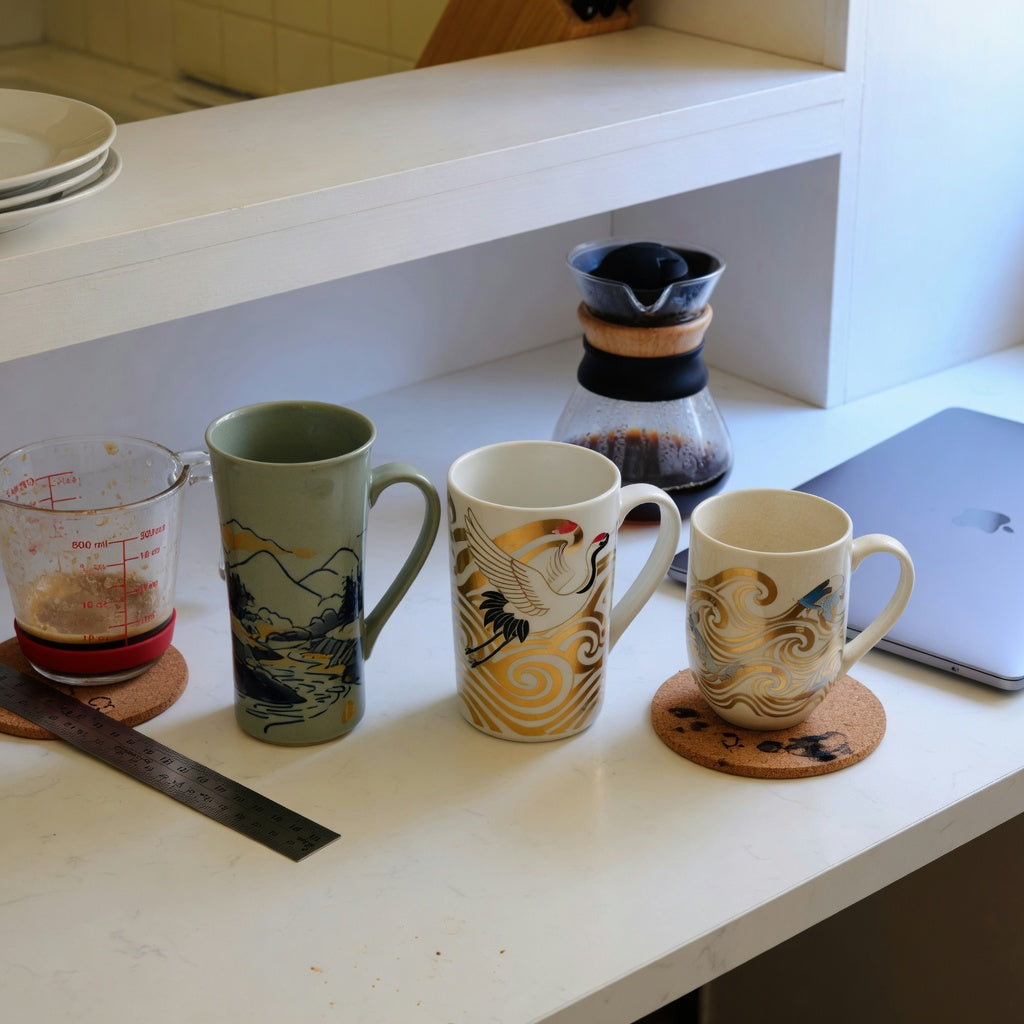
A mug can look perfectly proportioned on a product page and still become the one pushed behind the cereal bowls. Its handle collides with the mug beside it, its rim will not clear the coffee-machine spout, or a normal latte sits uncomfortably close to the top. In our store, high quality ceramic coffee mugs buying priorities start with those ordinary fit problems: the finished drink, the way the mug is held, and the space where it will be used.
We use the same sequence when comparing mugs for a kitchen counter, an office desk, or a gift. First establish the routine, then verify the current product listing. The category guidance below explains how to measure and inspect a ceramic mug; product-specific comments are limited to the names, visible profiles, and details presented on the linked CoffeifyMug pages. If a capacity, dimension, or care instruction is not listed, it should be treated as unknown rather than estimated from a photograph.
Which capacity matches the drink you actually make?
Start with the finished drink, not the nominal output printed on a brewer. Coffee plus milk may occupy considerably more space than the espresso or brewed coffee alone. Tea drinkers should include any room needed for an infuser, while iced-coffee drinkers need to account for both liquid and ice.
Our practical measuring process takes only one normal drink:
- Prepare the coffee or tea exactly as you usually serve it, including milk, water, or ice.
- Pour it into a marked measuring jug to record the finished volume.
- Allow roughly 15 to 25 mm of empty space below the rim if the mug will be carried from the counter to a desk.
- Compare that working fill with the capacity on the current product page. Check whether the listing describes a brim capacity or a comfortable serving capacity.
A larger capacity reduces the need for a refill, but the full mug will also be heavier. That matters during a long walk through an office or for anyone who finds a loaded ceramic mug tiring to hold. An oversized mug is also a poor match for a short coffee that will sit shallow in the base. If you usually finish a small drink quickly, a smaller ceramic style may suit you better than the largest available option.
How do body shape, rim, and handle change daily use?
Four parts of the silhouette deserve separate attention: the widest body diameter, the base or foot, the rim, and the handle opening. A photograph can show whether a mug is tall, rounded, tapered, or straight-sided. It cannot reliably prove how many fingers fit through the handle, how the filled mug balances, or whether the rim feels thick against the lip unless supporting measurements are provided.
When we handle ceramic ware, we check it both empty and filled. We look for knuckle clearance, pressure on the fingers, and any tendency for the body to rotate away from the hand. We also place it on a flat, dry counter to see whether the foot sits evenly. These small checks matter more on an office desk, where a mug is often lifted one-handed beside a keyboard, than they do during a seated meal.
Shape involves a trade-off. A tall profile may appeal to someone who likes an upright silhouette, but height can create problems under a low brewer or cupboard shelf. A broad decorative body may have more visual presence at a gift unboxing, yet it can consume valuable space beside a laptop. Product photography is useful for narrowing the style; listed dimensions are what confirm the fit.
Will the mug fit your brewer, shelf, coaster, and desk?
Overall height is only one space measurement. Total width must include the handle, and the widest point of a curved body may sit above a narrower base. We recommend measuring the actual route and resting places the mug will use, not just an open patch of countertop.
- Coffee brewer: Measure vertically from the drip tray to the dispensing spout. Leave enough room to place and remove the mug without tipping it sharply.
- Cupboard: Record shelf height and depth, then allow space for your hand to lift the mug without striking the shelf above.
- Desk: Measure the available width between the keyboard, notebook, monitor stand, and other fixed items.
- Coaster or warmer: Compare its usable surface with the mug's base diameter, not the wider body.
- Microwave: Check internal height and turntable clearance only after confirming that the product's current care instructions permit microwave use.
A ruler and a strip of removable tape are enough to mark the maximum footprint on a desk. Place your current mug inside that outline and move the handle through the positions you normally use. This exposes clearance problems that a single diameter figure can miss. It also prevents a common assumption: a tall mug is not automatically narrow, and a narrow-looking body is not proof of a small total width once the handle is included.
High quality ceramic coffee mugs buying priorities by routine
Once your maximum measurements and working capacity are written down, the visible design can guide the shortlist. The table maps specific shopper situations to the most relevant current CoffeifyMug page without assigning specifications that are not stated there.
| Reader situation | Evidence to compare | Relevant next step | Reason to pass |
|---|---|---|---|
| You deliberately prefer a taller silhouette for coffee or tea. | Current listed capacity, overall height, widest body diameter, base diameter, and total width with handle. | Open the Landscape Tall Coffee Tea Mug product page. Its named and visible tall format makes it the logical first comparison for this shape preference. | Skip it if your brewer or shelf has limited vertical clearance. The word tall does not, by itself, guarantee greater capacity or a smaller footprint. |
| You want a nature-led design for a desk, kitchen, or gift. | Current capacity, handle and body measurements when listed, motif placement, and care instructions. | Review The Crane Coffee Tea Mug details. The crane design gives this shopper a more relevant starting point than a plain mug would. | It is not the obvious choice for someone building an undecorated or tightly matched dinnerware set. The artwork also cannot tell you whether the grip will fit your hand. |
| You prefer a wave-led decorative mug with a more noticeable visual finish. | Listed capacity, visible profile, dimensions when provided, and product-specific cleaning and microwave guidance. | Compare the Golden Waves Kio ceramic mug with your recorded limits. | Pass if you prefer neutral tableware or need care instructions that are not confirmed on the current listing. A gold-colored name or appearance is not proof of the decoration's material. |
| You know your measurements but have not chosen an artwork or silhouette. | Reject anything outside your capacity and space limits before comparing decoration. | Browse the unique coffee mugs collection with your measurements beside you. | A broad collection can encourage appearance-first shopping. Keep the shortlist to designs whose current listings answer your practical questions. |
No row has a universal winner. Landscape Tall is the shape-led candidate, Crane is the nature-motif candidate, and Golden Waves Kio is the wave-design candidate. Their current product pages remain the source for capacity, dimensions, material details, and care instructions at the time of purchase.
What should the glaze, rim, and care notes tell you?
Ceramic quality cannot be reduced to weight or a glossy photograph. During handling, our team looks at the rim, handle junctions, glazed surface, and any exposed foot ring under clear side lighting. Common warning signs include a chipped rim, a hairline crack near a handle attachment, an uneven foot that causes rocking, or unexpected glaze pinholes and crazing. Some glaze effects may be intentional, so an unclear mark should be checked with the store rather than diagnosed from a photo.
Use the same inspection at a gift unboxing or before the mug's first drink. Set it on a flat, dry surface, examine the rim from several angles, and gently run a finger around accessible edges. Do not continue using a ceramic mug with a chip or crack in a drinking or load-bearing area.
Care claims must remain product-specific. Confirm whether the current listing explicitly allows dishwasher and microwave use; ceramic material alone does not settle either question for every decorated mug. Color names such as golden also do not establish whether a finish contains metal. If microwave guidance is absent, do not infer safety from appearance.
For routine care, avoid moving ceramic directly between temperature extremes, use a non-abrasive sponge on decorative surfaces, and store mugs so their rims and handles do not knock together. If dishwasher use is permitted, position the mug where another item cannot repeatedly strike the handle during a cycle. These habits reduce avoidable wear, but they do not replace the instructions attached to a specific product.
Where is an open ceramic mug the wrong format?
These ceramic coffee and tea mugs should not be treated as substitutes for lidded travel drinkware. A commute, moving vehicle, packed bag, or worksite with frequent impacts calls for a securely lidded format designed for mobility. Ceramic is breakable, and an open rim offers no spill control.
A different style may also suit a shopper with wrist sensitivity, very limited shelf height, or a strong need for stackability. In those cases, compare smaller and lighter vessels, low-profile cups, or a uniform stackable set. A distinctive ceramic mug makes sense for mostly stationary kitchen and desk use; it is a poor purchase if its visual design asks you to ignore a recurring practical limitation.
A five-minute counter, desk, and cupboard check
- Write down the volume of your finished everyday drink.
- Measure brewer clearance, shelf height, base space, and total available width.
- Decide whether tall shape, decorative artwork, grip, or easy care ranks first.
- Record each candidate's listed capacity, dimensions, and care directions. Mark omitted information as unknown.
- Reject poor fits before comparing the remaining designs by appearance.
This is how we keep high quality ceramic coffee mugs buying priorities tied to daily use. The result should fit the drink, the hand, and the room before it earns a place at the front of the cupboard.
Frequently asked questions
What high quality ceramic coffee mugs buying priorities should I check first?
Measure your finished drink, then check the mug's capacity, overall height, widest diameter, base diameter, and total width including its handle. After those fit, compare handle shape, artwork, and care instructions. This order prevents a visually appealing mug from failing at your brewer, desk, or shelf.
Does a tall ceramic mug always hold more coffee?
No. Height describes one part of the silhouette, while capacity also depends on internal width, wall shape, and base construction. Use the capacity stated on the current listing and confirm the overall dimensions instead of estimating volume from the word tall or from a photograph.
How do I know whether a mug will fit under my coffee maker?
Measure from the drip tray to the lowest fixed part of the dispensing area, then compare that clearance with the mug's listed height. Leave enough extra room to move the mug in and out without a steep tilt. Also check the base against the usable drip-tray area.
Can I put a decorated ceramic mug in the microwave or dishwasher?
Only follow the care directions stated for that specific mug. A ceramic body does not automatically make every applied decoration suitable for a microwave or dishwasher, and a gold-colored design does not confirm or rule out metallic material. Treat missing care information as a reason to ask before use.
Which CoffeifyMug design should I compare first?
Start with Landscape Tall for a deliberately tall silhouette, The Crane for a nature-led motif, or Golden Waves Kio for a wave-focused decorative look. Then reject any candidate whose current capacity, dimensions, or care notes do not match your checklist. Take your measured limits to the current unique ceramic mug selection and compare only the designs that fit them.
More from our blog
Read more
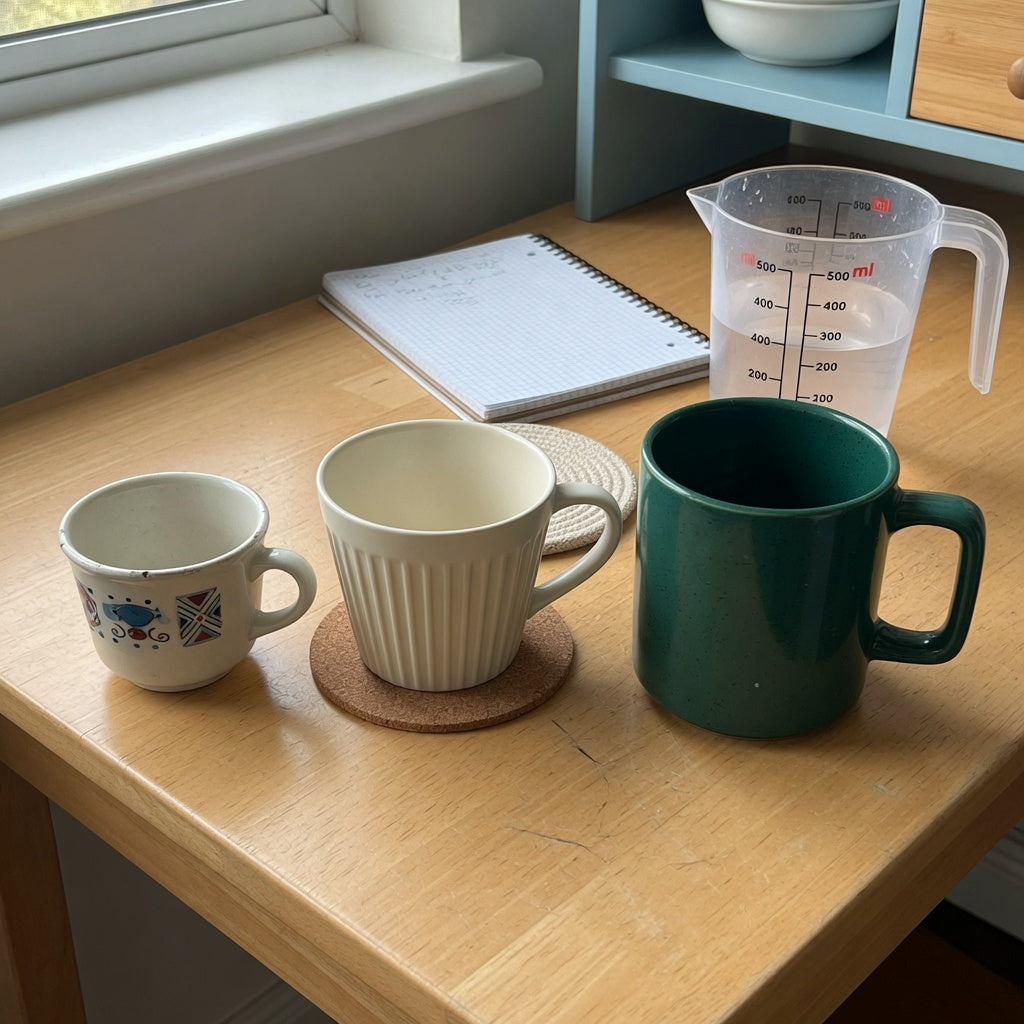
Decaf Coffee Cup Buying Priorities: Capacity, Shape, and Space
Compare verified 170 ml, 200 ml, and 270 ml cup capacities against your normal pour, handle preference, desk or counter space, and care needs. This guide also flags what photos and listings cannot ...
Read more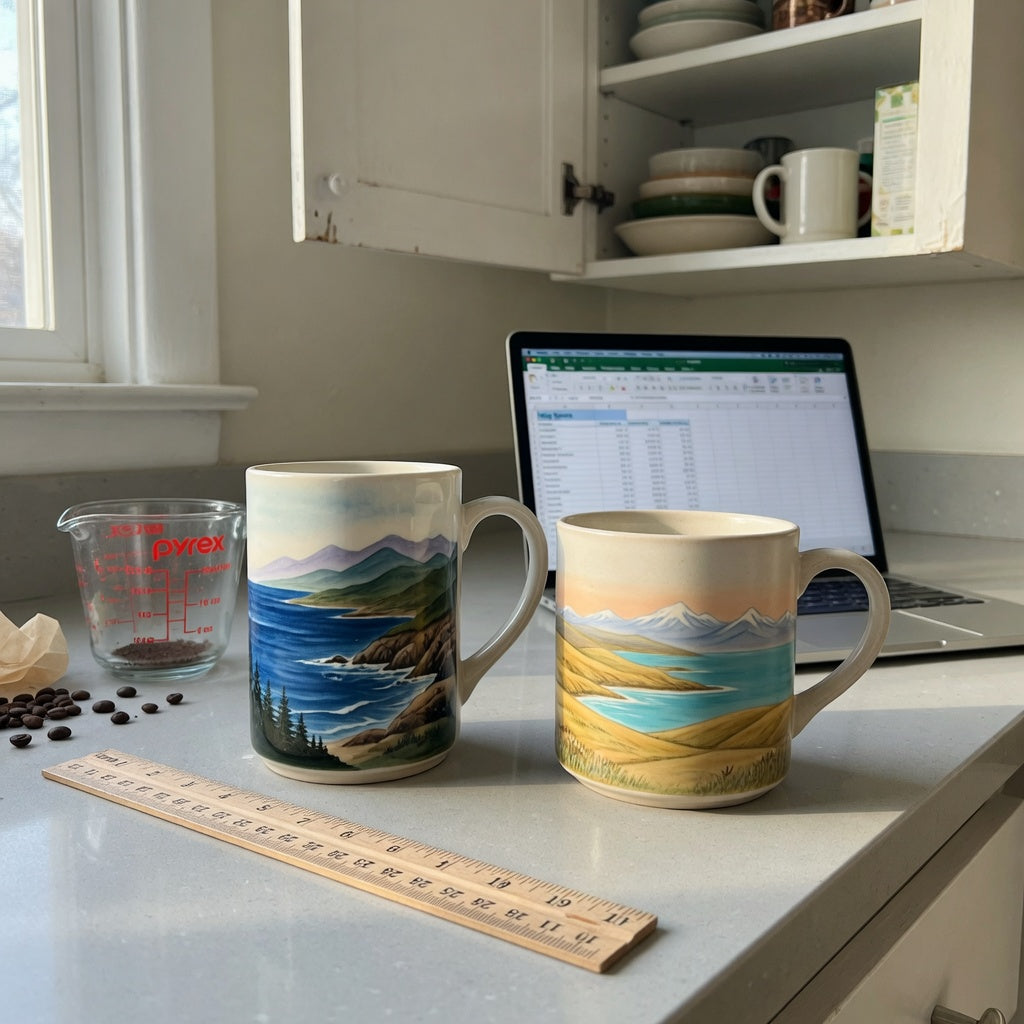
Ocean Coffee Mug Buying Priorities: Capacity, Shape, and Space
Match an ocean-themed ceramic mug to your real pour, hand clearance, desk footprint, and cabinet space. We compare the visible form and current listed details of the Mountain Sea and Landscape mugs...
Read more
Leave a comment
This site is protected by hCaptcha and the hCaptcha Privacy Policy and Terms of Service apply.