
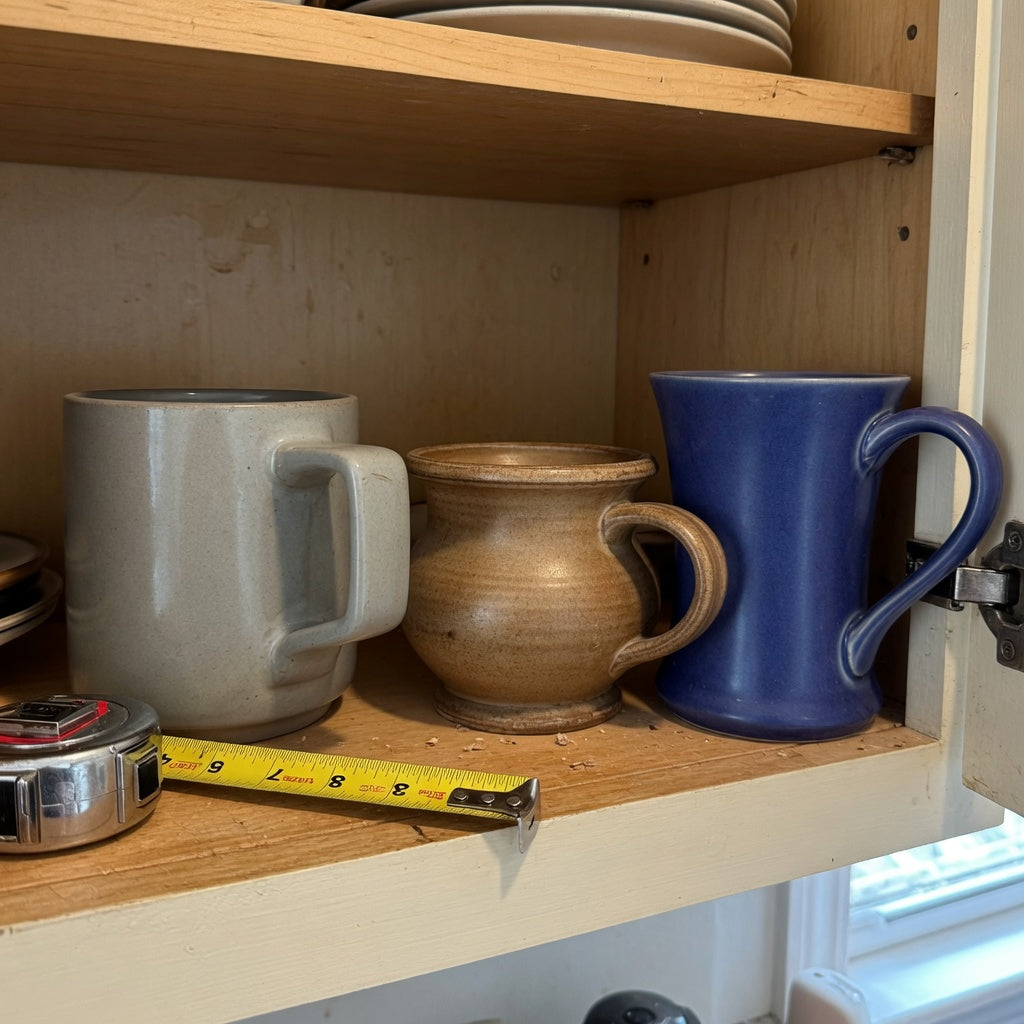
Heavy Ceramic Coffee Mugs Storage Fit Guide: Shape vs Shelf Space
Reading time: about 9 minutes
A cabinet can look roomy until a mug goes in handle-forward. The ceramic body clears the shelf, then the handle reaches the inside of the door and the door will not close. That ordinary mismatch is the problem this heavy ceramic coffee mugs storage fit guide is designed to prevent: choosing by visible body size while forgetting total depth, the widest point and the space needed to lift the mug out.
We sell, handle and pack these shapes in our store, so we pay attention to the parts shoppers often miss in a product photo. We can compare the forms clearly visible on the current pages, but we cannot turn a photo into an exact measurement. If a page lists dimensions, use those current figures as the source of truth and check whether the stated width includes the handle.
How should you use this heavy ceramic coffee mugs storage fit guide?
Start by recording the usable storage envelope, not just the dimensions of the shelf board. Five variables determine whether a heavy ceramic mug fits comfortably.
- Usable depth: Measure from the cabinet back to the inner surface of the closed door. Measuring only to the front edge of the shelf can overstate the available room.
- Usable width: Record the clear space between cabinet walls, face frames, hinges and neighboring dishes. The opening may be narrower than the shelf behind it.
- Vertical clearance: Measure from the shelf surface to the underside of the shelf above, then allow enough room to grasp and lift the mug without scraping its rim.
- Handle orientation: A forward-facing handle consumes depth. A sideways handle consumes width. Decide which orientation your cabinet can support before comparing products.
- Shelf support: Several heavy mugs grouped on one adjustable shelf place more demand on its pins and supports than lightweight cups. Check the cabinet maker's load guidance if you plan to fill the entire shelf.
Write these numbers down before opening a product page. If a listed measurement does not make clear whether it includes the handle, treat the fit as unresolved rather than assuming the smallest interpretation.
How do The Rock, Spittoon and Flow occupy a shelf?
The current product photography shows three noticeably different silhouettes. The comparison below addresses visible form and its likely storage implications; it does not assign exact footprints that are not listed on the pages.
| Mug | Visible form | Storage implication | Best situation to investigate |
|---|---|---|---|
| The Rock Coffee Tea Mug | A substantial, straighter-sided body with a broad-looking base and side handle. | The body appears to hold much of its width through its height. Total span from the outer handle edge to the opposite side matters more than the base alone. | A dedicated open shelf, deep cabinet bay or office desk where the solid profile has room around it. |
| Spittoon Coffee Tea Mug | A vessel-like silhouette that becomes wider toward its upper portion. | The widest point may sit above the base, so measuring or judging only the foot can produce a poor side-by-side estimate. | An open display shelf or a cabinet section with enough lateral room for the flared upper profile. |
| The Flow Coffee Tea Mug | A contoured silhouette with narrower sections and a projecting side handle. | The contour may leave room beside parts of the body, but the widest body point and handle still establish the real storage envelope. | A mixed shelf where you want to compare a more contoured form against straighter or flared mugs. |
Product photos are useful for spotting a straight body, rim flare or contour. They are not reliable for declaring one mug the smallest because camera angle, cropping and perspective can change the apparent scale. Compare current listed dimensions wherever available before making a final fit decision.
Will the handle clear a closed cabinet door?
Handle projection is often the deciding variable in a shallow upper cabinet. The mug body can sit fully on the shelf while the outer part of the handle crosses the door's closing plane. Cabinet bumpers, inset doors, hinges and face frames can reduce clearance further.
- Handles facing forward: This arrangement can conserve side-to-side space, but it requires enough depth for the entire handle.
- Handles facing sideways: Turning a mug can solve a door collision, although each handle then occupies space that might otherwise hold another cup.
- Alternating handles: This can work with some mug combinations, but only if the handles do not collide and each mug remains easy to grasp.
Measure to the inside of the closed door, not to the cabinet frame or shelf edge. If the available depth is close to a listed total mug dimension, leave practical room for your fingers and for removing the mug without striking the door. A technically exact fit can still be irritating during a rushed morning coffee routine.
Which current shape suits your storage setup?
The right next step depends on where the mug will live. Match the situation to the shape, then verify the current page rather than treating these as universal size rankings.
- Roomy open shelf: Compare The Rock and Spittoon first. Their visually substantial forms can be displayed without a cabinet door turning handle projection into a problem.
- Mixed shelf with bowls, jars or smaller cups: Examine The Flow's contoured profile. It may leave usable gaps beside parts of the body, but it should not be assumed to have the smallest total width.
- Deep cabinet with a row of handles facing forward: A straighter body such as The Rock may be simple to arrange in a regular row. Confirm total handle depth before ordering more than one.
- Shallow cabinet: Do not choose from the front-view photo alone. Verify total depth, plan to turn the handle sideways or use an open shelf if no handle-inclusive measurement confirms the fit.
- Gift for someone whose kitchen you have not seen: Storage is harder to predict than color preference. Review several silhouettes in our unique coffee mugs collection and consider whether the recipient uses an open shelf, office desk or compact cabinet.
For an RV, travel kit or very small kitchen built around nested drinkware, a heavy sculptural ceramic mug may be the wrong category. A lighter, straight-sided and explicitly stackable style will usually suit those spaces better.
How do shelf height, stacking and care affect storage?
Exterior height is only part of the vertical-space calculation. A mug that fits beneath the next shelf can still be difficult to remove if you have to tilt it around a face frame or cannot lift it high enough to clear the shelf lip.
- Plan for single-layer storage: Unless a product page explicitly states or demonstrates that a mug is stackable, do not assume that sculptural bodies and handles will nest securely.
- Avoid hard ceramic contact: Rim-to-base or handle-to-body contact can create unstable stacks and increase the chance of glaze chips. At our packing table, we keep ceramic surfaces protected rather than using one mug to support another.
- Check the stated care directions: Ceramic material alone does not establish dishwasher or microwave compatibility. Follow the current instructions on the individual product page.
- Dry before enclosed storage: Let the mug dry fully after washing, including the base and handle junction, before returning it to a closed cabinet.
Adjustable shelves can solve a height problem, but raising one shelf may remove useful space from the level above. Evaluate the whole cabinet section instead of fitting one mug at the expense of everything stored around it.
What trade-offs should small-kitchen buyers expect?
Heavy ceramic mugs are not optimized for maximum storage density. Bold bodies, substantial handles and non-nesting profiles can be satisfying on a desk or counter while proving inefficient in a narrow cabinet. They are also less convenient on a high shelf where every mug must be lifted down at full arm extension.
Capacity does not settle the storage question. Two mugs intended for similar drinks can occupy different cabinet footprints because of wall shape, rim flare, base width and handle projection. Our heavy ceramic coffee mugs storage fit guide therefore treats photography as evidence of shape, not as a substitute for comparable dimensions.
If you want a mug with visual presence and have a dedicated shelf, the extra footprint may be a reasonable trade. If you need to stack several cups, move them frequently or fit them into a shallow cabinet, a thinner and explicitly stackable style is the more practical choice.
A five-minute cabinet check before ordering
- Choose the exact shelf position where the mug will be stored.
- Measure usable depth to the inside of the closed door.
- Measure the clear width at both the cabinet opening and the shelf interior.
- Record vertical clearance and test the path your hand uses to lift out a mug.
- Choose a forward, sideways or alternating handle arrangement.
- Review the current dimensions and side-view photos on each candidate page. Confirm whether the total width or depth includes the handle.
- If a required measurement is unavailable or the fit remains close, select a roomier location or compare another shape in the collection.
A paper or cardboard footprint can help only when it is based on listed measurements. Do not scale dimensions from a product image. A small uncertainty around handle projection is enough to turn a usable cabinet into one that will not close.
Frequently asked questions
Can this heavy ceramic coffee mugs storage fit guide tell me which mug is smallest?
Not without directly comparable dimensions that include each mug's widest point and handle. The guide identifies how the visible Rock, Spittoon and Flow forms use space, but product photography alone cannot establish an exact size ranking. Use the current specifications on each linked page for the final comparison.
Does mug height include the room needed to lift it off a shelf?
No. A listed product height describes the mug, while practical storage also needs clearance for your fingers and the upward movement used to remove it. Check for a low shelf above, a front lip or a cabinet face frame that could obstruct that movement.
Can The Rock, Spittoon and Flow mugs be stacked?
Do not assume they are stackable unless the current product page explicitly says so or shows a stable nesting arrangement. Sculptural rims, bases and projecting handles can create poor contact points. Plan for single-layer storage if cabinet organization depends on a reliable fit.
Which mug should I compare first for a shallow upper cabinet?
Start with the mug that has a verified total depth including its handle. The Flow's contoured body may appear less bulky in places, but that does not prove its handle is shorter or that it will clear your door. If handle depth is not confirmed, plan for sideways storage or an open shelf.
Are heavy ceramic mugs practical gifts for someone with a small kitchen?
They can be if the recipient keeps a favorite mug on a desk, counter or open shelf. They are a riskier gift for someone who relies on shallow cabinets or tightly stacked cups. Compare visible profiles in the collection and favor a shape that matches the recipient's known storage habits.
Next step: Write down usable depth, clear width, vertical clearance and intended handle direction. Compare those four points against The Rock, Spittoon and Flow pages, then browse the current unique mug collection if none of the three provides a clearly supported fit.
More from our blog
Read more
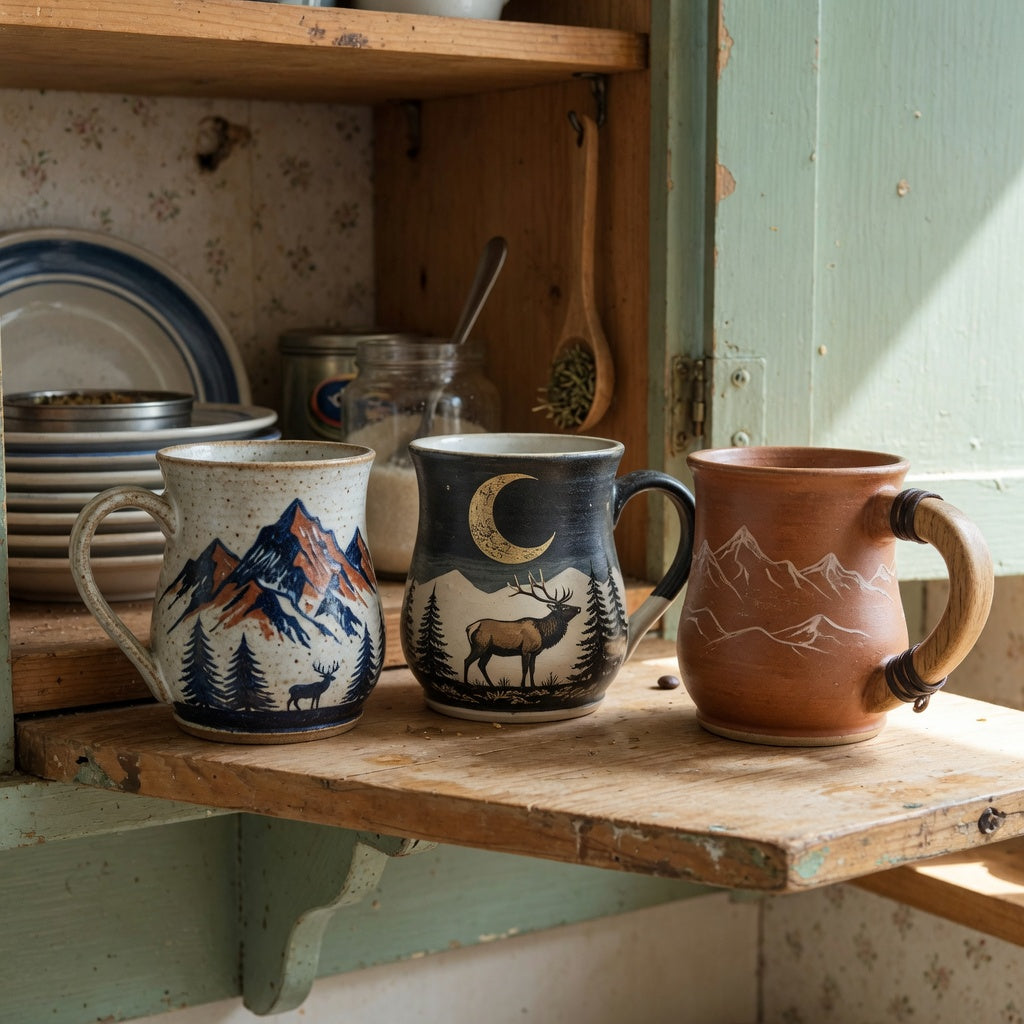
Rustic Ceramic Coffee Mugs Storage Fit Guide: Shelf Needs
Compare three current rustic ceramic mug shapes by handle projection, cabinet clearance, stacking limits, and care needs. This guide separates visible product details from general storage advice so...
Read more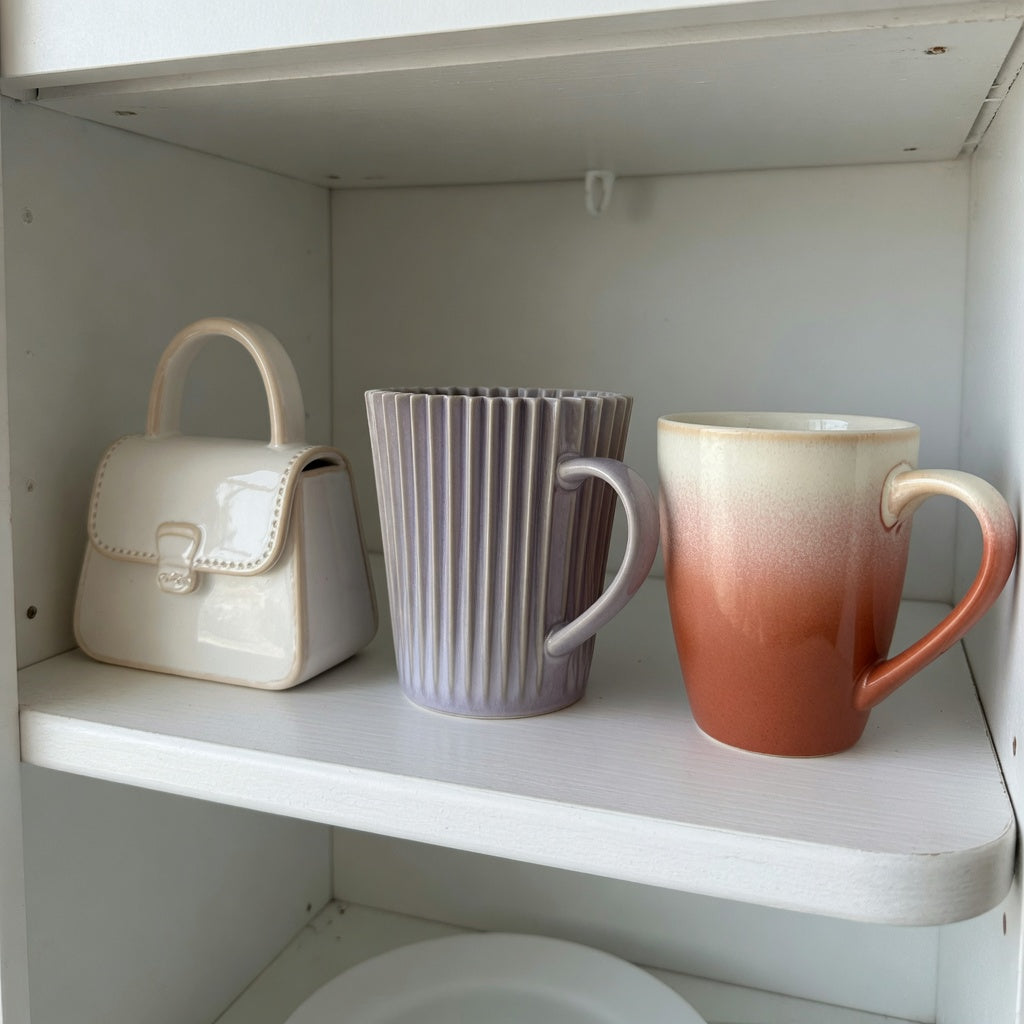
Cute Ceramic Coffee Mugs Storage Fit Guide: Shelf Fit by Shape
Compare CoffeifyMug's handbag, pleated, and gradient ceramic mug shapes against real cabinet, open-shelf, mug-tree, and desk constraints. See what to measure, where each form makes sense, and when ...
Read more
Leave a comment
This site is protected by hCaptcha and the hCaptcha Privacy Policy and Terms of Service apply.