
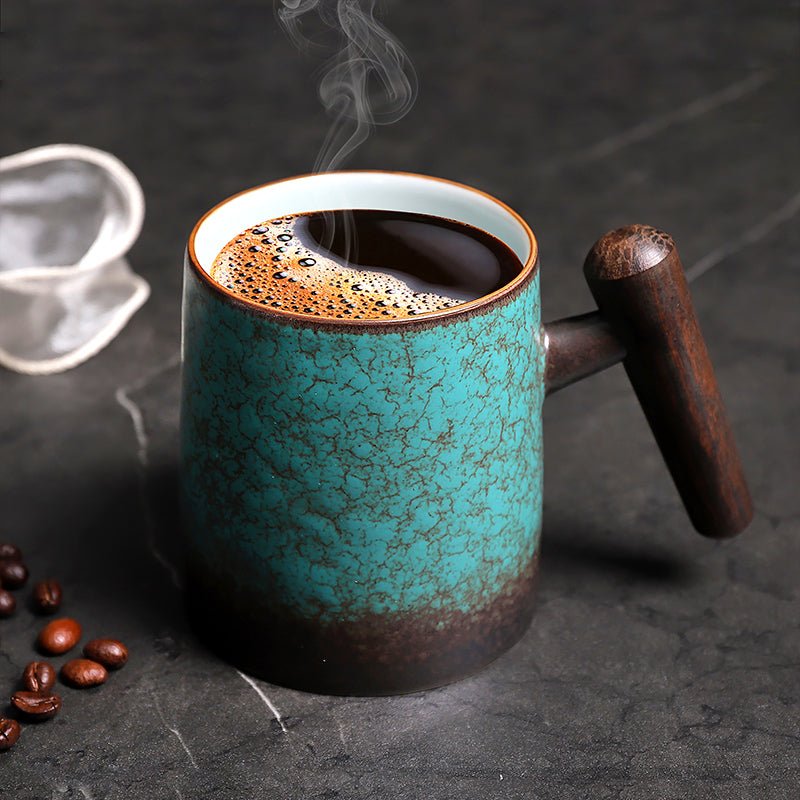
Green Tea Mug Capacity Guide: 170, 200, or 270 ml?
Reading time: about 9 minutes
A mug that looks right on a product page can feel too small after the second trip from an office desk to the kettle. The opposite problem happens too: a large mug is filled halfway every morning because the owner actually prefers short servings. This green tea mug capacity guide compares the three capacities currently listed in our relevant catalog options: 170 ml, 200 ml, and 270 ml.
We are keeping the comparison deliberately practical. Capacity tells you how much a vessel is listed to hold, but it does not establish tea origin, authenticity, brewing performance, or care requirements. In our store, we find that the useful buying question is simpler: do you want a compact serving, a middle-size cup, or the longest pour of these three?
The current choices are the Retro Coffee Tea Cup at 170 ml, the Pleated Coffee Tea Cup at 200 ml, and the Emerald Coffee Tea Mug at 270 ml. Shoppers who want to compare these designs with other shapes can also browse our unique coffee mugs collection.
Green tea mug capacity guide: what does each current size mean?
The difference between adjacent sizes is not enormous, but it is noticeable in a repeated daily routine. Moving from 170 ml to 200 ml adds 30 ml. Moving from 200 ml to 270 ml adds 70 ml. Across the full range, the 270 ml Emerald holds 100 ml more than the 170 ml Retro based on their listed capacities.
| Current option | Listed capacity | Best fit | Main trade-off |
|---|---|---|---|
| Retro Coffee Tea Cup | 170 ml | Short servings and intentional refills | Least liquid per fill |
| Pleated Coffee Tea Cup | 200 ml | Moderate servings without moving to the largest option | Still requires refills for longer drinking sessions |
| Emerald Coffee Tea Mug | 270 ml | A longer single serving at a desk or counter | More capacity than a short-pour drinker may use |
These are listed capacities, not a direction to fill liquid to the rim. In day-to-day use, many people leave some headroom so the mug can be carried from the kitchen counter to a table or desk with less chance of spilling. If you routinely leave generous headroom, choose with that habit in mind rather than assuming every listed milliliter will be part of your normal pour.
How much room should you leave below the rim?
Capacity labels are most helpful as comparison points. Your practical pour may be lower because a brim-full vessel is awkward to lift, especially if you need to cross a room, climb stairs, or work beside a keyboard. We usually suggest picturing your actual movement after pouring, not just the moment the mug sits under a kettle.
- Stationary kitchen use: You may be comfortable using more of the listed capacity because the mug only moves a short distance.
- Office desk use: Leaving visible space below the rim can make the walk from the kitchen or break area less tense.
- Repeated small pours: The 170 ml option aligns with a routine built around returning for refills.
- One longer sitting: The 270 ml option reduces the need to refill compared with the other two listed sizes.
This is also why two shoppers can look at the same 200 ml cup and judge it differently. One sees a complete serving. Another sees a compact cup that will need topping up. Neither is wrong; the better fit depends on the amount poured and how often the person wants to leave their seat.
When does the 170 ml Retro cup fit a daily routine?
The 170 ml Retro Coffee Tea Cup is the smallest option in this comparison. It suits someone who deliberately serves green tea in compact amounts, enjoys returning to the kettle or teapot, or wants a cup that does not encourage a long single pour.
Picture a morning at the kitchen counter: tea is poured, enjoyed during breakfast, and refilled only if there is time. In that situation, 170 ml can feel purposeful rather than undersized. The visible retro styling also makes sense for a shopper who values the cup's appearance alongside its compact capacity.
The trade-off is straightforward. This is not the best fit for someone who wants to fill once, settle into a long meeting, and avoid getting up again. It provides 30 ml less listed capacity than the Pleated cup and 100 ml less than the Emerald mug. If frequent refills already irritate you, choose a larger option.
Why choose the 200 ml Pleated cup instead?
The 200 ml Pleated Coffee Tea Cup occupies the middle position. The additional 30 ml over the Retro is modest, but the cup gives short-serving drinkers a little more room without moving all the way to 270 ml. Its visibly pleated form also separates it from the smoother visual profiles a shopper may encounter elsewhere in the collection.
This size fits a person who thinks 170 ml sounds restrictive but regularly leaves part of a larger mug untouched. It is a practical middle choice for a breakfast table, an afternoon break, or a desk routine where one refill is acceptable but constant refilling is not.
Do not select 200 ml merely because it sits in the middle. It is not automatically the most versatile option for every buyer. A shopper who consistently wants the largest available pour in this group may still find it too small, while a dedicated short-serving drinker may prefer the more compact 170 ml cup.
Who gets the most useful fit from the 270 ml Emerald mug?
The 270 ml Emerald Coffee Tea Mug is the largest of these three current choices. It gives you 70 ml more listed capacity than the Pleated cup and 100 ml more than the Retro cup. That difference matters most when a refill interrupts what you are doing.
For example, a shopper carrying tea to an office desk before a call may prefer the 270 ml size because it offers the longest serving of the group. It can also fit a quiet reading session or a place at the kitchen table where the goal is one sustained pour rather than a sequence of smaller servings. The visible Emerald design gives the larger format its own distinct look instead of making capacity the only deciding factor.
There is a limit to that advantage. The Emerald is not the best match for someone who regularly pours much less than 270 ml and specifically wants a compact vessel. More listed capacity is useful only when you use it. It also remains smaller than the high-capacity mugs some shoppers seek for extended drinks, so buyers expecting a very large mug should compare the broader collection before deciding.
One pour or planned refills: which pattern describes you?
Refill preference is the clearest dividing line in this three-size group. We recommend counting how many times you normally return for more tea during one sitting. That real habit is more reliable than choosing the largest number by default.
- Choose 170 ml if a short pour is the point and a refill feels like part of the routine.
- Choose 200 ml if you want a moderate serving and can accept an occasional refill.
- Choose 270 ml if you want the longest single pour available among these three options.
A useful test is to look at the mug you already use. If it usually returns to the kitchen empty and you immediately refill it, moving up in capacity may remove an annoyance. If tea is regularly left behind, moving down may better match the amount you actually drink in one sitting.
The same capacities appear in other drink comparisons, but the routine can change with the drink. Our 170, 200, and 270 ml cappuccino mug comparison examines these sizes from a coffee-serving perspective, while the affogato cup capacity guide applies them to a more compact dessert routine.
How should visible shape affect the decision?
Capacity is measurable, but it is not the only thing you see on a table. The Retro, Pleated, and Emerald options have visibly different design treatments. Compare the current product photos at the same time as the capacity labels, especially if the mug will stay on an open shelf, appear in video calls, or be given as a gift.
Do not infer unlisted performance from appearance. A retro profile does not establish origin or authenticity. A pleated exterior does not by itself establish grip, durability, or brewing performance. An Emerald name or color treatment does not change what can be concluded about capacity. We use visible shape here as a style comparison only.
Care requirements should also come from the current product listing, not from assumptions about a photograph. This guide does not promise dishwasher, microwave, or other care compatibility for any option. Check the product page before purchase and follow the care information shown with the current listing.
When are all three options too small or too large?
None of these mugs is designed to satisfy every serving routine. If you want substantially more than 270 ml in one pour, this three-product comparison is too compact for your needs. The loose leaf tea mug capacity comparison covering 250, 390, and 400 ml provides a useful next reference for larger listed options.
At the other end, even 170 ml may be more than you normally pour if your routine is built around very small servings. Capacity should follow the drinker, not the other way around. Browse the current unique mug collection if shape or a different capacity matters more than choosing among these three products.
Frequently asked questions
What size green tea mug is best for avoiding refills?
Among the three products compared here, the 270 ml Emerald Coffee Tea Mug has the largest listed capacity and therefore accommodates the longest single pour. It is the clearest fit if 170 or 200 ml would send you back for more during the same sitting.
Is a 170 ml green tea cup too small for daily use?
Not if you prefer short servings or intentional refills. The 170 ml Retro cup is less suitable for long desk sessions where leaving for a refill is inconvenient, but it can be a precise fit for compact breakfast or afternoon pours.
Should I choose a 200 ml or 270 ml mug?
Choose 200 ml if you want a moderate middle size and do not mind an occasional refill. Choose 270 ml if you routinely finish a larger serving and want the most capacity offered by these three current products.
Does this green tea mug capacity guide rate brewing performance?
No. This green tea mug capacity guide compares listed capacity, visible shape, and likely refill patterns only. It does not claim that one size improves flavor, temperature retention, steeping, authenticity, or tea quality.
Are the Retro, Pleated, and Emerald mugs dishwasher safe?
This capacity comparison does not make a dishwasher-safety claim. Review the current care details on the individual product page before buying and follow the instructions supplied with the product.
A 30-second capacity checklist before ordering
- Pick 170 ml for compact servings and a refill-friendly routine.
- Pick 200 ml for a middle-size pour with 30 ml more listed capacity than the Retro.
- Pick 270 ml for the longest single serving in this comparison.
- Leave room for your normal below-the-rim pouring habit.
- Compare the Retro, Pleated, and Emerald product photos for visible shape and style.
- Check the current product page for care details rather than assuming compatibility.
Start with the number of refills you actually want, then choose the visible design you would be happy to use every day. If none of the three capacities matches that routine, move to the CoffeifyMug collection and compare the current alternatives before ordering.
Read more
Herbal Tea Mug Capacity Guide: 400, 440, or 480 ml?
Compare CoffeifyMug's current 400, 440, and 480 ml tea mugs by serving size, refill pattern, and full-mug handling. See which capacity best matches your desk, kitchen, or gifting routine.
Read more
Cafe Au Lait Mug Capacity Guide: 400, 440, or 480 ml?
Compare CoffeifyMug's current 400, 440, and 480 ml mugs by pour size, refill routine, handle comfort, and everyday fit. See which capacity makes sense for your kitchen counter, office desk, or gift...
Read more
Leave a comment
This site is protected by hCaptcha and the hCaptcha Privacy Policy and Terms of Service apply.