



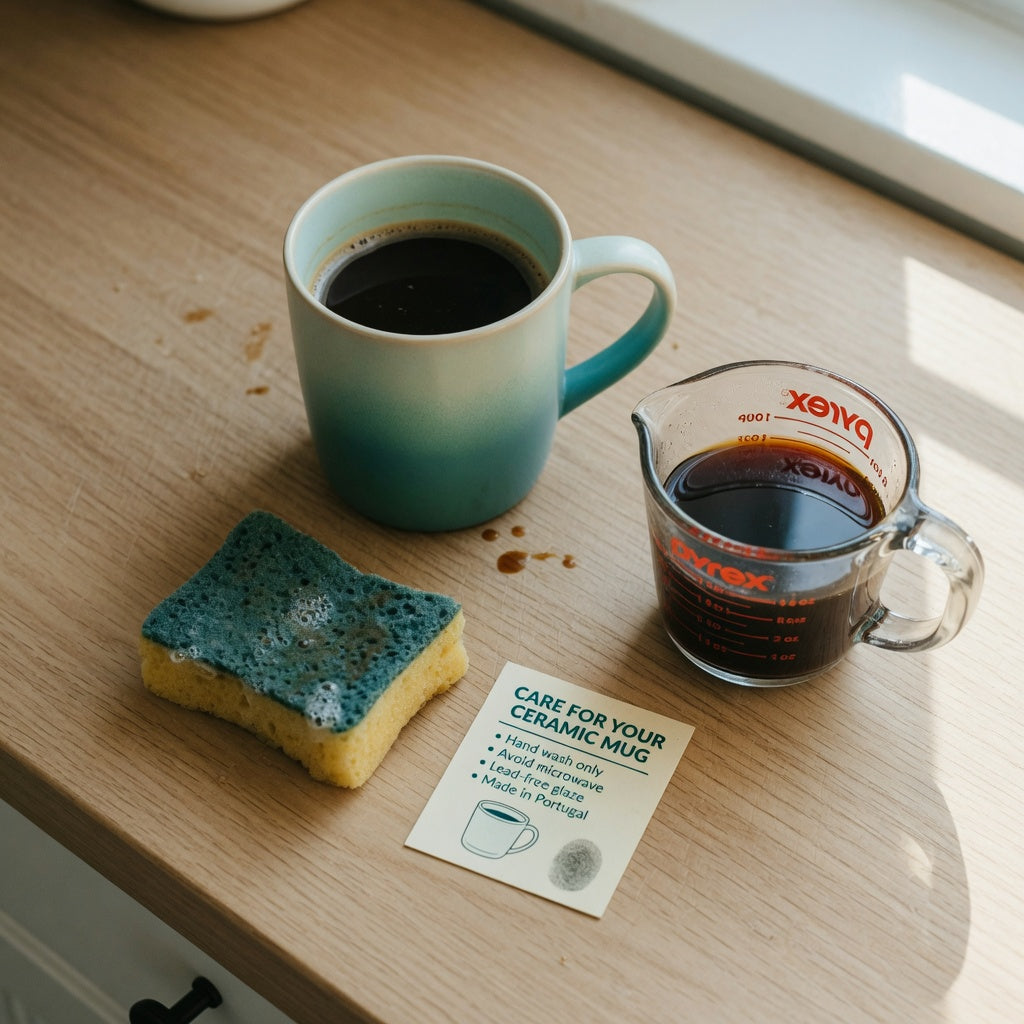
Gradient Coffee Mug Buying Checklist: 8 Checks Before You Buy
Reading time: about 9 minutes
Half the customer emails our team answers about gradient mugs start the same way: "will the fade survive the dishwasher?" The second most common: "why does my 12-ounce mug barely hold a normal cup of coffee?" Both are fair. Both are also answerable before you spend a cent, which is exactly why we built this gradient coffee mug buying checklist — the same eight checks we run in our store before any ombre mug earns shelf space.
We pack and ship ceramic drinkware every day, and we've unpacked enough disappointed returns to know the listing photo tells you the least about what matters: where the color lives, how far the fill line sits from the brim, and what the care card actually says. Judge those first and the gradient is a bonus. Skip them and you'll own a mug you quietly stop using by spring.
The gradient coffee mug buying checklist: eight checks before checkout
- Capacity to the fill line — stated ounces almost always measure to the brim, not to a comfortable pour with milk or foam.
- Finish type — fired-in color, sprayed color, sublimation print, and vinyl each age differently in the sink.
- Written dishwasher and microwave instructions — stated on the listing, never assumed from the word "ceramic."
- Glaze safety — lead and cadmium testing, and what a Prop 65 warning does and doesn't tell you.
- Recall history — a two-minute search of the CPSC database by brand and model.
- Handle fit and wall thickness — knuckle clearance, weight, and how long the mug holds heat.
- Gifting logistics — shipping protection, personalization durability, and return rules on customized pieces.
- Care habits you can live with — the wrong routine shortens any decorated mug's life, however well it's made.
Run this list against any mug from any shop, ours included. If you haven't settled on a style direction yet, browsing a range makes the comparisons concrete — our unique coffee mugs collection is a fast way to see how differently mugs can look while still facing the same eight checks.
What do the ounces on the label actually buy you at a real pour?
The "8-ounce cup" printed on coffee maker carafes is an industry convention, not a serving anyone actually drinks. Real mugs run 10 to 16 ounces, and a label reading "12 oz" almost always means 12 ounces filled to the very brim. Pour like a person rather than a lab technician — leaving headroom for milk, foam, or simply not scalding your lip on the rim — and that 12-ounce mug realistically delivers 10 or 11.
Three capacity details worth confirming on any listing:
- Where the measurement is taken. Brim-full and fill-line capacity can differ by more than an ounce, and listings rarely say which one they quote.
- Rim shape. Flared rims read bigger than they hold and let coffee cool faster; straight walls hide volume until you pour.
- What you drink. A cappuccino needs foam headroom; a black coffee drinker can fill closer to the top and get away with a smaller mug.
Capacity is the check we'd rank first, because it's the most common gap between what a buyer expected and what arrived. Our Gradient Ceramic Coffee Mug is the gradient piece we stock — its listing is where you confirm the stated capacity and care instructions, so read those against this section before ordering instead of trusting the photo. For the same exercise across materials and shapes, our nine-point coffee mug buying checklist expands every comparison here.
Which finish are you buying: fired-in color, spray, or a sublimation print?
Two mugs can show the same sunrise fade and behave completely differently in your sink, because the real variable is where the color lives. Most listings won't spell this out unless you ask, so here's the breakdown we give customers at the counter:
| Finish type | How it's made | Dishwasher reality | Wear to expect |
|---|---|---|---|
| Fired-in / in-glaze color | Pigment fired into the glaze itself | Usually the most tolerant — still confirm on the listing | Slowest to dull; wear shows as glaze scuffing, not color loss |
| Sprayed or airbrushed color | Color layered onto the glaze surface | Hand wash is the safe call; harsh cycles and detergents dull it first | Fades at the handle and base first, where hands and racks make contact |
| Sublimation print | Dye pressed into a polymer coating, common on photo and personalized mugs | Varies by coating quality — follow the seller's instructions exactly | Edge fading and spotting if the coating degrades |
| Vinyl or UV print | A printed layer adhered on top | Hand wash only | Peels and chips at the edges within months of daily use |
If a listing never names its method, email the seller. A store that knows its product answers in one sentence. A store that can't is telling you something too.
Is the glaze food-safe? Lead, cadmium, and reading a Prop 65 warning
Ceramic tableware sold in the United States is subject to FDA limits on lead and cadmium leaching from food-contact surfaces, and the standard industry screen for glazed ware is ASTM C738. Makers who test against it can usually tell you so in a single sentence. Ask — especially when the mug is a gift for a child or for someone who is pregnant. "Is the food-contact glaze tested for lead and cadmium?" is a question any serious seller answers without hedging.
A California Proposition 65 warning deserves plainer language than it usually gets. It means a chemical on the state's list is present somewhere in the product above a defined threshold. It is not, by itself, a statement that the surface your lips touch leaches anything — warnings frequently trace to exterior decorative glazes, inks, or a brand's blanket caution for shipping into California. Treat the label as a prompt to ask which component triggers it and whether the drinking surface is tested, not as an automatic verdict.
One more two-minute step before you gift: search the brand and model in the CPSC's recall database at saferproducts.gov. Recalls of ceramic drinkware are uncommon. Uncommon is not never, and the search costs nothing.
Will the handle fit your hand — and will the wall keep coffee hot?
Grip test: hold the mug the way you would at 7 a.m. Small pinch-grip loops punish larger hands on anything over 10 ounces; you want a handle tall enough for at least two fingers, with clear knuckle room between your fingers and the mug wall. Photos hide this. Listed dimensions usually don't.
Wall thickness is the trade-off nobody mentions. Thick stoneware keeps coffee hot longer and feels substantial, but it's heavier, and the outer wall — exactly where a gradient shows — can get warm enough that the handle stops being optional. Thinner walls stay cooler and lighter in the hand but surrender heat faster and chip more readily at the rim. And if you park a mug on an electric warmer all morning, ask whether the finish tolerates sustained bottom heat; gradients often run darkest at the base, which is precisely where a warmer concentrates contact.
Buying a gradient mug as a gift? Three checks that outrank color
- Shipping protection. Ask whether mugs ship in individual boxes or divided cartons, and what happens if one arrives cracked. A store that answers instantly has handled this before.
- Personalization durability. A printed name or photo is usually sublimation on a coated mug — the same care rules as the finish table above. Confirm the washing limits before you commit to the customization, not after.
- Returns on customized pieces. Many stores can't accept returns on personalized mugs at all. Read that policy before adding initials.
Packaging, timing, and matching the mug to the recipient's actual coffee habits matter just as much — our ceramic coffee mug gifting checklist walks through the full gift evaluation.
Which daily habits keep a gradient finish from fading or chipping?
Rims chip. The most common chipped-mug story we hear doesn't involve a drop onto the floor — it involves a crowded dishwasher rack and a neighboring mug. Give a gradient mug its own shelf space or a hook and it will outlast your expectations.
Thermal shock is the quiet killer. Boiling coffee poured into a mug straight from a cold car, or a hot mug set down on a wet stone counter, can crack ceramic from the temperature swing alone. Let it come to temperature gradually — that single habit prevents most of the cracks customers describe to us.
Cleaning rules stay simple: soft sponge on the colored exterior, stronger stain treatment only on a plain interior. Abrasive pads and powdered cleansers dull sprayed and printed color fast. And never set a ceramic mug on a stovetop or open flame — mugs are drinkware, not cookware. For the deeper material walkthrough, our ceramic tea mug buying guide runs ten checks specific to ceramic bodies, from glaze weight to foot rings.
Where a gradient mug is the wrong tool for the job
- Communal office kitchens running heavy-duty dishwasher cycles daily — a plain, in-glaze mug survives that environment with less drama.
- Stovetop and campfire reheaters — ceramic doesn't belong on direct heat, full stop; a metal camp mug is the better buy there.
- Buyers who want zero visible aging — any surface-applied color shows wear eventually, and matte solid glazes hide it longest.
There's no shame in any of those situations. Matching the mug to your actual routine beats matching it to a photo, every time.
Run the checklist against our Gradient Ceramic Coffee Mug
Open the Gradient Ceramic Coffee Mug listing beside these eight checks and confirm each line for yourself: stated capacity, written care instructions, finish details, and gift packaging options. If the ombre look turns out not to be yours after all, the rest of our unique coffee mugs range covers plenty of other personalities — and the same checklist applies to every one of them.
Frequently asked questions
Are gradient coffee mugs dishwasher safe?
It depends on the finish, so read the listing instead of assuming. Fired-in color generally tolerates dishwasher cycles, while sprayed surface color and sublimation prints often call for hand washing or a gentle cycle. If a seller states no care instructions anywhere, treat the mug as hand-wash-only.
What does a Prop 65 warning on a coffee mug actually mean?
It means a chemical on California's listed substances appears in the product above a set threshold — not automatically that the drinking surface is unsafe. Ask the seller whether the food-contact glaze is tested for lead and cadmium; a confident seller answers specifically.
How many ounces do I need for a latte or cappuccino?
Most home milk drinks land comfortably in a 10 to 12 ounce mug because foam needs headroom; black coffee drinkers can go smaller or fill closer to the brim. Remember that a stated ounce figure usually measures brim-full capacity, so subtract an ounce or two for a realistic pour.
What should I verify on a listing before buying a gradient mug?
Work through a full gradient coffee mug buying checklist: stated capacity, finish type, written dishwasher and microwave instructions, glaze safety information, handle dimensions, and the seller's breakage and customization return policies. Anything missing is worth one email before checkout — the reply tells you as much as the answer does.
Do gradient mugs fade with normal use?
Surface-applied color fades faster than fired-in color, especially under harsh detergents and abrasive sponges. A fired glaze gradient can look unchanged after years of daily use; a sprayed one often dulls at the handle first. Match the mug to your washing habits, not just the photo.
One last nudge: run these eight checks on any mug you're considering, ours or anyone's. Mugs are small purchases, but you drink from one every single day, and the difference between a good one and a disappointing one always hides in the details the photo didn't show.
Ready to pick your mug? Two ways to save on today's order:
Ordering 1–3 mugs? Get an extra 10% off your 1st order with code 10_OFF Apply 10% Off & Shop Wooden-Handle Mugs →
Gifting 4+ mugs? Buy 3, Get the 4th Free applies automatically at checkout (no code needed; offers do not stack) · Free standard shipping (Nov pre-Christmas delivery: 15–20 calendar days US) · Free replacement if chipped in transit.
Popular mug buying guides: Ceramic Tea Cups & Infuser Mugs · Ceramic Mugs with Lids Compared · Wooden-Handle Tea Infuser Mugs Compared · Christmas & Secret Santa Mugs 2026 · Espresso & Cortado Cups Guide · Cup & Saucer Gift Sets · All 25 Mugs Spec Table · Mug Size Guide · Shipping & Promo FAQ
FIRST ORDER 10% OFF (CODE: 10_OFF) · OR BUY 3, GET THE 4TH FREE


Read more
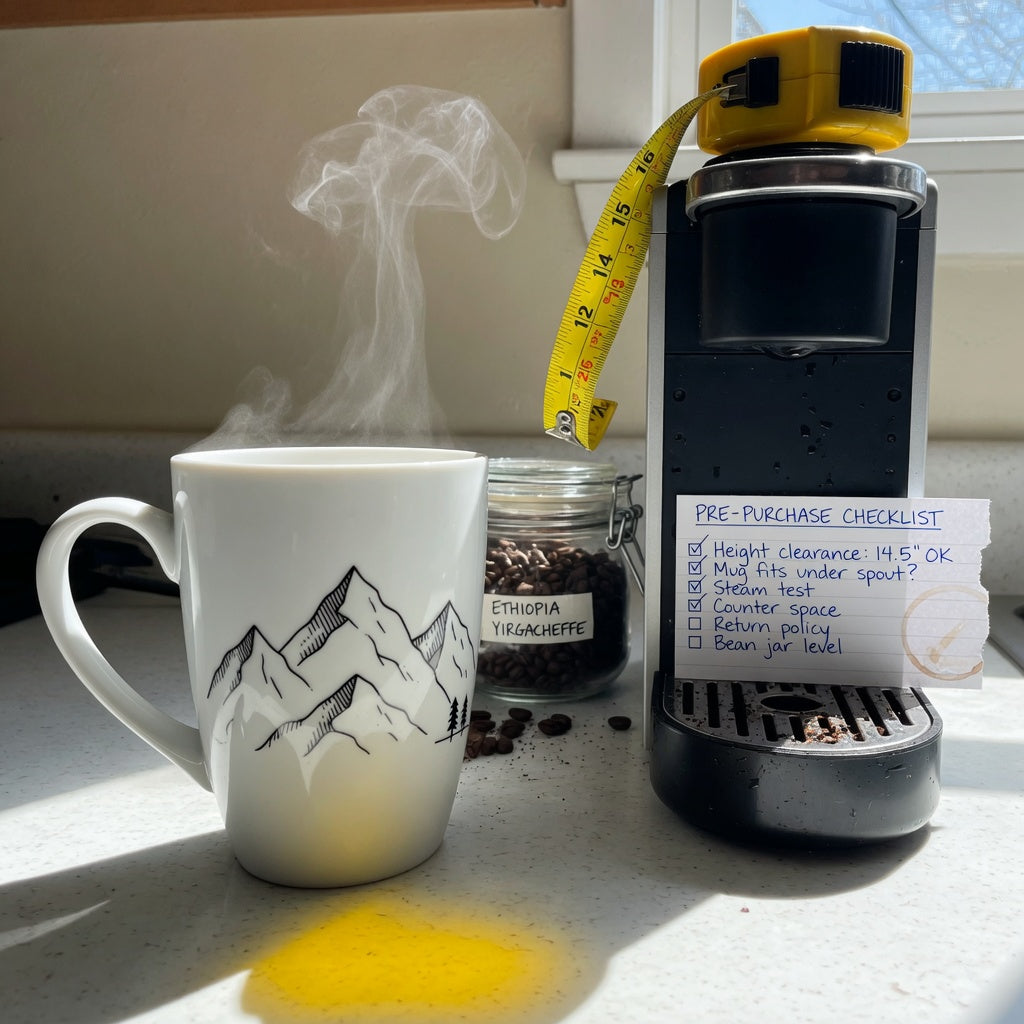
Mountain Tall Mug Buying Guide Checklist: 10 Things to Compare
A store-written mountain tall mug buying guide checklist: brim capacity vs. usable fill, brewer clearance, glaze and artwork durability, filled weight, care habits, and gift packaging — plus the ho...
Read more
Flow Mug Gift Ideas: What Buyers Should Compare Before Checkout
Flow mug gift ideas hide a trap: the phrase mixes licensed movie merch, flow-state quote mugs, and travel tumblers. We sort intent first, then walk through ounce capacity, care labels, print durabi...
Read more
Leave a comment
This site is protected by hCaptcha and the hCaptcha Privacy Policy and Terms of Service apply.